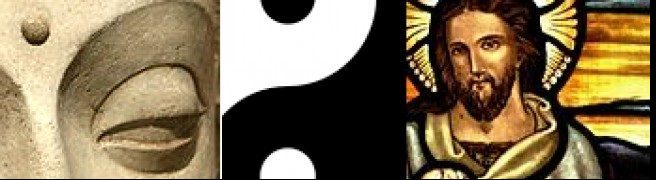
How Christ Tranforms Evil

In “Christ is Risen”, Matt Maher encapsulates the message offered by so many celebrants at Easter:

Christ is risen from the dead,
Trampling over death by death!
Come awake! Come awake!
Come and rise up from the grave!

Oh, death, where is your sting?
Oh, Hell, where is your victory?

It is a message of conquest.

But those that have survived a near-death experience tell us that as they drifted into the light, they saw all their loved ones reaching out to call them forward, and behind them shone the loving embrace of Christ.

Jesus did not conquer death: he entered into our greatest fear and transformed it into a conduit through which love is brought to us.

Understanding that conflict justifies evil, I have been negotiating with sin for the last fifteen years, offering the exhortation that love will not destroy it, but bring it into greatness. In that process, I have been assaulted psychologically, night and day, by people that exercise sin to gain power over others. The struggle has been exhausting.

This morning, I find myself in a different place. I turned the problem around: rather than resisting them, I envisioned the light of Christ shining through me, then through them and onto those that they oppress. The closer they press against me, the closer they come to the light, and the more brightly it shines from them.

Maher begins his song with this exhortation:

Let no one caught in sin remain
Inside the lie of inward shame.
We fix our eyes upon the cross
And run to him who showed great love.

Those that rely upon sin for power run in the other direction, of course, and build their castles to wall out the light of Christ. Death is their final tool – the means by which they weed out those that insist upon loving. Every Christian that keeps his eyes upon the cross defeats that strategy: they make death the means by which Christ enters into the darkness, bypassing all the walls of the citadel.

How does Christ protect his faithful? Because even thinking about bringing harm to a true servant of Christ calls him closer. Those that would sin against the faithful must flee their ramparts into the wilderness.

At the beginning of his ministry, Jesus offered this counsel:

“You have heard that it was said, ‘Eye for eye, and tooth for tooth.’ But I tell you, do not resist an evil person. If anyone slaps you on the right cheek, turn to them the other cheek also.
[NIV Matt. 5:38-39]

And for those strong enough, even more:

“You have heard that it was said, ‘Love your neighbor and hate your enemy.’ But I tell you, love your enemies and pray for those who persecute you, that you may be children of heaven.
[NIV Matt. 5:43-45]

What I see now is: it is the miracle of the cross that guarantees the efficacy of this conduct! Death was not vanquished, it is the very tool by which we redeem one another!

Speak Your Truth in Love

But remember – it is your truth, not God’s.

And remember that, as love creates peace and joy, speaking from love is always without anger and fear, and creates neither anger nor fear in the listener.

Rather, as love heals the wounds of sin, always speak words of hope, and have faith that the hearer, in loving themselves and you, will reveal their truth in turn.

And if their truth is that a different love guides them to a deeper hope, have faith that God makes a home great enough for all of our truths.

Dawn of the Soul

Midi Berry’s newly published Nights of the Road examines the mystical power of feminine devotion. The nominal protagonist of the tale is Sarah, a British refugee from bad relationship mojo, taking up a life as a psychotherapist in Los Angeles. The power driving her spiritual awakening, however, arises from the 17th century, where her ancestor Frances Coke earns the regard of those surrounding the Stewart court as its excesses succumb to Parliamentary discipline.

When I was a child, my father declaimed modern music by observing that it was the discipline of classical forms that allowed composers to create pieces that challenged listeners without alienating them. This seems a suitable metaphor for the structure of Midi’s work.

In both time streams, Berry injects the theme of a woman committed to a natural love with a devoted partner, but challenged in her course by the passionate attentions of an unstable and possessive creative genius. In the Stewart Court, Frances is frustrated in her love by an arranged marriage, albeit to a man who – as long as the forms of the relationship are honored – kindly accepts her devotion to another. In modern Los Angeles, Sarah escapes a political marriage through emigration, and falls captive to the reborn creative genius whose attentions were frustrated by social strictures in the Stewart Court.

The novel evolves through a series of tetes-a-tetes between the romantic interests. Sarah employs the language of modern psychology as a shield against strong emotions, eventually drawing her two competitors – both previously members of a band called Nights of the Road (whence the title, in part) – into collaborative reconciliation. As for Frances, I found myself thinking that her attitudes were entirely too modern, but then realized that so were the attitudes of Beethoven and Brahms. Frances makes a decision early on in the book to believe in herself, and thus speaks her mind honestly throughout, and so perhaps reveals wisdom of the feminine heart that has been long suppressed.

I found myself at times wishing that Berry would bring us into some of the historical experiences discussed by Frances and her lover Robert. However, the emphasis of the book is on transformation of relationships, and there is a lot of valuable relationship modeling in the story line.

The most significant flaw in the story – and this is nit-picking – may be the lack of forecasting of Frances’s mystical ascension as her death nears. For those familiar with such events, this is foreshadowed by the affirmation by a noble protector that Frances’s beauty, compassion and devotion have brought her unsuspected admiration from the royal entourage. Unfortunately, for some the connection may be lost, and so her wandering down the psychic road as she nears death (whence again the title) may seem a little jarring, if not deus ex machina.

But the book’s final chapter is golden. Antony, the creative genius of Nights of the Road, manipulates masterfully Sarah’s emotions, and precious are the lyrics sung as reflections upon her impact on the men that love her.

Berry’s heart-felt tribute to reconciliation and redemption casts light on the challenges of being a muse, and presents wisdom that readers will usefully apply when seeking to understand and deepen their relationships. As the Brits would say: “Give it a go!”

Robbing Peter to Play Paul

In an era in which the Law of Moses had been corrupted as political tyranny and religious hypocrisy, Jesus would not have been expected to write a Gospel. Scripture is offered to us as a method to open ourselves to the love of God, but words change meaning over the course of time, and eventually the weight of our cultural prejudice stands as a barrier against the Divine Presence. As Jesus experienced, even worse can occur when the meanings are manipulated intentionally.

It was in recognition of this outcome that God proclaimed through Jeremiah [NIV 33:34]:

I will put my law in their minds
and write it on their hearts.
I will be their God,
and they will be my people.
No longer will they teach their neighbor,
or say to one another, ‘Know the Lord,’
because they will all know me,
from the least of them to the greatest,
For I will forgive their wickedness
and will remember their sins no more.

Jesus was the implementation of this promise. The proof was not in his words, which are always ambiguous, but in his actions.

In The Soul Comes First, I explain Jesus’s promise that his generation will see the fulfillment of his prophesy: On the cross, Jesus was unbound from time, and worked his way through the future until his will for Humanity is manifested. Then he returned in the glory of his realm to return to the Father. In that process, Jesus had no need for words – it was through his flesh itself that the work was done.

But, for those stuck in the flow of mortal time, how were those moments to be bridged? That requires propagation of the message of salvation. The original Apostles, fishermen and tax collectors, simple men of Galilee, had limited reach for this purpose – but they had direct experience of Christ, and had been humbled by their lack of faith. This is reflected in the kindly advice of Peter, in his second letter [NIV 2 Peter 1:5-9]:

For this very reason, make every effort to add to your faith goodness; and to goodness, knowledge; and to knowledge, self-control; and to self-control, perseverance; and to perseverance, godliness; and to godliness, mutual affection; and to mutual affection, love. For if you possess these qualities in increasing measure, they will keep you from being ineffective and unproductive in your knowledge of our Lord Jesus Christ.

This is a message of personal redemption through direct relation with Christ.

How was such a message to spread in the face of a culture of tyranny and hypocrisy? Long and slow it would have been. So this is where Saul of Tarsus comes in. Roman citizen and temple persecutor of the Christians, like Moses, Saul understood the mindset of the ruling classes, and the processes that would avail to bring him into direct dialog with them. As a Temple priest, he also understood institutional practices. Reborn into faith as Paul, this apostle was a traveling consultant to Christian communities in formation. As a philosopher, Paul also provided the early Christians with a framework for understanding the events that had transpired in the Holy Land, including clear statements regarding the implications with respect to past teachings.

Obviously, these are incredibly powerful works, and a source of rich guidance for pastors trying to manage diverse congregations and reconcile Old and New Testaments. In many non-denominational congregations, I find that Paul’s writings are preached more often than the parables of Jesus. Paul is clear and direct, while the parables of Jesus often leave me wondering “WTF?” (until I work out that Jesus wove in three meanings for three different audiences).

But is the voice of Paul the voice of Christ?

I would argue “only mostly.” Paul has a terribly serious defect: his religious roots rest in a framework dominated by sin, and his personal redemption occurred as a result of his sin against Christianity as a whole. Paul carries a guilty past around with him, and so his theology is dominated by a concern for forgiveness, and the miracle of redemption.

Peter, on the other hand, offers this promise [NIV 2 Peter 3:8-9]:

But do not forget this one thing, dear friends: With the Lord a day is like a thousand years, and a thousand years are like a day. The Lord is not slow in keeping his promise, as some understand slowness. Instead he is patient with you, not wanting anyone to perish, but everyone to come to repentance.

I much prefer the simplicity and directness of this promise. It is echoed in Paul’s writings, but as Peter says [NIV 2 Peter 3:16]:

His letters contain some things that are hard to understand, which ignorant and unstable people distort, as they do the other Scriptures, to their own destruction.

Sometimes less is more. I’d lay aside the rules offered in Paul’s letters, and focus on the progression defined by Peter. Leaving much to be discovered, it is harder work, but comes from one who learned most painfully from a more immediate experience of Christ.

You-Say-I-Am

In the last week of his life on Earth, Jesus brought his verbal sparring match to Jerusalem, where was gathered the authorities of his age. Welcomed enthusiastically by crowds expecting him to transform their political and religious reality, Jesus instead proclaims the kingdom of heaven and his impending destruction.

Sensing weakness, the temple priests swoop in for the kill. Perhaps advised by spies that Jesus had been proclaimed the Son of God, and certainly with the evidence of his tirade in the temple, they summon him to pose the question directly: Is he the Messiah, the “King of the Jews?” However, if they thought that Jesus was on the ropes intellectually, they were mistaken. For in answer to their questions, and the questions of Pilate and Herod, he simply answers “You say I am.”

The Gospels give us no punctuation for this statement, and so it is generally read passively, without emotion. But we cannot imagine Jesus without emotion in this moment, not given the throes of passion just evidenced in the Garden of Gethsemane. There must have been something there, besides simple resignation.

So what would the emotion have been? That of the man pleading “Father, take this cup away from me!” – a petulant “You say I am.” That is to observe “Would you face the consequences of that admission? Then why do you expect me to say it?”

No, Jesus was a man of greater heart than that. Perhaps, then, it was “You say I am!” The proof of the statement was in their actions, this desperate attempt to preempt the rallying of the people to him after his non-violent provocations against their authority. If they did nothing, he would indeed become king, a king brought to authority by God, rather than by human methods.

Or was it a prophetic proclamation? As David had proclaimed his suffering twenty generations before, was Jesus merely observing to Pilate, “You say I am!” The ultimate authority of Rome, the Emperor himself, will one day proclaim Christ the Lord!

But there is another thread, the thread that starts with Israel being told “I am that I am”, and continuing with the challenge to Peter “Who do you say I am?” It is the prompting of God through the ages that beseeches us to trust our hearts – to hear the still, quiet voice that Samuel counseled the Israelites to rely upon over the institutions of men. It is a voice of hope, still hoping against hope that the pain and suffering could be avoided. Not just the endurance of the cross, but all the religious wars, the starving children, the women demonized and abused for sexual gratification, and the wasted words of political dispute when only compassion can light the road to justice.

It is the hope of rejoining human institutions to the divine purpose.

It is to encourage:

You! Say I am!

Are we prepared to do that now? Not just if he came down in glory – but if he came as he did before, a man with all the frailties of flesh. Would he be recognized? And if not, why would he return?

Only to die again?

Gatekeepers and Prophets

When I was in my twenties, I was a steadfast contributor to H.A.L.T. (Help Abolish Legal Tyranny). The organizers recognized that the legal industry was positioning itself as a funnel through which all ethical questions had to be resolved, and that a predatory core was using client-attorney privilege to hide criminal activity taken on the behalf of their patrons. The most disgusting examples occurred at the turn of the millennium, where CEOs (involved in financial scandals) and presidents (Bush and the absurd doctrine of the “Unitary Executive”) alike stated that “Well, I did what I did because my attorney advised me that it was legal”, and the attorneys protected their briefs behind “client-attorney privilege.”

The scales were always unbalanced in H.A.L.T.’s struggle, and as it wore on, the founder became more and more strident in his diatribes. I eventually sent him a letter advising that he take care of himself, and plan to pass the baton to the next generation.

I see something similar happening to Mikey Weinstein at the Military Religious Freedom Foundation. There is a core cabal in the military that attempts to force Christian practices and declarations upon their subordinates. They have also sent death threats to Weinstein’s home.

Obviously, this as contrary to Christian principles. But Mikey’s recent tirades against Air Force sentries offering “Have a blessed day” give me concern that a simple expression of personal good will is being attacked as though it was a tool of repression. Weinstein is trying to control personal behavior, and beginning to come across as not too different than the people he opposes.

While I wish that I could do more to help you, I see the problem this way, Mr. Weinstein:

Love does not force things to comply. It helps them to manifest their greatness. That was the experience of the Apostles under the tutelage of Christ.

Yes, Jesus would not force anyone to pray – he would confront them with a problem too big for them to solve, and then give them the strength to solve it.

And for the base commanders:

Asking “What Would Jesus Do” is one thing – acting as though you are Jesus when you don’t have the powers of Christ is quite another. Force is something used by people that imagine Jesus with their own limitations. It is simple hubris to suppose “Well, if Jesus had my limitations, what would he do?”, and then to force other people to live accordingly.

No, Jesus would not force anyone to pray – he would confront them with a problem too big for them to solve, and then give them the strength to solve it.

Loneliness

Right on schedule (3 AM in the morning), I had this dream:

I was away in another city at a conference, feeling really lonely and adventurous in the way that one feels away from home. A Hispanic woman had adopted me, and decided that we were going to have sex. She wasn’t really pushy about it – it was just, you know, “Why not?”

So we go back to my hotel and get into the elevator. She pushes the button to the sixth floor, and we rise and rise and rise and rise. The floor indicator was on ‘6’, but we just kept on going for the longest time. Finally, the doors open and we step out into heaven.

There was an pleasant blonde at a folding table, the kind set up for conference receptions. She was dressed all in white – obviously the angel receptionist. I stepped forward and my companion just faded into the background.

The feeling of loneliness intensified, and I found myself laying my head down on the table. “Why haven’t you found me anybody? I’m so tired of being alone.” This went on for ten seconds.

Then I stepped outside of the dream. Taking stock of the women that were organizing it, I clarified for them:

I am not a supplicant in this place.

This life is unfolding just as I intend it.

I am the carrot.

You ladies need to do better for me.

Exhaustion

I forget who said it – either George Bernard Shaw or Oscar Wilde – but “being gentle” sticks in my mind. I do the best that I can.

Bikram Yoga is an interesting exercise in wearing that discipline down. We’re supposed to look forward directly into the front mirror, ignoring all the beautiful and scantily clad bodies around us. I usually do well – deflecting even the attentions of the women that want me to look at them – until triangle pose, which is about the 40-minute mark. By that point, I’m pretty much worn out, and my eyes begin to wander.

I do try, but I guess that part of the problem is that I’m such a long, skinny rail. I’m not strong enough to fully express the postures. I’ve also discovered that I’ve not been using the muscles in my pelvic floor, which was creating havoc with the tendons on the inside of my legs. There are certain postures that just hurt, so I sit them out, which causes people to wonder why I’m breaking the practice. So they look at me, and my brain, in its weakened state, follows the interest back to its source.

Strangely, the floor series is even worse. I’ve been struggling with ever-intensifying waves of grief during corpse pose. I know that I’ve been disturbing the other students. I finally broached the matter with the owner, and Rachel, sweet-heart that she is, just offered me a free choco-coco water.

The challenge has broadened over the last couple of weeks. Women are just so incredibly beautiful. I try not to look into them, but even just taking in their shape has gotten them to start dropping the fact that they have boyfriends, or prominently displaying their wedding bands.

I think it has to do with exhaustion. I’ve been getting about five hours of sleep a night for the last couple of weeks – well below my subsistence level of six-and-a-half (I really need eight, I think). It’s also shown up in my driving. I’ve found myself in embarrassing situations a couple of times, basically avoiding accidents through the alertness of others.

I did go back to church this Sunday for the first time in six months. I was fine at St. Paschal’s – the children’s choir their is so clear in their intentions. And I’m getting better at restraining the images of taking the celebrant aside to correct his theology. That showed some at Skyline Chapel, where Pastor Manny took the time to sit down with me after service. I’ve only spoken to him a few times over the years, but what he said was like balm to my heart.

Brian, I hear what you’re saying, but every time you talk to me, I have to let my heart work on it before I know what to do with it.

God, I didn’t even know that anybody was listening.

The Uses of Tyranny

Given the libertarian cachet of the software “Open Source” movement, I was taken aback, when reading through the Git source-control system manual, to discover that the model used to prevent incoherent updates was labelled “Dictator and Lieutenants.” Linus Torvalds, the acclaimed “Dictator” of the Linux kernel, is famous for abusive tirades on the discussion boards. I guess that it fits.

The Greeks used the word “tyrant” without any negative connotations. Tyranny was a practical response to the fact that most people are going to do what feels good to them in the moment. If a society is going to grow, somebody has to take charge and force them to move in the same direction – what we typically think of as getting them to “work together.” That’s going to make some of them unhappy, and unhappy people complain, and eventually band together to defend their liberties.

The reaction of the tyrant is often to interpret such claims as a threat to the society as a whole, which justifies brutal suppression. That has led, in the modern era, for us to view “tyranny” as an evil thing. But if consensus (the alternative to tyranny) really generated more power in ancient times, then we wouldn’t have had a 2000-year gap between the democracy of Athens and the democracy of the United States of America. Even so, the latter nearly failed the transition from tyranny during the distrustful era of the Confederacy.

What are the preconditions for a transition from tyranny to consensus? Widespread understanding of the forms and practices of government is one, which requires universal public education. Codification of citizen rights and creation of institutions to defend them are others. We might also uphold renunciation of political aspirations by the leaders of the agencies that manage coercion, such as the police and military.

Even in modern societies, these preconditions are somewhat tenuous, and the rights of freedom are all too often abused as libertine privilege. For this reason, many institutions still revert to the model of tyranny. Someone has to be in charge, and preventing the dilution of that individual’s authority is often critical to the success (or even survival) of the institution as a whole.

This presents a real problem to women, I believe, who are often psychologically predisposed to consensus. They tend to get people talking, find out what they need to be happy and effective, and raise alarms against the practices that prevent those results. They undermine the practices of tyranny, and so are pushed aside in order to preserve the integrity of the institution and its tyrant.

The cracks in human tyranny are becoming impossible to ignore, however. Controlling the thought processes of the creative knowledge worker is to contradict their purpose – they are supposed to come up with new ideas. The growing number of women in the workforce has already been mentioned. And the political strategy of non-violent dissent, which became so pronounced in the Communist countries, broke down all the practices of tyranny by pushing responsibility for failure back up to the leadership. “I’ll do it if you show me exactly what you want done” eventually left many with time to moonlight in a second job.

But pushing tyranny out of our lives, I believe, is going to require a sea-change. For the average citizen, we need a moral framework that enables people to regulate the assumptions of rights as privileges. I raised my sons with the mantra that my goal was to make them “able, healthy and happy”, and that to have all three was almost impossible. When we got down to negotiation of “I need”, I clearly articulated the difference between needs (healthy) and wants (happy), and declared that unless I saw a personal commitment to “able”, I was unlikely to accede to their desires for the latter. In the long term, happy depends on health, and both depend upon the ability to create value for others.

And for those at the top of the food-chain?

As a scientist and engineer, I am privileged to work among a community that does not require political structures to arbitrate consensus. Nature is its own tyrant, with its diseases, predators, and disasters. It also has a set of unalterable rules that beat down our most narcissistic flights of fantasy. It provides plenty for us to struggle against.

I believe that we are entering an era in which that struggle will be unavoidable for most of us. This means a change from “extensive” social orders, that grow through predatory acquisition of resources, to “intensive” social orders, that require effective performance from every member to avoid universal hardship. In that future, the imposition of will by the tyrant will no longer be enough to ensure institutional survival, unless couple with compassionate concern for the well-being of individuals. The indulgence of privilege by individuals will be punished by nature, requiring of each of us a commitment to our fellow citizens. The combine constraints on tyranny and anarchy will make the destructive political dialog of our era a luxury that we can no longer afford. Loud-mouths will be told to pick up a shovel and work, or go and shout in the wilderness.

Healing is a Messy Process

I was heading to San Francisco Airport to catch a flight out to Washington D.C., and was glad that I had left early. Traffic down the 580 to the 238 was an absolute disaster. I could feel the tension and frustration in the air as traffic crawled forward. I put out the thought that we should try to give that energy to the emergency crew working to clear the accident. When I finally reached the scene, they were just loading the victim – a motorcyclist who had gone under a car at high speed – into the ambulance. I could feel his spirit swirling in the air, terrified of the prospect of re-entering the broken body. Firmly, I projected, “It’s time to put yourself back together.”

“Why,” we might ask ourselves, “why does God let things like this happen?” All the wasted time, the pain and frustration: can’t he do any better than that?

I can’t give a answer that is going to bring consolation. The only answer I have is of the “that’s just the way that things are” kind. Unconditional Love, which is the foundation of God, does not judge. Why? Because if it judged, it would justify the use of force, which would give authority to destructive spirits.

So what can Unconditional Love do? It can echo the “yes” of things that feel joy. It can enter into productive and healing relationships and support them with its presence. Jesus put it this way [NIV Matt. 18:20]:

For where two or three gather in my name, there am I with them.

Not with one alone, but in even the smallest group.

Simply, Unconditional Love supports things that work for us together, but it’s up to us to find those things. It doesn’t prescribe for us – it doesn’t want us to kneel and pray if that doesn’t work for us. It doesn’t want us to bear lashes if that doesn’t satisfy our sense of justice. But neither will it deny the martyr the grace of surrendering life to prove to the tormentors that love is stronger than fear, and thus to infect them with love.

Why do bad things happen to good people? Really, because their light is needed in the darkness. Yes, it’s painful, but if in those moments more of us took the attitude

Dear God, help me to shine brightly so that the captives can see freedom, and those that persecute me can see that their abuse only serves to liberate my spirit into knowledge of you.

Well, things might go a little bit faster. No, we won’t avoid pain, but we will have the security of knowing that our suffering has a purpose, just as did the suffering of Jesus. No, not every tormentor will chose healing, but when the light becomes bright enough, they will be forced to flee.