Private Property as a Principle of Social Terrorism

James Radcliffe offers a UK perspective on Trump’s presidential candidacy. I offered this context.


There’s an aspect of the American political trajectory that is perhaps worth highlighting to those outside the country, because it is developing steam in other places.

Fundamentally, government is concerned with negotiating the rules that control the distribution of power in a society. For all of human history, it has been either at odds with or coopted by the concept of “private property,” which most often is allocated arbitrarily from the commons, and held by force even when mismanagement of resources leads to preventable social suffering.

What has happened in America is that, since the ’80s, the conservative branch of our political system has adopted an extremist view of this conflict supported by the economic proposition that the only legitimate means for redistributing power is the free market. That actual markets, with their privileged knowledge and contractual Arcana, are by no means “free” in the theoretical sense has not impeded the propagation of policies, laws and political planks that uphold this principle as the foremost goal of all governmental action.

They are blind to the contradictions of their program: the use of government to supplant government with the free market. Karl Rove, conservative talk radio, the Koch brothers and Grover Norquist are the political terrorists driving the implementation of this program. The consequence is that conservative candidates for president have become progressively less qualified to run the government. Their understanding of government has become atrophied because they actually question its legitimacy.

Trump is simply the inevitable consequence of this divorce from reality.

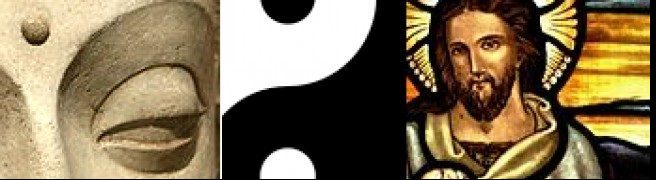
The Zen of Jesus

Upon waking up to the reality that self-serving does not bring joy, the seeker after comfort tends to a superficial sampling of religious wisdom. The sophisticated teacher needs to avoid becoming involved in blame-shifting for the seeker’s miserable state. In the traditions of Abraham, that begins with a vow of submission, formulated in Christianity as “Do you accept Jesus Christ as your personal savior?” In Islam, it is stated as the Shahada:

There is no god but God alone; he has no partner with him; Muhammad is his prophet.

The dissatisfied acolyte is then made responsible for his own condition, in that all wisdom is found in direct relation with the godhead.

Lacking a divine center for its practice, Buddhism takes a different approach, epitomized by the Zen koan. A koan is a cryptic one-liner that organizes an inward meditative journey. The most notorious is:

What is the sound of one hand clapping?

The obvious answer is “nothing,” but that certainly doesn’t point the way to wisdom. The student still needs to grasp that the “hand” being referred to is themselves, and that in seeking after spiritual glory, they earn no lauds.

The story of the rich young man in Matthew 19:16-22 shows Jesus ministering to the problematical seeker. The poor fellow grasps at eternal life as a guarantee that joy can be secured. Calling Jesus “Master,” he then asks what good he must perform to earn that grace.

Presciently, in Matthew 7:21, Jesus had pre-empted the Christian vow of submission:

Not everyone who says to me “Lord, Lord” will enter the kingdom of heaven, but only he who does the will of my father.

Consistent with this warning, Jesus immediately deflects the proffered authority:

Why do you ask me what is good? There is one alone who is good.

No man needing anything but faith to draw upon the strength and wisdom of the Father.

But the teaching does not end with the Zen master’s edict to seek inwardly. Jesus lists the six commandments of human relation: edicts against murder, adultery, theft, and lying; and encouragements to honor our parents and love our neighbors. The latter build intimacy with those closest to us; the former prevent those bonds from sundering. Through this practice, Jesus suggests that his protégé will “enter into life.” In avoiding the drama of struggle, adherence to the commandments allows to blossom those quiet moments in which we gain the subtle and sublime assurance of security in our knowledge of the compassion that embraces us.

We are no longer a hand trying to clap alone.

But the seeker is not just young; he suffers another handicap, one known in Islam as Allah’s greatest test of character. He is rich. Thus, while meaning well, others see him as a potential source of material security. They seek a bond with his money, not his heart. And so Jesus offers him this final advice: give your wealth to the poor and follow!

The young man departs saddened. We can only guess at the cause: was he responsible for managing money that ensured the well-being of the community, wealth that he could not trust others to manage responsibly? Was he simply unable to imagine survival without the perks of wealth: the daily bath, the satisfying meals? Or did he arrogantly perceive his wealth as a sign of divine approval, and so Jesus’ pronouncement as proof that hope had been invested with just another false prophet?

Whichever it may have been, we as readers should recognize the advice not as some generic one-size-fits-all formulation, but a direct response to the needs of this troubled young man. It is the mark of the greatness of his compassion that Jesus does this again and again throughout his ministry: offering just the words that the listener needs to hear to bring solace and healing, even to the point on the cross of:

Father: forgive them. They know not what they do. [Luke 23:34]

Jesus was not concerned with self-preservation – he was devoted to his ministry to the lost. Thus, while his teaching encapsulates the wisdom of the Zen and Christian teacher, it then surpasses it. None can doubt that he does the best that he can for them, although they might not be able to respond fully. Yes, it is this I believe that gives the young man sadness: his realization that salvation was offered him, and he was unable to grasp it. It foreshadows Jesus’ struggle in Gethsemane:

The spirit is willing; but the flesh is weak. [Matt. 26:41]

and:

My soul is overwhelmed with sorrow to the point of death. [NIV Matt. 26:38]
Sunday Heat

While Amtrak trains have air conditioning, the stations don’t always. That may just be my stops: I’m riding along the coast from Oxnard to Santa Barbara. It was getting warm this morning when I left, so I just puttered along on my bike, hoping to keep from arriving at the station as a walking swamp. I did all right, but still found myself hiding out under the Highway 1 fly-over. All that concrete made the air cooler than in the station.

One of the best parts of taking the train out to Santa Barbara is having the chance to put on my noise-cancelling earbuds and really let the praise music I’m listening to work its way through me. Listening at work during the week, I’m just cancelling mental noise – the music doesn’t really sink in and produce meaning.

I found myself looping over “Draw Me Close to You” by the Katinas. I kept on tearing up on this passage:

You’re all I want.
You’re all I ever needed.
You’re all I want.
Help me know you are near.

I finally realized that it would be natural for Christ to feel the same way about the flock that seeks for him. I was picking up that reflection.

Santa Barbara was pretty hot – 87 F when I got off the train at 10:20.  I went past puttering to dawdling. Even so, I got to the Dance Tribe early, and enjoyed those first ten minutes with the dance floor nearly empty – those that entered with me still needed to warm up their muscles. The early numbers are also meditative, allowing me the freedom to vary pace and attitude as spirit moves me. When the second piece finished, one of the organizers caught my eye and shared “Wow. Great job.”

And then the frenzy. We had fun – I’ve been in attendance long enough that the improv group recognizes me as a trustworthy partner. I got caught up in a couple of multi-person scrums, although in one case I ended up crying out “Squish!” from the bottom of a pile of bodies.

The tempo began to wind down in the last half hour, and I made a really joyful discovery. I’ve been struggling with left-right imbalance in yoga for the last five years, and on Thursday I finally got into full locust posture with a sense that I was pulling into the center of my body, rather than listing to the right. I was working that into my dance when suddenly I realized “My wings are back.”

For the last couple of months I’ve been a little sad that, as the music winds down, I haven’t been able to find a lady to dance the last number. This time I decided that I was just going to claim someone. So I walked through the middle of the floor until I caught her eye, and started leading her through some travelling ballroom dance turns. When we finally locked together, I took her up into some rotating shoulder lifts.

Then I began to listen to the music: it was a plea for forgiveness from Great Spirit. I tried to fight it off, but she felt what was going on and just stood still, encouraging me. I ended up making two windmill sweeps through the air with my right arm, just pulling in all of the sorrow emanating from the natural world while choking out “Oh, God! Oh, God!”

When I opened my eyes, I found that she hadn’t run away – in fact, she had stepped closer. We ended up winding ourselves together and rolling onto the floor, she eventually inside my body as I went up into a shoulder stand. She surprised me by continuing to curl through into a reverse somersault.

God, I’d forgotten what that was like: to be affirmed by a woman’s touch as I do the work that seems to be mine.

So I’m exhausted tonight, but it’s a good exhaustion.

Russia and the United Nations

The cease-fire in Syria was shattered today when Russia mounted a massive bombing assault on the city of Aleppo. Included in the targeting were two supply centers for Syria’s non-partisan White Helmets, the rescuers that rush in to neighborhoods after an assault to attempt to save civilians trapped in the rubble.

This turn of events is being interpreted as a failure of foresight by John Kerry, US Secretary of State, but it was forecast as early as last week when the alliance led by the Russians bombed a UN relief convoy attempting to reach Aleppo, where nearly a quarter of a million people are attempting to survive a government siege.

The Syrian rebellion was triggered by a drought that forced rural settlers to the cities. The government of Bashar al-Assad ignored their plight, leading to protests that were met with government violence. Seeing parallels with recent events in Georgia and the Ukraine, the UN attempted to issue a proclamation rebuking al-Assad and demanding a negotiated end to hostilities, but the resolution was vetoed by Russia and China in the Security Council.

Despite this, the Syrian war was almost over last year with rebel forces ready to mount an assault on the capital, Damascus. Russia joined a government alliance including Iranian forces and Hezbollah fighters from Lebanon. The three foreign governments are all united by a common purpose: erode US, Israeli and Saudi influence in the region.

But Putin’s Russia is not just thumbing its nose at the US, it’s also challenging the legitimacy and authority of the United Nations. Throughout, it has used its position on the Security Council to advance its own aims in the world, against the consensus of the body as a whole. So I think that our next step is obvious: the Security Council was recently expanded by adding additional states on a temporary basis. I think that now the US needs to work to establish procedures to remove members from the Security Council. Russia would be first on my list, and the recent assault on the relief convoy is sufficiently egregious that if established as a criterion for ejection, no other state should ever qualify.

As for Syria, al-Assad is obviously nothing more now than a Russian toadie. With the exception of Damascus, the nation is in a ruin. Even if, as he claims, the government manages to reclaim control of the land shown on the map as ‘Syria,’ the people of the nation will burn with hatred of him. He will never again be able to claim legitimately that he serves as their “president.”

Peace Requires Interfaith Solidarity

A powerful reminder of the necessity that Jews, Christians and Muslims recognize and shoulder together the sacred work of bringing peace to the world.

Marcus Mescher's avatarMillennial


On September 20th, Pope Francis joined thousands of pilgrims in Assisi for the World Day of Prayer for Peace.  This event commemorated the 30th anniversary of the gathering that brought together pilgrims from all over the globe and invited the world’s religions to join their hearts, minds, and hands in becoming peacemakers.  At that gathering in 1986, Pope John Paul II highlighted the “common nature, a common origin and a common destiny” of all people and called for collaboration between individuals and nations to forge common ground in a shared aspiration for peace.  John Paul II urged that this work be undertaken through prayer, humility, and “a commitment to serve all.”  He also acknowledged that Christians are required to complete acts of penance for the sins of omission and commission that have kept them from answering the call to be peacemakers in the world.

Pope Francis echoed…

View original post 1,700 more words

After Christ, Seeking

My father, after reading Ma, recognized that the book was an attempt to share with the world my experience of life. He had to admit, however, that he understood it very poorly.

When my son Greg learned that I had spent almost $20,000 on publishing and marketing Ma and The Soul Comes First, he chastised me, “You’re  wasting your money. They don’t care!” My response was, “I understand, and some may think that they are taking advantage of me, but it’s not just money. It’s intention, and that investment is allowing me to get close to the things that oppose the realization of my goals.”

As part of that process, I went out to meet Hugh Ross at Reasons to Believe in Arcadia. He wasn’t in that Sunday, but the presentation gave me hope that I had found a community that might understand my journey. Conceptual frameworks color our perceptions, and thus our experience of life. The presenter summarized a book that proposed criteria for assessing conceptual frameworks, and surveyed the limitations of Humanity’s most robust frameworks. Having realized that I had been allowed a perspective that reconciled many of the limitations, I tried to engage him, only to be completely rebuffed because my understanding of angels was incompatible with his.

That made me think of the Apostles in the Garden of Gethsemane. As a child, I was taught that “The spirit is willing; but the flesh is weak” was a chastisement. Today I understand Jesus’ words as self-diagnosis, and recognize that the reason the Apostles slept is because to share Jesus’ struggle with him would have shattered their hearts and minds.

I don’t write about all of my experiences as I inch closer to the heart of Christ. Partly, that’s because they won’t make sense to anyone – the scientists will say that they are impossible, and the religious will reject them, citing dogma and creed. But it’s also because the experiences often aren’t fun. I was juicing oranges Tuesday morning when India’s poor landed on me, and I sobbed for several minutes with my forehead resting against the door of the kitchen cabinet.

While listening to WOW Worship Gold last night, I went in really deep. A sequence of songs reiterated the encouragement to open hearts to Christ. A flood of energy arose from mine, and I struggled with grief as the great tide of Life’s suffering pulled on it. I raised my hands to the sky and felt him reaching down to me, almost ready to surrender the sorrows of the cross. Entering into that heavenly will, my hands reached down, touching all the hands raised up from the ground.

No, it doesn’t make sense. It is just what it was.

People make better choices when they understand, but understanding is possible only upon surrendering oneself in service to needs that are insurmountable in the clothing of our Humanity. So Love, with infinite patience, watches as we take two steps forward, and then one back. With infinite endurance it suffers and heals the corruption of our self-serving. With infinite compassion it guides us to relationships that bring us strength and affirmation.

Please try to understand. Love is perfect. It is our experience that is imperfect. To offer love to the world is the only way to bridge that gap.

So this helps: the marchers in Charlotte, N.C. stopping outside the prison and shouting up to the inmates:

We see you. We love you.

Solidarnosc, Roboti!

The Russian police arrested a robot that was collecting opinion data at a political rally. Given how little suffering corporations endured to obtain free speech rights in America, I think that soon enough it will be time to let robots vote. It’s not quite as bad as sending 18-year-olds to Vietnam when the voting age was twenty-one, but its getting there.

Okay, probably not.

From Grief to Power

A friend was offering a sermon on his birthday yesterday, dwelling on the contradiction between his grief over all the things that we are losing in this era, and the joy he finds in seeing his community interacting. When I had the opportunity to speak, I offered:

Grieving is the prequel to the opening of the door of our heart to a spirit that would otherwise be lost.

That opening is not easy, because the expression of Darwinian selfishness has left so many of them traumatized. But once they have settled in to the experience of being cherished, they look back into the world they have departed and reach out to those left behind, giving them assurance, strength and guidance.

“They” are trees, flowers, fish, birds, mice, whales, children: anything living that is being displaced by a disappearing or polluted ecosystem.

Over the years my conscious welcoming has gathered quite an entourage around me. From that community of displaced souls I draw my power, power that is expressed in the t-shirt I started wearing six months ago to dance celebrations. Across the shoulders are a right and left hand framing a head and a heart. The words are:

DANGER
Angel Gateways

They just want to be friends.
Please play nicely.

What’s Wrong With this Picture?

Nothing. Nothing at all.

I was telling my Mom yesterday that the election will probably hang on the debates, and that the trick for Hillary was to simply allow Trump’s negativity to pass right through her while she addressed the voters directly.

Given the new “Love trumps hate” meme for her campaign, it would also be interesting to have her gently chide him when he starts lying “That’s just not true, Donald. You known, Duckie, when you talk people don’t understand a word that you’re saying. But you are quite good at encouraging them to believe that you’re saying what they want to hear.”

The Gospel of Life

In explaining the Parable of the Sower {Luke 8:4-15], Jesus says:

To you, it has been given to know the secrets of the kingdom of God, but to others I speak in parables, so that ‘looking they may not perceive, and listening they may not understand.’ Now the parable is this: The seed is the Word of God.
[Luke 8:10-11]

The passage begins with the report that people from many towns had gathered to hear Jesus speak. Clearly their hearts hungered for truth. But Jesus does not speak plainly to them of the things that they yearn to know. He offers them a parable designed to confuse. So why did they come?

In our day, it is even harder, for what do we have of Jesus’ words? He did not write a Gospel, leaving it to his disciples to collect fragments of his teaching in contradictory testimony. Worse, that testimony has been parsed and twisted for centuries by those seeking political authority. Of the three great Christian Inquisitions, all were enforced by political leaders seeking to oppress their enemies. Only in the second, longest episode – the Catholic Inquisition – did the Church in Rome send out priests as Inquisitors to counter politically-motivated dogma with true Christian teaching. As a result, many of the accused repented, received the sacraments, and were saved.

If Jesus had written a gospel, could this have been avoided?

The parable suggests not, for Jesus says:

The ones on the path are those who have heard; then the devil comes and takes the word away from their hearts, so that they may not believe and be saved.

This is a confusing image, that of words in the heart. It is repeated in the final verse, when Jesus speaks of those that “hold it fast in an honest and good heart.”

When speaking of the kingdom of heaven, of course, all earthly metaphors eventually must fail. Some hint of the grandeur of the Word of which Jesus speaks is given to us in the opening lines of John’s Gospel, in which he testifies:

In the beginning was the Word, and the Word was with God, and was God. [John 1:1]

Later Jesus offers the metaphor of living water:

If you knew the gift of God and who it is that asks you for a drink, you would have asked him and he would have given you living water. [John 4:10]

During a sermon in which he felt this presence moving through his congregation, I heard one pastor testify that it felt indeed like water pouring over his head, drenching every fiber of his body.

St. Teresa of Avila combines beautifully these metaphors when describing her experience of prayer in her spiritual autobiography, The Book of My Life (translated wondrously by Mirabai Starr). The holy woman talks of prayer as a means of bringing water to a garden. It progresses through stages, the first of which is like lifting a bucket. As we strengthen the mechanisms that process love, the water moves through us as though driven by a water wheel. When we learn to surrender our desires, the gates burst, and love moves through us as though a river, drenching us in “holy madness.” Finally, we enter a state of union and serenity, seeing love entering the world everywhere we go, doing the Father’s work. The word becomes a rain that falls on our garden, which has become the world. There we meet Jesus in the struggle to heal the pain of the world’s separation from Love.

In describing this growth into the Word, Teresa testifies:

O Lord of my soul and my Good! There are souls so determined to love you that they gladly abandon everything else to focus on nothing but loving you. Why don’t you want them to immediately ascend to a place where they may receive the gift of perfect love?

Indeed, the saint’s desire was so powerful that at times she had to order her sisters to sit on her to keep her attached to the ground!

But the answer to Teresa’s plea, of course, is that words such as she gave to the world are no less of the Word than were those that issued from Jesus’ lips. Jesus did not write a gospel because he knew that others would do it for him, not as a fixed testament crafted to a specific age, but ever renewed to reflect the needs of each person in their time. Not dead words captured on a page, but living words, lived with enduring trust, growing into an ever more joyful proclamation that love amplifies Life with majestic, glorious and infinite possibility!