Looking Ahead

It’s such a beautiful experience, moving through a crowd of gentle people, and then getting hooked on life, stretching out a hand and feeling the pulse of the Amazon, caressing the Andes and then making the leap from Tierra del Fuego to Cape Hope, gently cupping the Congo and pausing before merging into the thrum of Ethiopia. Stuck there, I reached across with the other hand and felt the rainforests of Southeast Asia, roamed over the Russian tundra, and then slowly squeezing inward around the pustule that is the Middle East, soaking it with the healing energy of life and love.

And later she said, hesitantly “It seems that it’s going to get worse.”

“I’m afraid that is what I see, too.”

With the air of one surrendering innocence, she hazarded “But it’s not going to affect people like us.”

I had to look away, trying to find a formulation that did not take air out of the joy she was sharing with me. “Well, in order to bring healing, we have to make a diagnosis. That means getting close enough to feel their pain.”

It’s the last hurrah of selfishness. It knows it, and so figures there’s nothing to lose.

As Matt Maher promises in “Hold Us Together”:

It’s waiting for you knocking at your door
In the moment of truth when your heart hits the floor

And you’re on your knees

And love will hold us together
Make us a shelter to weather the storm
And I’ll be my brother’s keeper
So the whole world will know that we’re not alone

Farewell, Dad

My mother, sister and brother reported telling him that it was a good “rebirthday.” He was very weak. I read him part of the scene on the Hogwart’s Tower at the end of The Half-Blood Prince. He was in pain, but the breath was too weak to form words. We tried repositioning him, offered water and medication, but could not make him comfortable.

Standing at the head of the bed, I took his head in my hands and turned my attention upwards. “Your higher self is telling you it’s time to go, Dad. Time to share all the experience and insight you’ve gained in this life with the holy mind, and try to figure out why it was so hard for people to receive it from you.”

The nurse came in around 2PM and told us that the focus was now to keep him comfortable. My mother had baked cookies and the room was filled with their sweet odor. They were talking about their hopes that he would pass soon, and I interrupted “I don’t know – I keep on visualizing him in a big brain party up in heaven. With lots of terrible puns.” My father’s head stirred, and my sister offered “I think that he heard you.”

I left to spend time with my sons, who are on break from college. My father was breathing comfortably when he passed around 8:30 last night. His spirit felt at peace when I walked back into the house.

I’m afraid that this is the best that I can do Dad:

Yes, there will be a big brain party, but no hors d’ouevres, because heaven can’t wait.

Away, Away…

“There’s been a lot of deterioration since last night,” my mother told me.

He’s really weak. When I came through the door on Thursday, I could see the light in his face. Saturday he did not stir until I sat down next to him. We eventually rolled him over on his back. As he stared up into the lamp hanging from the ceiling, my mother asked him “Is Brian supposed to take that down yet?” There was a green piece of ruled paper curled up in the scroll work. “It didn’t make much sense,” she told me.

I thought, “Oh, but it does.”

On Christmas eve I had told him about the lineage that he was struggling with. Yesterday we felt our way toward freedom. He suffered from childhood polio, which left him with neuropathy in his legs. “Do you remember what it was like to run, before your legs became sick?”

He paused, trying to reach back. “No. I don’t.”

“Well, maybe your mother or grandmother can help.”

As I sat on the bed beside him, I rested my hand on his hip, and then caressed downward towards his lifeless feet. “Away, away the bad stuff.” It was where the domineering will had pooled. For three hours, off and on, we worked through it, sometimes holding hands. I felt the pain of the arguments and rejection he had suffered in his childhood, mostly from family but also from the peers that enjoyed bullying this genius who graduated from high school at fourteen. “I will receive that from you,” I promised him.

Indeed, I did, as the day passed into evening. He was lying on his side, looking at me hopefully, and I put my right hand on his cheek. A look of bliss came over his features, and I cemented the connection by placing my left hand on the crown of his head. The tears came as his sorrow poured into me – carrying all those lesser spirits that had been forced into him but that didn’t have a place.

“I’m so glad that you were my father.”

Father, Finally

My father is in the final stages of his journey here. For the last month, he has been surrendering to the prostate cancer that is invading his bones. His principal fear has been of being a burden to my mother, and so he has methodically tried to further the process. The degradation of his sense of taste is facilitating his resolve. It is clear that his extremities are being consumed in the effort to maintain the operation of his heart, lungs and brain.

I could mourn the loss of his brilliant intellect, but that intellect was a mixed blessing to his intimates. It was a very powerful tool that supported convictions that could lead to harsh judgments. What I am finding instead is that as he weakens and submits to confusion, for the first time in my life I am able to proffer simple acts of tenderness. Stroking his head, rubbing his chest over his heart, holding his hand: these have been rewarded by looks of wonder.

I was caught up, for much of my life, in my father’s ambitions for programming. On the title bar, the “Programming” link offers entries that introduce his philosophy of design. It is my own formulation: my father adopted obscure terminology to ensure precision of meaning, and believed that practice under his tutelage was essential to competence. In fact, inspired by Hesse’s “The Glass Bead Game”, his vision of a training center was a monastery. Having grown up with Diagrammatic Programming, when I joined him in the family business in 1995, I rapidly began to innovate. He found this intolerable, and when I finally had the opportunity to articulate my logic to him, his retort was “Well, it’s clear that if you talk long enough, Brian, you could convince people of anything.”

My mother dreaded our conversations. Even as recently as a few months ago, she would retreat into her office when I came by to visit him. I recognized the dynamic that evolved between us, but also saw that the problem was far more complex than just our personal history. During a transfer to the residents of ownership of the mobile home park property, my father fought a tremendous legal and spiritual battle with the lawyers seeking to maximize the developer’s profits at the cost of displacing old friends. My father eventually shared that the lead lawyer was ticketed on a DC10 that crashed when the cabin door popped open in flight, but chose at the last minute not to board. (Yes, a textbook case of misdirected anger.) I had my own struggle with the family law community that cultivated fear on the 7th floor of the Van Nuys court house. After one conversation with my father, I heard the thoughts of one of them admitting of me, “He’s far stronger than we’ve given him credit for.” Eventually I used my father to send a message back: “I’ve done what I’ve done in order that it couldn’t be said that people weren’t given a chance to do the right thing.”

In spite of his spiritual capacities, my father always pooh-poohed my own experiences. I received several clues as to his motivations over the years. Having suffered the traumatic losses of John and Robert Kennedy and Martin Luther King Jr., he observed once that “All the good people get killed.” Although he was bailed out of the financial consequences of his own ambitions by an inheritance from a distant aunt, he worried about my financial insecurity, and may have considered wasteful my itinerant attendance at churches throughout the Conejo Valley.

But there was a deeper aspect to the problem that became clear only in 2008 when I went out to the Netherlands on a business trip. As I stepped to the visa counter in Amsterdam, I caught the thought “Well, [the Americans] are finally producing real people.” I immediately entered a warm and open relationship with the engineers we had come to visit, and a couple of nights into the trip, I woke up to them poking around in my mind. They found my father, and showed me behind him the tomb of an ancient Germanic king, still struggling to retain control of his line.

My father never had a father. Grandfather Balke left my grandmother, at the time a professional ballet dancer and later an anesthesiologist, after my father was born. From my father’s response to my physical affection, I came to see that the lack of a father was the wound that his antagonists, both ancient and modern, used to attempt to control him and his children.

That realization brought me back to a day when, returning to work after lunch, I waited at a stop light outside the executive suites rented by my brother. The usual argument over priorities was raging in my head. Suddenly, a wave of energy moved through my mind from left to right. Both the stop light and the radio in my car went dead at the same instant, and a woman’s voice announced firmly “His job is to prove to people that love works.”

My father worried about his lack of success, voicing his concern that he didn’t know what it was about him that brought failure where others less talented had achieved success. On Sunday he let me tell him this: “There’s so much good in you, Dad, but the world is full of things that see good and pile dirt all over it. It’s really hard to love somebody without leaving an opening back the other way. One of the great frustrations in my life has been that every time I tried to reciprocate your caring was that you shut me out, as though there was something frightening inside of you that you wanted to protect me from. I’m sorry if I became angry with you at times.

“There are some things about loving that a man can learn only from a father. Next time, find a good father, Dad. It will be a wonderful life.”

Faith and Intellect

The atheist’s complaint against religion is frequently rooted in charges of anti-intellectualism. This is evident in Nicholas Baker’s article in this quarter’s Skeptic (Volk. 20 No. 4), Christianity’s Negative Impact on Modern American Education.

I must admit to being befuddled by these charges. Upon encountering atheists decrying intellectual incoherence in the faithful, I often invite the critic to come out and respond to the writings under the New Physics page of this blog. I have also offered the material to scientists through various forums. So far, I have received no response.

A colleague at work invited me down to the atheist Sunday Service in Santa Monica. In the event, a couple of sarcastic remarks regarding faith rankled, but for the most part I found a group of well-meaning people that seemed to have no interest in their spirituality. I confirmed this with my friend later, saying that I didn’t think that I would fit in to the community. When I offered that my experience was that my very presence forced people to confront their spirituality, he confirmed my decision.

It is the anti-spirituality of atheism that concerns me most. Until it is recognized, I am afraid that it is going to be impossible to reconcile the two communities.

An anti-spiritual emphasis is not entirely unique to atheism – I had a Kabbalist tell me that men were not to enter spiritual experience until they were forty. The violence outbursts of nationalism that rocked the world in the 20th century may be symptomatic: where once European politics was dominated by the egos of kings, public education may have facilitated the formation of gestalts that were driven by the masculine urge to power. Jung’s work on the collective unconscious may have been an attempt to understand the dynamics, and he writes in his biography of looking up at the mountains before World War II and seeing a tide of blood pouring over them. I sometimes suspect that, in the aftermath of the war, psychologists settled on denial of spiritual experience as a necessary practice of quarantine to prevent future epidemics. I have encountered some that say they diagnose schizophrenia only if the voices create fear in the patient. And when I sought counseling to deal with family-related stress, once the therapist determined that I was stable, she began asking me questions about reincarnation and process theology, with a focus on understanding why so many of us are immature spirits.

Unfortunately, any policy of denial creates a context of conspiracy that feeds a revolutionary counter-reaction. I believe that this is probably the basis of the anti-intellectualism that Mr. Baker confronts.

The illustration for Mr. Baker’s article shows Jesus whispering a test answer into the ear of a struggling student. This is a point made explicitly in the article: “When it comes to academic achievement, helping a student solve a math problem, using math and the student’s actual brain, displays better family values than does teaching the student to distrust intellect while pleading for an answer to fall from the sky.”

Mr. Baker’s attitude is rooted in the conflation of the brain and mind. While I did not force my children to read the Bible, I struggled against this prejudice with making them aware of the nature of intellect. As I perceive the operation of my mind, the brain is not a logic circuit, it is an interface that ideas use to become invested in the world, and an anchor that they use to create new forms of association. Ideas are spiritual constructs. As possessors of brains, we are their dance partners.

The most painful part of parenting my children through the prejudice of scientific materialism was when my younger son, struggling with his studies, attempted to engage me in discussion only to have his older brother come downstairs and tell him how wrong he was. For years I had attempted to open Greg’s mind to the world of ideas that Kevin had gained access to as an infant. Before Kevin’s intervention, I had felt the door finally opening, and it broke my heart to have him slam it shut. I dealt with the matter pretty harshly, telling him “If you don’t stop abusing your brother, I am not putting a single cent into your college education.” In later conversation, I told Kevin that “ideas are strongest when they are shared.”

This is known among mature scientists. Edward Teller’s office at LLNL had pictures of all the great scientists of his era, and I could feel their personalities reaching out through them. In another incident, I saw a divorced father at dinner with his son, the beautiful mother, and the wealthy man she had married. The son had asked a technical question, which the father answered after a pause. The child challenged him “How do you know that?” To which the father could only answer “I was informed.”

Personally, I had the experience in high school AP Biology of working in a classroom of collaborative students. During the AP exam, I became stuck on a couple of questions and found the answers arriving during final review. The teacher reported that to her surprise – given the brilliance of students in prior years – we had achieved the highest average score on the test in all her years of teaching. And in discussing morality at work, I have shared that when I reach a road block, I frequently open my mind and  an answer comes to me. At times that has been as explicit as having a person’s voice come into my head and say “Do it this way…”

Baker does not articulate this experience, and given his reaction to Christian values, I think that he may not be conscious of the operation of his own mind. If he was, he would understand the preconditions for sustaining such exchanges. It requires surrender of the ego (something that nature often forces upon scientists) and a genuine concern for others. This is the teaching we find in the Bible. In denigrating the value of the book’s moral teaching, Baker and his colleagues are undermining the attempts by Christian parents to open the door to the gestalt of civilized ideas known to the faithful as “The Holy Spirit.” That is no small matter.

Until they arrive at an alternative technology, Baker and others might do well to be more gentle with their public pronouncements. The emotion they attach to their crusade is going to make it extremely difficult for them to reconcile themselves to Christ when those investigations force them to confront his existence.

Refugees : Creatures Of Circumstances.

From Iraq to Syria to Turkey…but not the US?

For those with an abstract concept, framed mostly by fear of terrorism, of what it means to be a Middle Eastern refugee.

Fifty Shades of Reality.'s avatarThe Ignited Mind !

It was a fresh new morning of 14th `December 2015 when I logged onto Facebook and found this post about a really young Iraqi refugee, named ‘Aya’. This is Aya’s picture as posted on the page of Humans of New York.

Aya

A page called “Humans Of New York,” had posted about how her life took a surprising turn, with the unfavourable events unfolding for her one after the other. She’s just about twenty years of age, but once you know what her entire story is all about, I’m sure you’ll be as compelled as I am at this point of time. Her tale is sure to leave you spellbound as well as in tears. I am about to narrate. It is in her own words, that she describes what she has been through, all thanks to Humans Of New York, for supporting persons like her and letting the entire…

View original post 2,277 more words

A Species of Thinking

When I stepped to the counter with The Lost Language of Plants by Stephen Harrod Buhner, I broke in on a conversation between the proprietress and a customer hawking her capabilities as a spirit healer. Unaware that I was incubating a serious respiratory infection, I went looking for a juice bar hoping to restore the energy expended earlier in the day while dancing in Culver City. It was kind of a random walk up and down Santa Monica Boulevard, trying to orient myself to the addresses provided by Cortana, but as I waited to cross Fifth Street I was accosted by the customer, who broke in hopefully “I saw that book you bought, too.” Without turning my head, I observed “Yeah, I bought it because I realized that I am paying too much attention to people,” and stepped into the crosswalk as the signal changed.

The first chapter of the book was a balm to my soul. Buhner writes of being introduced to “wild water” by his grandfather, a man that maneuvered through brush as though guiding a lady across a crowded dance floor (my image, not Buhner’s). Like Buhner, I feared the consequences to my sons of the lack of access to wild places, and lugged 50-pound backpacks up and down the Sierras to be where I could share my affinity with them. In reading how trees will irrigate the soil by pulling water to the surface while their stoma are closed at night, I remembered walking by a reservoir surrounded by parched stands of oak, and trying to tell the trees closest to the water to lift some to their brothers further up the hill. In celebrating the mystical insights of tribal peoples, Buhner reveals the richness and suggestiveness of their taxonomic terminology, and exposes again and again how their myths reflect the biochemical dependencies between species. The book also dwells lovingly on the transformations that occur as life propagates into a receptive environment. This poetical celebration of the tenacity and interdependence of the lower orders of life is one thread of Buhner’s exposition.

The second thread warns of the disaster that looms due to humanity’s disruption of the chemical balance of the natural world. This takes many forms: replacement of complex biomes with industrial monocultures such as wheat and corn; dispersal of long-lived cosmetics and pharmaceuticals that disrupt natural endocrine responses and breed superpests; replacement or suppression of wildlife that served to cycle nutrients through soil; and mass harvesting of plant life that releases natural chemicals to soil in amounts that overwhelm the bacteria and fungi that process them for reuse. Each of these factors contributes to the impending extinction of many plant species.

As a reader, both threads serve to illuminate the reality experienced by the plant kingdom, so I cannot complain about this book in the same way that I complained about A Global History of Christians. But, confronting the loss of so much that he holds dear, Buhner beats a straw man: scientific reductionism. In the rush of each discipline to grasp the mechanisms that determine that characteristics of its subject, science has ignored the systemic interactions that ensure the fertility and robustness of natural biomes. This includes our symbiotic relationships: the bacteria, fungi and nematodes that live within and on us in a balance that medicines disrupt, sometimes irrecoverably.

But I find that Buhner goes too far in asserting the wisdom of the natural world. His claims are disproven by the impact of invasive species. If nature always kept balance, how do:

  • cane toads run amok in Australia,
  • kudzu and Spanish moss infest the forests of the American South,
  • European songbirds wipe out the smaller songbirds of the New World, and
  • European grasses choke out the sagebrush of the West?

Such imbalances are only restored through extinction and restoration of diversity through exploitation of new opportunities in the devastated habitats. While human transportation serves to facilitate such traumas, in the modern era it is only the pace of disruption that is unnatural, not the phenomenon itself.

This extends, of course, to the most invasive species of all: homo sapiens sapiens. While Buhner decries scientific reductionism, yet its terminology and tools provide the insights that he uses to cast his poetic glamour over the reader. In describing the formation of humus (p. 165) he identifies “flavonoids, degraded lignin, terpenes, lignans, and tannins,” then continues:

Humus is mostly two substances, humic acid and a combination of polysaccharides or sugar molecules. No one knows how humic acid forms, but once formed it acts like a living substance and possesses a number of unique characteristics. It forms crystals, much like snowflakes in a sense, and, like snowflakes, no identical ones have ever been found.

While humus is a biochemical reservoir that facilitates growth, the virtue of plant medicine also reflects strategies used by plants to destroy competitors and parasites.

As Buhner documents, this natural biochemical productivity dwarfs human activity. The difference is that the products of natural biochemistry are introduced slowly enough that bacteria learn to process them. Sometimes that adaptation requires millions of years – lignin, for example, is the substance that trees use to form wood. When it first evolved, trees did not decompose after falling, but accumulated on the forest floor until burning. Oxygen content in the atmosphere soared to 30%, and the giant insects displaced other land animals. When bacteria finally learned to digest lignin, conditions reverted, triggering another jarring disruption to the global ecology.

How is the human incursion different in kind from these events? To Buhner, it seems to boil down to “once we knew better.” This is not to say that we understood. In contrast to the reductionist scientific epistemology of a mechanistic reality, Buhner celebrates the epistemology of “pre-industrial” cultures. Their medical practitioners universally ascribe their wisdom to (page 33):

“nonordinary” experiences, specifically: dreams, visions, direct communications from the plant, or sacred beings.

Was this good enough? Did Life make a mistake in creating humanity? Or do we exist because Life sought for solutions to problems that could be solved no other way?

Consider our agriculture: corn, wheat and rice are not naturally occurring varieties. Their utility as foodstuffs reflects the pressure of human selection, and is manifested in both the quantity and chemical stability of their output. As a result, humanity invests far less mental effort gathering food than it did, liberating a privileged class to the pursuit of understanding.

Buhner decries the regimentation of scientific disciplines which is accompanied by the growth of intellectual barriers that impede systems thinking. But is this not just as in the natural world? Buhner describes the intermingling of distinct species in the soil layer, each contributing to the survival of the others. Is that not the situation in the sciences?

As each natural species can be traced back to bacteria, yet is considered distinct from it, could we not celebrate the emergence of distinct disciplines from the common root of humanity? Perhaps, over the long run, what Life is interested in is a liberation from random evolutionary pressures punctuated by traumatic extinctions. In the short term, humanity was bound to make a mess before mastering our practice, and our pride and myopia is certainly exacerbating our difficulties. In the end, though, I believe that we will enter into a golden era of thoughtful evolution, empowered by the human capacity to evolve new species of thought.

Continued…
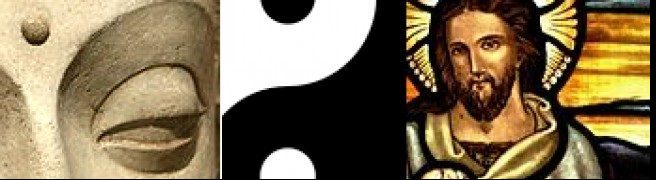
Anti-Christ Anti-Scientist

A few years back, National Geographic ran a photo essay on the Alaskan tundra. In the publication notes at the back, the photographer recounted a conversation with a native regarding the urban tourists that passed through each year. When asked to characterize them, the native, a man who lived in solitude for most of the year, remarked that “They seem lonely.” That loneliness reflects not a lack of human association Rather, it is a deep disconnection in our souls from the root of life.

This problem is so characteristic of modern societies that, in our search to escape our constructed reality, we tend to gloss over the defects of ancient cultures. Pagan worshippers extol the virtues of Roman worship for its naturalism, ignoring the paternalism that gave license to fathers to murder their dependents. The homeopathic intuition of native healers is lauded, ignoring the vicious lore of hexes and curses. And nobody appears to want to reflect that xenophobia was endemic to all the ancient cultures, with outsiders that looked and spoke differently treated as inferiors.

But if the ancient world mixed its spiritual vices and virtues, it is still fair to ask why the spread of modern civilization has resulted in a spiritual divorce. Naturally, critics seeking to heal the divide focus on the dominant elements of modern culture. I am sympathetic to these concerns:

  • Science applies methods of analytical reductionism to reveal creative possibilities. Unfortunately, reducing things to their constituent parts is not something that souls engage willingly: to do so would be a form of suicide. Therefore, science achieves its most impressive manifestations in the material realm. Scientists seeking funding for fundamental research have a strong motivation to ignore their failure to explain spiritual phenomena, and tend actually to pretend that souls just don’t exist.
  • Capitalism heralds the efficiency of the free market in responding to unforeseen public needs and opportunities. Unfortunately (as recognized by Adam Smith), the metric of success – the accumulation of wealth – is too crude to support political control of resource exploitation by the greedy. Worse, concentration of wealth has allowed the exploiters to broadcast rationalizations for their behavior, almost all of which cast the exploited resources as spiritually deficient, and therefore not deserving of protection.
  • The traditions of Abraham (dominated by Christianity in American society) tackle the problem of masculine aggression by heralding the power released through submission to unconditional love. Unfortunately, the target population persists in its aggressive recidivism, to the extent that scripture is often quoted selectively (when not completely rewritten) to justify destructive behaviors that are decried universally by the avatar(s). This perversion divorces us from the noblest masculine manifestations of spiritual maturity.

Given the problems outlined above, I would be surprised if it were impossible to assemble evidence that each of the three elements can facilitate depravity. The science of eugenics justified medical experiments on populations (both human and animal) that were considered to lack souls, and therefore believed to be unable to feel pain. Unbridled greed first drove the adoption of slavery in the New World – both of native populations and imported Africans, and now drives us pell-mell down the road to ecological collapse. And the “Great Commission” to propagate the good news of Christ’s resurrection has been used to justify violent suppression of indigenous cultures.

But is it fair to stop there? After all, is not the material construction of our modern reality, with its buildings, appliances and tools, far more conducive to liberty from fear than the natural world we inhabited previously with its predators, diseases, weather and natural disasters? Does not capitalism also distribute wealth and create monetary velocity that supports personal initiative, thereby providing an escape from exploitation? And have not the traditions of Abraham been foremost in providing charitable support of those in need?

For those seeking spiritual reconnection, this seems to leave us in a limbo of ambiguity. If we cannot find the seeds of disconnection in our history, then how are we to escape from the mistakes of the past?

The answer I have held out here is that the way out is to recognize that it’s not just about us.

One of the great gifts of the Bible is that it charts the progression of human spiritual maturity from the heralded “era of innocence” experienced by primitive cultures. In The Soul Comes First, I explain the Biblical days of creation as the history of the evolution of the senses as revealed by the souls that survived the experience. The Garden of Eden is a similar metaphor, in my view. It describes the ideal state sought by the pagans – man and spirit united to create a world of peace. But that unity is sundered by the serpent, who tempts the woman – the nexus of life-engagement – into partaking of the “fruit of the Tree of the Knowledge of Good and Evil.” For that sin, man and woman are cast out of the Garden.

As I expressed it recently to a friend, the great tragedy of the Fall was the sundering of trust. That trust was not only between mankind and spirit, but between man and woman. Ever since, we have been engaged in the sterile course of trying to fix blame for the problem. What we fail to realize, however, is that the source of the problem existed before the Garden. We did not create the serpent, although we were susceptible to its wiles.

We were cast out of Eden not because application of our intelligence was evil, but because we had admitted sin as a guide to our intelligence. Rather than allowing Life to guide our intelligence for good, we became committed to a course of resolving the difference between good and evil, and of developing the strength to choose the good. This is an extremely dangerous path, and the spiritual collective decides that we must be cast out lest we partake of the “Tree of Life” and live forever.

Again, we can think of this in material terms, but from the perspective of the soul of life, this is to say “if man, having admitted the serpent into his mind, enters into the Soul of Life now, then we will never be rid of the serpent.” In Revelation, this aim is made quite clear: the serpent/dragon attempts at one point to assault heaven, and is ultimately destroyed in the final confrontation with Christ.

But what is the serpent? The best way to characterize it is in the contrast between reptilian and mammalian parenting: while the mammalian newborn is nurtured for weeks or years before being forced into independence, the baby Komodo dragon must climb a tree to avoid being eaten by its mother. The reptile manifests the virtues of the predator, seeing in others only resources to be consumed.

So the problem is not science, or capitalism, or Christianity – it is with the ancient reptilian spiritual infection that we must purge. It is our path, on the knowledge of good and evil, to master that influence. It is a skill first encouraged in Cain (“sin crouches at your door, but you can master it”) and delivered by Jesus to the Apostles when he says “what you loose here on earth will be loosed in heaven, and what you bind here on earth will be bound in heaven.”

But until we as a species accede to the disciplines taught by Christ, we will discover, the further we walk with sin down the path of knowledge, the more distant will become our relationships with the Spirit of Life. Not because we can be expected to do differently, nor as punishment for our weakness, but as a matter of its own self-preservation.

The Physicist Contemplates Life

After I finished my graduate course in Quantum Mechanics, I came to realize that even in a blade of grass there is enough going on to humble the grasp of the human mind. The miracle of life’s operations, manifested in subtle chemical variation, constantly unfolding into new expression – we are embraced by a diversity of wonders far more magnificent than the rigid panoply of the cosmos!

Two Conversations

Down in Carson yesterday, I was trying to teach a young Hispanic girl how to shoot set-shots. I kept at it for a half an hour, and she just wanted to prance and play, so we didn’t get very far. That’s not true – she did get better over time, and seemed to improve in her accuracy. But after twenty minutes of encouragement and silly dancing around, she asked me:

How old are you?

Well, that didn’t seem fair, so I asked her how old she was. Then I told her I was more than five times her age. She kept on going with guesses until she learned that I was fifty-four. When I asked her why she asked, she said:

You act like you’re younger than that.

So I asked: “If I came here all serious and stuffy, would you be shooting baskets with me?”

“No.”

“But that’s what I’m here for. It doesn’t make a difference what you think about me – this is all about you. I work five days a week writing software and doing mathematics. But when I come here, it’s all about what works for you.”

My father says that if her parents find out, they’ll never let her come again.

And then this morning, to the priest who had just announced that he was leaving religious orders because his out-spoken passion for Christ had caused too much friction in the community:

As someone who has been told that his expressions of faith frighten people, my experience has been that sometimes I have to choose to say nothing, and let the broken heart of Christ within me speak for itself. Sometimes words will not do – we just have to let others feel what we feel. We have to take people into our hearts. It is as Jesus said: ‘Take my yoke upon you and learn from me. For my heart is humble, my yoke is easy, and my burden is light.’