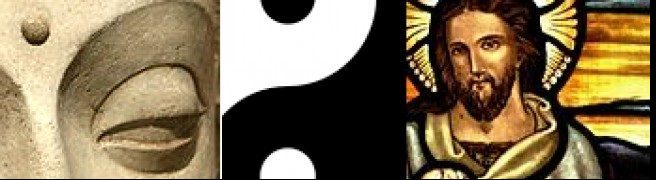
Islam and Christ

The Christian Bible is the story of how one people succumbed to corruption, thereby surrendering a privileged relationship with God, and then wandered in a spiritual wilderness until Jesus demonstrated the discipline to surrender himself in caring for the world. In navigating this process, God relies throughout on the law of natural consequences: when the people heed the inner voice that guides them, they prosper; when they disown it, they suffer. For this reason, while history trends steadily upwards, it has its high and low points.

What is true throughout is that God meets us where we are. That’s a source of a lot of confusion when interpreting scripture. For example, in Matthew 5:18, we have:

For truly I say to you, until heaven and earth pass away, not the smallest letter or stroke shall pass from the Law until all is accomplished.

And then Jesus undermines its authority (Matt. 19:8):

Moses permitted you to divorce your wives because your hearts were hard.

And in John 8:7, he says:

Let he who has not sinned cast the first stone.

So Jesus is saying to teach the law, but set it aside when it suits us? As a child “Do as I say, not as I do” drove me crazy. Or is this “Say as I say, but do as I do?” In either case, hypocrisy seems right around the corner.

The difficulty can be resolved with the understanding that different people are on different stages of the journey. The Law is a code of conduct that seeks to prevent the spread of moral corruption. For people without the tools to heal corruption, that discipline is essential.

Jesus introduced his Apostles to a new stage of the journey, making them healers of the flesh and spirit. As reagrds the Law, his is final teaching to them was [Math: 22:37-40]:

Love your God…and love your neighbor…All the Law and the Prophets hang on these two commandments.

However, this was not the entire Jewish people – it was only twelve of them. Was the law to be demoted for everyone, or only for those twelve and the others like them? I think only for the twelve and those like them. This does create some difficulty for those teaching Christianity that don’t claim to be able to do the things that the Apostles accomplished in Acts. Where are they on the scale, and how are they to lead their congregations into apostolic faith?

The solution, in the modern age, is that Christians chose the congregation that helps them take their next step on their journey to Christ.

Along the way, though, a stop was made in the Middle East. The Islam teachings of Muhammad (pbuh) came at the people of Mecca out of left field. There was no cultural tradition of Law. The community was at the level of Abraham in their relationship with God.

The Islamic path is therefore “The Middle Way” between the strict legalism of Judaism and the conditional morality of Christianity. It has rules – though far less pervasively than in the Law – that allow people to establish themselves in religious practice. While eliding Hebrew history, it upholds the character of the prophets as exemplars to inspire Muslims to maturity. Finally, it disintermediates the priesthood, upholding a personal relationship with Allah with promises of forgiveness and ultimately salvation.

The principle problem with this program is the divinity of Jesus. If he was the word made flesh, then the overwhelmingly difficult conditional morality of Christ stood as a barrier to Muslim practice. It meant that those that worshipped according to the rules would be second-class citizens in the faith. That the teachings of Jesus were received second-hand would be no obstacle to those interested in manipulating such divisions: there is enough in the Gospels to prey on the fear of those unprepared by experience and education to understand Christian moral philosophy.

To prevent this exclusion from the faith of those that needed it most, Jesus was demoted, being made only a prophet. This was extended to his crucifixion.

Should this make a difference?

The point of faith, as I see it, is to provide us with the strength to do good in the world. Most Christians find great strength in the sacrifice made by Jesus. But there are also those that flee Christianity because Christians cannot act according to that standard. If Muslims find hope that they can do good without failing the standard set by the Son of God, is that a bad thing? Particularly if their tradition holds out the hope that they will ultimately aspire to that standard?

I think not. I think that God meets us where we are, and that all that matters is the degree to which our faith encourages us to open our hearts to him.

Whose Free Will Is It Anyways?

“Let’s say that you are on a camping trip with your son, and he suffers a snake bite. What if there was a source of information, freely available everywhere in the world that could tell you how to prepare the leaves on that bush to make an antidote. Would you accept that information?”

“Nobody tells me what to do!”

That was a real conversation on a Boy Scout outing. I didn’t say that there was a connection between receiving the gifts of love and choices that we make elsewhere in our lives, but that was assumed by the listener. Not that I didn’t make different choices: I was the father that stayed behind on that trip when the other dads went off to gamble, or to the topless bar.

As a physicist, the whole proposition of free will makes no sense to me. Given the initial conditions of the universe, things will unfold according to the laws of nature. Given that I believe that the soul can be encompassed by our theories of nature, there doesn’t seem to be any room left for choice at all. We are simply machines moving through time. Choice is an illusion.

But we have choices forced upon us all the time, don’t we? When a vulnerable person turns to us for security in exchange for sex, we have to decide whether to be faithful to our spouse. When a problem in a contract threatens our company, we have to decide whether to miss coaching the youth soccer playoff game or risk being fired. Those are hard choices, but nothing compared to the man watching his children starve who puts a gun into his pocket and goes out to find money for food. Or in an abusive family, the sensitive child that turns to drugs to block out the psychic pain.

What does making any of these choices have to do with “free will”? It seems like there’s no good solution, at least no solution that allows us to feel good about ourselves. If we have “free will”, wouldn’t we choose to have better choices? And if God truly loved us, wouldn’t he give us better choices to make?

But the fact of the matter is that humanity creates our own choices. We decide to accept sex in exchange for the promise of security, when we could donate to charities that provide a safety net for people in trouble. The lack of that safety net pushes that man out the door with his gun. We could narrow our role in the family to “bread-winner”, never be that soccer coach, and vent our frustrations on that child.

This, then, is the Christian promise: God promises that your soul won’t be trapped in the bad choices you make. Your soul, when it sees the opportunity to receive love, will always be free to accept that offering. That may mean death, as so many Christian martyrs have joyously accepted as a surcease from their struggle against hatred, but they receive it willingly because they can feel God’s love reaching down to them in that moment.

Do you ever think whether God is free to choose not to rescue us when we are in need? Think about it: it’s certainly not easy.

When the adulterer is caught in the lie, is he still going to receive love from the spouse that promised to love in the name of God? When the abuser is finally caught by the social services, is she going to receive love from the child that was blessed with the emotional sensitivity to understand her sorrows?

No, because we were offered love, and chose to strengthen the parts of our spirit that don’t want to receive it. Of those parts that we have denied, we have to look for replacements, because often they have fled back to God of their own free will. Is it right for God to force them to come back so that we can try again?

This is the true miracle of this day, the day of the Savior’s birth. Unconditional Love came as man to prove that we have all the parts that we need right here. We have each other, we have the gardens and animals: we can choose to love them, and when that choice is abused by the recipient, God is there to fill us up again, and rescue us when the physical world rejects our gift.

You see, it’s not “free will” from love, which is the choice that only a crazy person would make. It is freedom from the crazy people that refuse love. It is the promise of an escape from the boot on the neck: we don’t have to succumb to the bastards that want control more than they want to share in our choices.

And for the crazy people, it’s the promise that there’s a way back that doesn’t depend upon fixing all the wrongs that you’ve committed. Eventually, yes, you will want to make up for them, but the door opens for free.

Did love have a choice? No. The sacrifice of Jesus was the only way that it could be done: Humanity was given the gift of intelligence to do this work of salvation of the world. It wasn’t enough. Love had to come in human form to show us how it was done.

But it was a gift given freely, of love’s own free will.

Religious Intolerance in the Military

I’ve been active on the Religious Tolerance group on Facebook. I declared my position fairly early on in a posting that stated “all great religious teachings serve to transform an existence driven by lies, fear and death into an existence guided by truth, hope and life.” However there are those that see me as a Christian proselytizer, largely because I quote scripture. This makes me sad. I write there because I believe that “Christian intolerance” is rooted in false teaching, and that if we look in scripture, we will find evidence to that effect. I quote scripture because I believe that it is the best tool that we have for combating intolerance masquerading as Christianity.

This is nowhere more evident than in those that use death threats in order to conquer institutions in “the name of Christ.” I have been made aware recently of the Military Religious Freedom Foundation, and the death threats issued against its members and their families by Christian militants.

We don’t have to attain much depth of spiritual experience before we become aware that spiritual evolution did not begin with humanity. The dominant personalities in the spiritual realm, prior to our emergence, were the predators that stand atop the biological food chain. These would have been the dinosaurs (which appear as the serpent in the Garden of Eden and the dragon in Revelation) and the bear and great cats (the mammalian predators) that appear in Revelation and Daniel’s Dream of the Four Beasts.

Revelation is best understood as the history of the unseating of predation as the driver of evolution in favor of intelligent engineering that is informed by unconditional love. This is not a clean and simple process, and is made more difficult because humanity has only a dim perception of the spiritual dynamics. What transpires in Revelation 13:11-15 is that the dragon dresses up as the lamb and empowers the mammalian predators to religious dominance. As it is written: “All inhabitants of the earth will worship the beast – all whose names have not been written in the book of life belonging to the Lamb that was slain from the creation of the world”, that lamb being Christ. Clearly, those that follow the beast do not follow Christ.

The beast continues to promulgate teaching that “anyone that does not worship the idol must die.” The beast famously bears the number “666.” While John points out that this is the number of man (who was created on the sixth “day”), six is also the number of the “day” of mammals that attained evolutionary dominance after the fall of the dinosaurs.

So what is directly written in the Bible is that the use of death threats is false teaching, and actually anti-Christ.

That this teaching is particularly strong in the military, which is an institution organized to harness the forces of predation, is not at all surprising. As I see it, those that resist this process, such as Mr. Weinstein and his colleagues, are agents of truth and life, and regardless of their profession of faith, are held in the heart of Christ with the most tender concern and honored regard.

Loving Women

For the last two years, I have been frequenting a restaurant down in Calabasas that has live music Friday and Saturday nights. One of the owners decided on Friday that I couldn’t dance there anymore. The band had come back on stage, and the floor that the DJ had filled up was emptied. I went out, as I usually do, and danced by myself, filling the floor up with joy. When I walked off, the party of twelve at the front table began applauding wildly. That’s when he walked up and told me to never dance that way again. I frowned at him, and asked “Why?”, and he just stalked off.

The bouncer came up and told me that, while he didn’t agree with the owner, he had been told to tell me that I couldn’t dance there. So I took my sweater and left. The manager intercepted me at the parking lot and made his apologizes as well. I asked him not to worry about it, and to have a wonderful holiday season.

The thing that cracks me up was that people have approached me and said that they had seen videos of me dancing on YouTube. The bands have approached me, too, just to say how wonderful it is to play when I’m there with them. So here I am, generating trade for this venue, never having hurt anybody in two years, and they basically throw me out.

While some rationale was put forward about liability in case of an accident, I have a sense that something else was going on. There’s a group of four gigolos that hang out there, and they’ve been really proud to make a point of setting the owners against me. One of them in particular is actually dangerous: his “come-on” move on the dance floor is to trip the lady and throw her over into a deep back bend. I’ve actually seen girls walk off the floor in pain. Recently I had a woman ask to dance with me, and the first thing out of her mouth was “no back bends”. I had a pretty good idea who had put that into her head.

Their problem is that they can’t pick up women when I’m on the dance floor. We just get this glow of joy going. While I’ve had women come on pretty strong, for me it’s not a sexual thing. It’s just the joy of feeling what women feel when they no longer have to fight off the dirt that the world heaps on them.

There’s a “Freedom From Religion” group out on Facebook that cross-posts to the Religious Tolerance group. I decided to go out and see what their dialog is like on their home turf, and the first post quoted a male sympathizer of the women’s suffrage movement. In summary, the quote said that the Bible was a piece of trash that never taught anything of value to anyone. The issue of the day, of course, was the admonition in Paul’s letters that women should be “submissive” to their husbands, which was used by some to justify the denial of voting rights to women.

I have to admit, until you get to Luke, the Bible is really not good to women. When I was at Torah study one day, a young lady got really upset about that, and I leaned over and whispered: “You know, you’re right. But the Bible is all about men’s problems.” We weren’t good enough for you ladies, and that’s part of why Daniel 11:37 describes Jesus as “the one desired by women.”

So what is the problem with men? Well, we’re designed to change things. Unfortunately, the easiest way to change something is to break it. I see so many men struggling with this, and I have to say, I have submitted myself. What’s kept me steadiest is the strong sense of feminine approval I receive when I try to fix things. Mostly, of course, that’s fixing people’s hearts, and women bring me a lot of opportunities. Not just to work on them: women feel things deeply, and carry people around with them.

So: thank-you for being what you are. Please just try to remember that you’re supposed to feel that way all of the time. And grant me the benefit of this testimony: the example of Jesus is what made me what I am.

On Dying

When I sat down with the pastor at St. Maximillian’s to discuss my spiritual journey, the pitch was pretty blunt: “Tell me, Brian, do you want to die, or live forever?”

Today, I have arrows in my quiver that I didn’t have then. “For whoever wants to save his life will lose it, but whoever loses his life for me will find it.” [Matt. 16:25] Not that I wasn’t concerned about survival then, but that concern was overshadowed by incredibly powerful dreams. I needed somebody to help me sort through them, so the response he got back was a disappointed stare.

Now I didn’t expect to die, so the sense in which I was losing my life at that time was that held by most people reading Jesus’s words. My way of living was being consumed by powerful forces that I could not overcome with force. The only weapon that I had was my heart. I was committed to surrendering myself to loving, no matter the cost.

But in an earlier era, most people would have taken those words as a literal pronouncement: those that perish for me will find life. Certainly death was part of the early Christian experience, with thousands of martyrs to the faith. But how is that “for Christ”?

We celebrate sacrificial nobility in those that died in combat securing our freedom. That was perhaps also the understanding of those that died fighting for the faith during the Crusades and other Christian wars. But how does that square with the first part: “Whoever wants to save his life will lose it”? Doesn’t every warrior wish to return to home and family?

Christ died on the cross to bring perfect love into the world. In Matt. 10-38, he admonishes “…he who does not take his cross and follow me is not worthy of me.” From this, it seems clear that to die for Jesus is dying to bring love into the world. That is hard, because the only reason that our lives are not filled with love is because we chose, of our own will, to reject it. Why would we do that? Because we’re infected with a disease called selfishness.

Look at what Jesus did on the cross: he submitted to the religious and secular authorities of his age. They forced their wills upon him, and he did not resist. Because of that, they became stuck in his compassion. He infected them with the seeds of loving.

Obviously, that is taking a great long time to work itself out. But the message is that dying is nothing to fear, at least so long as the manner of our dying is to bring love into the world.

Now Jesus’s surrender to evil was obvious and dramatic, involving public orations and processions. Very few people in Jerusalem would have been unaware. For most of us, taking up the cross is a lonely, silent affair. We don’t wrestle with Satan in all his power, we wrestle with petty evil in spouses and bosses, employees and rapists. That can have its toll on us. A family member once shared an anecdote about a visit with a rich business partner, a man that took his children up to the top of a building to throw paper airplanes down into the streets in violation of a sign that said “Do not throw paper airplanes.” (Think about it: would you go out of your way to do that?) This was a pattern in his business dealings as well. His wife was a twisted crone, beaten down by the burden of the anger that the world had mounted against her husband.

How long should we struggle against the burden of others’ sin? Only so long as we can face it without falling into fear. Trying to live with uncontrollable pain is heroic until we lose our heroism. Then it becomes a slow cancerous submission of our souls to evil.

Is there hope? Always, but Jesus offers the guarantee this way: “whoever loses his life for me will find it.” Jesus could have chosen to hang on the cross in suffering, suffer into eternity. But he did not because he knew that another life awaited him. He knew that to attain that life he needed to surrender his body.

Thus it is with those that suffer pain in this world, pain brought on by their sin and the sins of others. They need to lose their bodies to selfishness, to let it wind itself into their flesh, and then to escape into death, purified in spirit as was Jesus. It is thus that we weaken evil by trapping it in decaying matter, and free those portions of our soul into loving as are willing to accept love.

So when you pronounce against death, remember that death was Jesus’s tool of choice. Look into the soul of the person dying, and do not push them past their ability to endure. Do not block that moment of release, lest you stretch it into a torment of possession.

Rather, send them off with that most tender of incantations: “S(he) has gone to a better world.” With that little push too empower them, perhaps they’ll be motivated to look back in time when they get there, and reach out to pull us through behind them.

The Philosphical State

I studied my moral and ethical philosophy with Albert Tussman at U.C. Berkeley. He taught there well into his 70s, I believe, and resolved to give it up when a coed popped her bubble gum before his lecture. I guess that her action crystalized his sense that nothing was sacred to the generation he was teaching.

His wisdom to me was granted one Spring day when he broke out of his office hour to take me out on the lawn under the clock tower. He allowed me to unburden myself of my concerns for the future. When I finally realized what a great honor he had granted me, I asked what he considered to be the most important source of philosophical understanding in our age. His response is relevant to this discussion: the decisions of the Supreme Court. He supported the judgment with the observations that they decided matters that had to be implemented by systems that were critical to the survival of the citizens of the nation, but that they had absolutely no power to effect change. Thus their decisions had to be crafted in a way to build consensus between the parties in the matter.

Philo sophia“, indeed.

So what about academic philosophy? Well, these are people involved in far more abstract issues regarding the accessibility of truth and the nature of human experience. These become esoteric for at least two reasons.

The first is the categorization problem. As in the sciences, we start with coarse categories of experience and then, when that coarseness frustrates our powers of explanation, we refine. That means a never-ending progression of inventive vocabulary that ultimately leaves the common man standing out in the hallway (metaphorically). What becomes even more interesting is when thinkers in two traditions of philosophy try to reconcile their categorization schemes. Ach! Me noggin!

The second is the desire to maintain lineage so as to preserve as much from the past as possible. Now the Supreme Court is going through an activist stage in which this principle is less important, but in general philosophers are wary of throwing anything away. This means that they tend not to reclaim words used in the past, but rather to invent new ones.

My clearly stated intention at everdeepening.org was to buck this latter trend. I set out to reclaim words in common usage to try and help people out of the moral and ethical morass that imprecision of everyday use has bequeathed to us. First and foremost of those words was “love.”

Imprecision in everyday use is mostly a problem when power is conditioned upon avoidance of responsibility. When the shit hits the fan, a typical sound bite is “Well, that’s not what I understand the word to mean”, or “But that’s not what I meant.”

I was put onto this by the confusion regarding the phrase “I love you”, which I realized meant, in most usage, “I love myself.” In other words: “I feel good when I’m around you – let me  use this token to bind you to me.”

While the power of precision has been valuable to me in managing my personal relationships, it’s been essential to me in surviving my spiritual engagements. When we know what it means to love others, we know what it means to love ourself. That understanding has protected me from a lot of harmful associations that presented themselves with a great deal of shiny glitter.

Interstellar

Christopher and Jonathan Nolan’s meditation on the meaning of love is a heartening departure from the “shock and awe” tendencies of modern science fiction. The oversight of executive producer and theoretical physicist Kip Thorne ensures that the semantics of the dialog is coherent. While I don’t believe that the theory of wormholes is going to hold up in the long run, that consistency does ensure that audiences will not be too confused to grasp the central message: there are experiences that are accessible only to people joined in loving relationships.

While there is a great deal of beautiful deep space imagery in the film, the dramatic tension comes from the human response to a terrible crisis: the loss of agricultural productivity to wide-spread blight. At the low end of the social scale, the desperate struggle of farmers develops, over the years, into a stubborn determination that extinction, when it comes, must be faced in the company of those we love. At the opposite end are the privileged scientists and engineers of a “Noah’s Ark” project, launching explorers through a worm hole into another galaxy – explorers that, despite the nobility of their intentions, suffer very natural moral and psychological collapse due to the futility of their lonely efforts.

On the one hand, I am disappointed that it is the most violent and destructive of all astrophysical phenomena that is advanced as the backdrop for the discovery of the subtle power of love. I could complain that the team of explorers could not possibly have survived the challenges they faced. However, that would detract from the main proposition: they succeed because they care. Ultimately, that caring links into a chain of causality that loops back in time when human consciousness escapes the confines of our familiar reality. I guess that I would have to admit that it is no more difficult to swallow than the Savior returning to life after his own journey through time.

On the other hand, the film pays homage to Earth in subtle ways. I waited through the end of the credits and learned that the movie was shot in film. The beautiful planetary settings can be enjoyed right here.

But, of course, so can all of the sublime miracles of loving. Let’s hope that this film helps to open the minds of a generation that has been fed on destructive pap that preaches success through balls-out aggression. They need to spend more time understanding the nature of personality. I am a firm believer that we shouldn’t abandon the Earth, nor do we need to. We simply need to restrain our selfishness and apply ourselves to helping it heal itself. There’s far more power available to us than is required – we simply need to surrender our personal concerns and use it to love the nature that we’ve wounded.

It would help if the behavioral psychologists would stop telling us that it’s improbable, not to speak of the physicists who believe they have proven that it’s impossible.

The Most Painful Choice a Woman Can Face

My introduction to the trauma of unwanted pregnancy occurred one night when the women of our household disappeared at dinner time. I discovered them clustered in the front doorway, speaking quietly in frightened tones. A girl had gone to Mexico and not come back. When I asked my god-sister why she had gone there, I was told because she was afraid to tell her parents that she was going to have a baby.

Abortion is a procedure that yields no victors, only victims. For that reason, debating the matter yields no winners. But it’s important that the debate not be grounded in the evasion of lies, fear and death, but in the pursuit of truth, hope and life. So I’m going to offer my understanding of the issues from that second perspective.

Life is the integration of matter and spirit. I’ve participated more than once in the consummation of that binding during pregnancy, and it doesn’t necessarily occur at conception. Only a mother can be certain when the binding happens, and I would hope that makes a huge difference to her.

The nature of the spirit that is carried is important. We don’t fret too terribly much when a surgeon divorces us from cancerous tissue and the destructive spirit it anchors. In that light, insisting that a woman carry to term a baby that was forced into her by rape seems to be cruel. Similarly, the spirit of a child that gestates in a substance abuser might deserve relief from a toxic environment.

Does that mean that the infant spirit is guaranteed to depart following surgical removal of the fetus? Not necessarily. The womb is designed to anchor an infant’s spirit as much as to nurture its body. Of course, pregnancy isn’t necessary for a lady to suffer from spiritual pollution of the womb. I have rescued a young woman ruined by a single night of casual sex with a destructive man.

Cleaning up that kind of mess is done most effectively by offering the infant spirit a better alternative. Sometimes that is as simple as pointing out where other opportunities lay, but may include suggesting that it will have a better life if it hangs around until the mother gets into a stable relationship with a supportive and loving father. Such post-pregnancy tenancy happens more often than one might imagine, particularly when the mother desires to have a baby at some point in her life. Surgical abortion isn’t the only cause: 60% of all pregnancies abort spontaneously.

I’m the result of a union with such a hanger-on, who sits on my right shoulder. He came into the world to help me with a problem I’ve had in past lives. When somebody offered to remove him for me, I felt rather a sense of gratitude that God had provided me with such a companion. When a woman is too weak to resist the sexual demands of predatory males, she might find a similar benefit to have parts added until she develops the strength to say “no.”

That summarizes the theory and personal practice. What about Biblical injunctions? This is tendentious. In Genesis we are enjoined to “be fruitful and multiply”, but Jesus obviously didn’t feel a need to pursue that practice, and offered women non-traditional roles in his ministry. We should also not overlook the holy favor showed to Perpetua of Carthage, a mother still breast-feeding when she was martyred for her faith. Clearly the purpose of women in God’s plan goes beyond child-bearing.

“Thou shalt not kill” is also frequently invoked, but that’s not entirely consistent with the rest of the Judaic Law, which commands capital punishment for a number of offenses, including occupancy of a coveted territory or unrecognized Messiah-hood (the offense that allowed the Savior to prove his divinity). You can’t ignore the Father’s flexibility on this point. The inconsistency is resolved in Jesus’s observation that “all the law hangs” on love of the Father and our neighbors. That suggests that everything else in the law is conditioned upon circumstances.

So where, vis-à-vis abortion, does that leave us as Christians?

Well, first, we must invest in ensuring that women understand the sacred nature of their wombs. This goes well beyond motherhood. The womb is a place for the binding of spirit to matter, and that skill can be projected into the outer world as well. For this reason, Daniel 11:37 foretells the Messiah as “the one desired by women.” To anyone that has seen what happens to a woman when she is offered love to bind to the world, that obviously isn’t limited to emotional yearning. When a women uses her skill to bring unconditional love (which is Christ, of course) to a hungry world, the world vibrates with joy all through her. Yes, it’s incredibly sexual, and if we encouraged women to accept that joy then maybe they wouldn’t be so willing to let boys make a mess in them.

When we fail to encourage women to bind themselves fully to the unconditional love that is their due, well, they are going to face temptation, and some of them will submit. What happens in the eventuality of an unwanted pregnancy is between the mother, the infant spirit, and God. Whether a surgeon is involved or not is really incidental: a spiritually potent woman can manage the process without medical assistance. Among those not so gifted, some will find themselves encouraged to carry the baby to term by a supportive community, and some will be so enamored of the infant soul that they will bring the baby to term against all obstacles. Our job as Christians is to ensure that every expectant mother makes her decision in a supportive, loving environment. If she makes a choice that we disagree with, then our job is to provide love and counsel to help her heal and develop the strength to avoid a repetition of her error.

Under no circumstances should we use anger and shame to force an expectant woman into an outcome that she fears. For those that insist on that path: you assume the onus of ensuring that her child has all the advantages in life that yours do. After all, it was your will that brought the child into the world, so it’s really your child.

What about the innocent victim, the wounded infant spirit? That can be subtle. I knew a man with a really complex sexual identity. He served in the Navy for a number of years, and once spontaneously deciding to dress up in drag just before leaving port, creating a real stir on the aircraft carrier as the men raced about looking for a female stow-away. I ultimately came to understand that he was chaperoning the spirit of the daughter that he had sworn to protect, and who had clung to him in a past life as they perished in a shipwreck. She needed this life with him to restore her trust in living.

I could go on with examples, but the point is: don’t focus on how terrible the experience was, reach out to the infant’s spirit and show them how beautiful life can be. Don’t let them be trapped with someone not mature enough to raise a child. Open your heart to them, and help them find a home in a community that knows how to love.

You see, the moment of death really isn’t so long as compared to the span of our living. Dying is something that we suffer again and again. What’s important is that in each dying we come closer, step by step, to a life filled with loving.

Executive Privilege, Restrained

One of the challenges in ruling ancient Rome was that, as a Ponzi scheme run for the benefit of the senatorial elite, the government was often unable to meet its obligations to its veterans. This could lead to some unruliness. One of my favorite images is that of Octavian strapping on his armor to confront an angry mob demanding compensation for their service. He was rescued by Marc Antony and the Praetorian Guard, but I have to admire the courage Octavian demonstrated in choosing to come face-to-face with the people affected by his mismanagement.

At the other end of the scale we have the touching image offered in Revelation 4. Unconditional Love sits on a throne in heaven, surrounded by angels that channel the gratitude offered by all the living creatures on earth. The isolation of love is tragic. Remedying it seems a likely goal of Jesus’s promise to “remake heaven and earth.”

Somewhere between these two extremes of executive authority we have the modern CEO and head of state, in whom are gathered all of the defects of power, remoteness and corruptibility.

America’s constitutional system was designed to limit the power of the head of state. One of the principle abuses of royal authority in Europe was the use of charters to transfer control of markets to the nobility. This inhibited the rise of institutions with the wealth to defend the common man in disputes with the nobility. To guard against that in the new federation of US states, three branches of government were established with distinct powers.

George Washington, the first president, observed that his principle function was to encourage development of the nation’s resources. He was a booster for private business. The Native Americans bore the worst of this link between development and government. In one particularly egregious instance: The Cherokee of Georgia had actually begun to assimilate when gold was discovered on their land. Greedy speculators supported passage of the Indian Removal Act in 1838, and the Federal Government forced the Cherokee from their lands.

The cozy relationship between business and government became abusive in the late 1800’s. Deflationary policies ensured that the purchasing power of idle capital continued to increase, with the side-effect that farmers could not pay their obligations and were thus forced off of their land. Attacking these hypocritical policies was made more difficult because the Federal government lacked the financial means of the interstate corporations. Unchecked, the robber barons of the period, with their company stores and abusive working conditions, lined their own pockets at the worker’s expense.

Breaking up this social disaster was largely the work of the Roosevelts, Theodore and Franklin. Theodore was an army officer, and associated with men who were forced into the army by the loss of their lands. He was the president that stood up against the banking system and supported unionization against the violent resistance of owners. Franklin, who as governor of New York had witnessed the worst of the industrial hygiene crisis that beset the nation, betrayed his own class to ensure that a federal safety net was secured for vulnerable workers when the Great Depression paralyzed industry.

Roosevelt’s “New Deal” posed a challenge to our constitutional system with the creation of federal agencies administered by the executive branch. Congress no longer had the means to check executive power when so much money was allocated to agencies under the President’s control, and the courts were required to wait for whistleblowers to step forward with a complaint before they could intervene.

While you would think that it would be the liberal parties that would step forward to check this imbalance, in our day it is actually the conservatives leading the charge. This is because they share the agenda of business leaders seeking to limit the influence of the government on their operations. This is particularly strong with oil industry executives that want to prevent regulation of CO2 emissions. The power of business in the party was evidenced in 2012, when the flood of tea party money from out of state cost the Republican Majority Leader his seat in the House of Representatives. His crime: negotiating with Democrats on budget and immigration issues.

What bemuses me is that there’s another way to solve the problem besides trying to shut the government down. The mechanism of modern corporate structure are designed to ensure that majority shareholders don’t abuse the rights of minority shareholders. Corporate policy is set by an elected board, with implementation by a professional staff serving at the pleasure of the board. The public record-keeping required of the board ensures that abused shareholders have the opportunity to seek redress.

To ensure that the President did not abuse his powers, the constitution could be amended to make the president’s cabinet the chair of departmental boards, with the remaining members selected by 2/3 vote of Congress. Implementation would be through career civil servants. The president would retain his unilateral authority as command-in-chief. While limiting the opportunity for misdoing by the executive, this program would also reduce the political value of Congressional witch-hunts, as Congress could no longer say “we didn’t know.” They could invest the recovered with the business of the legislature – which is to debate and pass bills.

As for the corporations: they’ve come quite close to restoring the halcyon era of the late 1800’s. The injustice, as in the era of the Roosevelts, is that they acquire their wealth under the auspices of the government. Government, after all, is simply a system for negotiating the rules that control the distribution of power throughout the society. That can include procedures that seem somewhat abusive. For example, when a board awards a huge stock option to an executive, a legal transfer of wealth takes place from the shareholder to the executive – without the direct consent of the shareholder. The government enforces the legitimacy of that transfer. It’s seems reasonable that the people should have the option to recover that ill-gotten wealth through progressive taxation.

Why Physics is Important

For roughly 1400 years, from the time of Ptolemy until Kepler, the most accurate method for calculating the motions of the planets assumed that the Earth was at the center of the universe. Ptolemy used a model of perfect circles. To account for observations that showed that the other planets sometimes appeared to reverse their direction of motion, circles were added on top of the circles (somewhat like the moon Deimos moves in a circle around Mars as it moves in its own circle). The size and velocity of the circular motions were calculated by comparison to nearly 800 years of observations of planetary motions. The care taken in that work made the tables of Ptolemy the best means of predicting the position of the planets until Tycho Brahe made more precise measurements of planetary motion in the second half of the 16th century.

The problem with Ptolemy’s model, when the telescope was finally improved to the point that we could observe the moons of Jupiter and the positions of the stars, was that it didn’t allow us to predict the behavior of anything else in the sky.

Did anybody care? Not particularly. What was important was to know the position of the planets precisely for purposes of navigation and agriculture, and the more arcane and less reliable discipline of astrology (predicting the future based upon the configuration of the planets against the stars). Until, perhaps, generals became concerned with the trajectories of cannonballs. Then the work of Newton, inspired in part by Kepler’s laws, produced a universal theory of gravitation that could be used to predict the motion of any collection of massive objects.

All of the great advances in science have come when a large body of data is shown to be encompassed by a simple behavioral theory. Newton’s theory of gravitation assumes that the force exerted acts along the line between the two masses, and drops as the distance squared. Often, however, these behaviors are overlooked because scientists, like Ptolemy and his followers, can do pretty well simply by adding more shapes to their models. It doesn’t make a difference that the only reason circles were used was because they were perfect (and therefore easy to calculate). As long as you could get the right result by adding more circles, that was easy and comfortable.

Those of you that stick with this blog will learn that I believe that we are at another turning point in physics. Since 1950, the theorists have assumed that the objects they use to describe the universe are “perfect”: they have no additional structure. As their data became more and more complex, they stuck with this principle, despite the fact that every revolution in physics has come from discovering structure inside of things that were previously thought to be fundamental. Matter was discovered to be made of atoms; atoms are made of electrons and a nucleus; the nucleus is composed of neutrons and protons; neutrons and protons are made up of inscrutable objects called quarks. These insights gave us, successively, chemistry; optics and spectroscopy; radioactivity; and particle physics.

Like Ptolemy, the theorists draw upon a huge body of measurements that provide numbers that they can use to accurately predict the results of experiments. They are so successful in this regard that they have stopped asking “why” about the numbers. Why is the electron mass 0.511 MeV/c2 while the muon mass is 140 MeV/c2? As a graduate student, this drove me absolutely crazy. Mass is a primary fact about the universe, and the failure to adequately explain it means that nothing else in the models can be considered secure.

So why am I going on in this in a blog about religion? Because I think that we’re in the same boat with ethics.

The most powerful theories of moral action have been brought into the world by people that insist that there is a soul. Yet over the last 300 years, those moral theories have been slowly eroded under the skepticism of scientists that can’t find the soul anywhere in their models. Thomas Jefferson, for example, went so far as to remove every reference to miracles from his personal copy of the Bible, and considered Jesus of Nazareth to be merely an inspirational philosopher.

This impact of this perspective has propagated so deeply into our religious dialog that our focus is now primarily on material facts. Does life begin at conception? Is it possible for natural selection (Darwinian evolution) to generate a human being? If marriage is the seat of the family, how can the sterile union of a gay couple be marriage?

So the reason that I bring up physics is because when I began to consider models of structure beneath that known to modern particle physics, I came up with a large class of models that contain a soul – a personality independent of a material body. The theories also support the ability of souls to accumulate large amounts of energy. The most efficient way for them to organize energy is to love one another. That insight allowed me to evolve a whole array of methods for controlling predatory personalities, methods that are suggested in all the myths regarding the exemplars of love that gave us our most powerful theories of moral action.

In other words, I believe that I can prove that Jesus and Muhammed and Buddha were right.

And I hope that I can give women enough courage to stand up and be counted in their number.