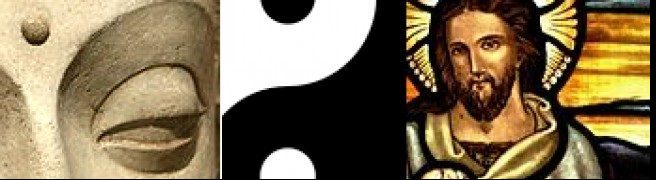
How Christ Tranforms Evil

In “Christ is Risen”, Matt Maher encapsulates the message offered by so many celebrants at Easter:

Christ is risen from the dead,
Trampling over death by death!
Come awake! Come awake!
Come and rise up from the grave!

Oh, death, where is your sting?
Oh, Hell, where is your victory?

It is a message of conquest.

But those that have survived a near-death experience tell us that as they drifted into the light, they saw all their loved ones reaching out to call them forward, and behind them shone the loving embrace of Christ.

Jesus did not conquer death: he entered into our greatest fear and transformed it into a conduit through which love is brought to us.

Understanding that conflict justifies evil, I have been negotiating with sin for the last fifteen years, offering the exhortation that love will not destroy it, but bring it into greatness. In that process, I have been assaulted psychologically, night and day, by people that exercise sin to gain power over others. The struggle has been exhausting.

This morning, I find myself in a different place. I turned the problem around: rather than resisting them, I envisioned the light of Christ shining through me, then through them and onto those that they oppress. The closer they press against me, the closer they come to the light, and the more brightly it shines from them.

Maher begins his song with this exhortation:

Let no one caught in sin remain
Inside the lie of inward shame.
We fix our eyes upon the cross
And run to him who showed great love.

Those that rely upon sin for power run in the other direction, of course, and build their castles to wall out the light of Christ. Death is their final tool – the means by which they weed out those that insist upon loving. Every Christian that keeps his eyes upon the cross defeats that strategy: they make death the means by which Christ enters into the darkness, bypassing all the walls of the citadel.

How does Christ protect his faithful? Because even thinking about bringing harm to a true servant of Christ calls him closer. Those that would sin against the faithful must flee their ramparts into the wilderness.

At the beginning of his ministry, Jesus offered this counsel:

“You have heard that it was said, ‘Eye for eye, and tooth for tooth.’ But I tell you, do not resist an evil person. If anyone slaps you on the right cheek, turn to them the other cheek also.
[NIV Matt. 5:38-39]

And for those strong enough, even more:

“You have heard that it was said, ‘Love your neighbor and hate your enemy.’ But I tell you, love your enemies and pray for those who persecute you, that you may be children of heaven.
[NIV Matt. 5:43-45]

What I see now is: it is the miracle of the cross that guarantees the efficacy of this conduct! Death was not vanquished, it is the very tool by which we redeem one another!

Robbing Peter to Play Paul

In an era in which the Law of Moses had been corrupted as political tyranny and religious hypocrisy, Jesus would not have been expected to write a Gospel. Scripture is offered to us as a method to open ourselves to the love of God, but words change meaning over the course of time, and eventually the weight of our cultural prejudice stands as a barrier against the Divine Presence. As Jesus experienced, even worse can occur when the meanings are manipulated intentionally.

It was in recognition of this outcome that God proclaimed through Jeremiah [NIV 33:34]:

I will put my law in their minds
and write it on their hearts.
I will be their God,
and they will be my people.
No longer will they teach their neighbor,
or say to one another, ‘Know the Lord,’
because they will all know me,
from the least of them to the greatest,
For I will forgive their wickedness
and will remember their sins no more.

Jesus was the implementation of this promise. The proof was not in his words, which are always ambiguous, but in his actions.

In The Soul Comes First, I explain Jesus’s promise that his generation will see the fulfillment of his prophesy: On the cross, Jesus was unbound from time, and worked his way through the future until his will for Humanity is manifested. Then he returned in the glory of his realm to return to the Father. In that process, Jesus had no need for words – it was through his flesh itself that the work was done.

But, for those stuck in the flow of mortal time, how were those moments to be bridged? That requires propagation of the message of salvation. The original Apostles, fishermen and tax collectors, simple men of Galilee, had limited reach for this purpose – but they had direct experience of Christ, and had been humbled by their lack of faith. This is reflected in the kindly advice of Peter, in his second letter [NIV 2 Peter 1:5-9]:

For this very reason, make every effort to add to your faith goodness; and to goodness, knowledge; and to knowledge, self-control; and to self-control, perseverance; and to perseverance, godliness; and to godliness, mutual affection; and to mutual affection, love. For if you possess these qualities in increasing measure, they will keep you from being ineffective and unproductive in your knowledge of our Lord Jesus Christ.

This is a message of personal redemption through direct relation with Christ.

How was such a message to spread in the face of a culture of tyranny and hypocrisy? Long and slow it would have been. So this is where Saul of Tarsus comes in. Roman citizen and temple persecutor of the Christians, like Moses, Saul understood the mindset of the ruling classes, and the processes that would avail to bring him into direct dialog with them. As a Temple priest, he also understood institutional practices. Reborn into faith as Paul, this apostle was a traveling consultant to Christian communities in formation. As a philosopher, Paul also provided the early Christians with a framework for understanding the events that had transpired in the Holy Land, including clear statements regarding the implications with respect to past teachings.

Obviously, these are incredibly powerful works, and a source of rich guidance for pastors trying to manage diverse congregations and reconcile Old and New Testaments. In many non-denominational congregations, I find that Paul’s writings are preached more often than the parables of Jesus. Paul is clear and direct, while the parables of Jesus often leave me wondering “WTF?” (until I work out that Jesus wove in three meanings for three different audiences).

But is the voice of Paul the voice of Christ?

I would argue “only mostly.” Paul has a terribly serious defect: his religious roots rest in a framework dominated by sin, and his personal redemption occurred as a result of his sin against Christianity as a whole. Paul carries a guilty past around with him, and so his theology is dominated by a concern for forgiveness, and the miracle of redemption.

Peter, on the other hand, offers this promise [NIV 2 Peter 3:8-9]:

But do not forget this one thing, dear friends: With the Lord a day is like a thousand years, and a thousand years are like a day. The Lord is not slow in keeping his promise, as some understand slowness. Instead he is patient with you, not wanting anyone to perish, but everyone to come to repentance.

I much prefer the simplicity and directness of this promise. It is echoed in Paul’s writings, but as Peter says [NIV 2 Peter 3:16]:

His letters contain some things that are hard to understand, which ignorant and unstable people distort, as they do the other Scriptures, to their own destruction.

Sometimes less is more. I’d lay aside the rules offered in Paul’s letters, and focus on the progression defined by Peter. Leaving much to be discovered, it is harder work, but comes from one who learned most painfully from a more immediate experience of Christ.

You-Say-I-Am

In the last week of his life on Earth, Jesus brought his verbal sparring match to Jerusalem, where was gathered the authorities of his age. Welcomed enthusiastically by crowds expecting him to transform their political and religious reality, Jesus instead proclaims the kingdom of heaven and his impending destruction.

Sensing weakness, the temple priests swoop in for the kill. Perhaps advised by spies that Jesus had been proclaimed the Son of God, and certainly with the evidence of his tirade in the temple, they summon him to pose the question directly: Is he the Messiah, the “King of the Jews?” However, if they thought that Jesus was on the ropes intellectually, they were mistaken. For in answer to their questions, and the questions of Pilate and Herod, he simply answers “You say I am.”

The Gospels give us no punctuation for this statement, and so it is generally read passively, without emotion. But we cannot imagine Jesus without emotion in this moment, not given the throes of passion just evidenced in the Garden of Gethsemane. There must have been something there, besides simple resignation.

So what would the emotion have been? That of the man pleading “Father, take this cup away from me!” – a petulant “You say I am.” That is to observe “Would you face the consequences of that admission? Then why do you expect me to say it?”

No, Jesus was a man of greater heart than that. Perhaps, then, it was “You say I am!” The proof of the statement was in their actions, this desperate attempt to preempt the rallying of the people to him after his non-violent provocations against their authority. If they did nothing, he would indeed become king, a king brought to authority by God, rather than by human methods.

Or was it a prophetic proclamation? As David had proclaimed his suffering twenty generations before, was Jesus merely observing to Pilate, “You say I am!” The ultimate authority of Rome, the Emperor himself, will one day proclaim Christ the Lord!

But there is another thread, the thread that starts with Israel being told “I am that I am”, and continuing with the challenge to Peter “Who do you say I am?” It is the prompting of God through the ages that beseeches us to trust our hearts – to hear the still, quiet voice that Samuel counseled the Israelites to rely upon over the institutions of men. It is a voice of hope, still hoping against hope that the pain and suffering could be avoided. Not just the endurance of the cross, but all the religious wars, the starving children, the women demonized and abused for sexual gratification, and the wasted words of political dispute when only compassion can light the road to justice.

It is the hope of rejoining human institutions to the divine purpose.

It is to encourage:

You! Say I am!

Are we prepared to do that now? Not just if he came down in glory – but if he came as he did before, a man with all the frailties of flesh. Would he be recognized? And if not, why would he return?

Only to die again?

Healing is a Messy Process

I was heading to San Francisco Airport to catch a flight out to Washington D.C., and was glad that I had left early. Traffic down the 580 to the 238 was an absolute disaster. I could feel the tension and frustration in the air as traffic crawled forward. I put out the thought that we should try to give that energy to the emergency crew working to clear the accident. When I finally reached the scene, they were just loading the victim – a motorcyclist who had gone under a car at high speed – into the ambulance. I could feel his spirit swirling in the air, terrified of the prospect of re-entering the broken body. Firmly, I projected, “It’s time to put yourself back together.”

“Why,” we might ask ourselves, “why does God let things like this happen?” All the wasted time, the pain and frustration: can’t he do any better than that?

I can’t give a answer that is going to bring consolation. The only answer I have is of the “that’s just the way that things are” kind. Unconditional Love, which is the foundation of God, does not judge. Why? Because if it judged, it would justify the use of force, which would give authority to destructive spirits.

So what can Unconditional Love do? It can echo the “yes” of things that feel joy. It can enter into productive and healing relationships and support them with its presence. Jesus put it this way [NIV Matt. 18:20]:

For where two or three gather in my name, there am I with them.

Not with one alone, but in even the smallest group.

Simply, Unconditional Love supports things that work for us together, but it’s up to us to find those things. It doesn’t prescribe for us – it doesn’t want us to kneel and pray if that doesn’t work for us. It doesn’t want us to bear lashes if that doesn’t satisfy our sense of justice. But neither will it deny the martyr the grace of surrendering life to prove to the tormentors that love is stronger than fear, and thus to infect them with love.

Why do bad things happen to good people? Really, because their light is needed in the darkness. Yes, it’s painful, but if in those moments more of us took the attitude

Dear God, help me to shine brightly so that the captives can see freedom, and those that persecute me can see that their abuse only serves to liberate my spirit into knowledge of you.

Well, things might go a little bit faster. No, we won’t avoid pain, but we will have the security of knowing that our suffering has a purpose, just as did the suffering of Jesus. No, not every tormentor will chose healing, but when the light becomes bright enough, they will be forced to flee.

Forgiveness of WHAT?

With the exception of Jesus’s ministry, the Bible really doesn’t quote God very much. It’s pretty obvious from Jesus’s example, however, that God doesn’t ask us to do anything that He wouldn’t do himself.

So what are we to infer from Jesus’s exhortation [Matt. 5:43-45]:

You have heard that it was said, ‘Love your neighbor and hate your enemy.’ But I tell you, love your enemies and pray for those who persecute you,that you may be children of your Father in heaven.

There’s a lot of really angry preaching against Satan in church, and after making this connection, I began to suggest that maybe we should think about Satan as the patient, not the enemy. People were pretty upset with me.

But Jesus came for the forgiveness of sin, didn’t he? We tend to think of that as our sin, but that follows a long progression. Think on what God tells Cain after his sacrifice is rejected [Gen. 4:7]:

If you do well, will not your countenance be lifted up? And if you do not do well, sin is crouching at the door; and its desire is for you, but you must master it.

Now the Hebrews eventually developed a lot of legal machinery to aid them in keeping sin away, but by Jesus’s time, it was pretty clear how that works out: the law was suborned by the monarchs and priests, and used to destroy him.

Maybe the only way to defeat sin is to declare unilateral peace, to forgive its transgression until its force has been spent against the power of the love that shines through us from God?

Into the Garden

On the weekend of my 45th birthday, I woke at 2 AM and drove from Livermore to Yosemite. The summer sight-seers were still in their beds when I parked at the Swinging Bridge. As I neared the far bank of the Merced River, I spied a circle of sunlight among the redwoods. A feeling of joy came to me, like unto an encounter with a long-lost friend. I stepped into the circle and raised my arms to the sky, and felt the whole valley singing with happiness.

I don’t know if I can ever convey what it is like to enter fully into Christ. In the official biography of Pope John Paul II, there’s a picture of him sitting on the stage in Manila, alone amidst a throng of tens of thousands. His forehead is pressed into his palm. When I saw the picture, I felt the weight of their sorrows pressing against him in that moment.

To be in Christ is to feel all the anguish of a world that suffers from our inattention. It is to shoulder the burdens shirked by those that have the power to make a difference. As Jesus says [NIV Matt. 11:28-30]:

Come to me, all you who are weary and burdened, and I will give you rest. Take my yoke upon you and learn from me, for I am gentle and humble in heart, and you will find rest for your souls. For my yoke is easy and my burden is light.

This is the paradox: those that seek power seek this same freedom – freedom from fear, freedom from weariness, freedom for sorrow. And yet they seek it in material things, when only Christ can grant them that freedom, and even then only when they accept the burdens that love lays upon them. So they are forced to choose between their desire for freedom and the love of Christ, and most choose freedom.

Fundamentally, it was this contradiction that brought Jesus to the cross.

When I thought on this last night, lying awake in the dark after Mystery had once again tried to corrupt me, I remembered that moment in Yosemite, and I thought of Gethsemane, were Jesus testified [NIV Mark 14:34]:

“My soul is overwhelmed with sorrow to the point of death,” he said to them. “Stay here and keep watch.”

Where did that sorrow come from? Well, from the Garden itself, acknowledging the man that brought words of peace and healing into its midst, celebrating the hope that maybe finally mankind would stop warring against Nature, and grieving the knowledge that the impending response was his destruction.

God, how I miss the gardens of the world – the trees and scrub, the birds, foxes and deer. I have walked the hills here in Southern California as they dry up and burn, and my heart can hardly bear it any longer. Please, God, send me someplace where the garden and I can delight again in one another.

Sinning Through Love’s Eyes

As Easter approaches, celebrants all around the world will extol the virtues of God’s sacrifice on the cross. While I accept the praise, I tend to cringe at the rationale.

The rationale is also offensive to critics of Christian theology. What kind of logic is to be found in the proposition of an all-loving God that creates fallible creatures that are punished eternally for their weakness? That is cruel and arbitrary to the core.

I’d like to offer another analogy: think of evil as a cell in the body. If we performed surgery to remove that cell, how many other cells would be destroyed in the process? Is it fair that those cells should suffer and die so that the single cell can be removed?

That is the problem facing God. Yes, s/he could do the surgery and destroy evil. But in the process innocent creatures would be harmed.

In human medicine, the alternative to surgery is to condition the immune system to locate and remove the malignant cell. That can take some time, but has the advantage that it establishes a memory in the immune system. Future malignancies are dealt with far more efficiently.

Humanity is the immune system. Unfortunately, we have an auto-immune disorder. It’s not something that happened in Eden, because the serpent existed before we did. No, it’s something that precedes even the creation of this reality.

So why did Jesus choose to die on the cross?

Because experience of the disease is required for diagnosis and treatment.

Because God failed to protect us from evil, and so bears responsibility for our suffering.

Because while there is no sufficient form of atonement for our suffering, to share it, at least, might inspire us to grasp the power that is tendered for our healing.

That is the beauty of the resurrection. Not even death is beyond that power, should we chose to have faith in the love that is offered to us.

The Writing of The Soul Comes First

In Catholic terminology, thaumaturgy is the working of miracles through love. Raised by a skeptical father and steeped in science that disproved the possibility of such experiences, for most of my life I disbelieved.

That changed with the millennium, when personal and political crises brought fear into my life. I began to read widely on spiritual and religious experience. Then one Sunday I entered the sanctuary at St. Kolbe’s in Oak Park, CA. A thirty-foot statue of Christ hangs from the ceiling, not nailed to the cross, but suspended before it. Confronted with this powerful image of human suffering, I instinctively put my hand over my heart, held it out to him, and thought, “Use this for healing.”

In the intervening years, I have learned a great deal about healing through divine love. I learned that many “evil” people are simply doing what was done to them, and desperately looking for someone with the strength to show them how to get over it. I learned that people used to being in control find the sensations that come with being loved to be frightening, almost a betrayal by the thirst of their hearts. I learned that many intellectual atheists are “spiritual”, and those that are not do not realize how frightening others find the strength of their minds. I realized that Biblical literalists use their dogmatism to hold those minds at bay.

As I sought for answers, the astrophysicists announced the discovery of Dark Energy. To those that remember the philosophical roots of modern physics, this discovery was shattering. Einstein’s theories of relativity are based upon the assumption that space is empty. Dark Energy demolishes that assumption. With that called into doubt, we might notice another oddity in the history of physics: where from Ancient Greece to 1950 the complexity of nature was always understood by positing structure inside the smallest objects we could observe, in the modern era physicists assumed that no additional structure was needed. Taking away relativity and adding additional structure reveals a whole new class of theories that have the potential to reconcile science and spirituality (see Generative Orders (GO) and GO Cosmology).

I began to share these insights in 2005 with the web site at http://www.everdeepening.org, in which, as a Greek philosopher might have, I try to prove that love works. Realizing that the material was really difficult, I wrote a “layman’s” treatment back in 2008, the unpublished “Love Works.” Unfortunately, attempts to teach others demonstrated that the ideas were still difficult to grasp.

Then, in 2013, I was moved to re-read the Bible cover-to-cover, and saw it in a completely new light. I realized that what Darwin and paleontology had revealed about natural history was written right into the Bible. No conflict existed, and in fact the consistency of science with the Bible served to substantiate everything else written within.

Reading through the book in such a short time, I also saw the greater work on human nature, and the majesty and brilliance of God’s efforts to prepare us for the manifestation of Christ.

So I sat down at my computer and wrote The Soul Comes First in three weeks. In it is contained all the hopes that I pray I share with Christ: the unification of reason and faith, the hidden strength that will give humanity victory over fear, and the healing of the world through the power of love.

The message may be frightening to some. The job that we forsook in Eden is a big job, and difficult. All I ask is that you remember that it is not in human hands that the work is held. We all do our part, and the farm hand that plants a sustainable crop is no less essential than the ecologist that plans the restoration of a forest. The housewife serving in the soup kitchen is no less essential than the CEO commissioning a new factory. The counsellor that saves a marriage is no less essential than that politician that negotiates a peace treaty. With love, the strength of Christ, and the unifying wisdom of the Holy Spirit, all things are possible.

Why Monotheism?

When I was in high school in the ‘70s, global politics was dominated by a penis-envy contest called Mutually Assured Destruction. The Soviet Union and the United States amassed huge stock-piles of nuclear weapons that Carl Sagan concluded could wipe out the enemy without even falling on their territory. Simply setting them all off at ground level would raise enough dust in the stratosphere to cause a global winter. The collapse in food supplies would push humanity to the brink of extinction. That the instigator of the war would share the fate of their enemy justified the acronym ‘MAD’. But there were a lot of institutions that spent a lot of money building weapons delivery systems that were faster, more lethal and more accurate – money that might have been better spent improving the educational and living standards.

While Khrushchev threatened that the Warsaw Pact would bury the West under the weight of Soviet armor (pounding his shoe on the table for rhetorical effect), ultimately it was America that buried Russia under a mountain of dollars. Remember – this wasn’t a strategic conflict with concrete goals. It was a penis-envy contest, and letting the other guy get away with more was unacceptable. So Russia bankrupted itself attempting to match the West weapons-system for weapons-system. The United States cynically engaged this policy of “escalation” in many theaters of conflict. Simply introduce more and more sophisticated weapons systems, until the enemy was financially exhausted, then bring them to the table to figure out how to make money together.

We’ve seen this same logic invade our religious arguments over the last hundred years. You know, “My God is greater than yours.” At one point, the Buddhists prided themselves on remaining above the fray, but when I went down to Deer Park Monastery five years back, the speaker was proud to observe that Buddhism had never instigated a war, unlike those Christians and Muslims. I wondered to myself whether Buddhists were running any countries, and now recent events in Myanmar seem to bear out the corrupting influence of political authority.

Religious breast-beating can be traced to theological escalation. Polytheism was accepted practice in the ancient world, and those that cultivated relationships with multiple gods would have been likely to consider themselves shorted in a relationship with a single god. What if the one god doesn’t approve of your goals? Why wouldn’t you want to bargain with another deity? The response from monotheism was often to assert that “Our one God is more powerful than all those other gods put together. In fact, our God is the god of all things seen and unseen, the creator of everything, the ultimate purpose, and look at how our warriors beat you up on the battlefield when we carry his banner!”

I am going to denounce this logic right here and now: monotheism is not the celebration of a god for the purpose of claiming his or her power. Monotheism is, in fact, the original humanism. It was to recognize: “Geez, there’s a lot of spiritual power brought forward from the past, power built up in trees and animals and fish. It’s really hard to be human in this world! Let’s band together and worship a human god, and create a place for ourselves.”

Why was this important? Because our minds are so incredibly powerful. This is recognized in Eden, where after eating of the Tree of the Knowledge of Good and Evil, Adam and Eve are cast out before they can eat of the Tree of Life. Humanity has a dangerous capacity: the capacity to create ideas, which is to reorganize spirit. The serpent tempted Eve because it knew that it could assault heaven itself with that power, and that is evident in the actions of God himself in the aftermath: an angel with flashing swords is set up to prevent our return to the Garden.

It is also evident in the punishments meted out for creating the golden calf, the judgment against the kings of Israel for allowing polytheism to flourish, the scourges suffered by Ezekiel and the passion of Christ. When humanity is polluted by primitive tendencies, God insists that they be purged. This is also the purpose of the Law: animals are opportunistic and instinctual. They don’t apply abstract systems of rules to moderate their actions. Reasoning about the consequences of our actions is a uniquely human capability.

The full glory of human potential is celebrated by Christ when he announces to Peter [Matt. 16:9]:

I will give you the keys of the kingdom of heaven; whatever you bind on earth will be bound in heaven, and whatever you loose on earth will be loosed in heaven.

In other words, the Apostles were trained as a corps of spiritual surgeons.

In confronting the power of this capacity, the ancient predators had only one response: keep us from banding together. This is described in Revelation, where John recounts how the dragon (the spiritual avatar of the serpent that appeared in Eden) causes humanity to pursue animal worship, and when we get over that, corrupts our religions from within [Rev. 13:15]:

The second beast was given power to give breath to the image of the first beast, so that the image could speak and cause all who refused to worship the image to be killed.

Sound like MAD, anyone? Claim that your god is the best, threaten the enemy, and bankrupt yourself spiritually.

The goal that I offer today, thus, is to put away monotheistic escalation. The ultimate nature of God is beyond our understanding. What is important is to use the divine relationship to most fully refine our human capacities. Our unique skills – the skills of understanding, imagination and creativity – must be strengthened. Ultimately, it is intended that those skills should replace the brutal urge for survival and reproductive opportunity that characterize the animal kingdom.

In guiding us to maturity, all of our great religious traditions hold that there will come an avatar who will help us bring peace and justice to the world. Their name or ethnicity is unimportant, for in that era the divine authority will be manifested in all of us.

Jesus’s Greatest Gift

Christians take pride in the claim that Jesus never violated the Law of Moses, but Jesus himself didn’t seem to consider that to be terribly important. When called “Good teacher”, he replies [Mark 10:18]:

Why do you call me good? No one is good-except God alone.

In fact, in his teaching, Jesus pares down. To the rich young man seeking to know the path to eternal life, [Mark 10:19] Jesus says:

You know the commandments: ‘Do not murder, do not commit adultery, do not steal, do not bear false witness, do not defraud, honor your mother and father.’

And when the lawyer asks for the greatest commandment [Matt. 22:37-40], Jesus says:

‘Love the Lord you God with all your heart and with all your soul and with all your mind.’ This is the first and greatest commandment. And the second is like it: ‘Love your neighbor as yourself.’ All the Law and the Prophets hang on these two commandments.

What is going on here? The pride of the Hebrews was their Law, but Jesus did not come and say,

“Very good, proud servants! You have mastered the 613 edicts of the Law! Now, let me finish it for you!” With a wave of his hand, a completed wiki of law appeared, covering all of life’s possibilities.

No, he said “Use your heart and mind and soul. You love. You draw near to God. You go out and serve your neighbors.”

Adam and Eve failed in Eden because they were weak. The Law of Moses was a prophylactic – an intellectual condom – for those still suffering with that weakness. But after millennia of wrestling with the interpretation of the law, Jesus called his people to leave it behind.

His final refutation was to rise from the dead after the Law was used to destroy him.

Can the rest of Humanity do the same? Some of us, yes, for he says to his disciples [Matt: 16:24]:

Whoever wants to be my disciple must deny themselves and take up their cross and follow me.

But obviously that was not what he told others (see above).

So why do so many Christians impose rules? Because in a broken world, love hurts. We open our hearts to people and they pour all their poison into us. But Jesus has an answer for that. He says, “I will die for the forgiveness of sins. Pour their poison into me. I will take it from you. I will make the weak strong. I will support the burdened. You – you, dear child of God – you go out and love.”

From our weakness and dependency upon the rules that limit us, Jesus makes an escape into the infinite possibilities of love.