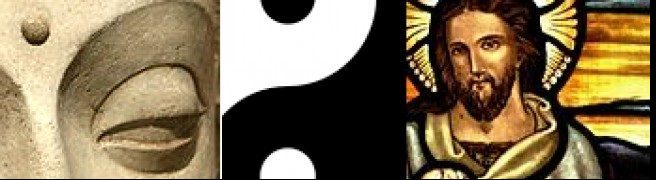
Reflections of Love

Between the fires and being sick, I missed a whole month of Dance Tribe up in Santa Barbara. Something was developing there – one of the women had taken to saying that we needed to “take the energy shared here and bring it into the world that needs it so much.”

At the end of dance, I am pretty extended. Specific messages tend to bounce away. I took it as something just nice to say, but when I last heard it, I realized that she might have been speaking to me. Pausing therefore to reflect, I recognized this paradox: if I bring energy into that room, it’s because I am reaching out into the world while we dance. Powers ancient and new, distant and near, reflect upon and affirm our engagement.

If we raise a special energy, it’s because the world is in the room with us.

But that’s nothing new – that’s been going on for me in many venues for many years.

What is new is this: stepping out of the darkened corridor into the sunshine, and feeling this joyful glow descend upon me. It’s like a friend offering a warm embrace. I reach up and brush the sky with its welcoming.

There is a panicked impatience in that engagement. We haven’t had any rain to speak of in Southern California. The ecosystem is drying out, burning up and blowing away.

As I walked down to the beach this morning, those perceptions crystalized around the Fall. Love always hopes, and to protect Adam and Eve, God hid his knowledge of what was to come. So I read his words in Eden not as those of a taciturn school master, but of a parent seeking children lost in the jungle.

Adam? Eve? Where are you?

Followed by the admonition:

You will die.

Death is the veil that separates us from love, so I do not read the second as a punishment. It is a simple statement of fact. Without understanding, when Adam and Eve covered themselves – when they made the choice to hide from God, who is love perfected – they were choosing to take refuge in death.

This great weight settled on me then – the weight of sorrow that so much of humanity rejects God, and so rejects love. The paradox is that we cannot dispel God’s love. Even if we seek it in other relationships, we are just asking God’s love to come through the door of our choosing. No, the only way to reject love is to reject ourselves. It is to surrender ourselves to death.

And this is what tears at me now: to walk around the world and see all these people dead to themselves.

Man does not live by bread alone. We cannot reject love without rejecting ourselves, for to be a self is to be loved unconditionally. It is to be seen by God.

And I realize now that this is what confuses the hell out of women. I walk around and offer “Here. You’ve lost this part of your self.” It’s always the part that they surrendered when they lost faith in love, and in finding it returned they resolve that I must be the love for them.

No. I’m just relaying the message that God never stopped loving you.

This has been playing itself out in a little triangle, and I realize that I don’t know any longer how to receive love in the fashion of the world. The compromises and barriers confuse the hell out of me.

The crescendo came tonight while watching Amelie. The denoument is incredibly tender. Love ambushes the poor girl, and she has sufficient faith to submit.

Does that remain in me?

I laid on the floor and wept.

Why Priests are Celibate

At all-hands meeting on Wednesday, I shared with a colleague that I had spent the Holiday weekend with a cold, lying on the floor watching movies. He himself had taken in “Lawnmower Man,” with it’s “gratuitous sex.”

Before remarking upon the similarities to “The Kids Are All Right,” I let slip: “As much as I remember about sex.”

I am single, but women make it obvious that I am attractive. It’s the sudden pause in their activity when I come around a corner, the frown and determination in their eyes when they look away, the staring when I dance.

It happened twice at the store on Christmas Eve: coming around the corner of an aisle to receive a woman’s astonished regard, frision all over my extremities focusing inwards as she fell into my heart.

As David Koresh did, I could make a real mess in the world. But I understand it this way: it’s not me. They are falling into the light that shines from me. They hunger for it because it promises surcease from the dirt that the world pours over them – the lust, the sloth, the greed. Freed from those burdens, they can manifest their most virtuous aspirations.

What I recognize, though, is that I can’t guarantee that to them. It is their right, but it is a right secured only in relationship with the Most High.

I am only a window that they can look through. They are responsible for securing the relationship.

And so I am single because I refuse to submit to their desire that I be responsible for that relationship.

Wise Guys, Eh: a book review.

One of the principal errors of Christian dogma is that we are fallen from an ideal state in Eden. Archeologically, this is absurd: mankind was distributed across most of the globe at the time of the direct encounter between Man and God in the Middle East. The Fall was a local event, that set in chain events (as the seed becomes the mighty mustard tree) that eventually enmeshed all of humanity.

But it appears also in our theological arguments: we hold that those closest to Jesus must have understood most clearly his intentions. This is a great comfort to those that do not wish to wrestle with the universalism of Christian love – they justify their prejudices by picking and choosing among early writers, rather than confronting the work that must be done in each age.

In fact, our modern dialog is far richer than that among the early adherents to the faith. The participants are more heterogeneous, and we possess words (such as EMPATHY, coined in the 1800’s) that were unknown to the elders.

We are not fallen, we are still rising. Christ is still at work in the world, and continues to lift us up, NOT LEAST through the agency of women that bear witness to virtue.

James Matichuk offers a review of a survey by Christopher Hall on the thinking of early church fathers on issues of modern controversy. In general, I am very sympathetic to James’ theology, and he is constrained in his format to representation of the content of the original work. I am not so constrained, and weighed in with this perspective.


The attitude to the fetus is idealistic. Did the early fathers recognize that there are mothers and fathers that are incapable of providing such nurturance, and that in fact the pressure of adding a child to a household might guarantee suffering and death to both mother and child? I am not asking this to be contrary, but simply as a matter of record: did they grapple with the practical issues of pregnancy and birth from a woman’s perspective?

If they didn’t, why do we reference them?

A contrasting practice is the Roman prenuptial rite. This created a physical experience comparable to child birth, which in its traumas can break either body or mind. If the woman could not endure the ritual, she was encouraged to withdraw from her engagement.

This same type of critical analysis can be extended to others among the selected issues.

matichuk's avatarthoughts, prayers & songs:

My introduction to patristics came through the Desert Fathers. I picked up a book (I can’t remember if I read Helen Wadell’s or Benedicta Ward’s collection first) and discovered there compelling voices from another age. They were ethereal and strange, sometimes legalistic, but always thoughtful. They offered a compelling vision of the spiritual life. Since then I’ve read more widely the church fathers, exploring the saints of both the Christian East and West. Because their time was so different from our own, and not so different, I think they have a tremendous capacity to speak prophetically into our age.

5188Christopher Hall is an excellent guide to the thought world of the fathers. He is the associate editor of IVP’s Ancient Commentary on Scripture and his newest book is the fourth and final volume of his Church Father’s series (previously published, Reading the Bible with the Church Fathers, Learning Theology with the…

View original post 1,359 more words

Christian Tax Policy

Here’s the prescription:

  1. Progressive corporate tax to punish monopolies and foster small business formation.
  2. Value-added tax to soften the transition to automation of work.

What follows motivates the prescription.


As a Christian, it is hard for me to focus on money. It’s not that I don’t understand economic and financial theory, it’s just that money isn’t important to the ends that I pursue. I seek, through this blog and other work, to heal the confusion that poisons our relationship with the Most High. That’s a difficult problem, demanding the fullest commitment of my energies.

As I told my sons in their formative years: “Money is a way of storing power. For those that commit all of their power to solving difficult problems, there is nothing left to store.”

Jesus warned us that “You cannot serve two masters…No man can love both God and money.” Therefore, in seeking to transform our relationship with the Most High, we do need to understand money, because it is a principle source of resistance to the rule of love. People that desire money desire it because the are selfish, and as I have explained out at Love Returns, selfishness is the opposite of love.

We have two looming disasters in our economy. The first is the destruction of the middle class by the richest members of our society, people such as Rupert Murdock and Peter Thiel that have no compunction about using their wealth to fund propaganda machines that demonize government. The second is the loss of blue-collar jobs, accessible to those with high-school diplomas, to automation.

The exploitation of resources has always been a foundational principle of American politics. Elected our first president, George Washington complained that he spent all of his time as a promoter of business opportunities in the nation’s undeveloped lands. That practice is enshrined in most of our state constitutions, where the first priority in land use policy is economic. At the federal level, conservation policy has limited the most brutal forms of resource exploitation.

Contract law provides a legal framework for exploitation of the last great resource: human potential. In the “Land of the Free,” the ability to enter into economic contracts is one of our most honored acts, though paradoxically it places us under the heavy hand of law enforcement when we have disputes. It is this that is decried in Revelation 13:18:

so that no one could buy or sell unless he had the mark – the name of the beast or the number of its name.

Murdock, Thiel, and their ilk know that they have attained wealth only through exploitation of investments made by others – investments accrued over millions of man years of public education and government-funded research, and trillions of dollars of infrastructure investment. Their attempts to limit their obligation to “pay it forward” are driven by greed.

Not being limited any longer by prudence or compassion, this class seeks economic dominance in their various industries. Concentration of industrial power is visible in all industries. It was decried as monopoly in the late 1800’s, and defense against it was established through the Sherman Act, the Clayton Act and the Federal Trade Commission. Those tools have become blunted in the last twenty years because trade has become multinational. Facebook and Google, the information service monopolies of our era, are not disciplined because they are American monopolists. The European Commission sees them as adversaries, of course, and Google, for one, is facing some large fines for monopoly conduct. But it’s not limited to high-tech: concentration is growing in telecommunications and financial services.

Fortunately, monopoly has one clear indicator: huge profits. In the personal tax code, we recognize that those making the most money also benefit most from public services, and tax them accordingly. We should do the same in corporate taxation. While large corporations use their market position to reap huge profits, it is small businesses that generate new opportunities and new jobs. We should reward them for their efforts. We need a progressive corporate tax code.

The middle class is not only being squeezed by monopoly pricing, it is being gutted by automation. Jobs are disappearing, and fast. On the immediate horizon is the loss of almost two million blue-collar jobs as shipping moves to self-driving trucks. But we see this throughout America: even as wages rise overseas, making local production competitive again, the factories that we are building use a fraction of the employees needed by their predecessors. All the material manipulation and most of the assembly is done by machines.

The factor that drives this investment is payroll reduction. A robot is a fixed-cost investment, does not ask for higher wages, and is subsidized by capital equipment tax write-offs. They are also far more precise in their work, yielding higher-quality goods that are preferred by consumers.

The replacement of taxed payroll expenses with tax-free capital equipment investment also hobbles government by restricting tax revenues. Clearly, our workforce needs new skills. Our youth are provided those skills for free by pubic education, but those skills no longer guarantee lifetime employment. People need to learn throughout their lives.

Employers, of course, don’t want to pay for that investment, because it creates opportunities for their best people to take positions elsewhere. So – as predicted by Adam Smith in The Wealth of Nations – the tendency of corporations is to exploit workers until they can be replaced by machinery, and then to cast them aside.

Smith defined the theory of capitalism, and his prescription was simple: governments must tax businesses to provide workers opportunities to retrain when they are replaced by equipment. Governments starved of tax revenues by automation can’t provide that service, which means that America’s human capital is now going to waste.

The solution comes to us from policy-makers confronting outsourcing of jobs: in Europe, companies were caught out selling products “Made in England” that were assembled from parts produced overseas in low-wage markets. To limit that incentive, a “value-added tax” was created. VAT charges a tax on companies reflecting the increase in their wealth as materials move through a system to create a finished product.

While this didn’t prevent jobs from going overseas, it did ensure that government revenues were maintained to support retraining and job placement services. If applied to goods shipped into our lucrative consumer market, it is also a reasonable way to limit the social costs of overseas production by countries that choose to exploit both labor and the environment. If a car made in South Korea for $2000 and sold in South Korea for $6000 enters the American market to be sold for $20,000, well the South Korean manufacturer should pay a VAT when that product is unloaded at Los Angeles.

Christmas Teaching, 2017

In the years from 2006, I made every effort to be down at the LA Cathedral for Christmas Midnight Mass and Easter morning services. Having given my heart to Jesus “for healing” back in 2002, on first encounter I was pretty direct upon approaching the crucifix set behind the altar. Looking into the serene visage, I gestured to the twisted limbs and observed, “It’s time to clean all of this up.”

My interaction with the brotherhood has been complex, and sometimes contentious. So when I moved another twenty miles up the freeway into Ventura, it was with some relief that I decided to spend Christmas down at the local parish, rather than making the trip to Los Angeles.

Though my mother asked pointedly whether I intended to go.

I also passed on Easter.

For some reason, I feel a greater receptivity now. I’ve had a number of dreams about Christmas Eve down at the Cathedral, including sharing words with the community. I began this writing before Thanksgiving, but became mired in theological resistance.

I sent out the message that love won’t manifest against resistance. It must be welcomed. A breakthrough of sorts happened last weekend, and I felt the resistance melt away. The words come forth easily.

I was down at the Ventura Government Center for jury duty, and worried through the last of the wording this morning. I do tend to become a little abstract. I hope that it conveys the meaning.

We are so very close. I do my best to mark the way.


The Age Upon Us

Hello, dear friends.

May all the blessings of this day be upon you.

Summoned by the cry of broken hearts, I first came here fifteen years ago. Thus it was to the sweet virgin, witness to the suffering of her people, praying that the Father might bring forth a savior from among her sisters. After Gabri-el revealed her role, the jewel of feminine compassion said simply, “Here am I.”

So I say now: “Here am I.”

That is all the introduction I have for you. The rest is not important, for the gifts of this day descend from a greater source.

In Genesis, when God arrives, the earth is declaimed as “formless and void.” That is to say: nothing found there had any purpose, nor any soul. The molten lava flowed and cooled. Rock ground against itself, creating nothing. Water washed against the rock, forming beds of clay, but no life sprang forth.

The Love that is God seeks to make relationships marvelous, and the Bible records His gifts. The first were simple: light, ground and rain.

Of these gifts God sought to raise creatures that loved as He did. Three billion years later, He crouched on the ground, remembering, and bestowed upon Adam the ability to love. Having compassion on Adam’s loneliness, God found a companion, and Eve was given Adam’s heart to tend, and bore witness to Adam’s virtue.

I remind you of these things to clarify the gifts of this day. Jesus lived forty years on this Earth. He walked among us, and we remember this day because he died to give proof to the undying power of love. But we should set that forty years against the three billion that preceded it. If we are amazed at what Jesus accomplished in forty years, how can we describe the tenderness, strength, and determination of the Father? Can we even begin to grasp it?

Three billion years. As it is said: “I am less than a worm.”

But the Father finds joy in us. Look around you. See the rock, polished and cast. We give form and purpose to it. Our gratitude secures a sanctuary for the burdened. Our souls expand, filling the world with the love we receive.

That is to say – as he is love – that we fill the world with God.

That is the specific gift of this day. Love descended to us. Secure in Mary’s incorruptible womb, love joined flesh, and walked among us.

This sounds simple, but is not easy to understand. What did it mean for Christ to descend from heaven? Why did he need to come in the flesh? Why did he need to suffer and die on the cross?

We come together tonight not only to honor Mary and Jesus, but because on this night the Most High comes closer to us. We see beauty, we hear it in voices and instruments, we see it in the faces of those we love. This beauty washes against our troubles and strife, and if we raise our faces and hearts in gratitude, we feel the Most High fill our cup to the brim.

There are those among you that know this to be true. You are near to the saints.

But is it for you that Jesus came?

Why would that glorious spirit, replete in the presence of his Father’s love, descend for the saintly? Would they not be served better if he stayed to prepare a place for them?

Let me remind you: there are those among us that dare not raise their hearts. They are like Peter on the boat after the fish rush to fill the nets, fallen to his knees, pleading “Go away from me, master, for I am a sinner!”

How many of us have felt that shame? Feared that God would turn away from us?

“Oh, you of little faith!” was the rebuke from Jesus. That was to say “Believe in yourself! Believe that you are beloved by the Most High! Believe that you should share the joy of my service to Him!”

St. Theresa of Avila wrote:

O Lord of my soul and my Good! There are souls so determined to love you that they gladly abandon everything to focus on nothing but loving you. Why don’t you want them to immediately ascend to a place where they may receive the joyful gift of perfect love?

The answer being: because God needs us here to fill the world with love.

Not only on Calvary. Not only on Christmas Day. Not only in this church. But everywhere, every day.

In this Age, Jesus commanded that we “pick up our cross.” But that is not the goal of love. Let us talk of the New Age: A day will come without suffering, without fear, without grief. It is the day from which the power of the love that surrounds us will chase those experiences from our lives.

In that future we will find, like the five thousand, that when we gather what little we have, it is multiplied until it is more than enough. Illness will fade when our sister gazes upon us with compassion. Conflict will flee when our brother prays that our ambition be tempered by good will.

Can we glimpse that day? Here? Now?

Let us try!

Oh, you saints, remember the grace of those two: the woman and the child that were touched by heaven, yet chose to serve us. Take the hands of those you love, and lift your hearts to the Most High. Feel his gaze upon you. Feel the tenderness, the patience, the strength. Behind it the unending ocean of his love. Allow that love to fill your heart.

Thus was the Sacred Mother. Thus was the Lamb.

Rest there, you saints, for now I must address others.

Oh, you weary and burdened. You that bear witness to the sorrows of the world. You are not forgotten.

They descended to serve you. Mary and Jesus: they became flesh so that they might feel your anguish, and bear witness to the sin that oppresses you. It is you that matter, you weary and burdened, for you test the submission of the saints to the love of the Most High.

Lean your sorrows upon me, oh you weary and burdened.

Here am I.

Oh, you saints, do you feel them among you? This is the purpose for your hearts: that as did Jesus, you might share your love. Open your hearts and minds now, and robe the weary and burdened in your grace. See in your hearts that they will find, in the coming year, all that they need, because those that have means to comfort them will receive something in exchange: the certitude of the New Age prophesied by Jesus. Not as a distant promise glimpsed from 2000 years ago, but as a palpable nearness in the heart.

That will be an age when the rich will not hoard their wealth, because they will have the security of fast friendship. It will be an age in which no one asks “What’s in it for me?” because they know that in sharing what they have, their hearts expand to receive ever more of the limitless power of the Most High.

Do you not feel it, oh you saints? Is there not still more? Let it pour out from you into the world! Through the streets, into the dark corners. Across rivers, plains and oceans. Into every heart that craves the hope birthed on this day.

Jesus was not born into comfort. Mary did not labor in a feather bed. This is the gift of this day: they brought love to the world so that we might know that all the world is sacred, that we were meant to be sacred, and that the Most High is determined that all should be redeemed.

Mold with the redwoods. Worms with the eagles. Shepherds with kings. And those oppressed by sin with the saints.

Oh my friends! Let us be worthy of our brother! Let us worship with every breath, with every touch. Let us worship in the temple of the Most High. Let us worship in the temple of our hearts.

Merry Christmas! And blessings be upon you all!

Abandoned

The leading residents of the camp call it “transitional housing.” Established on the site of an abandoned smelter, the concrete foundations of the demolished buildings are ideal for motor homes. A discard pile looms over the camp, an acre of tailings piled thirty feet high that the Environmental Protection Agency (EPA) is scheduled to remove in a couple of years. That’s going to involve heavy equipment, and many of vehicles are situated so as to interfere with the work.

The regulations for official motor home camps prohibit vehicles more than ten years old. As I walked amidst them, I say those rusted and lying low on deflated tires. I doubt that some of them can be moved, even if a place could be found to hook them up to services.

Cher, the first of the residents, parked her motor home ten years ago. At the time, the owners were still local residents, but unpaid property taxes have put the land into the hands of the EPA. Once the pile is removed – extending the salt marsh owned by the Nature Conservancy – the lot will revert to state and local ownership.

It seems an ideal site for a homeless camp. A corrugation plant sits just adjacent, and the sewage treatment plant is across the street. City officials find the inhabitants unpleasant, and of course many of them have criminal histories. They’ve found reasons to disallow garbage collection on site, and trash has piled up over the years, creating a serious public health hazard.

I’ve been going out there with the local churches, standing watch as residents are fed lunch and sift through the clothing and food. Unfortunately, the foremost of the organizers had concluded that the camp needed to be cleared. He also had some theological disputes with me, and asked me to stop attending.

But I went out two weeks ago looking for Cher. I had contacted the sociology department at the University, suggesting that her experience would be valuable to those seeking to provide alternatives for our growing homeless population. She wasn’t there that week, and I was busy with other matters last week.

Yesterday morning, my thoughts turned to her again, but I waited until after lunch to visit. When I arrived, she was standing out on the sidewalk talking with a man who had pitched his tent just outside the lot. I sat down with her, and she poured out her troubles to me.

She had gone up to meet her man when he came out of prison, but he acted as though he didn’t know her. They had planned to move into a shared living arrangement, but after his probation appointment on Monday, he disappeared. Cher contacted the office, and they said that he was fine, but wouldn’t be seeing her again.

I told her about the university contact, but it became clear that she had more pressing matters. She felt that God had abandoned the camp, and wanted to move her vehicle out to Las Vegas where her granddaughter lived. She needed to repair the lights. It seemed clear that she needed a phone, but the last time she had signed up for one, it never showed up in the mail. I offered to drive her out to find the free phone kiosk. We bounced from the 99-cent store to Wal-Mart, and were headed out to a third location when she spotted the pop-up tent outside the Goodwill.

Unfortunately, the system said that she already had a phone, and would only allow her a SIM card. Hoping either that we could buy a cheap T-Mobile device at Wal-Mart or find a spare at the camp, she accepted their offer. Wal-Mart didn’t have any T-Mobile devices, so I dropped her off, promising that I would try to find something and drop it off to her Thanksgiving morning.

During our wanderings, we talked about Revelation. She had never read the book, so I summarized it for her. Regarding her situation, what seemed important is this: love came to Adam and Eve 7000 years ago, and the selfish personalities that had dominion over the earth for the prior billions of years know that they have lost the battle. That means that they have nothing to lose, and they have set out to make the end as painful as possible. It’s upon the poor that the burden falls most heavily.

As she gathered her purse, Cher thanked me, sharing that she was in a much better place than before I came by. It was almost alarming, being told that she refused to get out of bed when her daughter reported that I wasn’t with the service crew. But she needed to eat, and found herself pulled to the curb just before I showed up.

She is shifting her hopes to me, and I know that I can’t respond. It appears that a phone will run at least $200, and who knows how much it will take to get her vehicle road-worthy. Her social security check arrives on the 3rd, but even now she’s eating noodles.

And through her I see millions more.

Last time I saw her, I told her that I just wanted her to see herself as God sees her – as a bright light shining in the darkness. She shared that she had meditated on that yesterday morning. I shared the story of Peter on the water, and she admitted that she didn’t have much faith in herself, either – time and again she had sabotaged herself.

I don’t know that she can be rescued in this life, but as I drove away, a passage from Revelation came to me. It comes in the chapters that describe the suffering brought to humanity by tyrannical government, and the loving response of the Lamb. Chapter 14 ends:

Then I heard a voice from heaven say, “Write: Blessed are the dead who die in the Lord from now on.”

“Yes,” says the Spirit, “they will rest from their labor, for their deeds will follow them.”

Would that have any meaning to her, this abandoned American citizen, hoping that someone from among God’s saints will provide for her? When the body is abandoned, what strength is there in a promise of salvation for the soul? I have confronted that recently, I was moved to reject spiritual compromise. But while not rich, I have physical security and comfort. She has been without for ten years. What does that do to a soul? Can she still feel God’s hand reaching down to her?

Am Misbehaving

Teri Gross, interviewing a young female actor/writer/director tonight on Fresh Air, had an uncomfortable dialog concerning male role-models that have now been revealed as sexual predators. The discussion focused on the challenges of not saying “the wrong thing,” with “the wrong thing” never being elucidated. Presumably it would be something that could be interpreted as hateful of men in general, or dismissive of the human depth and value of the work of some of the men involved, or offensive to men that they might want to work with on future projects.

So they preferred to say nothing.

This contrasted with the All Things Considered interview of women from lineage of three generations that have worked in Hollywood since 1960. They spoke frankly about the problem of sexual harassment and what it takes to avoid degradation. They had direct experience, and so had a specific human story to tell.

In both contexts, their attraction to Hollywood was explained as a reaching for the opportunity to create dreams. Remember that these are successful creators, so they have not hit the wall that causes most workers to hate their jobs after they turn forty. That wall is the gate that narrows when the cost of providing opportunities to all qualified people exceeds the available resources. When opportunities for professional growth thin out, what characterizes those that stay the course?

I would hazard that it’s not just the opportunity to create dreams for others, it’s the link between their work and the expression of their own fantasies. The more powerful those fantasies are, the greater the commitment to their craft.

Perhaps the most disturbing experience I have had in church is being told by a pastor that I was not welcome because when I meditated on the cross, everybody in the congregation felt that they were being sexually harassed. To love someone is to affirm their personality – and if they find more joy in sex than in compassion, they will channel the energy that way.

Couple this to the desire of a director or producer to associate and control beautiful people – the people that we love to watch on the screen – and the adoration that we tender to our media figures is going to amplify their worst habits. The more we adore them, the worse their conduct will become.

The problem is related to the problem Jesus faced with his disciples. The disciples believed that they needed Jesus to tell them what to do, just as consumers of entertainment believe that they need someone to give them dreams. Jesus complained of the “little faith” of his followers because they didn’t believe in themselves. He died, was buried, rose and ascended to convince them that they should cast off their doubts and love others.

Rather than fixing our gaze on that story – the true and heroic testimony of the redeeming power available to all that choose to love – we choose to fill our dreams with fantasies that can’t possibly be made true. In seeking to entertain, Hollywood doesn’t create dreams, it creates illusions. Those that suckle on its teat shouldn’t be surprised when those illusions are pierced, unmasking the self-serving motives of all those that peddle illusion – and exemplified by those that have clawed their way to the top.

Our government is also riven by corruption – politicians don’t have the power to solve our problems, so they peddle illusions. And we are disappointed in our relationships, because we operate under the illusion that someone else can change our soul when that is work that only we can do in collaboration with God.

We’re not going to end exploitation by shaming people, or throwing them in jail. There will always  be replacements.  We’re only going to solve the problem by recognizing illusionists when they appear in our lives, and putting them off with “That’s all very nice, Donald, but I need to pray for a friend before I go visit them.”

Virgin Shield

Roy Moore, Republican candidate for the Senate seat vacated in Alabama by Jeff Sessions, is under attack for his conduct towards underage girls while working in the district attorney’s office during his 20’s and 30’s. In responding to the accusations, Moore appears to be taking the advice of Steve Bannon, who led Trump around the Access Hollywood (“Grab ’em by the pussy”) debacle. Bannon advised to deny everything and double down.

Moore’s supporters have done their best. On the political level, they charge that the revelation of these claims only four weeks before the election reeks of political manipulation by the Democrats and liberal media (the charges were given national airing by the Washington Post). Others note that the acts, even if committed, have expired under the statute of limitations, and so have no bearing on the election.

Before the scandal, Moore achieved notoriety for his defense of Biblical principles. He was removed as a sitting judge for refusing to honor a court order requiring the removal of a Ten Commandments display he had installed. Appointed later to the Alabama Supreme Court, he was removed again for refusing to enforce the US Supreme Court decision upholding same-sex marriage.

So the political arguments have been supplemented by theological arguments. Co-religionists have implored voters to show Moore Christian forgiveness. Others have compared his suffering to that of Christ on the cross.

But the ugliest justification is that the Virgin Mary was only fourteen when she was married to Joseph, and so there is Biblical foundation for older men to pursue young girls.

There is so much wrong with these arguments. Forgiveness is wonderful, but that does not extend to empowering those that do wrong. Women also suffer persecution, and to suggest that Moore is being persecuted is like unto a suggestion that Herod is persecuted.

But the one that hurts the most is the parallel drawn to the relationship between Mary and Joseph. That relationship was not considered unusual in the era – in fact, the principle concern of the parents of an adolescent girl was to ensure that she was established safely in marriage to a decent man. Moore was not married to his victims.

But neither was the Holy Spirit. I’ve heard this issue raised before at a non-denominational Christmas service. The preacher attacked the whole idea of the immaculate conception, stating that “God doesn’t molest little girls.” Trevor Noah took this to its ultimate conclusion on Monday night, observing that the parallel offered by Moore’s supporters seemed to suggest that Moore was seeking to conceive a Messiah, giving new meaning to the idea of a “Second Coming.”

This upsets me because I don’t see Mary as a passive vessel. When women are allowed to choose, beautiful consequences result. The angel Gabri-el proposed a solution to the problems that beset Mary’s tribe, and by extension the whole of humanity. Mary’s humble response was “Here am I.”

Events during Jesus’s ministry emphasize this message. Presented with the paradox of the life in paradise of a woman widowed successively to seven brothers, Jesus observed that in that age everyone will make their own decisions about marriage. When Margaret complained that Mary was not helping with housework, Jesus encouraged Margaret to take also “the better part.” Finally, when a woman appears to anoint him with oil before the crucifixion – as were the kings by the high priest – Jesus rebukes the charge of hypocrisy (“the oil could have been used for the poor”) with the simple statement “She has done a beautiful thing for me.”

That Mary made the decision to bear Jesus when she was only fourteen may seem strange by our standards, but it was her choice. Moore didn’t share that choice with his victims. Mary’s choice carried with it the possibility of prosecution under the law of her day. Safe from criminal prosecution, Moore would do well to learn from her courage and humility, ask personally for forgiveness, and bear the consequences in the court of public opinion.

Exhaustion

So, here I am again, woken at 3 AM in the morning by the narcissists that run the company that employs me. They’ve tied my compensation to acquiescence to their industrial ambitions, and won’t take “no” for an answer.

When my boss told me two months ago that he wanted me out of the company, I memorialized the conversation, and ended up in a scrum that included the owner and the HR manager. Offered control of the agenda, I chose compensation as the topic. At one point, I asked the owner whether he could characterize the value that I brought to the company. He stammered, and then admitted, “Well, perhaps I know more about other parts of the company that I know about your area.”

He has no idea what my contribution is worth, and interprets his ability over nine years to avoid that understanding not as a testament to my value and virtue, but as a reason to ignore them. In fact, my boss is his fair-haired child, a man that the owner sees as driven and strong enough to ensure success in the competitive world of commerce.

To clarify the emotional context that drove my concerns, I shared that my father had passed two years ago, and that I had been living in proximity to my mother in Westlake Village until rent increases had forced me to move away. The owner interrupted me, stating that others had come to him with family issues to demand higher pay, and he had the same response for me: my family issues were my problem. He had a “family” of more than a hundred employees to consider.

To demonstrate his sacrifice, he tendered a letter of offer for his business. He said that he didn’t really need it any more, and I was tempted to tear the envelope in two. My family is eight billion people. The mind that I occupy took three billion years to create, and will survive long after the sun has annihilated the earth and with it all material evidence of human accomplishment.

Our mind is worth more than his company. It is worth more than all the businesses in the world. There is no price sufficient to purchase a billet of entry. The qualifications for entry are the compassion, tenderness, and awe that guide those responsible enough to walk in the temple of the Most High without corrupting his Creation.

Those aren’t typical in those unable to recognize and honor virtue when they see it. I shouldn’t have to think twice about being close enough to support my mother. I shouldn’t have to think twice about flying out to Texas to support the survivors of our most recent mass shooting. If they recognized that, the executive team at my company would be bending over backwards to garner the benefits of awareness among those that receive my love that “I work at Advanced Motion Controls in Camarillo, California.”

The Pro-Life Movement Before Roe and Its Lessons for Today: An Interview with Daniel K. Williams

In the form of an interview with Daniel Williams, Millennial offers the most sympathetic articulation of the pro-life stance that I have encountered. The experience of the original activists – proponents of the liberal theory of universal human rights – is typical of the experience of the Pharisees confronted by Jesus: any attempt to use law for moral ends allows hypocrites (such as the fiscal libertarians of the GOP) to suborn those impulses.

The proper approach is that of Jesus on the cross: “Father, forgive them, for they know not what they do.” That generation did confront their error, seeing many of their brethren convert to Christianity – including Saul on the way to Damascus.

So should we look at the problem of abortion – as a teachable moment that might not change the heart of a desperate woman, but that should change her behavior, hopefully bringing her closer to God as a result.

Williams’ final paean to life also rings hollow in my ears: babies are not priceless because their genetic code is unique. They are priceless because they represent an opportunity for self-clarification of a soul. We do have responsibilities as parents to optimize the conditions of that opportunity. That is best informed by abandoning the categories “pro-life” and “pro-choice” and choosing to be “pro-creation.” Pregnancy should be a conscious and considered joy, not an accident.

Millennial's avatarMillennial

What was the pro-life movement like before Roe v. Wade? In Defenders of the Unborn, Daniel K. Williams, history professor at the University of West Georgia, provides an essential overview of the pro-life movement in this period. Millennial editor Robert Christian interviewed Williams on his groundbreaking book and its implications:

The pro-life movement is often associated with conservatism, but could you talk a little bit about the roots of the movement?

The modern American pro-life movement, which originated in the mid-twentieth century, was the creation of Catholic Democrats, most of whom subscribed to the social ethic and liberal political philosophy of Franklin Roosevelt’s New Deal and Lyndon Johnson’s Great Society.  They believed that the government had a responsibility to protect the rights of minorities and provide a social safety net for the poor.  They viewed the unborn as a minority deserving of legal protection, but many of them…

View original post 3,220 more words