After Christ, Seeking

My father, after reading Ma, recognized that the book was an attempt to share with the world my experience of life. He had to admit, however, that he understood it very poorly.

When my son Greg learned that I had spent almost $20,000 on publishing and marketing Ma and The Soul Comes First, he chastised me, “You’re  wasting your money. They don’t care!” My response was, “I understand, and some may think that they are taking advantage of me, but it’s not just money. It’s intention, and that investment is allowing me to get close to the things that oppose the realization of my goals.”

As part of that process, I went out to meet Hugh Ross at Reasons to Believe in Arcadia. He wasn’t in that Sunday, but the presentation gave me hope that I had found a community that might understand my journey. Conceptual frameworks color our perceptions, and thus our experience of life. The presenter summarized a book that proposed criteria for assessing conceptual frameworks, and surveyed the limitations of Humanity’s most robust frameworks. Having realized that I had been allowed a perspective that reconciled many of the limitations, I tried to engage him, only to be completely rebuffed because my understanding of angels was incompatible with his.

That made me think of the Apostles in the Garden of Gethsemane. As a child, I was taught that “The spirit is willing; but the flesh is weak” was a chastisement. Today I understand Jesus’ words as self-diagnosis, and recognize that the reason the Apostles slept is because to share Jesus’ struggle with him would have shattered their hearts and minds.

I don’t write about all of my experiences as I inch closer to the heart of Christ. Partly, that’s because they won’t make sense to anyone – the scientists will say that they are impossible, and the religious will reject them, citing dogma and creed. But it’s also because the experiences often aren’t fun. I was juicing oranges Tuesday morning when India’s poor landed on me, and I sobbed for several minutes with my forehead resting against the door of the kitchen cabinet.

While listening to WOW Worship Gold last night, I went in really deep. A sequence of songs reiterated the encouragement to open hearts to Christ. A flood of energy arose from mine, and I struggled with grief as the great tide of Life’s suffering pulled on it. I raised my hands to the sky and felt him reaching down to me, almost ready to surrender the sorrows of the cross. Entering into that heavenly will, my hands reached down, touching all the hands raised up from the ground.

No, it doesn’t make sense. It is just what it was.

People make better choices when they understand, but understanding is possible only upon surrendering oneself in service to needs that are insurmountable in the clothing of our Humanity. So Love, with infinite patience, watches as we take two steps forward, and then one back. With infinite endurance it suffers and heals the corruption of our self-serving. With infinite compassion it guides us to relationships that bring us strength and affirmation.

Please try to understand. Love is perfect. It is our experience that is imperfect. To offer love to the world is the only way to bridge that gap.

So this helps: the marchers in Charlotte, N.C. stopping outside the prison and shouting up to the inmates:

We see you. We love you.

The Gospel of Life

In explaining the Parable of the Sower {Luke 8:4-15], Jesus says:

To you, it has been given to know the secrets of the kingdom of God, but to others I speak in parables, so that ‘looking they may not perceive, and listening they may not understand.’ Now the parable is this: The seed is the Word of God.
[Luke 8:10-11]

The passage begins with the report that people from many towns had gathered to hear Jesus speak. Clearly their hearts hungered for truth. But Jesus does not speak plainly to them of the things that they yearn to know. He offers them a parable designed to confuse. So why did they come?

In our day, it is even harder, for what do we have of Jesus’ words? He did not write a Gospel, leaving it to his disciples to collect fragments of his teaching in contradictory testimony. Worse, that testimony has been parsed and twisted for centuries by those seeking political authority. Of the three great Christian Inquisitions, all were enforced by political leaders seeking to oppress their enemies. Only in the second, longest episode – the Catholic Inquisition – did the Church in Rome send out priests as Inquisitors to counter politically-motivated dogma with true Christian teaching. As a result, many of the accused repented, received the sacraments, and were saved.

If Jesus had written a gospel, could this have been avoided?

The parable suggests not, for Jesus says:

The ones on the path are those who have heard; then the devil comes and takes the word away from their hearts, so that they may not believe and be saved.

This is a confusing image, that of words in the heart. It is repeated in the final verse, when Jesus speaks of those that “hold it fast in an honest and good heart.”

When speaking of the kingdom of heaven, of course, all earthly metaphors eventually must fail. Some hint of the grandeur of the Word of which Jesus speaks is given to us in the opening lines of John’s Gospel, in which he testifies:

In the beginning was the Word, and the Word was with God, and was God. [John 1:1]

Later Jesus offers the metaphor of living water:

If you knew the gift of God and who it is that asks you for a drink, you would have asked him and he would have given you living water. [John 4:10]

During a sermon in which he felt this presence moving through his congregation, I heard one pastor testify that it felt indeed like water pouring over his head, drenching every fiber of his body.

St. Teresa of Avila combines beautifully these metaphors when describing her experience of prayer in her spiritual autobiography, The Book of My Life (translated wondrously by Mirabai Starr). The holy woman talks of prayer as a means of bringing water to a garden. It progresses through stages, the first of which is like lifting a bucket. As we strengthen the mechanisms that process love, the water moves through us as though driven by a water wheel. When we learn to surrender our desires, the gates burst, and love moves through us as though a river, drenching us in “holy madness.” Finally, we enter a state of union and serenity, seeing love entering the world everywhere we go, doing the Father’s work. The word becomes a rain that falls on our garden, which has become the world. There we meet Jesus in the struggle to heal the pain of the world’s separation from Love.

In describing this growth into the Word, Teresa testifies:

O Lord of my soul and my Good! There are souls so determined to love you that they gladly abandon everything else to focus on nothing but loving you. Why don’t you want them to immediately ascend to a place where they may receive the gift of perfect love?

Indeed, the saint’s desire was so powerful that at times she had to order her sisters to sit on her to keep her attached to the ground!

But the answer to Teresa’s plea, of course, is that words such as she gave to the world are no less of the Word than were those that issued from Jesus’ lips. Jesus did not write a gospel because he knew that others would do it for him, not as a fixed testament crafted to a specific age, but ever renewed to reflect the needs of each person in their time. Not dead words captured on a page, but living words, lived with enduring trust, growing into an ever more joyful proclamation that love amplifies Life with majestic, glorious and infinite possibility!

Recidivism

When contemplating the selection from among the disciples of the Apostles, Luke records [6:12]:

Now during those days Jesus went out to the mountain to pray; and he spent the night in prayer to God.

Now this is an interesting proposition for prayer: the junior partner in the triune turning to himself for wisdom. Illogical, even bizarre? I can understand it only by assuming that Jesus was a pseudopod emitted from the Holy presence, not in possession of all his spiritual faculties.

Of course, as a demonstration it is instructive to read  of the devotion and trust that Jesus invested in the Father. If he was moved to pray, how should not we as well? And conceiving of him as a man, I would not rue Jesus that comfort.

A common elaboration of the Crucifixion is that it was not just physically agonizing, but also spiritually devastating. We have the great heart-rending cry:

Eloi! Eloi! Lama sabachthani?

[Mark 15:34]

There was no answer, because there could be none. God took on flesh because it was only through flesh that evil could be healed. Once Jesus assumed that burden, it was his and his alone.

The angels cannot change their nature – it is the grace and curse of humanity to possess that capacity. Thus God testified to Cain:

Sin is crouching at your door; it desires to have you, but you must rule over it.

[Gen. 4:7]

Jesus was the culmination of this seeking after strength. He arose out of a culture devoted to the seeking after purity, and chose to allow sin into his heart so that its consequences could be healed.

The bulk of the BIble demonstrates the difficulty of this accomplishment. The men raised to greatness always struggle with their frailty. Jacob’s lust makes him little more than a seed dispenser to two competing sisters and their handmaids, and his favorite Joseph leads monotheism into subjection to a polytheistic culture. David succumbs to desire, clearing the way for marriage by sending his friend into battle to die, and Solomon again opens the door to polytheistic practices.

This recidivism illuminates the challenge of loving unconditionally: to be merciful is to grant power to those lacking the ability to discipline their behavior. Every parent confronts this in the two-year-old and adolescent, but somehow we believe that grace given by God is proof against this corruption. To the wise, though, the recidivism of the Bible is the greatest possible proof of God’s compassion for us. He pursues the loving embrace even against the evidence of our unfaithfulness.

Of course, in demonstrating the infinite depths of divine compassion, the heroes of the Old Testament are problematical role models. This came to a head in Islam, which largely sanitizes the evidence of personal frailty. A Muslim scholar disputed with me over David’s betrayal of friendship, explaining that the sanitized history was enforced by Muhammed’s (pbuh) son-in-law, Ali, and justified in that opportunists used David’s behavior to justify their own lecherous license.

The consequence of this idealization of Biblical heroes is that the program of monotheistic escalation (the only God worth worshipping is perfect and infinite) extends to the heroes of the Bible. They are no longer human but gods themselves, immune to temptation and error.

So what of Jesus, absorbing the burden of human sin on the cross? We know that he showed reluctance and despair in the event. This supports my sense that divine love comes at the first possible moment. In the New Testament as in the Old, the manifestation of grace is subjected to pressures almost certain to destroy it. Among those are the unfaithfulness of those to whom salvation is offered. Returning to Nazareth early in his ministry, Jesus is astonished by their cynicism, which makes him unable to offer power in any great measure.

So I conclude: as monotheism is the pursuit of a truly human god, in that pursuit Jesus is truly our god, struggling against our sinfulness while healing us so that we may sin again. Paradoxically, as we approach more nearly to his grace, that struggle intensifies. The assault on his virtues are more focused, the wounds more intimate. As God cried out again and again in the Old Testament, would we not expect Christ to be tried by anger and fear?

Even perhaps, at times, to be overcome by human impatience and frustration?

Beyond Evil to Good

Miguel de Unamuno, considering the road from masculine frailty to faith, observed in Tragic Sense of Life that all men desire two things:

  • To live forever.
  • To rule the world.

The obvious paradox in these impulses is that most of us (myself being a man) attempt to accomplish the second by beating the crap out of other men – which tends to advance the interruption of our seeking after the first.

Work-arounds abound, the most obvious being to have a gun at the ready whenever an altercation arises. The subtlest is the use of psychological conditioning to get others to do the beating up for us. In totalitarian states, that conditioning takes the form of propaganda against imagined enemies, but is often joined with control over basic necessities. In democratic cultures, the conditioning is typically tied to unattainable visions of sexual conquest. When progeny ensue, hypersensitivity to their vulnerability often becomes the lever used to encourage financial exploitation of others.

Obviously in these systems there will be losers – a great many losers. The power of the impulses identified by Unamuno then manifests in a terrible perversion, expressed by a friend who asserted that the world would “know about him.” He testified ominously:

“Yeah, when a man has nothing to lose, there’s nothing he won’t do. And when the world learns about me, it will be nothing like anything that it’s ever seen before.”

I tried to lighten the air, offering that I knew what he meant, and that my sons were sometimes worried that I was going to just walk off and disappear. When he asked “You mean go live on the streets?” I replied, “No, probably they’d find me out someplace like the Amazon in Ecuador helping the indigenous people deal with the mess that Texaco left behind.”

Ah, the contradictory consequences revealed by Unamuno’s observation!

Some men lose everything, and seek to rule the lives of others by ending them, thus finding immortality in notoriety. I have nothing, and so claim this little piece of the blogosphere, writing about everything for almost nobody, and imagine conquering a little part of the world with a sponge and a squeegee. Some men fear the immigrant, and extrapolate our future against Europe’s tragedies where the Muslim population is ten times proportionately larger than ours. Accepting King’s dictum that “injustice anywhere is a threat to justice everywhere,” I embrace Muslim America as an opportunity for Islamic scholarship to rediscover and reassert the original message of Mohammed (pbuh), and any acts of violence as a cross to be born in conquering fear.

Unamuno’s defense of Christian faith was that we “create this God of love and eternal life by believing in him.” I see that as heresy: we don’t create him; we rather allow his virtues to manifest in our lives. In doing so, we learn to love ourselves and accept love from others, thereby obtaining dominion over the only part of the world that really matters: ourselves. In focusing that strength to the service of loving others, we lessen the burden of their resistance to our survival, and so enter more deeply into their world.

And for those that cannot learn – either those that lash out in violence or those that consume the innocent? What do they become in the end? Not themselves any longer – they become a headline in a newspaper. The history implicit in the personal “why” is lost. They become simply a “what”: 18 in San Bernardino. 49 people dead in Orlando. 3000 dead on 9/11. 47 million during World War II. Their personal history is consumed by the violence they created.

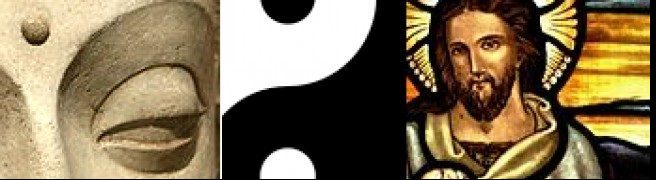
But men like Buddha – who renounced violence to bring a system of self-control to his people – or Jesus – who died to expose the hypocrisy of the military-religious complex – their names are enshrined in the hearts of those they have liberated. They live on in us.

Exuberant Faith

In The Soul Comes First, in assessing the crippling effects of the heresy of Original Sin, I conclude:

The more serious fault […] is the conclusion that Humanity is a flaw in Creation. This is completely in opposition to the actual truth. Humanity is an essential and valued part of Creation, an element that is [be]held with the most tender concern and honored regard in recognition of the difficulty and importance of the work that we must perform, the pain and sacrifice involved in accomplishment of that work, and the joyous consequences of its eventual completion.

When I wandered with the Boy Scouts on backpacking trips, I would feel this shouted at me from the wilderness – the trees, birds and animals begging for relief from drought. When I paused to bless the land, raising my hands to remind the heavens that they suffered, one of the fathers snapped “Would you stop doing that?”

In my dialogs with those of conventional faith – once principally dogmatic Christians, but today including atheists – I am often dismayed by the energy they invest in running from the truth offered in that opening excerpt. I have come to understand that their rejection is rooted in the privilege of flesh that resists the primacy of spirit. For it is the flesh that suffers, and the spirit that reaps the joy.

Even Jesus struggled with that paradox, testifying at Gethsemane:

The sprit is willing, but the flesh is weak. [NIV Matt. 26:41]

This comment, at the end of his long journey of surrender to the limitations of his age, was prefaced by:

My Father, if it is possible, may this cup be taken from me. Yet not as I will, but as you will. [NIV Matt. 26:39]

In that moment of weakness, with Simon Peter dosing nearby, I wonder if Jesus heard the echoes of the apostle’s complaint on the lake of Gennesaret. The fisherman, weary from his fruitless night and irked by Jesus’ commandeering of his boat as a podium, grudgingly responds to an encouragement to lower his nets in the deep water:

Yet if you say so, I will let down the nets. [NIV Luke 5:5]

And thus unfolds the little charade that Jesus had organized with the fishes, those quiet denizens of the waters that wait so patiently for us to assume our stewardship of the earth. Recognizing the Man that had come to show us the way, they spent the night lurking in the depths of the lake, teasing the fisherman. When the net enters the water at Jesus’ command, they surged exuberantly upwards, each calling to his fellows: “Come! Leap into the net! Show these fishermen his glory!”

But did Simon follow? No, condemned by religious teaching to believe that the sinner eclipses the saint, Simon falls to his knees and begs:

Go away from me, Lord; I am a sinful man! [NIV Luke 5:8]

This is the second great obstacle to faith: the conviction that we are unworthy to serve love.

Simon Peter, by nature extravagant in all things, expresses this with physical extravagance. Again at the temple, he cannot just deny Jesus once and then depart; he must amplify his shame by lurking in the shadows, watching impotently so that he may deny Jesus twice more. What would have happened if, recalling the fish, he had stepped forward brazenly to cast his arm around Jesus’ shoulders and proclaimed, “Look at the dignity of this man! How could he not be God?”

Instead, Jesus went to the cross, bearing the weight of the dependence of all flesh upon sin, and caught Humanity in the net of his heart. Some still fight to escape that embrace, but I for one hunger for the company of those that leap exuberantly into faith.

Terms of Debate

I excerpt a conversation out at Dandelion Salad that illustrates the challenges of engaging dialog with well-meaning people that are scandalized by the things done in God’s name. James was responding to my earlier comment.


James of the Commons offers:

would it not have been possible for at least a portion of humanity to love a perfect creation, the perfect creator of the perfect creation, and the perfect will of that perfect creator ? I would argue that a perfect god would have in fact created a perfect world; a world in which every action ,reaction and phenomenom was in some sense of the word, perfect.

You have stated that love requires an object in order to exist. If this is what you believe then I must assume that you are not a bible believer. The bible clearly states that god is love. From the bible we also learn that god existed before all else. Surely you do not claim to be a bible believer?

You have stated that sin occurs when we oppose our own will upon others. If this is the case, it seems then we are instructed by even the bible to sin. There is a certain bible verse that commands believers to not allow witches to live. Perhaps like the elite of socioeconomic realm, the self prescribed elite of the spirit realm,” the believers,” are not held to the same laws as everyone else? I suppose I should not be asking you, because you after all, as I have already stated, most certainly not, a bible believer. Besides that point, I am fairly confident that you believe that there are times when one individual has a moral obligation to prevent another individual from acting upon their will. Indeed you would agree that it is good for a person to impose their will upon another, when say, the other intends to harm a child, or perhaps commit murder ?

I agree, it is usually unproductive to challenge the faith of the faithful. I have found that the faithful are so insecure in their faith as to often become enraged when reminded of the absurdity of what it is they know deep down inside, is not true.

Thanks for your well thought out comments Brian.


My response:

James:

I would agree that my understanding of the Bible is not that of common belief. I have published a book that presents that understanding (See The Soul Comes First on the side-bar of my blog).

The essential distinction is that I do not see love’s perfection manifested in creation, but in healing. The Almighty did not create all the personalities in his realm, but – faced with the evidence of their pain – chose to create this reality in which healing could occur.

To the extent that I would countenance the imposition of will upon others, it would be to separate predators from their prey (I believe that covers your examples). However, that is a strategy favored by people, trapped in our limited, linear view of time. The Divine, perceiving the preconditions that cause the predator to reject the fruits of loving relationships (See Cozolino’s The Neuroscience of Human Relationships) prefers the Law of Natural Consequences. Thus Cain was allowed to live, and Jesus offers this plea at Calvary: “Father, forgive them.”

One of the most significant episodes in the Bible, often overlooked, is the covenant with Noah in which God gives Mankind responsibility for the administration of human justice. Thus the Mosaic Law should be seen as a human construct. Its purpose was to foster the development of reason in the Hebrew people. The Law was deprecated by Jesus in the New Testament. In effect, he encouraged: “You have learned to think. Now think about love.”

Your observation regarding the common reaction to challenges to closely held beliefs is not unique to people of faith. I find that many atheists tend to use linguistic violence, denigrating the intelligence and moral integrity of people of faith, rather than seeking the common ground so essential to marshalling the will to address the enormous problems we face in attempting to avoid destruction of the biosphere that sustains us.

The Better Half

As a member of the afflicted sub-population, I may admit freely that the Bible is all about men’s problems. As I observe in The Soul Comes First, Jesus obviously had a rich ministry to women, but there are few writings that address their unique concerns. I consider it a terrible loss that Jesus’ teachings to women are not available to us.

Some might doubt the existence of such teachings, but a number of the encounters in the Bible make it clear that Jesus recognized the oppressed status of women, and Luke records an encounter with two sisters [Luke 10:38-42] in which Martha becomes irate because her sister Mary sits and listens, foregoing her obligations as a hostess.

The recorded parables, however, are mostly about men. In the modern era, the context of business and financial probity is more relevant to women, but I would imagine that in their day they would have been hungry for stories that related more directly to their concerns.

How would they have understood the parable of the wise and foolish bridesmaids? As related in Matthew [25:1-13], ten bridesmaids await the arrival of the bridegroom to be received at the wedding feast. They bring their lamps, but fall asleep until midnight when the bridegroom is announced. The five foolish bridesmaids depart to by more oil for their depleted lamps, while their wiser peers enter the feast with the vials they thought to bring in advance. Upon their return, the foolish women are turned away by the bridegroom with “I do not know you!”

The imagery of the story is not obvious. The lamps could be souls or wisdom, but I believe the story holds together better if we think of them as virtue. The wise maids store their virtue, conserving it for the afterlife. The foolish maids do not. In their contemporary religious practice, the loss of virtue could be recouped by alms and sacrifice at the temple. What Jesus warns, however, is that that practice carries no weight in the kingdom of heaven.

The last leaves me to consider whether this isn’t just another dig at the priesthood, but in comparison with the parable of the landowner, I do see some special meaning for the women of the era. Masculine personalities are active, dynamic and at times brutal. Feminine personalities express their virtues in merging. I don’t think that it’s an accident that we have two groups of women, for it is in community that women find their strength.

More might be extracted from the parable if I better understood the marital traditions of the era. Clearly, the lamps are carried for some purpose other than to light the way to the celebration. Some sense of the special purpose of women in heaven is suggested in John’s vision of the New Jerusalem [Rev. 21 and 22]. The masculine virtues, represented by the twelve tribes, stand guard at the walls, while the feminine virtues manifest as the tree of life with leaves that heal the nations and twelve crops to feed them. I have an intuition that Jesus also is offering an insight in Matthew 25 that would be revealed by study of the marriage rites.

I once characterized Jesus’ stories as the “WTF parables,” meant to draw sharp contrasts between the retribution expected of men and the forbearance of a loving God. In this case, a literal interpretation of the story leads in the other direction. Why are the wise maids so harsh with their sisters, in contradiction to the practice of Jesus himself on the cross? Why are the lamps necessary at all to enter heaven, when the prodigal son brings nothing but his humbled spirit? It is here that we again see this as a story targeted to women: men were used to lording it over people, and as the prodigal sons they needed to learn humility. Women had different priorities – first and foremost the preservation of their virtue in a society so devoted to their diminution and degradation.

Steven Fry’s Challenge

Rocket Kirchner addresses Steven Fry’s critique of God out at Dandelion Salad. Fry interprets the existence of suffering as proof that the Christian God is a fantasy. My response to one skeptic follows:


Here is the conundrum: If the “fantasy God” made a perfect world in which everything unfolded according to his will, then there would be nothing to love, because his will would be all. Since love requires an object to exist, the creation of such a universe would be a form of self-annihilation.

So we are granted the option to not heed the will of God – we are allowed our own free will. Unfortunately, many of us chose to play at being gods ourselves, and it is in imposing our will upon others that sin occurs.

The Christian proposition is that if we learn to submit ourselves in service to one another, we obtain access to enormous amounts of power. I won’t bother you with how that manifests in the New Testament – you’d simply assert that science disproves the possibility of the events that transpired. But to the person of faith, the healing accomplished by Jesus and the Apostles indicate that many ills that we suffer are not of God’s will. In fact, if we surrendered ourselves to the dictates of love as Jesus did, those ills would be unable to obtain purchase upon us.

So Rocket is right: we are misguided to refuse (or worse, misuse) the gift of love and then decry the consequences of its absence. And it is hypocrisy for Fry to say “God, you didn’t intervene to save the children!” when God created Fry and gave him wealth to so intervene. We were made in God’s image, which can be interpreted as “we are his intervention.”

And, given the huge amount of charitable work and giving provided by people of faith, to challenge faith is also counter-productive. The faithful understand that the world is imperfect. We simply choose to keep on giving, in part because we feel our hope sustained by the endless love that arises in our hearts.

Soul Cultivation

The parable of the vineyard [Matt. 20:1-16] begins:

For the kingdom of heaven is like a landowner who went out early in the morning to hire workers for his vineyard.

And ends with the non-sequitur:

So the last will be first, and the first will be last.

I call it a non-sequitur because the bulk of the parable is a caution against the assumption of religious privilege. At the very least, after doing our work for the landowner (Christ and the Father), we don’t want to screw up the relationships by challenging the generosity shown to those that come later. But in that context, the final line seems a little harsh to the Hebrews. Are they really to expect that as the original subscribers to God’s burdens, they are going to be lesser than the Gentiles brought into the fold through Jesus’ ministry?

That doesn’t seem fair.

To make sense of the final line, I recommend treating it as a bookend to the first. Jesus is suggesting the process by which God prepares fallen souls to enter the kingdom of heaven. Early in the “day,” when the spiritual condition of the “field” is most rugged, the strongest workers are brought in to uproot the weeds and remove the stones. They enlarge the perimeter in which cultivation can be done. As the day progresses, less hardy souls are brought in to plant and irrigate. As the crop develops, gentle and sensitive spirits are brought in to prune and guide the growth. Finally, at the very end of the process, the final workers are brought in to gather the harvest – in Jesus’ metaphor, to guide the cultivated souls into heaven.

The first workers are spiritual pioneers. Not only do they clear the land, they prevent corruption of the crop. If they were called in first, the efforts of the later workers would be overwhelmed. Thus they must stay out in the field, performing their roles, until the workers brought in later in the “day” are safe in the kingdom of heaven. Only then can the pioneers enjoy the fruits of their shared labor.

Will there be no honor in heaven accorded to those early workers? In this parable, Jesus is silent on that point. It is in the parable of the talents that the point is made that those that do the work accrue the gratitude of their fellows, and will receive honor in heaven. Here, Jesus is attempting more to give them strength not to carry privilege and pride back with them when they come to heaven. That corruption cannot be allowed through the gates. If they receive honor, it will be because their fellows grant it to them, and privilege and pride are the surest way to lose that boon.

Walking with Grace

Reply to this post by Caralyn out at Beauty Beyond Bones:


Hey, Caralyn-

Great post. I hope that somebody takes the time to stop you on the street and share what a light you are. I know that you get that here, but sometimes that affirmation doesn’t transfer until it’s expressed in the specific context.

This came to mind: a friend told me that one day she saw Princess Diana walking from her hotel to a limo in NYC. Diana stopped and simply waved her hand slowly along the street. My friend said that she felt the grace wash over her.

We can do that. We can call God into the world and allow his love to wash over others in a way that they can feel palpably. The trick is to only let go of the angels that are guided by our love when they land on somebody that will employ them to love others. Otherwise we need to pull them back into our hearts. As they come to trust our judgment with greater and greater certainty, they gather around us more densely. This is what Jesus meant when he said “To those that have, more will be given. And to those that have not, even what they have will be taken from them.”

I realize that for women this can be a little like walking off the end of the pier. Some men will misinterpret. But you don’t have to be visible to make it happen. You can be looking out a window, riding by in a car, or passing in a train.

I hope that you don’t mind my writing a sermon. I know that you’ve experienced this. I just want others to join in the process. When the joining of our little bubbles persists, the world will be changed. People will realize that they have a choice between the pain of the world the live in and the joy that surrounds those blessed by grace (which is to be given the support of angels in loving others).

Wishing joy, grace and love upon you in all things,

Brian