Spirituality without Religion: Hope or Hoax?

Sam Harris has amassed a fortune decrying religion. His latest best-seller, Waking Up: A Guide to Spirituality without Religion, describes a journey that I must herald as a step towards personal maturity. I won’t consider the details, because his preface was enough to let me know that he’s got a long, long way to go. Harris asserts that our minds are the only tools that we have to manage life’s challenges. That’s a sort of lobotomy, and the best response I can offer is that of Hume. Following Hobbes’s characterization that the experience of most is of:

continual fear and danger of violent death, and the life of man solitary, poor, nasty, brutish and short

Hume diagnosed that Hobbes had forgotten “the operation of his own heart.”

That may seem a small point, but a compassionate heart is the singular difference between a monstrous ego and a great personality. In its lack, the rational mind tends to the conclusion that everything that violates its logic is error, possesses no value, and thus should be destroyed.

This is the conclusion that the anti-religious have indulged in for far too long.

Now I hope that Harris will eventually confront the errors of the axioms that allow him to conclude that religion has no value. Foremost is the confusion of correlation with causation: the fact that the brain is essential to the physical manifestation of our will does not mean that our will arises from the brain. The soul does exist. When that is recognized, the heart becomes full, and logic leads us to a different set of conclusions.

For example: Harris’s book bears the picture of a face superimposed on the cloudy heavens. What happens when spirits collide in that space? How do we negotiate conflicts? Only by resort to institutional structures staffed by experienced arbiters. That is religion.

The second erroneous axiom is that the mythical aspect of scripture proves the unscientific world view of our intellectual predecessors. Far be that from the truth: those men and women were investigating aspects of reality that Harris has yet to encounter, and doing it using practices that, if one strips away the branding, are scientific in their core. That wisdom was transmitted to us from the past through – you guessed it – religion. The alternative offered us in the modern age – schools – are prey to short-term political fashion, also known as propaganda, and pit students in a competition that places knowledge above compassion.

The alternatives to religion that Harris offers, at least in his preface, are use of psychotropic substances (a.k.a. – illegal drugs) and meditation. The former is pathetic: I raised my sons with the wisdom that love is the anti-drug. Using drugs to temporarily achieve an elevated psychological state is no substitute for submitting to the discipline required to sustain loving relationships. Lacking that discipline, the craving for love, which is built deep into our hearts, leads to abuse of drugs and self-destruction. What institutional structures confront us most meaningfully with the practice of emotional discipline? Well – religions.

Meditation is where I find hope for Harris. Meditation serves to reveal the preconditioning of our minds that prevents us from accurately perceiving experience. Through it, as Deepak Chopra inveighs in The Future of God, the seeker after truth eventually confronts the reality that love exists even when no person is present, even when no drug stimulates our senses and minds, even when we do nothing. That is the nature of God – and for reasons I have outlined elsewhere, that is the only God that could ever exist. Nothing but unconditional love can bind together things that want to be apart: the Greek word religio meaning to bind anew.

When Harris encounters that presence, I am certain that he will want to find a place in which to share his joy. That would be, of course, to find religion.

Becoming a Man in a Woman’s World

On my fist visit to the Cathedral of our Lady of the Angels in Los Angeles, I was consciously assessing the state of a community that I expected to be seized by fear. The priestly child-abuse scandal that had been papered over in the ‘70s had re-ignited. Attorneys revealed that many of the perpetrators had been hidden in the church hierarchy, and some had been allowed to resume children’s ministry. Cardinal Mahoney himself was accused of complicity, and huge financial claims were leveled against the Church.

What I discovered, as I wandered around the periphery of the celebration, was that it was infected by a subtle competition for dominance. Every member of the worship team wanted to lift the pall, to re-establish the connection to Christ, and no longer trusted the authority of the prelate. So I listened carefully, echoing back what I heard, and tried to celebrate harmony when it appeared. The cantor went and sat with the choir, and when he came back down to the podium, the competition surrendered to glorious praise.

As I wandered in the space, I got a few disturbed glances from the ushers and deacons. But the confrontation came from a middle-aged woman who, as I stood in the back enjoying the music, approached me and hissed “Say the words!”

I experienced this again when I went down to Orange County to the enormous campus of a renowned evangelist. This time I sat in the fourth row from the stage, and as I probed the spirit of the congregation, he stared pointedly at me. I stayed for a second service, this time sitting in the back rows, and he announced that he had been talking to Jesus every day of his adult life. A little non-plussed, I poked around and discovered that it was his wife and her girlfriends that were presenting the counterfeit.

I won’t assert that these incidents are typical of the “male-dominated” religions, but neither are they rare. They illustrate the temptations of maternal power. If a man and his wife become “one flesh” through intercourse, how much deeper are the bonds that link a mother and the child growing in her womb? The sin that exists in abortion is that the two spirits, rather than separating through birth, remain bound up together. Inevitably a struggle for dominance develops. Even if a normal delivery occurs, male children remain buried in a feminine psychology. This is untenable. While a woman can tell a man whether he satisfies her physical and psychological needs, she cannot connect him to the sources of spiritual strength that make it possible for those needs to be met.

Particularly in affluent communities, where housewives often find their worth measured by the strength of their children, boys face enormous challenges in becoming men. Mothers have difficulty letting their children go. I saw this manifested when I volunteered as a teacher’s aide in elementary school. I was the only father to so participate in kindergarten. I was involved in a divisive custody struggle at the time, and faced a prejudice that I was simply there for legal reasons. That was not true – I really wanted my sons to have a concrete sense of how important their education was to me. But the teachers and mothers struggled with my presence.

In my younger son’s class, lessons were tutored at tables marked by pictures. I was never assigned to the teacher’s table until I took my sons to a swim party. One of the activities was water volleyball with a huge bouncy ball. The event facilitators stood at the back of the court and, though trying to be as gentle as possible, served the ball with force that simply overpowered the kids. I finally got my hands on the thing and walked it up to the net, asking “Who wants to serve it?” Holding the ball over the child’s head, they knocked it up into the air, and the children on the other side clustered under the ball. No longer having to absorb its momentum, they knocked it back over the net. Laughter and shouting replaced the bored frustration.

When I next went in to class, the children embraced me with their hearts while the teacher read a story. The birthday girl turned around and smiled at me, and the little community of children finally overwhelmed the resistance to my presence that had been established by the mothers and teachers. I was allowed that day to tutor at the “red heart table.” But consider: only because one of the daughters let me in.

So when feminists decry the disempowering psychology of “male-dominated” religions, I get a little frustrated. Given their powerful psychological influence on little boys, maternal projections of anger towards men are a destructive burden. I would prefer that women celebrate the strength that they gain from participating in Earth- or Goddess-centered religions, thus advertising what men are missing. And I would also prefer that they celebrate the teachings of the avatars, none of whom rejected the participation of women. Even in the Hebrew tradition, a woman’s spiritual power is recognized: inheritance of the tradition is through the mother.

But the only way to make sense of the story of Abraham’s lineage is to realize that Joseph, the child left without a protector in his father’s harem, became a glorious man because his father took him under his wing. Boys need fathers, and women need to be cautious against using their children as leverage in their relationships. It leaves them with weak sons that attain independence only through rebellion, and the problems of managing the predatory women that they attract. When that consequence is recognized, it seems unfair to castigate men because husbands, spun up by sex and greed, go out into the world to plunder and pillage for the satisfaction of their wives.

The Writing of The Soul Comes First

In Catholic terminology, thaumaturgy is the working of miracles through love. Raised by a skeptical father and steeped in science that disproved the possibility of such experiences, for most of my life I disbelieved.

That changed with the millennium, when personal and political crises brought fear into my life. I began to read widely on spiritual and religious experience. Then one Sunday I entered the sanctuary at St. Kolbe’s in Oak Park, CA. A thirty-foot statue of Christ hangs from the ceiling, not nailed to the cross, but suspended before it. Confronted with this powerful image of human suffering, I instinctively put my hand over my heart, held it out to him, and thought, “Use this for healing.”

In the intervening years, I have learned a great deal about healing through divine love. I learned that many “evil” people are simply doing what was done to them, and desperately looking for someone with the strength to show them how to get over it. I learned that people used to being in control find the sensations that come with being loved to be frightening, almost a betrayal by the thirst of their hearts. I learned that many intellectual atheists are “spiritual”, and those that are not do not realize how frightening others find the strength of their minds. I realized that Biblical literalists use their dogmatism to hold those minds at bay.

As I sought for answers, the astrophysicists announced the discovery of Dark Energy. To those that remember the philosophical roots of modern physics, this discovery was shattering. Einstein’s theories of relativity are based upon the assumption that space is empty. Dark Energy demolishes that assumption. With that called into doubt, we might notice another oddity in the history of physics: where from Ancient Greece to 1950 the complexity of nature was always understood by positing structure inside the smallest objects we could observe, in the modern era physicists assumed that no additional structure was needed. Taking away relativity and adding additional structure reveals a whole new class of theories that have the potential to reconcile science and spirituality (see Generative Orders (GO) and GO Cosmology).

I began to share these insights in 2005 with the web site at http://www.everdeepening.org, in which, as a Greek philosopher might have, I try to prove that love works. Realizing that the material was really difficult, I wrote a “layman’s” treatment back in 2008, the unpublished “Love Works.” Unfortunately, attempts to teach others demonstrated that the ideas were still difficult to grasp.

Then, in 2013, I was moved to re-read the Bible cover-to-cover, and saw it in a completely new light. I realized that what Darwin and paleontology had revealed about natural history was written right into the Bible. No conflict existed, and in fact the consistency of science with the Bible served to substantiate everything else written within.

Reading through the book in such a short time, I also saw the greater work on human nature, and the majesty and brilliance of God’s efforts to prepare us for the manifestation of Christ.

So I sat down at my computer and wrote The Soul Comes First in three weeks. In it is contained all the hopes that I pray I share with Christ: the unification of reason and faith, the hidden strength that will give humanity victory over fear, and the healing of the world through the power of love.

The message may be frightening to some. The job that we forsook in Eden is a big job, and difficult. All I ask is that you remember that it is not in human hands that the work is held. We all do our part, and the farm hand that plants a sustainable crop is no less essential than the ecologist that plans the restoration of a forest. The housewife serving in the soup kitchen is no less essential than the CEO commissioning a new factory. The counsellor that saves a marriage is no less essential than that politician that negotiates a peace treaty. With love, the strength of Christ, and the unifying wisdom of the Holy Spirit, all things are possible.

Why Monotheism?

When I was in high school in the ‘70s, global politics was dominated by a penis-envy contest called Mutually Assured Destruction. The Soviet Union and the United States amassed huge stock-piles of nuclear weapons that Carl Sagan concluded could wipe out the enemy without even falling on their territory. Simply setting them all off at ground level would raise enough dust in the stratosphere to cause a global winter. The collapse in food supplies would push humanity to the brink of extinction. That the instigator of the war would share the fate of their enemy justified the acronym ‘MAD’. But there were a lot of institutions that spent a lot of money building weapons delivery systems that were faster, more lethal and more accurate – money that might have been better spent improving the educational and living standards.

While Khrushchev threatened that the Warsaw Pact would bury the West under the weight of Soviet armor (pounding his shoe on the table for rhetorical effect), ultimately it was America that buried Russia under a mountain of dollars. Remember – this wasn’t a strategic conflict with concrete goals. It was a penis-envy contest, and letting the other guy get away with more was unacceptable. So Russia bankrupted itself attempting to match the West weapons-system for weapons-system. The United States cynically engaged this policy of “escalation” in many theaters of conflict. Simply introduce more and more sophisticated weapons systems, until the enemy was financially exhausted, then bring them to the table to figure out how to make money together.

We’ve seen this same logic invade our religious arguments over the last hundred years. You know, “My God is greater than yours.” At one point, the Buddhists prided themselves on remaining above the fray, but when I went down to Deer Park Monastery five years back, the speaker was proud to observe that Buddhism had never instigated a war, unlike those Christians and Muslims. I wondered to myself whether Buddhists were running any countries, and now recent events in Myanmar seem to bear out the corrupting influence of political authority.

Religious breast-beating can be traced to theological escalation. Polytheism was accepted practice in the ancient world, and those that cultivated relationships with multiple gods would have been likely to consider themselves shorted in a relationship with a single god. What if the one god doesn’t approve of your goals? Why wouldn’t you want to bargain with another deity? The response from monotheism was often to assert that “Our one God is more powerful than all those other gods put together. In fact, our God is the god of all things seen and unseen, the creator of everything, the ultimate purpose, and look at how our warriors beat you up on the battlefield when we carry his banner!”

I am going to denounce this logic right here and now: monotheism is not the celebration of a god for the purpose of claiming his or her power. Monotheism is, in fact, the original humanism. It was to recognize: “Geez, there’s a lot of spiritual power brought forward from the past, power built up in trees and animals and fish. It’s really hard to be human in this world! Let’s band together and worship a human god, and create a place for ourselves.”

Why was this important? Because our minds are so incredibly powerful. This is recognized in Eden, where after eating of the Tree of the Knowledge of Good and Evil, Adam and Eve are cast out before they can eat of the Tree of Life. Humanity has a dangerous capacity: the capacity to create ideas, which is to reorganize spirit. The serpent tempted Eve because it knew that it could assault heaven itself with that power, and that is evident in the actions of God himself in the aftermath: an angel with flashing swords is set up to prevent our return to the Garden.

It is also evident in the punishments meted out for creating the golden calf, the judgment against the kings of Israel for allowing polytheism to flourish, the scourges suffered by Ezekiel and the passion of Christ. When humanity is polluted by primitive tendencies, God insists that they be purged. This is also the purpose of the Law: animals are opportunistic and instinctual. They don’t apply abstract systems of rules to moderate their actions. Reasoning about the consequences of our actions is a uniquely human capability.

The full glory of human potential is celebrated by Christ when he announces to Peter [Matt. 16:9]:

I will give you the keys of the kingdom of heaven; whatever you bind on earth will be bound in heaven, and whatever you loose on earth will be loosed in heaven.

In other words, the Apostles were trained as a corps of spiritual surgeons.

In confronting the power of this capacity, the ancient predators had only one response: keep us from banding together. This is described in Revelation, where John recounts how the dragon (the spiritual avatar of the serpent that appeared in Eden) causes humanity to pursue animal worship, and when we get over that, corrupts our religions from within [Rev. 13:15]:

The second beast was given power to give breath to the image of the first beast, so that the image could speak and cause all who refused to worship the image to be killed.

Sound like MAD, anyone? Claim that your god is the best, threaten the enemy, and bankrupt yourself spiritually.

The goal that I offer today, thus, is to put away monotheistic escalation. The ultimate nature of God is beyond our understanding. What is important is to use the divine relationship to most fully refine our human capacities. Our unique skills – the skills of understanding, imagination and creativity – must be strengthened. Ultimately, it is intended that those skills should replace the brutal urge for survival and reproductive opportunity that characterize the animal kingdom.

In guiding us to maturity, all of our great religious traditions hold that there will come an avatar who will help us bring peace and justice to the world. Their name or ethnicity is unimportant, for in that era the divine authority will be manifested in all of us.

Jesus’s Greatest Gift

Christians take pride in the claim that Jesus never violated the Law of Moses, but Jesus himself didn’t seem to consider that to be terribly important. When called “Good teacher”, he replies [Mark 10:18]:

Why do you call me good? No one is good-except God alone.

In fact, in his teaching, Jesus pares down. To the rich young man seeking to know the path to eternal life, [Mark 10:19] Jesus says:

You know the commandments: ‘Do not murder, do not commit adultery, do not steal, do not bear false witness, do not defraud, honor your mother and father.’

And when the lawyer asks for the greatest commandment [Matt. 22:37-40], Jesus says:

‘Love the Lord you God with all your heart and with all your soul and with all your mind.’ This is the first and greatest commandment. And the second is like it: ‘Love your neighbor as yourself.’ All the Law and the Prophets hang on these two commandments.

What is going on here? The pride of the Hebrews was their Law, but Jesus did not come and say,

“Very good, proud servants! You have mastered the 613 edicts of the Law! Now, let me finish it for you!” With a wave of his hand, a completed wiki of law appeared, covering all of life’s possibilities.

No, he said “Use your heart and mind and soul. You love. You draw near to God. You go out and serve your neighbors.”

Adam and Eve failed in Eden because they were weak. The Law of Moses was a prophylactic – an intellectual condom – for those still suffering with that weakness. But after millennia of wrestling with the interpretation of the law, Jesus called his people to leave it behind.

His final refutation was to rise from the dead after the Law was used to destroy him.

Can the rest of Humanity do the same? Some of us, yes, for he says to his disciples [Matt: 16:24]:

Whoever wants to be my disciple must deny themselves and take up their cross and follow me.

But obviously that was not what he told others (see above).

So why do so many Christians impose rules? Because in a broken world, love hurts. We open our hearts to people and they pour all their poison into us. But Jesus has an answer for that. He says, “I will die for the forgiveness of sins. Pour their poison into me. I will take it from you. I will make the weak strong. I will support the burdened. You – you, dear child of God – you go out and love.”

From our weakness and dependency upon the rules that limit us, Jesus makes an escape into the infinite possibilities of love.

The Peace of the Grave

In The Soul Comes First, I include Death among the forms of selfishness that the angels release onto Earth for healing. I characterize it as “which destroys utterly”, but I have realized that is unfair. It is how it appears to the rest of us, but the elements of a soul cannot be destroyed, only repurposed. No, it only appears to us that Death destroys the ones that we lose.

Death cuts a soul off from the dance of life. It enters in as a shroud around our spirit, and chokes off the links that tie us to others. We can no longer share ourselves. How is that selfish? Well, Death does not give up its victims willingly. It collects spirits, like insects in amber.

So how is Death redeemed by Love? Jesus’s resurrection proved that Love pierces the veil of death. That control allows lovers respite from the burdens of the world. They can withdraw and process the pain that they receive when healing broken hearts.

Through love, we can control the veil of death, and find peace for ourselves when we need. In love, we find ourselves always yearning to return to the dance of life with others, and so do not remain isolated.

Unless, of course, we don’t build links of love to others, and then death is a terrible and permanent isolation – which is why selfish people fear it so much.

I am astonished by parallels with the process of birth. A spirit separates from the chorus of heaven and enters into the mother’s womb to be bound to a body. The end of that process is a violent forcing out that can break the spirits of either or both participants. The spiritual cycle is almost manifested in the act of birth itself, and I believe that among a woman’s spiritual challenges is the essential intimacy of life with death.

What did this mean for the Magdalene? She was confronted with a glorious man who was committed to a confrontation with death! But his glory is a manifestation of the beauty of the spirits that choose to surround him, and what woman would not want the joy of bringing such spirits into the world? I see her almost swept away by this passion for the life of him, so he cautions her in the cemetery:

Do not hold on to me, for I have not yet ascended to the Father.

He had not yet purged himself of the pain that had been forced upon him, and in clinging to him she was binding herself to that pain.

Among the Biblical commentators are those that see Mary Magdalene as the bride of Christ, but I hear in his words a caution to a woman swept up by events beyond her comprehension.

But there is another among Humanity’s pantheons who might understand, because her experience parallels that of Jesus. The Greeks tell of a goddess, Persephone, daughter of Demeter, who was given up as a bride to Hades to prevent his melancholy from consuming the world. The rest of the world found life in the sacrifice of the jewel of womanhood, foremost among Death’s treasures, whose grace fascinated his attentions. In Spring, she was released from Hades for a day, and life returned with her. If there are any among Death’s captives who deserve liberation, foremost among them is she!

Oh, Christ, bring her forth, and let her inspire us to protect nature, rather than destroying it so that we might profit! Bring us peace, not through death, but a lasting peace built upon the wisdom gained in our long struggle to master the Knowledge of Good and Evil!

Healing Dissension

In the weary journey that has been this life, I have come to accept that we cannot end sin by trying to destroy the impulses that trigger it. That simply justifies their behavior. So Jesus counsels us [NIV Matt. 5:9]:

But I tell you, do not resist an evil person. If anyone slaps you on the right cheek, turn to them the other cheek also.

So I have sought to join the vices to love. That strategy was held out in All the Vice of Jesus. I was pretty satisfied with my progress, and had turned my thoughts from the matter until I realized that Dissension was still at work in my life.

She kept me up all last night, from 12:30 until I rose at 6:45. Competition and fear at work, the cry of “Anti-Semitism” against the reasons for Jesus’s demotion of the Law of Moses, old family history and recent family struggle: they rolled through my mind, one after another, sometimes mixing into toxic stew, and I found myself simply reiterating: “I have so much else to be concerned with! What right do you have to burden me with these trivial complaints that are your responsibilities?”

So I lost that round. I allowed dissension to separate me from those that I seek to love and inspire.

I think of dissension as “she” because I have learned that Mystery, the woman on the red beast in Rev. 17:5, uses it as a favorite tool. Whether in debasing my relationships with younger women by imposing sex or in undermining collaboration with other men, Mystery (I could name the women, but that would be counter-productive) has inserted dissension again as an obstacle to my goals.

When things got really bad at work, I found this piece of wisdom about dealing with conflict, the goal of all dissension:

Find a mutually beneficial solution.
Adapt to surroundings.
Don’t share all your secrets.
Stand up for your dreams.
Sometimes you need to move on.

It’s that last that has come to disturb me: surrender. I have found it to be an effective solution, but a consequence has been that I haven’t been able to build upon the foundations I establish at work and home. Domineering people walk off with them.

There’s another method: dissension justifies the projection of our egos. If we don’t participate, and accept that projection without responding to its harmful intent, people become enmeshed in our love. Eventually they may realize that we can do more together than we can as individuals.

But then comes Mystery again: the quiet lurker in the backwaters of our minds who gains power by picking up the gold that dissension scatters. As we learn to work together, she’s frozen out, and the volume and intensity of her projections goes up.

Is that what I’m dealing with? The last hurrah of Mystery?

That doesn’t seem satisfying. I’d like to redeem her.

So let’s consider: if dissension motivates us to assert our egos in destructive competition, perhaps with love it becomes celebration of our differences? Maybe the answer to a charge of ill intent is to insert, at the top of the list:

Celebrate your opponent’s virtues.

Church and State

President Obama fanned the flames of controversy when, at breakfast with Muslim leaders, he remarked that Christianity had a history of injustice that should be cautionary when characterizing movements such as the Islamic State in Iraq and Syria. The specific examples he cited were the Crusades, the Inquisition and slavery in America.

How does each of these examples relate to the effort to create an Islamic State in the Middle East?

The Crusades

The Crusades were a complex political effort. The laws of inheritance in Europe meant that all the younger sons of the nobility were unlanded, and thus unable to provide for a noble wife. As a result, Europe was embroiled in internecine strife, to a degree that the Papacy at one point threatened to excommunicate the nobility if the bloodshed did not cease.

In this context, the Emperor of Constantinople, in whom leadership of both Church and State were gathered, was facing Muslim aggression. Again, the politics was complex: the Emperor was a tyrant, and faced internal dissent both from Christian “heretics” and Jews. The Emperor pled to the Rome for assistance, and Urban, seeing the possibility of reuniting the two halves of Christendom, agreed. Of course, this was also an outlet for the unlanded nobility to attain honors and wealth.

The first of the Crusades was a successful military effort, but revealed its misconceived origins. The Jews fought against the Crusaders, which led to pogroms against the “elder brothers” that Europe had accepted as representatives of their nation. The castles gained were impossible to support logistically from Europe, and ruled by the most aggressive of the European knights, men who insisted on attacking passing Muslim caravans. When the Caliph refused, on Islamic grounds, to retaliate except when the raiders were attacking, he was overthrown by Saladdin, a military slave, who began a concerted effort to conquer all of Christendom.

Back in Europe, the organizational strength of the Catholic Church led to a fascination with Christian ceremony and piety among the nobility. This reached its peak in France, where King Philip decided to mount a crusade as a proof of piety. The logistics were poorly conceived, and the mission ended in disaster. The last of the Crusades, in complete contradiction of Urban’s original intent, ended with the sack of Constantinople itself.

So the lesson I see here is: don’t mix religion and politics.

The Inquisition

The Inquisition is often spoken of as a single movement, but study reveals that the character of an “inquisition” depended upon the political context.

The worst excesses of inquisition occurred when political leaders began to challenge the organizational power of the Church. Again, this was a complex problem: the Church had benefited from the instability of the European nobility, and so had acquired huge amounts of land and wealth. They used religious authority to protect those lands. As the nobility began to establish independent systems of law and institutions of learning, the more aggressive among them focused on the practical opportunity of the weak Church military. The hypocrisy of many religious leaders also led them to question the authenticity of their claim to the lands held for Christ.

The most horrific inquisitions occurred in Spain and France. Following the Muslim invasion, the crown of Spain holed up in the Pyrenees. When the Islamic world rejected scientific thinking, advances in military technology eventually gave the king the upper hand in the struggle. Sweeping out of the mountains with the fire of religious purity, the king set out to purge Spanish civilization of Muslim collaborators. As in the Middle East, this included many Jewish nobles, who had benefited by Muslim occupation. The king forced them to Christianize their names and convert. Those that did not were stripped of their titles.

The mechanisms of this inquisition were horrific, and that was recognized by the Pope. A papal decree was issued warning the king to cease the program. The king responded with a threat to reform the church in Spain with himself as its head. Rome, for reasons among which should be considered to provide relief to those under indictment, choose to retract its decree and remain active in Spain. The king pushed his advantage by posting Borgia to Rome. The methods used by Borgia to obtain the papacy reflect more the guidance of Machiavelli than Christ.

The prior situation in France was similarly complicated. The French king was in a struggle against the independent southern nobility. The region was also distinguished by its Catharism, a schismatic sect that upheld feminine spirituality and the renunciation of worldly concerns. Rome was an active collaborator in the purge of the region, but was goaded by the murder of its legate by a rebellious noble, Raymond of Toulouse. I do remark that about this time the king invaded Rome and transferred the papacy to Avignon. Obviously, the balance of power in Europe was shifting. Most Cathars chose to convert to Catholicism: those that did not were hanged or burned at the stake.

The French and Spanish Inquisitions bracketed the Medieval Inquisition. Again, this was a complicated situation. Prosecution of heresy was performed under civil as well as Church law, and Rome often found that the proceedings were manipulated to benefit the civil authorities. In an attempt to prevent executions and to ensure that heretics received correct Christian teaching, the papacy attempted to take control of prosecution of heresy. Some assert that the mission saved thousands of lives.

So the lesson I see here is: don’t mix politics and religion.

Slavery in America


Obama made the claim that Christianity was used to “justify” slavery. While not having studied the matter deeply, I have never heard anyone claim that the slave masters looked into the Bible and found a command to subjugate the peoples of Africa to slavery. Yes, slavery was mentioned as a common practice in the Bible, but it also came with injunctions against mistreatment. Sympathy and counsel to the slave is given in a charming fashion in the story of Naaman [2 Kings 5], whose humble servants convinced their violence-prone master to accept the guidance of Elisha, and thus to receive healing.

This sense of slaves as part of the owner’s family is contradicted by the zeal and determination shown by God in freeing his people from Egypt. Though jilted by Joseph and his family, who became prominent political figures in Pharaoh’s circle, God heeds the cries of the Israelites under the foreman’s lash. Obviously, God acted in a way consistent with justice.

My sense, then, is that the Bible was used to rationalize the corrupt system of slavery in the American South by those that profited by it. They were eventually beaten down, just as Pharaoh was beaten down. Of course, racism is still strong among all the survivors of that system, but Obama did not mention racism – he spoke of slavery.

So the lesson that I see here is: don’t mix economics and religion.

The Lessons of Christ


The Republican Party likes to draw upon the authority of religion in its legislative program. This has led to some interesting policy contradictions in a party committed both the Christian action and laissez-faire economics. Indiana recently passed a law allowing the state to contract with organizations that require adherence from their employees. You would think that they would prefer those institutions to demonstrate the alignment of those precepts by succeeding against all comers in the open market, and so to be uninterested in government contracts.

To the discerning reader, the Bible gives clear testimony regarding the effects of the mixing of politics and religion. Samuel counsels against the anointing of a king, but relents in a “law of natural consequences” demonstration. While the wisdom and grace of God had guided the nation through trouble unscathed, with the creation of a monarchy, the nation was riven by internecine strife, forsook its covenant, and was eventually destroyed by the Assyrians.

With the return to Canaan, the process is repeated. Jesus finally comes along to counsel “render unto Caesar” and to demolish the authority of the law that had been perverted to make wealth a substitute for actual piety. Dashing the hopes of his Apostles, he renounces an earthly kingdom and submits to destruction at the hands of the authorities of his day. His resurrection was proof that the paternity of God promises greatness that no king can equal.

Christians should understand political systems as a temporary mechanism used to protect against exploitation. Such claims always have an aura of subjectivity: the rich man confident of his contributions to the general well-being may consider taxation to be a form of “exploitation.” Conflicting claims can only be resolved face-to-face, as happened to John McNamara in India. However, when the era of Christ’s reign occurs, the openness of Christ’s heart will make resolution of these claims immediate and obvious to those involved. That era will manifest only when we stop heeding the political philosophies of men, and trust the “still, quiet voice” that talks directly into our hearts.

So the lesson of Christ is that in the face of personal weakness, attempting to legislate justice is a fool’s errand. The Christian path is to expose corruption, and then to heal the victims, thereby disempowering those that use fear to exploit the weak.

So the lesson of Christ is: don’t mix politics and religion.

The Lessons of Islam


Following the death of Mohammed (pbuh), the Islamic Ummah went through a period of upheaval as it assumed the responsibilities of state management. Corruption was rampant. The Eleven Followers of Mohammed (pbuh) tried to restore the integrity of the Ummah, but were systematically destroyed. This is the essence of the Shia-Sunni split, with the Shias coming out on the losing end of the argument. It was the Sunni Muslims in Baghdad that mounted the era of Muslim conquest, although ultimately Islam proved to be a fig-leaf for a sequence of conquerors of diverse nationalities, including Ughurs and Turks.

In the service of celebrating the martial accomplishments of the conquerors, the state-supported Imams glorified and justified their atrocities (as can also be seen in the Bible, with the Babylonian Chronicles a re-write of the disparaging Kings). These nationalist paeans are now held by some as a higher authority than the Qur’an itself, in which Mohammed (pbuh) inveighs against violence unless under immediate attack.

In the modern era, we can see the disastrous consequences of mixing politics and religion in the extremism generated by Saudi Wahabbism and militancy throughout the world when Islamic practices are enforced by the state (as by the Taliban in Afghanistan).

So the lesson of Islam is: don’t mix politics and religion.

Wisdom from the Bully Pulpit?


I obviously find Obama’s comments to lack nuance. Religious history shows that religious states always yield to corruption. Worse, ISIS doesn’t appear to have ever been a manifestation of Mohammed’s (pbuh) moral principles. However, I would agree that nations that profess to be Christian have also failed to practice the moral principles of Christ.

As a moral imperative, I’d like the President to exhort Islamic leaders to renounce state-enforced religion. And I’d like him to remind Christians that legislation of morality has an ugly history in the Bible, not excluding the crucifixion of the man we hold as our Savior.

God granted us free will. In the exercise of that will, we will make mistakes, hurting ourselves and others. This is the path of the Knowledge of Good and Evil that we choose in Eden. The greatness of our God comes in patient forgiveness and healing.

For Christians hoping for the reign of Christ, this is not an idle matter. Jesus died for our sins, but his compassion does not stop there. A sin is a sin because it leaves a wound in our eternal souls. When Jesus returns, it will be for the healing. So long as we continue to attempt to prevent sin through the coercive power of the state, his power can only be manifested against the institutions of the state.

Yes, competent administration of the state is essential, but should not be linked to manifestation of his ultimate aims, for his spirit will unite all peoples, and wash away fear with healing. Provide private support for your church and its charitable efforts among the less fortunate, and let the spread of the Holy Spirit make the state irrelevant.
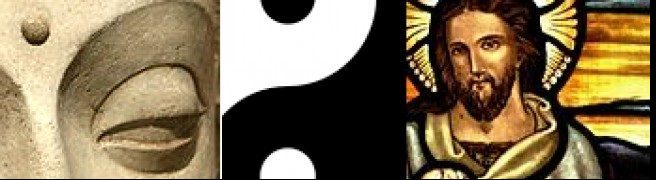
Taking Up the Cross

While Christianity is filled with joy in the certainty of Jesus’s promises, those promises are balanced with assurances that we will face suffering. In fact, suffering seems to be tendered as a condition of our Christianity, for Jesus says [NIV Matt. 16:24]

Whoever wants to be my disciple must deny themselves and take up their cross and follow me.

It’s hard to avoid the impression that if we don’t find a cross to carry, we can’t call ourselves a disciple of Christ.

Now the obvious thing about the cross is the pain involved. But if the experience of pain was a condition of grace, Jesus would have come into the world a cripple, and shown us how to overcome that deficit. And to be healed would be contrary to grace, rather than an act to be celebrated – as Jesus so joyfully did – as a demonstration of great faith.

So we should be cautious against ascribing a long illness as a cross to bear, nor a difficult relationship or financial challenges. Jesus presented us another tool to use in overcoming those difficulties: an openness to the unconditional love tendered from the divine source, and a sharing of its riches with those around us. It was a message of truth that both revealed our nature, and the grace of the relationship that God seeks to share with us.

It is this observation that leads us into an understanding of the metaphor as Jesus offered it. The cross was not just the place of suffering – it was a tool wielded by the rulers of the age to prevent Jesus from sharing his message. Those authorities achieved their position largely through fear. In the case of the Romans and Herod, it was fear through threat of violence. In the case of the Temple priests, it was fear gained through the threat of spiritual corruption.

To take up the cross, then, is to offer the world the experience of our love, and to be harmed by those who use fear to control those to whom we offer hope. It is to speak truth to power, to do it joyfully, and to make courage born of faith a demonstration of the weakness of our persecutors.

There is no place in which it is more important to do this than in our churches. Consider: the only direct assault Jesus mounted against the rulers of his age was against the money changers in the Temple – the intermediaries that profited by standing between the faithful and the healing love of God.

So do not make too much, fellow Christians, of finding that we have pain in our lives. That is not what qualifies us in the eyes of Jesus. We find certain grace as Christians only when our pain serves to overcome the institutions that stand against love: either the perfect love of God, or the love that we offer each other.

The Standard of Truth

I first read F. Scott Peck, the psychologist and Christian philosopher, back in college. (Ouch! Was that really 1984?) The Road Less Traveled crystalized the wisdom he gained in trying to balance the scientific practices of one-on-one therapy with the creation of networks of support that enabled healing to become a practical way of living for the patient.

One of the greatest causes of psychological distress, as well as the greatest impediment to healing, was the simple confusion that “love” was something that the giver felt. Peck completely rejected this in the case of the confusing loss of ego boundaries that we know as romantic love, applying to this particular form of madness the technical term “cathecting.” That’s close enough to “catheter” that I find it almost repulsive.

Peck’s writing sent me off down a path of rational loving that is just terribly confusing to most people. I don’t expect to feel good when loving somebody until my love actually manifests itself in a way that means something to them. I know that I’ve succeeded in that process when they come and say “Thank-you for loving me.” Ultimately, that’s the only meaningful evidence of my love. I do still offer “I love you” to my intimates, because it’s a comforting token, but I know full well that it doesn’t give me any claim on them until they give me “thank-you” back.

The most awe-inspiring part of this process is the depth to which people reveal themselves, and the tenderness of the engagement. The experience is very much like the “cathecting” that Peck described: it’s a deep surrender of ego. It’s different, however, because I’m not projecting myself into them. I’m actually acting as a doorway of sorts, and on the other side of the doorway is God. In looking into them, I’m simply showing them how I accept God, and letting them use that as an example for their own acceptance.

This is the source of the confusion, particularly to women of child-bearing age. They think that they’re falling in love with me, when in fact what they’re falling in love with is the source of perfect, infinite, unconditional love that reaches out to them through me.

That divine love is the love that forgave Cain, the first son, for the murder of Abel, the second son. It is a love that knows no rules, no boundaries. It is the love that manifested itself on the cross in the ultimate act of forgiveness.

Are rules imposed upon us in this relationship? Only one: to humbly accept that our love can never be so perfect, and thus to surrender ourselves as the conduit through which that love flows to others.

Is that hard? Yes, it’s hard. It’s really, really hard. The reason is that, after we’ve all broken down our egos and learned to offer our hearts up in service to one another, we still have to figure out how to stay alive in this world long enough to make some progress in healing it. That means deciding what we’re going to do, and often it really doesn’t make a difference, in the big picture, whether we eat Chinese or Mexican take-out tonight. But if we all say “you choose”, then nothing ever happens. And if we always insist on making ourselves happy, then our partners will eventually get tired of never having their preferences honored.

The example might seem silly, but when you’ve got a two-career family, and job offers in two states, the decisions become more difficult and painful to resolve.

And so we look for rules – something hard and fast from God that will help us prioritize. In Judaism, those rules were pretty much designed for men (which I interpret as reflecting our weakness). Rules provide structure, and can be a useful spiritual tool. We simply stop investing our egos in practical matters, and move on to spiritual ones.

But the New Testament is about creating people that live outside of the rules, and Acts demonstrates Jesus’s success in that endeavor. After the healing of a cripple, the Sanhedrin throw Peter and John in jail, but eventually are forced to relent, because, as the Scripture says [NIV Acts 4:13-14]:

When they saw the courage of Peter and John and realized that they were unschooled, ordinary men, they were astonished and they took note that these men had been with Jesus. But since they could see the man who had been healed standing there with them, there was nothing they could say.

And so this brings me to the point of this message: the standard of truth, as Jesus always said, is the faith that gives you the courage to give and receive healing. Remember, Jesus never, ever said “I have healed you” – he always said “Your faith has healed you.” Divine love can reach out through us, but unless the target of that love accepts it, no benefit will come.

So believe in what heals you. Allow others to take comfort in the healing that their faith brings to them. And open your heart to each other so that the truth of your healing can be seen to all. For that is the testament that Christ begs for the world to see: not a labored adherence to rules and conditions, but a joyous revival of truth, hope and life in those that once suffered with lies, fear and death.

And you ministers: if you can’t offer the kind of healing described in Acts, please humble your egos to the ultimate authority when your congregants tell you that the rules don’t work for them. Just agree that they need to find a spiritual home elsewhere, and part without prejudicial words on either side.

And for those ministers with the courage to recognize that you have guided your congregation through experiences that have moved them beyond the need for rules: Well: “God Bless You!” and “Welcome to the Journey!”