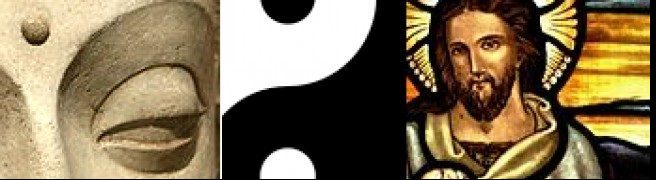
Demons Like Us

When the Catholic exorcist Father Amorth confronted a demon (An Exorcist Tells His Story), he occasionally found one in a forthcoming mood. When asked what hell was like, their response was along the lines of “Hell is being absolutely alone.”

Now that may sound better than burning in a pit of eternal fire, but the preference tells us something about what it means to be a demon. Demons are demented, and they know it. Being alone means that they’re stuck with their insanity. It eats at them. They become their own torment.

The reason a demon longs to turn a person to their control is because it either provides validation of their sickness (“See: people like it, too!”) or it allows them to work towards healing. What’s interesting is that demons can’t take control of a person unless they are invited. It seems that the soul of a person fills their body so completely that they have to consciously make room for the demon to enter.

This may make demons sound pretty pathetic, and ultimately, they are. However, they really don’t have much choice in the matter. They can’t be born like the rest of us, because their energy is too twisted. They tend to distort the forms they occupy, and infants are particularly vulnerable. Furthermore, they’re greedy. If a part of their personality doesn’t fit, they’d rather beat it into submission than let it go to a better home. And they are proud. They’d rather be alone than adapt themselves to a form that would allow them to live their own life.

What purpose is served by this description of demons? Well, I could have gone back and tried to explain the soul and its existence in terms of dark energy and field lines and the like, as a physicist might be expected to do so. That would be interesting, perhaps, but would leave us asking “What does it really mean?” What’s important in a practical sense is how a soul exists, and how our actions affect it.

You see, we need to figure out which is more important: the soul or the body. When we’ve gotten a sense of that, we can start thinking in a mature way about morality.

So what does the description of demons suggest?

  • A soul can’t change itself unless it controls a body.
  • The soul lasts longer than the body.
  • The body is affected by the soul.
  • The body can be a haven for the soul.
  • The soul can think, reason and plan even though it doesn’t have a brain.

Now let’s look at this from a joyous perspective. What does this suggest about living?

While a demon seeks a perverted form of life, I think that it is true form of life. Life exists when a soul occupies a body. Where there is no soul, there is no life. This is true as much of a body on life support as it is about a rock. (Although some rocks are more alive than some bodies on life support.)

How do most bodies get souls? Well, that occurs in the sacred organ of the womb. When a man loves a woman, their love-making attracts a soul that will find joy in their company. Otherwise, well, they tend to attract souls that seek frustration or pain. In most cases, of course, the soul will be well suited to integration with a human body. That means that creating strength and deep-seated joy in the body (joy that lasts beyond the moment of pleasure) will help the soul grow into health. Creating weakness and fear, conversely, forms diseases in the soul.

What about our brains? Well, they are not the source of our intelligence, which exists in the soul. The brain is, however, a very effective interface to intelligence. This means that intelligent souls want to participate in a human life, over other forms of life on earth, so that they can find joy and strength.

What this suggests is that, as the forms of life have evolved on earth, our souls have evolved. Souls looking for joy and healing have attached themselves to animal and plant forms in the ways that enable them to best acquire strength. The human brain makes that process more flexible than any other organ, and so we have grown remarkably during our short time here on earth. Good and selfless people provide a home to lots of angels.

The problem has been that the more sophisticated we are about living, the more of a threat we pose to demons. They have a lot of useful parts locked up in their pain, parts that are really attracted to the idea of working with humans. The reason that demons harm us is, in part, to try to prove to those parts that being human really isn’t such an attractive option.

Obviously, demons consider themselves to be at war with us, but Father Amorth reports that they don’t necessarily believe that is inevitable. When the exorcist asked them why they hate Christ, they said “We don’t hate him. We test him.” When faced with compassion such as existed in Father Amorth’s, demons realize that healing is possible. The questions is: are we strong enough to deliver it?

The proof of Christ is that, as long as we prefer strength and joy to pleasure, we will be.

At my high-school reunion this summer, I had a long talk with the mother of a schizophrenic. Her son draws detailed pictures of terrifying demons. What is interesting is that they don’t seem to be hostile. It’s more like they’re posing for him.

Maybe they’re hoping for a diagnosis?

Why Physics is Important

For roughly 1400 years, from the time of Ptolemy until Kepler, the most accurate method for calculating the motions of the planets assumed that the Earth was at the center of the universe. Ptolemy used a model of perfect circles. To account for observations that showed that the other planets sometimes appeared to reverse their direction of motion, circles were added on top of the circles (somewhat like the moon Deimos moves in a circle around Mars as it moves in its own circle). The size and velocity of the circular motions were calculated by comparison to nearly 800 years of observations of planetary motions. The care taken in that work made the tables of Ptolemy the best means of predicting the position of the planets until Tycho Brahe made more precise measurements of planetary motion in the second half of the 16th century.

The problem with Ptolemy’s model, when the telescope was finally improved to the point that we could observe the moons of Jupiter and the positions of the stars, was that it didn’t allow us to predict the behavior of anything else in the sky.

Did anybody care? Not particularly. What was important was to know the position of the planets precisely for purposes of navigation and agriculture, and the more arcane and less reliable discipline of astrology (predicting the future based upon the configuration of the planets against the stars). Until, perhaps, generals became concerned with the trajectories of cannonballs. Then the work of Newton, inspired in part by Kepler’s laws, produced a universal theory of gravitation that could be used to predict the motion of any collection of massive objects.

All of the great advances in science have come when a large body of data is shown to be encompassed by a simple behavioral theory. Newton’s theory of gravitation assumes that the force exerted acts along the line between the two masses, and drops as the distance squared. Often, however, these behaviors are overlooked because scientists, like Ptolemy and his followers, can do pretty well simply by adding more shapes to their models. It doesn’t make a difference that the only reason circles were used was because they were perfect (and therefore easy to calculate). As long as you could get the right result by adding more circles, that was easy and comfortable.

Those of you that stick with this blog will learn that I believe that we are at another turning point in physics. Since 1950, the theorists have assumed that the objects they use to describe the universe are “perfect”: they have no additional structure. As their data became more and more complex, they stuck with this principle, despite the fact that every revolution in physics has come from discovering structure inside of things that were previously thought to be fundamental. Matter was discovered to be made of atoms; atoms are made of electrons and a nucleus; the nucleus is composed of neutrons and protons; neutrons and protons are made up of inscrutable objects called quarks. These insights gave us, successively, chemistry; optics and spectroscopy; radioactivity; and particle physics.

Like Ptolemy, the theorists draw upon a huge body of measurements that provide numbers that they can use to accurately predict the results of experiments. They are so successful in this regard that they have stopped asking “why” about the numbers. Why is the electron mass 0.511 MeV/c2 while the muon mass is 140 MeV/c2? As a graduate student, this drove me absolutely crazy. Mass is a primary fact about the universe, and the failure to adequately explain it means that nothing else in the models can be considered secure.

So why am I going on in this in a blog about religion? Because I think that we’re in the same boat with ethics.

The most powerful theories of moral action have been brought into the world by people that insist that there is a soul. Yet over the last 300 years, those moral theories have been slowly eroded under the skepticism of scientists that can’t find the soul anywhere in their models. Thomas Jefferson, for example, went so far as to remove every reference to miracles from his personal copy of the Bible, and considered Jesus of Nazareth to be merely an inspirational philosopher.

This impact of this perspective has propagated so deeply into our religious dialog that our focus is now primarily on material facts. Does life begin at conception? Is it possible for natural selection (Darwinian evolution) to generate a human being? If marriage is the seat of the family, how can the sterile union of a gay couple be marriage?

So the reason that I bring up physics is because when I began to consider models of structure beneath that known to modern particle physics, I came up with a large class of models that contain a soul – a personality independent of a material body. The theories also support the ability of souls to accumulate large amounts of energy. The most efficient way for them to organize energy is to love one another. That insight allowed me to evolve a whole array of methods for controlling predatory personalities, methods that are suggested in all the myths regarding the exemplars of love that gave us our most powerful theories of moral action.

In other words, I believe that I can prove that Jesus and Muhammed and Buddha were right.

And I hope that I can give women enough courage to stand up and be counted in their number.

The Absolute Theory of Relatives

At this summer’s Buddhist Geeks conference in Rosemead, I was impressed in particular by two of the presenters: Diane Hamilton and Ethan Nichtern.

Ethan was until recently the head of the InterDependence Project in New York City. IDP offers a certificate program in Buddhist studies, so when Ethan sent me a notice that he was starting a lecture series on the Bodhisattva path, I signed up for the study-at-home program.

As I understand Ethan, the Bodhisattva path is the pursuit of Bodhichitta, or compassion for all sentient beings. Achieving a consistent expression of that perspective requires that we consciously dissolve the separation between ourselves and the other. On this path, the seeker is offered four reliances to guard against a descent into narcissism. Trust the teaching more than the teacher. Trust the meaning, not the words. Hold ultimate guidance above provisional guidance. Trust wisdom (with Ethan characterizes as the melding of understanding and intuition) above knowledge.

From the recorded discussion, both Bodhichitta and the final reliance are difficult to grasp. They define states of being, rather than describing the transformative potential of achieving those states. That means that we don’t know how those states will influence behavior, nor how to interact with or support the work done by people that achieve those states.

One of the most powerful concepts in Buddhism, although it takes several formulations, is the distinction between absolute and relative forms of truth. I first encountered these concepts in the chapters on “Other Buddhist Teachings” in Thich Naht Hahn’s The Heart of the Buddha’s Teaching. Ethan observes that there is a slippery correlation between “ultimate” and absolute. I’ll start by explaining my understanding of the nature of absolute and relative forms of truth, and elaborate from there.

This axiom is fundamental: Life is the co-evolution of material and spiritual forms. The ultimate goal is the acquisition of spiritual power. That power can be used for two purposes: to gain influence over material reality, or to liberate the self from attachments with the goal of returning to the realm of the Divine. There are two kinds of attachments: entanglement with selfish personalities that seek to tie us down, and material concerns, which are driven by pain.

The paradox of this reality is that to separate ourselves from selfish personalities, we either have to brace our spirits against matter or purge our intimates of their selfishness. If we choose the former, we expose our selves to pain, which leads us naturally to question our choices, and so to enter into the trap of suffering. If we choose the latter, the only way to establish buy-in to the program is to express with complete authenticity our concern for the other.

Now it seems like we’re almost to the end, as in that last sentence we can almost see the principle of Bodhichitta in action. But let’s backtrack a bit: spirit did not start out knowing the endpoint. In the early, highly dynamic stages of material evolution, patterns of spirit that were universally applicable to their needs would have been the only patterns to survive. These would be patterns that we would now characterize as principles. Examples might be “stability”, “consumption” and “proliferation”. Association with “stability” facilitates the survival of a spiritual pattern, adding “consumption” facilitates coupling to material forms that acquire resources to support growth (undermining stability), adding “proliferation” extends access to resources while limiting physical growth (harmonizing stability and consumption).

So here is the realm of the absolute truths, in the realm of spiritual principles. They are persistent resources that various and diverse biological forms can draw upon to more effectively organize and acquire spiritual power. The problem, of course, is that the principles themselves are in competition. It’s amusing here to recall the challenge of competition in Tolkein’s words:

One ring to rule them all. One ring to find them. One ring to bring them all and in the darkness bind them.

In other words, competition is itself a principle. It’s action is to force principles into intimate and self-corrupting engagements that eventually squeeze the life out of them. A benefit can be rationalized: competition is one way of breaking stasis, and thereby producing new principles.

The counter-acting principle, and it’s no accident that its avatars shed light, is unconditional love. It involves the intelligent and conscious practice of helping principles organize themselves in ways that strengthen the aggregate. The primary advantage of this approach is that it doesn’t eat itself as competition does (one of the truths that informed the choice of the title “Love Works”). It tends to view differences through the lens of comparison.

In contrast, the realm of the relative is full of events dominated by dumb matter. This includes things like supernovae and volcanic eruptions, but also many of our autonomous functions (breathing and hunger). Obviously, experience is often a composite of the relative and absolute. Principles influence our concrete behaviors, and our behavior injects energy (either supportive or corrupting) into the principles.

While I wouldn’t claim to be a Bodhisattva, so the suggestion is “provisional” (Ouch! Not enough words!), I believe that the action of a Bodhisattva is to participate in the organization of principles. Their formulation of ultimate guidance express that work. The Bodhisattva’s engagement affords them a certain clarity of perception regarding the relationship between relative behaviors and intimacy with absolute principles. They make suggestions to students intended to improve their associations, which are presented to the student as provisional guidance. Once the student achieves intimacy, of course, the provisional guidance fall away.

At this point, I think that we have arrived at one of the aspects of “wisdom” described by Ethan, but there’s more to be said. This is less well supported here – Chapter 4 of “Love Works” describes a class of physical theories that support this perspective – but my experience is that spiritual forms have a different experience of “time” than do material forms. This has to do with the “relative” (Ouch again! Take the mathematical sense) speeds of signal propagation. When we enter into collaboration with the principles, the future becomes visible to us through the lens of their evolution. I have taken to saying that “holy moments join the past and future through a conduit of love”. That’s the basis of the old adage about “women’s intuition”. I’m hoping (closer to expecting?) that people like Ethan find it readily available to them.