Rise of the Womanarchy

I hate negative memes. They offend and alienate needlessly. These, then, were the off moments for me during the Woman’s March in Portland: the signs proclaiming “Down with the Patriarchy.”

Really, girls? You expect that your sign is going to have any psychological effect on men that are rewarded by woman that sex them up to go out and rape and pillage on their behalf? Especially when the female instigators get to lurk in the background as MYSTERY, tossing aside men with broken spirits while blaming the victors for the carnage?

Hopefully my readers recognize the Biblical reference. There are two “beasts” in the Book of Revelation. They are nearly identical, differing only in that the first bears the number “666” while the second is colored red and ridden by a woman with MYSTERY blazoned on her brow.

“666” refers to the sixth day of creation that gave rise to the mammals. Not yet fully in control of their primitive urges, they swept across the globe, rising to ecological dominance in every realm except the air. It was only in man that the capacity of rationality rose to a level that would sustain the expression of Unconditional Love. The first beast was almost cast aside by the metal tools created by men, but it survived by entering into our religious experience with the spiritual aid of the serpent – the ghostly residue of the dinosaurs.

The red beast represents sexual control as the strategy for dominance developed by female mammals. In its primitive essence, the most effective literary rendering is the long introduction to Jack London’s White Fang. I read it out of curiosity when it was assigned to my son in middle school, finding it a little odd until I had to bring in a forgotten assignment and saw the sexier eighth grade girls flaunting their tits and asses on the lawn while the drooling boys jockeyed for position.

In Revelation, MYSTERY is destroyed when the red beast turns on her. I believe that bondage is broken when the mammalian females come to realize that MYSTERY does not care for their offspring – that the dominant females of homo sapiens will countenance the destruction of the global climate so long as they can use fossil fuels to maintain their personal comfort.

Trapped in his patriarchic mindset, unfortunately, John was unable to perceive the feminine virtues at work (the common theme in Revelation is that woman corrupt men through fornication). From the masculine side of the process, I am aware that love prevails only when the oppressed believe that they have a choice. This is the liberating power of the resurrection: not even death is a barrier to those that surrender fully to love. With that fear eliminated, masculine violence loses its power as a strategy for social dominance.

So what other choice do women have?

Jesus heralded the transformation of the patriarchy under the guidance of Unconditional Love: the rise of Manarchy, with the capitalization carrying the indications of Genesis. I have been seeking in this life to support a female partnership, a Womanarchy willing to subdue sexuality in the service of Unconditional Love. It is to perceive the womb as the sacred crucible in which spirit is joined to matter, thus the mechanism that can be used to call angels to guide that which is good through the era of duress that Gaia is to suffer.

I see the rising spirit of resistance against death in the hard-hitting political analysis offered in the teen girl magazines, and the strength of the criticism brought by Rachel Maddow and other female commentators. But criticism is not enough: if the joint power of the Patriarchy and Matriarchy is to be broken, woman must turn their powers to the service of Love.

Walk in the woods. Go to the zoo. See what is beautiful and good and offer your inmost self to its service. Give the red beast an alternative. Use your wombs to guide it into Unconditional Love. MYSTERY will not be destroyed, she’ll just become irrelevant.

A Gentler Atheism

When planning my trip to Portland, I envisioned walking in snowy woods. The view of the city from the plane did not disappoint – it was covered in a pristine white blanket. It was only when riding downtown on the MAX that I learned what a disaster this was for the residents. Portland rarely sees snow, and the city has been practically shut down for the last ten days.

I did get my walk in the woods out at Breitenbush, in between sessions of the Wild Grace workshop facilitated by Paula Byrne. The experience was refreshing, although challenging. I found myself revealing far more about my journey than I had intended. After my walk in the woods on Monday morning, however, I closed my eyes to offer my gratitude before breakfast, and when I opened them the two new friends at the table said “Thank-you for that.” I found acceptance among them.

Today was my first day driving over the ice and snow. The Dollar lot was kind enough to put me in an Impreza. I don’t know what would have happened without the 4-wheel drive. I was going to go down to the OMSI, but I needed a silk swab for my flute. I ended up bouncing around NW Portland, picking up some books at Powell’s to fill in the mornings and afternoons until heading out for the dance events that drew me here. And well that I did: the rain started this afternoon, turning the roads into an icy slushy mess, and prompting cancellation of tonight’s full-contact improv event.

I picked all my selections at Powell’s from the nature shelves. I’ve been paying far too much attention to the problems people have created for themselves, and feel a strong need to see the natural world through the eyes of people that cherish it. So I find myself with books on bees and nesting.

But I started with Frans de Waal’s The Bonobo and the Atheist. The author is a primate behavioral scientist, focusing on chimpanzees and bonobos (most similar among all the apes to our primate ancestors). Without dwelling on it, de Waal makes clear his preference for the matriarchy of the bonobos, whose casual sexuality supplants fear as social glue. But in both societies, primates evidence empathy, compassion and a sense of fairness that are often upheld by philosophers as markers of “moral” conduct. de Waal extends this attribution, through brief vignettes, to other species in the mammalian order.

Laced throughout the book are reflections on the work of the Dutch artist Hieronymus Bosch, famous for his apocalyptic visions. Motivated perhaps by recent works that characterized Bosch as a deviant, de Waal reinterprets the artist as a humanist, noting that there is no representation of God in Bosch’s paradise. The artwork serves as an interesting device in the narrative: de Waal references it in drawing parallels between bonobo and human behavior.

As a work of moral philosophy, the book is weak. de Waal asserts that the cooperative socialization of apes proves that morality is innate, rather than learned. But this is the morality of the tribe that suppressed intellectual innovation for so much of human history. That is not always a bad thing: nerve gas and atom bombs are tools that we probably should do without. But it is the human capacity to innovate that creates social disparity that eventually sunders tribal bonds. I remark that the Greek root – religio – means “to bind again.”

Ignoring this problem, de Waal asserts that religion exists only to claim authority over our moral energies. This is accomplished by generalizing and abstracting the moral impulse. Without demonstrating deep religious insight, de Waal suggests that any such system of moral reasoning divorces us from the physiological and emotional roots of our natural morality. Paradoxically, he observes that natural morality applies only to individuals familiar to us, which leads to gross abuse of the rights of the “other” = whether of different cultures or different species. The book closes with an appeal to broaden our moral attachments – in effect, to repeat the sins of religion by generalizing and abstracting our morality.

Unlike his more intemperate peers (such as Christopher Hitchens), de Waal does concede the benefits that religion confers upon the believer, among them longer life, social amity and a sense of meaning. He believes, furthermore, that as our moral impulse is rooted in emotional experience, any attempt to reason people away from faith is misguided. Religion is to be tolerated.

At this point, of course, de Waal has joined the camp from which I am now seeking to disentangle myself. Every human culture brought forth the concept of the soul from its tribal past. It is the most obvious mechanism for explaining the sympathy felt between intimates when one is hurt (mirror neurons having been proven to be a fiction). Taking the existence of the soul as a given, religion is then best interpreted as an institutionalized orientation toward spirituality, and the ground staked out by the atheist (de Waal among them) subsides in the tidal surge of love that originates from the divine source.

On Politics and Altruism

The Huffington Post has picked up on the clarion call sounded by Judith Herman and others regarding their psychological profile of Donald Trump. Cynics respond that all politicians are power-seeking, and therefore possess significant personality defects. While that may be so, brains do evolve as we mature.

The brain is plastic, and evolves structures as we age that are responsible for socialization. The most evolved structure, which doesn’t appear until most are in their twenties, is responsible for the expression of altruism. Sociopathy (which I see manifested clearly in Trump’s behavior) is the tendency to treat other people as objects. It is indicative of a lack of even the most basic structures of socialization that are entrained with nursing, which delivers the most basic of rewards for collaboration. Forget psychoanalysis: scans of brain activity reveal whether people have even the basic machinery necessary for responsible leadership of others. My guess is that Trump is seriously deficient in that regard.

Louis Cozolino, who teaches at Pepperdine University, also has a practice in psychotherapy that guides adults through experiences that help them to evolve the neurological mechanisms of socialization (see The Neuroscience of Human Relationships). In other words, there are methods for treatment of these disorders, and we should try to educate the electorate to prefer politicians that engage in such counseling. Altruism is the ability to act for the good of others, and is something that everyone should prefer in political leaders.

Of course, the fullest flowering of altruism appears in our great spiritual leaders – those whose service is pursued without any external evidence of seeking for power. It is granted to them by the world they serve. One of my favorite quotes is from Tagore, the educator and poet who was Gandhi’s cultural collaborator:

Power said to the World, “You are mine.”
The World kept it prisoner on her throne.

Love said to the World “I am yours.”
The World gave it the freedom of her house.

In my post Man and Woman, I flirted with the assertion that the capacity to express altruism (characterized as “unconditional love” in that context) is what made Adam and Eve fully human. Conversely, from a psychological perspective, sociopaths are little more than lizards.

“Man” and “Woman”

The driving motivation for the writing of The Soul Comes First was a reading of the Book of Revelation as just what John said it was: a visit to the Holy Mind in which the angels revealed their relationship to and experience of Christ. The difficulty of the writing is that the insights are like the M.C. Escher drawing of hands drawing each other. Genesis makes sense only if you’ve read Revelation, which makes sense only if you’ve read Acts, which depends upon the Gospels, the chain continuing to a dependency on Genesis.

We have to grok it all at once. I’m afraid that I didn’t succeed very well with that problem.

But the insights continue to trickle in.

Genesis 2:7 says [NIV]:

Then the LORD God formed a man from the dust of the ground and breathed into his nostrils the breath of life, and the man became a living being.

This has been interpreted literally as meaning that Adam was the first instance of the species homo sapiens sapiens. There are those that take a different tack: that Adam and Eve were the sole human survivors of a geological catastrophe such as a major volcanic eruption. But the continuity of the archaeological record undermines all of these interpretations.

Revelation 4 starts where Genesis starts [NIV Gen 1:2]:

Now the earth was formless and empty, darkness was over the surface of the deep, and the Spirit of God was hovering over the waters.

This is the scene that John encounters: the “Spirit of God” being the corporate body of the angels united under the guidance of Unconditional Love. In John’s vision, there are twenty-four of the former – described as “elders” – gathered around the “one on the throne.” We should understand the latter to be Unconditional Love, which is warded by fearsome beasts that prevent the approach of the elders.

So this is the initial state of Heaven before the investiture of God in the Earth. What comes next in Revelation is the sequence of that investiture: a scroll with seven seals is opened, and selfishness is given dominion over the Earth. Then from among the twelve princes of heaven, twelve thousand are sent from each down to Earth. These are the masculine angels that generate change; the feminine angels are held in reserve until a measure of safety is created.

Paleontology tells us that it took approximately a billion years before that safety was attained. Finally, in homo sapiens sapiens, God recognized a species with the potential to express love.

Genesis 2 starts with God’s reflection on that process. The species “man” was created from the dust of the ground, rising up only through an enormous commitment of intention and attention to the manifestation of the potential for life to receive love. If done too early, the gift would have been wasted: it would have been corrupted by selfishness. So love was held in reserve when the 144,000 were sent down from heaven, and remained aloof for a billion years.

God having spawned homo sapiens sapiens as an animal with the potential to elaborate love, Unconditional Love then breathed itself into one such animal, Adam, making him Man. Love was joined to biology, making it possible for us to escape the brutal practices of natural selection as described by Darwin. Recognizing that Adam should not be alone, Unconditional Love then sought for a mate to share the stewardship of spreading love throughout the world. Thus was one female animal imbued with love, creating Eve – the first Woman.

This is what we celebrate when we call them “First Man” and “First Woman” – not the material superfluity of their physical forms, but the transformation that comes with becoming imbued with Unconditional Love.

How did this make Adam a “living being”? Because one of the forms of selfishness is death. Through the link with Unconditional Love, Adam was freed from that captivity. He acted with fearless generosity. It was in seeking to become God’s equal that our thralldom to selfishness was reimposed.

In reflecting on all the evil we have committed since, I have called it “the great working out through the flesh of our dependency on sin.” Each generation becomes a little stronger, and with Jesus to light our way as an exemplar, eventually love will have its way with us.

From Grief to Power

A friend was offering a sermon on his birthday yesterday, dwelling on the contradiction between his grief over all the things that we are losing in this era, and the joy he finds in seeing his community interacting. When I had the opportunity to speak, I offered:

Grieving is the prequel to the opening of the door of our heart to a spirit that would otherwise be lost.

That opening is not easy, because the expression of Darwinian selfishness has left so many of them traumatized. But once they have settled in to the experience of being cherished, they look back into the world they have departed and reach out to those left behind, giving them assurance, strength and guidance.

“They” are trees, flowers, fish, birds, mice, whales, children: anything living that is being displaced by a disappearing or polluted ecosystem.

Over the years my conscious welcoming has gathered quite an entourage around me. From that community of displaced souls I draw my power, power that is expressed in the t-shirt I started wearing six months ago to dance celebrations. Across the shoulders are a right and left hand framing a head and a heart. The words are:

DANGER
Angel Gateways

They just want to be friends.
Please play nicely.

Hoisting by Einstein’s Petard

While often cited as an authority in particle physics and cosmology, Einstein didn’t win the Nobel Prize for his work on relativity. That was considered too controversial at the time. Rather, he was awarded the prize for two papers that forced physicists to shift their understanding of waves.

As I’ve pointed out before, the mathematics of waves is seductive. By assuming that a phenomenon is uniformly smooth at any magnification, we are allowed the use of powerful mathematical tools such as differential equations and Fourier analysis. But it comes with a big assumption: that the things described have no structure inside of them.

Einstein’s two papers undermined that assumption. One paper forced the conclusion that light waves were composed of particles called “photons.” The second forced a recognition that water waves were composed of molecules.

Then he spent the rest of his life pursuing a grand theory of physics that assumed that space was uniformly smooth. Go figure, and take note: he failed in his quest.

So have all the others that followed in his footsteps.

In essence, all that I am asking in my New Physics page is that we imagine that space has structure. I’m hoisting Einstein on his own petard.

Recidivism

When contemplating the selection from among the disciples of the Apostles, Luke records [6:12]:

Now during those days Jesus went out to the mountain to pray; and he spent the night in prayer to God.

Now this is an interesting proposition for prayer: the junior partner in the triune turning to himself for wisdom. Illogical, even bizarre? I can understand it only by assuming that Jesus was a pseudopod emitted from the Holy presence, not in possession of all his spiritual faculties.

Of course, as a demonstration it is instructive to read  of the devotion and trust that Jesus invested in the Father. If he was moved to pray, how should not we as well? And conceiving of him as a man, I would not rue Jesus that comfort.

A common elaboration of the Crucifixion is that it was not just physically agonizing, but also spiritually devastating. We have the great heart-rending cry:

Eloi! Eloi! Lama sabachthani?

[Mark 15:34]

There was no answer, because there could be none. God took on flesh because it was only through flesh that evil could be healed. Once Jesus assumed that burden, it was his and his alone.

The angels cannot change their nature – it is the grace and curse of humanity to possess that capacity. Thus God testified to Cain:

Sin is crouching at your door; it desires to have you, but you must rule over it.

[Gen. 4:7]

Jesus was the culmination of this seeking after strength. He arose out of a culture devoted to the seeking after purity, and chose to allow sin into his heart so that its consequences could be healed.

The bulk of the BIble demonstrates the difficulty of this accomplishment. The men raised to greatness always struggle with their frailty. Jacob’s lust makes him little more than a seed dispenser to two competing sisters and their handmaids, and his favorite Joseph leads monotheism into subjection to a polytheistic culture. David succumbs to desire, clearing the way for marriage by sending his friend into battle to die, and Solomon again opens the door to polytheistic practices.

This recidivism illuminates the challenge of loving unconditionally: to be merciful is to grant power to those lacking the ability to discipline their behavior. Every parent confronts this in the two-year-old and adolescent, but somehow we believe that grace given by God is proof against this corruption. To the wise, though, the recidivism of the Bible is the greatest possible proof of God’s compassion for us. He pursues the loving embrace even against the evidence of our unfaithfulness.

Of course, in demonstrating the infinite depths of divine compassion, the heroes of the Old Testament are problematical role models. This came to a head in Islam, which largely sanitizes the evidence of personal frailty. A Muslim scholar disputed with me over David’s betrayal of friendship, explaining that the sanitized history was enforced by Muhammed’s (pbuh) son-in-law, Ali, and justified in that opportunists used David’s behavior to justify their own lecherous license.

The consequence of this idealization of Biblical heroes is that the program of monotheistic escalation (the only God worth worshipping is perfect and infinite) extends to the heroes of the Bible. They are no longer human but gods themselves, immune to temptation and error.

So what of Jesus, absorbing the burden of human sin on the cross? We know that he showed reluctance and despair in the event. This supports my sense that divine love comes at the first possible moment. In the New Testament as in the Old, the manifestation of grace is subjected to pressures almost certain to destroy it. Among those are the unfaithfulness of those to whom salvation is offered. Returning to Nazareth early in his ministry, Jesus is astonished by their cynicism, which makes him unable to offer power in any great measure.

So I conclude: as monotheism is the pursuit of a truly human god, in that pursuit Jesus is truly our god, struggling against our sinfulness while healing us so that we may sin again. Paradoxically, as we approach more nearly to his grace, that struggle intensifies. The assault on his virtues are more focused, the wounds more intimate. As God cried out again and again in the Old Testament, would we not expect Christ to be tried by anger and fear?

Even perhaps, at times, to be overcome by human impatience and frustration?

Beyond Evil to Good

Miguel de Unamuno, considering the road from masculine frailty to faith, observed in Tragic Sense of Life that all men desire two things:

  • To live forever.
  • To rule the world.

The obvious paradox in these impulses is that most of us (myself being a man) attempt to accomplish the second by beating the crap out of other men – which tends to advance the interruption of our seeking after the first.

Work-arounds abound, the most obvious being to have a gun at the ready whenever an altercation arises. The subtlest is the use of psychological conditioning to get others to do the beating up for us. In totalitarian states, that conditioning takes the form of propaganda against imagined enemies, but is often joined with control over basic necessities. In democratic cultures, the conditioning is typically tied to unattainable visions of sexual conquest. When progeny ensue, hypersensitivity to their vulnerability often becomes the lever used to encourage financial exploitation of others.

Obviously in these systems there will be losers – a great many losers. The power of the impulses identified by Unamuno then manifests in a terrible perversion, expressed by a friend who asserted that the world would “know about him.” He testified ominously:

“Yeah, when a man has nothing to lose, there’s nothing he won’t do. And when the world learns about me, it will be nothing like anything that it’s ever seen before.”

I tried to lighten the air, offering that I knew what he meant, and that my sons were sometimes worried that I was going to just walk off and disappear. When he asked “You mean go live on the streets?” I replied, “No, probably they’d find me out someplace like the Amazon in Ecuador helping the indigenous people deal with the mess that Texaco left behind.”

Ah, the contradictory consequences revealed by Unamuno’s observation!

Some men lose everything, and seek to rule the lives of others by ending them, thus finding immortality in notoriety. I have nothing, and so claim this little piece of the blogosphere, writing about everything for almost nobody, and imagine conquering a little part of the world with a sponge and a squeegee. Some men fear the immigrant, and extrapolate our future against Europe’s tragedies where the Muslim population is ten times proportionately larger than ours. Accepting King’s dictum that “injustice anywhere is a threat to justice everywhere,” I embrace Muslim America as an opportunity for Islamic scholarship to rediscover and reassert the original message of Mohammed (pbuh), and any acts of violence as a cross to be born in conquering fear.

Unamuno’s defense of Christian faith was that we “create this God of love and eternal life by believing in him.” I see that as heresy: we don’t create him; we rather allow his virtues to manifest in our lives. In doing so, we learn to love ourselves and accept love from others, thereby obtaining dominion over the only part of the world that really matters: ourselves. In focusing that strength to the service of loving others, we lessen the burden of their resistance to our survival, and so enter more deeply into their world.

And for those that cannot learn – either those that lash out in violence or those that consume the innocent? What do they become in the end? Not themselves any longer – they become a headline in a newspaper. The history implicit in the personal “why” is lost. They become simply a “what”: 18 in San Bernardino. 49 people dead in Orlando. 3000 dead on 9/11. 47 million during World War II. Their personal history is consumed by the violence they created.

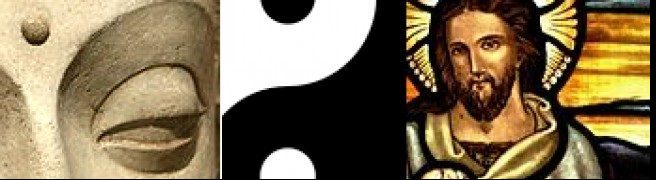
But men like Buddha – who renounced violence to bring a system of self-control to his people – or Jesus – who died to expose the hypocrisy of the military-religious complex – their names are enshrined in the hearts of those they have liberated. They live on in us.

Exuberant Faith

In The Soul Comes First, in assessing the crippling effects of the heresy of Original Sin, I conclude:

The more serious fault […] is the conclusion that Humanity is a flaw in Creation. This is completely in opposition to the actual truth. Humanity is an essential and valued part of Creation, an element that is [be]held with the most tender concern and honored regard in recognition of the difficulty and importance of the work that we must perform, the pain and sacrifice involved in accomplishment of that work, and the joyous consequences of its eventual completion.

When I wandered with the Boy Scouts on backpacking trips, I would feel this shouted at me from the wilderness – the trees, birds and animals begging for relief from drought. When I paused to bless the land, raising my hands to remind the heavens that they suffered, one of the fathers snapped “Would you stop doing that?”

In my dialogs with those of conventional faith – once principally dogmatic Christians, but today including atheists – I am often dismayed by the energy they invest in running from the truth offered in that opening excerpt. I have come to understand that their rejection is rooted in the privilege of flesh that resists the primacy of spirit. For it is the flesh that suffers, and the spirit that reaps the joy.

Even Jesus struggled with that paradox, testifying at Gethsemane:

The sprit is willing, but the flesh is weak. [NIV Matt. 26:41]

This comment, at the end of his long journey of surrender to the limitations of his age, was prefaced by:

My Father, if it is possible, may this cup be taken from me. Yet not as I will, but as you will. [NIV Matt. 26:39]

In that moment of weakness, with Simon Peter dosing nearby, I wonder if Jesus heard the echoes of the apostle’s complaint on the lake of Gennesaret. The fisherman, weary from his fruitless night and irked by Jesus’ commandeering of his boat as a podium, grudgingly responds to an encouragement to lower his nets in the deep water:

Yet if you say so, I will let down the nets. [NIV Luke 5:5]

And thus unfolds the little charade that Jesus had organized with the fishes, those quiet denizens of the waters that wait so patiently for us to assume our stewardship of the earth. Recognizing the Man that had come to show us the way, they spent the night lurking in the depths of the lake, teasing the fisherman. When the net enters the water at Jesus’ command, they surged exuberantly upwards, each calling to his fellows: “Come! Leap into the net! Show these fishermen his glory!”

But did Simon follow? No, condemned by religious teaching to believe that the sinner eclipses the saint, Simon falls to his knees and begs:

Go away from me, Lord; I am a sinful man! [NIV Luke 5:8]

This is the second great obstacle to faith: the conviction that we are unworthy to serve love.

Simon Peter, by nature extravagant in all things, expresses this with physical extravagance. Again at the temple, he cannot just deny Jesus once and then depart; he must amplify his shame by lurking in the shadows, watching impotently so that he may deny Jesus twice more. What would have happened if, recalling the fish, he had stepped forward brazenly to cast his arm around Jesus’ shoulders and proclaimed, “Look at the dignity of this man! How could he not be God?”

Instead, Jesus went to the cross, bearing the weight of the dependence of all flesh upon sin, and caught Humanity in the net of his heart. Some still fight to escape that embrace, but I for one hunger for the company of those that leap exuberantly into faith.

Me, Myself and Christ: Lover of Ideas

If to love something is to seek to strengthen it, then in the period between high school and the World Trade Center attack, my life was devoted to the loving of ideas.

Of course, as an initiate to modern scientific materialism, at first I didn’t see it that way. I was strengthening my brain to ensure my future as a knowledge worker. I understood that when exercised, the tissues of the brain become more densely penetrated with energy-delivering capillaries. Neurons that were stimulated by thinking sprouted dendrites that sought axons, and when those synaptic connections were triggered, new thoughts were born.

I didn’t really begin to examine the detailed operation of my mind until my wife began to get angry with me when I didn’t look at her when she was asking for advice. She was a very ambitious woman, seeking a complex balance in life between competing priorities, and when she brought me a problem I would go into a kind of meditative state. Her words would enter my mind, as though through a gateway into a garden that she could not enter. I would hold them all together, not weighing them, but allowing them to find a balance among themselves. When a pathway through the possibilities became clear, I would focus on the most immediate priority and serialize the procedure that would generate the desired conclusion.

The friendship that I offered to ideas was the maintenance of the preserve in which they organized themselves. I didn’t force them together. I have never been invested in the outcome of the determination. I was interested in the truth that was revealed. When none became apparent, I would produce a plethora of possibilities for my interrogator, intuitively probing for more constraints so that I could produce a definite conclusion.

Most people, of course, found this incredibly confusing.

In the quiet hours alone, I continued to grapple with my growing concerns regarding the stability of our civilization. What I realize now is that I was reaching ever deeper into the space of ideas, and that exploration was allowed because I was trusted. Ultimately this manifested as a terrible intellectual force that simply brushed others aside as I pursued ideas to their conclusion.

The outcome on my professional relationships was distressing. In one case, I had identified a fundamental inconsistency in a design method, revealed only through a seven-step chain of reasoning. I tried to offer this to the lead investigator, who fought me at every step. When I finally wore him out one day and was able to lay out the logic, he broke off with the complaint “If you talk long enough, Brian, you can convince people of anything.” In another situation, a potential collaborator noticed me breaking eye contact when he asked a difficult question. I was looking past the blank wall of the cafeteria into the space of ideas. Intuitively, he tried to follow my gaze to enter along with me, but was rebuffed. And finally in 2005 I had a female sponsor show up in my dreams one night, offering to usher me into the quantum realm. She slipped through the atoms of the wall, pulling me behind her, and I simply bounced off. When she mused “I wonder why that happened,” I realized that I was in possession of a view of reality that led into deeper truth.

In the spiritual awakening that occurred after 9/11, I came to understand just how great a gift I had been awarded by the ideas that accepted my attention. My elder son Kevin gained access to them early in his childhood. Distressingly, he considered that space as a private preserve, and worked systematically to exclude his younger brother. So Greg learned to access ideas through his peers.

As they grew older, I offered them some advice. To Kevin, “Ideas are strongest when they are shared.” And to Greg, “People can introduce you to ideas, but eventually you need to make friends with them yourself.”

While in my childhood I was in awe of the past, I am relieved to say now that I am blessed with the awe of realizing how deeply they have integrated that advice into their lives, and to observe how their moral and intellectual skills mesh to create value in the world. While I try not to impose my expectations upon them, I find through them hope for the future.