Coffee and Coaching PodCast Recording

Caryn FitzGerald had me on today for her inspirational author series at http://www.coffeeandcoachingradio.com. I told her it was an honor to be her guest for “Render Unto Caesar” day (which brought a gracious laugh), and she prompted me to share the greater journey that led to the creation of my web site (www.everdeepening.org), my four books, and this blog. Reconstructing that experience – and reflecting on how they all support each other and the purpose I serve – was really valuable to me. It’s been a long intellectual and emotional journey.

The podcast should play in a month or so. I’m just worried that (as is typical, I guess) I had a lot of surprising things to say. When Caryn remarked that I was a very complex man, I had to admit that was why I am single – I’m just too much work. And then I turned around and remarked that it all seemed pretty simple to me.

Love is like quantum mechanics – it applies to everything, which can be confusing until you understand how it changes things. So while I was rattling on about corporate management, men and women, raising children, and Jesus, it was really all about one thing: let’s make life simple, people. Let’s just love one another.

Caryn is a gracious and affirming host, and the questions she asked were a powerful force in shaping the interview. She invited me to come on again, and I’m expecting to face interesting questions – and continue to benefit from the learning that entails – when I do.

Robbing Peter to Play Paul

In an era in which the Law of Moses had been corrupted as political tyranny and religious hypocrisy, Jesus would not have been expected to write a Gospel. Scripture is offered to us as a method to open ourselves to the love of God, but words change meaning over the course of time, and eventually the weight of our cultural prejudice stands as a barrier against the Divine Presence. As Jesus experienced, even worse can occur when the meanings are manipulated intentionally.

It was in recognition of this outcome that God proclaimed through Jeremiah [NIV 33:34]:

I will put my law in their minds
and write it on their hearts.
I will be their God,
and they will be my people.
No longer will they teach their neighbor,
or say to one another, ‘Know the Lord,’
because they will all know me,
from the least of them to the greatest,
For I will forgive their wickedness
and will remember their sins no more.

Jesus was the implementation of this promise. The proof was not in his words, which are always ambiguous, but in his actions.

In The Soul Comes First, I explain Jesus’s promise that his generation will see the fulfillment of his prophesy: On the cross, Jesus was unbound from time, and worked his way through the future until his will for Humanity is manifested. Then he returned in the glory of his realm to return to the Father. In that process, Jesus had no need for words – it was through his flesh itself that the work was done.

But, for those stuck in the flow of mortal time, how were those moments to be bridged? That requires propagation of the message of salvation. The original Apostles, fishermen and tax collectors, simple men of Galilee, had limited reach for this purpose – but they had direct experience of Christ, and had been humbled by their lack of faith. This is reflected in the kindly advice of Peter, in his second letter [NIV 2 Peter 1:5-9]:

For this very reason, make every effort to add to your faith goodness; and to goodness, knowledge; and to knowledge, self-control; and to self-control, perseverance; and to perseverance, godliness; and to godliness, mutual affection; and to mutual affection, love. For if you possess these qualities in increasing measure, they will keep you from being ineffective and unproductive in your knowledge of our Lord Jesus Christ.

This is a message of personal redemption through direct relation with Christ.

How was such a message to spread in the face of a culture of tyranny and hypocrisy? Long and slow it would have been. So this is where Saul of Tarsus comes in. Roman citizen and temple persecutor of the Christians, like Moses, Saul understood the mindset of the ruling classes, and the processes that would avail to bring him into direct dialog with them. As a Temple priest, he also understood institutional practices. Reborn into faith as Paul, this apostle was a traveling consultant to Christian communities in formation. As a philosopher, Paul also provided the early Christians with a framework for understanding the events that had transpired in the Holy Land, including clear statements regarding the implications with respect to past teachings.

Obviously, these are incredibly powerful works, and a source of rich guidance for pastors trying to manage diverse congregations and reconcile Old and New Testaments. In many non-denominational congregations, I find that Paul’s writings are preached more often than the parables of Jesus. Paul is clear and direct, while the parables of Jesus often leave me wondering “WTF?” (until I work out that Jesus wove in three meanings for three different audiences).

But is the voice of Paul the voice of Christ?

I would argue “only mostly.” Paul has a terribly serious defect: his religious roots rest in a framework dominated by sin, and his personal redemption occurred as a result of his sin against Christianity as a whole. Paul carries a guilty past around with him, and so his theology is dominated by a concern for forgiveness, and the miracle of redemption.

Peter, on the other hand, offers this promise [NIV 2 Peter 3:8-9]:

But do not forget this one thing, dear friends: With the Lord a day is like a thousand years, and a thousand years are like a day. The Lord is not slow in keeping his promise, as some understand slowness. Instead he is patient with you, not wanting anyone to perish, but everyone to come to repentance.

I much prefer the simplicity and directness of this promise. It is echoed in Paul’s writings, but as Peter says [NIV 2 Peter 3:16]:

His letters contain some things that are hard to understand, which ignorant and unstable people distort, as they do the other Scriptures, to their own destruction.

Sometimes less is more. I’d lay aside the rules offered in Paul’s letters, and focus on the progression defined by Peter. Leaving much to be discovered, it is harder work, but comes from one who learned most painfully from a more immediate experience of Christ.

Loneliness

Right on schedule (3 AM in the morning), I had this dream:

I was away in another city at a conference, feeling really lonely and adventurous in the way that one feels away from home. A Hispanic woman had adopted me, and decided that we were going to have sex. She wasn’t really pushy about it – it was just, you know, “Why not?”

So we go back to my hotel and get into the elevator. She pushes the button to the sixth floor, and we rise and rise and rise and rise. The floor indicator was on ‘6’, but we just kept on going for the longest time. Finally, the doors open and we step out into heaven.

There was an pleasant blonde at a folding table, the kind set up for conference receptions. She was dressed all in white – obviously the angel receptionist. I stepped forward and my companion just faded into the background.

The feeling of loneliness intensified, and I found myself laying my head down on the table. “Why haven’t you found me anybody? I’m so tired of being alone.” This went on for ten seconds.

Then I stepped outside of the dream. Taking stock of the women that were organizing it, I clarified for them:

I am not a supplicant in this place.

This life is unfolding just as I intend it.

I am the carrot.

You ladies need to do better for me.

Exhaustion

I forget who said it – either George Bernard Shaw or Oscar Wilde – but “being gentle” sticks in my mind. I do the best that I can.

Bikram Yoga is an interesting exercise in wearing that discipline down. We’re supposed to look forward directly into the front mirror, ignoring all the beautiful and scantily clad bodies around us. I usually do well – deflecting even the attentions of the women that want me to look at them – until triangle pose, which is about the 40-minute mark. By that point, I’m pretty much worn out, and my eyes begin to wander.

I do try, but I guess that part of the problem is that I’m such a long, skinny rail. I’m not strong enough to fully express the postures. I’ve also discovered that I’ve not been using the muscles in my pelvic floor, which was creating havoc with the tendons on the inside of my legs. There are certain postures that just hurt, so I sit them out, which causes people to wonder why I’m breaking the practice. So they look at me, and my brain, in its weakened state, follows the interest back to its source.

Strangely, the floor series is even worse. I’ve been struggling with ever-intensifying waves of grief during corpse pose. I know that I’ve been disturbing the other students. I finally broached the matter with the owner, and Rachel, sweet-heart that she is, just offered me a free choco-coco water.

The challenge has broadened over the last couple of weeks. Women are just so incredibly beautiful. I try not to look into them, but even just taking in their shape has gotten them to start dropping the fact that they have boyfriends, or prominently displaying their wedding bands.

I think it has to do with exhaustion. I’ve been getting about five hours of sleep a night for the last couple of weeks – well below my subsistence level of six-and-a-half (I really need eight, I think). It’s also shown up in my driving. I’ve found myself in embarrassing situations a couple of times, basically avoiding accidents through the alertness of others.

I did go back to church this Sunday for the first time in six months. I was fine at St. Paschal’s – the children’s choir their is so clear in their intentions. And I’m getting better at restraining the images of taking the celebrant aside to correct his theology. That showed some at Skyline Chapel, where Pastor Manny took the time to sit down with me after service. I’ve only spoken to him a few times over the years, but what he said was like balm to my heart.

Brian, I hear what you’re saying, but every time you talk to me, I have to let my heart work on it before I know what to do with it.

God, I didn’t even know that anybody was listening.

The Rude Chakra

I would imagine that readers of this blog might be asking “Why?” Not just, “why are you writing this”, but also “why do you think you have the authority to undertake this work?”

Bear with me while I explain:

Among the methods for spiritual development are practices that focus on the activation of “energy centers” in an ascending sequence from the hips to the crown of the head.

My orientation to the seven chakras, an Indian categorization, occurred simultaneously with reading of Cozolino’s The Neuroscience of Human Relationships. I was stunned by the close parallels between the personality traits manifested at each stage of chakra activation and the development of the seven neurological centers involved with socialization. Clearly, the investigators of chakra had captured something fundamental about human personality.

So what, then, to make of the parapsychology of the chakra system? The capacity for healing obtained through activation of the heart chakra? The gifts of divine knowledge and wisdom? Why would the investigators have corrupted their careful study of human psychology with unfounded assertions such as these? My sense was that it would be unlikely – that in fact the assertions are based in fact.

The principal hazard in exploration of the chakras is the sequential order of the activation. The theory is that the root chakra, located at the base of the spine, is the conduit for spiritual energy (prana) that arises and activates subsequent energy centers. Of course, that energy is tied to fundamental life processes, including, at the root level, our sexuality.

In adults, once control of that energy is established, a common tendency is to engage in sexual self-gratification. Some people never tire of that game. Worse, kundalini energy, once turned on, becomes an extremely powerful tool in the hands of manipulators interested in controlling our will.

Having gotten past that stage, I am now mortified when the response to an offer of heart or mind energy is sexual energy. It’s usually driven by simple greed: the simplest way to ensure access to knowledge and power is to grab on to the source at the root level. In the process, energies that are designed to support our basic life processes are raised up and set loose in the more delicate structures of personal discipline and social imagination. Generally, a mess results.

It is, indeed, rude, in the sense of both “crude” and “insensitive”.

It was with some interest, then, that I reacted to being told by a reader of auras that I have a gap of four inches in the flow of prana up my spine, located just above the root chakra. I was told at the same time that “[I] keep on losing parts of myself” in the course of the sequence of my lives. I therefore assumed that the gap was a prophylactic step taken before entering this life, as a means of keeping people from getting into my heart energy through sex.

There’s some truth to this, but recent events counter that interpretation. When I finally decided that I needed to stop investing energy in people that were unable to reciprocate in kind, I went through a period of several weeks in which I felt at times that the top of my head was going to come off. All the energy I had been laying about was seeking an outlet through the crown chakra.

At the suggestion of a friend, one night I began experimenting with alternative channels for the flow. In a few minutes, I found myself directing it down through my spine, bridging the gap. In the following days, the transformation in my personal energy was unexpected. In yoga classes, problems with alignment of my spine began to evaporate. And in interacting with peers and family members, I have become more direct, to the point, well, of being “rude”.

In terms of the activation of the chakras, though, I need to emphasize the reversal of sequence. I am reorganizing my root chakra with energy originating from the heart, rising through the crown, and now being directed downwards.

And this brings to mind the Native American theory of energy centers. In that theory, there are twenty total stages of development. The first ten are similar to the Indian chakras, rising along the spine and blooming from the body through the crown. The pattern of personal development is also similar. One the tenth stage is activated, the subsequent stages repeat the sequence, with the subject of the work being the community served by the practitioner.

So, to the original question: the reason I am doing this is because it is the only thing that works for me at this time. A consequence of that program, I am beginning to realize, will be the injection of discipline into the pool of prana drawn upon by Human Nature.
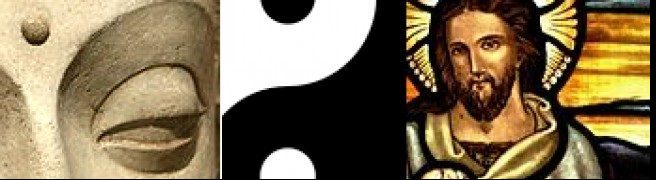
Spiritually Engineered

Here we are.

No more doubts. No more partial truths, corrupted by political expediency. No more relying upon wisdom received from the past. We stand or fall on our own.

It is going to hurt. Humanity had at its disposal all of the tools needed to avoid this eventuality, but they were not marshaled and applied to that purpose. Rather, we focused on our material needs, attempting to separate ourselves from the cycles of nature. In the end, though, we are faced with the fact that we are not as powerful as they. They will hold us to account.

What are we to hope for, then? This: we are designed to organize resources other than the material elements made so convenient to us. It is there, in the realm of spirit, that we must accomplish the work of design that will liberate Human Nature from naive and foolish choices.

If we are inmates, then we have control of the asylum. Our only option is to become therapists. What use to hate crazy people? We are them.

Walk through time with us. The patient suffering of the lamb opens gates through which all truths are revealed. The joyous dissolution of masculine and feminine heals the divisions that separate us from understanding. When we surrender ourselves to service, we see each others’ need, and the Love of the Divine flows through us and heals our longing.

Engarde!

The old adage “If you don’t know where you’re going, any road will do” applies to religion as well as to any other human endeavor. In fact, in the case of religion, the implications are particularly acute.

The process of religion has a character much like that of the scientific method, with the exception that the demonstrations of its principles – avatars such as Jesus of Nazareth, Clara Barton, Lao-Tzu and Buddha – are exceptional manifestations that cannot be produced by rote method. There are no factories for people of grace. They are called into existence through channels in time opened by exceptional human need.

Lacking any understanding of mechanisms, theosophists (those that speculate on the soul and its relationship with the divine) have typically resorted to monotheistic escalation. Their reasoning is roughly as follows: exceptional experiences that overwhelm the material status quo must have their origination in superior principles. That those principles hold sway indicates that they must be free of corrupting influences, and so superior in their own realm. If they are superior, their influence must be inescapable and complete. Ultimately, Dao, Brahman, God, Allah and all others are ceded control over all aspects of reality.

There are three strategies of religious practice allowed in the psychology of this relationship between infinitesimal humanity and infinite deity. The first is paralysis – trust in the Divine, and await its deliverance. The second is passivity – study the Divine, with the hope of emulating it, but assert no independent will. The third, most dangerous path, is to follow someone that asserts superior understanding, with the hope of achieving enlightenment.

The third path is dangerous because, when coupled with wealth, the assertion of spiritual authority is backed by means for suppressing cautionary voices.

I have been negotiating with a subset of self-proclaimed religious “authorities” over the last decade. The process has developed as a series of manifestations of the power of unconditional love, and attempts to communicate principles and mechanisms that would, as Jesus promised, enable a disciplined practitioner do “greater works than these”. The disciplines are those described most directly in Daoism, but mirrored also in Buddhism: surrender of self-concern and commitment to the manifestation of harmony in the realm of our influence.

What has become clear through those experiences is that the process will proceed only through dis-intermediation. Purveyors of mystery will not exchange their mysteries for understanding.

So what I have to offer here is an antidote to religious speculation. I am going to attack confusion by offering a model of religious experience, and use it to elucidate the recorded history of the lives of our spiritual avatars. I am going to attempt to place their lives in the context of the evolution of Human Nature, and offer my sense as to how that process is going to unfold over the next 40 years.

Involvement in the process is inescapable. Paralysis and passivity are not viable options. The only way out of the bind Humanity faces is for some number of us to learn to recognize the “still, small voice” inside of us, and let it guide us as we re-organize the broken reality that will come to surround us.

In the service of that process, I am going to clear the air. I am going to winnow from religious teaching expedience in the service of priestly and political authority. Names will not be named. Social policies will not be promulgated. The only thing on offer here will be the antidote to hypocrisy: truth in the service of spiritual liberation.