Ideas, Ideally

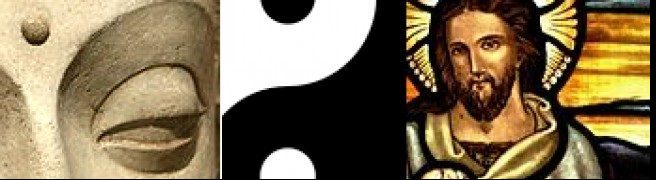
I have been trying to reclaim (see 1 and 2) the philosophical tradition of ldealism that in the West was first articulated clearly by Plato. Idealism is one of two threads of discourse that attempt to explain the relationship between ideas and our experience of the world around us. The paradox for Plato was that the real world does not contain perfect representatives – no line is absolutely straight, and no horse manifests all the ideal characteristics of horses (fast and powerful, for example). Convinced that the world originated from a source of absolute good, Plato therefore held that the idea of a perfect line or perfect horse was the original, with the physical examples as imperfect manifestations.

To the scientific thinker, this assertion fails to satisfy because it does not specify a mechanism for the manifestation, and therefore cannot be disproved. The solution proposed by scriptural literalists is that the ideals did exist when the Holy will created the world, and were accessible for our appreciation during the inhabitation of Eden. It was through our selfishness and disobedience that the connection with the divine source was sundered. Not only human nature was corrupted in the Fall, but all of Creation.

Reacting against Plato’s idealism, Aristotle advanced the program of Empiricism. From our observation of the world around us, we intuitively recognize similarity between things. We might choose to call some things “dogs.” There is no ideal dog, but all dogs share certain characteristics. Through the mechanism of the syllogism, we can therefore transmit a great deal of understanding by simply designating the type of something. The most famous syllogism is “All men are mortal. Socrates is a man. Therefore, Socrates is mortal.” In general form, we might write “All A are B. If C is an instance of A, then C is B.”

Aristotle employed this program to a comprehensive classification of the world around him. The power of classification becomes most obvious in the physical sciences, where saying “an electron is massive and charged” allows us to apply mathematical deduction to predict its behavior. But classification is also conditional: Linnaeus, the inventor of the phylogenic scheme for categorization of living creatures, recognized only plants and animals. Modern biochemistry has demanded the addition of three new phyla, with the consequence that things once considered to be “plants” have been reclassified as “fungi,” which recognizes that all along they actually lacked some of the characteristics of “plants.”

Aristotle recognized that all ideas are abstractions, and so that when applied to a specific instance, information is lost. This should be unsettling – it means that the world is populated by exceptions to our ideas. This is consequential: If a member of a tribe asks you to care for his dog, how do you know which among the dogs is his pet ‘Akela’?

Ultimately, the pragmatic successors to Aristotle re-introduced the concept of moral good to deal with this problem. What is important is whether ideas have practical utility. This has both good and bad consequences: Darwin’s theory of natural selection was used to justify ethnic prejudice in Nazi Germany and in certain parts of America. Against that, we have housing codes that ensure that disasters do not displace entire populations, such as occurred after the 1906 earthquake in San Francisco or the great urban fires of the 19th century.

So let us now return to the larger umbrella: I hold that philosophy is the study of the operation of the intellect, which manifests as the capacity to synthesize mental states. Among the sources of mental states, I listed sensation, emotion, thoughts and spirits. Where are ideas in this categorization? They seemed to be related to thoughts, but thoughts can also be random associations without plausible manifestations, such as – Kia Soul advertising not-with-standing – “my hamster is break-dancing.”

As might be expected, the exclusion of ideas from the list of mental states is not an oversight.

I have asserted elsewhere that Idealism reflects an affinity in its adherents for soul-relation. This manifests most powerfully to the mystic as a gift of energy that suffuses moral good with joy. This is the experience that I believe informed Plato’s affiliation of ideas with “The Good.”

Where I depart from Plato is in the belief that all ideas originate from The Good, only to be expressed in corrupt form in the world around us. To me, this is the terrible deficiency of scriptural literalism. It denies us agency in moral progress in the world. In The Soul Comes First, I take this head-on, using paleontology and evolutionary biology to demonstrate that the seven days of creation and the trumpets in Revelation actually correspond to a process of uplift from primitive forms of life towards an intelligent integration that will heal the spiritual wound of selfishness.

The role offered to humanity in this process is to sort through our thoughts to identify those that empower the expression of moral good. This is “the Knowledge of Good and Evil,” and the serpent’s characterization of the Fall in Genesis is a political posture that seeks to delay the perfection of our discernment.

In re-interpreting scripture through the lens of science, I show obvious affinity for Aristotle’s empiricism. Where I depart from his formulation is in the belief that ideas are merely abstractions of experience. Thoughts are those abstractions.

In the model of physics I have offered, I understand the human mind as the interaction of soul with the empirical world through the interface of the brain. In that interaction, our thoughts are temporary modifications of our soul. An idea is a thought reinforced by multiple successful episodes that instills energy that causes the thought to bloom into the world of spirit. An important consequence of this penetration is that the thought becomes accessible to other thinkers. In other words, Plato’s Ideas do not originate from The Good, but rise into the realm of spirit most readily when they serve a moral purpose, increasing the life-time of their subscribers, and therefore gathering ever greater energy through continued application to the survival of living things.

In terms of the framework I have established, with stimulation and combination as the two types of intellectual synthesis: ideas arise from the intellect’s capacity to stimulate thoughts from sensation, and then to combine thought and spirit. Ideas do not originate from The Good, but the strength of an idea is ultimately determined by the degree to which it allows us to improve our moral discernment. When mature discernment is realized in a personality such as Jesus of Nazareth, The Good that seeks to facilitate our healing actually touches the material world, shattering all of our categorizations with consequences unimaginable to the empiricist.

I hope that in this formulation that faith and science recognize the shape of a reconciliation that can organize collaboration that will speed the development of moral discernment, fundamentally changing our relationship with reality, and liberating Life in general from our vicious cycle of angry and ineffectual claims to authority defended by reference to incompatible and ultimately meaningless standards of “truth.”

Flirting with Trust

Since Friday I’ve been working on my relationship, sharing visualizations of inconceivably precious forms of intimacy. The organizing principles are healing and celebration, involving us in a powerful whirlpool of emotions, running the gamut from grief to dizzying passion. Underneath that runs a steady flow that guides us into deeper and broader connections. So we found ourselves kneeling on the floor, I catching her long hair from behind and stretching her will out into the world where it caught whales and trees and birds, and then her pushing me down on the bed and slowly dragging those long strands over my face so that understanding and love can bring order to life.

And then she stops and wonders what she is doing in the midst of this process, not conscious of the powers she possesses and so uncertain of her ability to manage the dangers she perceives. As I struggle to formulate an assurance, we spin apart. My last clear communication from her ended with her disappearance into a vortex of female faces, creating a cocoon in which she could incubate, but also from which others offered themselves as alternatives. I simply re-iterated my commitment to the self-discovery of my lady, and let her depart with the assurance that I would meet her on the other side to be certain that nothing had been lost.

In the pauses in this work, I’ve been re-reading Santayana’s Three Philosophical Poets. Santayana, philosopher and Christian apologist, combines a deep knowledge of culture and beautiful literary style in the service of revealing the choices we face as we struggle to find meaning and purpose in life. Santayana offers the works of Goethe, Lucretius and Dante as a progression that illuminates the submission of our animal nature to moral discernment, unfortunately with the growing risk of detachment from the joys and perils of human experience. Due to this tension, Santayana finds no superior voice among the three, instead celebrating each as a trustworthy illuminator of the power found in choosing either to do (Goethe), to create (Lucretius) or to serve a higher purpose (Dante).

To do is exemplary because it protects us from nihilism, the conclusion that any single life is insignificant and useless. In exploring this path, Goethe’s anti-hero Faust learns to discard self-judgment for personal wrongs committed against others, and so becomes capable of ruling an entire nation, granting purpose to his people by immersing them in struggle. Upon his death at one hundred years, Faust vanquishes Mephistopheles, demonic grantor of mystical power, who predicted that Faust would eventually learn to surrender purpose and be content with any experience at all, even to lick the dust. Instead, having demonstrated that each individual can find purpose in creating struggle against the world, Faust’s soul is received by angels and carried up to heaven.

Against this idea that we are glorified by struggle, Lucretius celebrates the orderly structure of the world, filled with creative forces that reclaim resources liberated by death. The philosophy of materialism stretches even further, propelling scientific study that allows the rational mind creative opportunities that would never be revealed in nature, and so to engage in an orderly process of improving the human condition. Among the virtues of Lucretius’s program, Santayana heralds self-control, and the defeat of superstition – the latter often abused by religious illusionists to steal the power of an adherent’s natural urge to improve his lot. Chief among the defects is timidity that arises from an awareness of life’s fragility, timidity heightened by the view that we had best live as though this is the only life we have – timidity that would be scorned by Goethe.

Of course, most of history is the story of how those characterized by Goethe twist the power liberating by understanding to subdue ever larger populations. Dante, following Aristotle, celebrates adherence to moral codes that sustain social order. Even more, in an era of deep Christian faith, Dante heralded the possibility of human perfection, of a rising into another realm in which all struggle would cease, each individual recognizing the benefits of submission to the will of a God that loved them without reservation. Dante’s ambition is for every person to be freed from constraints, excepting only the constraint to submit to the dictates of being guided by God’s love for others. Notwithstanding Dante’s outraged prosecution of the authorities of his era, Santayana follows Lucretius in decrying the passivity consequent to subscription to any externally imposed morality.

After his comparative analysis of the three works, Santayana proposes that a fourth poet must be sought to resolve the contradictions between the three philosophies, a poet whose celebration of vitality yet proves that self-control and other-service lead us into our most powerful and satisfying experiences. Incongruously in the context of his analysis, my reaction was “That would have to be a woman.”

But as I sat and pondered my experiences since Friday, I couldn’t escape the feeling that there was a thread that tied all of this together. Santayana brings us the writing of three iconoclasts, men who felt a strong need to assert themselves against the society they inhabited, each with a dour view of the fairness of life. And in my relationship, we have this expansion into ever greater realms of experience that recoils against fear of personal insufficiency. In both cases, the problem is other-trust. Faust trusts only in himself; Lucretius trusts only in personal discernment; Dante trusts only in God; and my lady does not trust that others will support our relationship.

What does it take, to lay mistrust to rest? We have the evidence of Good Friday services, in which multitudes gather to celebrate the worthiness of a man that was willing to die to redeem others of their faults, followed by Easter in which the resurrection proves the overwhelming power committed by God to the realization of that redemption. How can we not be discouraged by this standard of loving, a standard that cannot possibly be sustained in relationships between lesser beings?

Enough: it was done. The powers that stood behind Jesus did so because he arose in confrontation with sin, and in surrendering to its power became capable of diagnosing it. The era to come will be the era of healing in which those that suffer obtain the power to send sin on its way.

Lucretius, in elaborating the dynamic between creativity and destruction, chose the mythical figure of Venus to represent the surging of life, and the figure of Mars as the force of destruction. In the introduction to his unfinished work, Lucretius pleads with Mars to surrender to the pleasures of Venus’s bower, protecting the poet from interruption during his great task. This pairing is not unique to Greek mythology: in the Hindu pantheon, Parvati is responsible for cooling Shiva’s passions after he enters his dance of destruction. In celebrating struggle Goethe obviously sides with Mars, while Dante casts theology in the person of his beloved Beatrice.

The idea that women are responsible for tempering the wildness of men is buried deep in our cultural heritage. In women, that belief manifests as a cautious predisposition to believe that men will turn their passions against their lovers. My prayer is that women cast aside their ancient burden and organize their fertile energies around men of healing and constructive intelligence. Rather than catering to Mars, they should amplify the character of Apollo. Cast aside the terrorist to invest your energies in the healer, and discover reciprocity for your trust.

Called Out on Quotes III

Well, I was going to try to work up a quote from Hume, but I could not track the fragment found in On Kindness (Phillips and Taylor) to its source. I also got into a rather heated debate with IB, and am now too exhausted to organize my thoughts, which were to link Hume’s thought as a rebuttal of the nihilistic philosophy of Hobbes. The fragment says that Hobbes’s position is tenable only to “he who has forgotten the operation of his own heart.”

So, you know, I’m going to quote myself. From the home page out at everdeepning.org, this is the best wisdom that I have. It explains Humes’s observation, and sets forth the only path that I can see freeing us from the consequences of our actions:

Love dissolves the barriers of time and space, allowing energy, wisdom, and understanding to flow between us, and embracing us with the courage, clarity and calm that overcomes obstacles and creates opportunities. When we open our hearts to one another, there is no truth that is not revealed. And – for those that truly love themselves – no impulse to harm that cannot be turned to the purposes of healing and creation.

Called Out on Quotes

Anonymously Autistic has nominated me for the Three Day Quote Challenge. I am torn here, because after a lifetime of avoiding denomination I now have no means of wriggling out of nomination. Except maybe to blame AA for choosing such a great quote that I know that I will never be able to equal her inspiration.

So “Thank-you,” Anna.

Here is my favorite quote, penned by George Bernard Shaw when he sent Man and Superman to his friend Arthur Bingham Walkley:

This is the true joy in life, the being used for a purpose recognized by yourself as a mighty one; the being thoroughly worn out before you are thrown on the scrap heap; the being a force of Nature instead of a feverish selfish little clod of ailments and grievances complaining that the world will not devote itself to making you happy.

I have many reasons for returning to this quotation.

First, the distinction between joy and happiness, the first being something that arises from within while the second is a response to temporary external stimulus.

Secondly, the wisdom (as Jesus suggests in the parable of the talents) that power is not awarded to self-seekers, but only to those that serve. When we honor that compact, we do indeed become like unto a force of nature, causing others to move in sympathy with our purpose, sometimes even against their conscious intention.

And finally the sense that the body is simply an adjunct to spiritual service. I wear my scars without shame.

There are some people that I would like to get quotes from, so I think that I will propagate the challenge. As Anna, I will not be offended if any among you decline.

The challenge rules are:

  1. 3 quotes in 3 days
  2. Thank the person who nominates you
  3. Nominate three more people each day.

Hoo-hah on the last one!

The Struggle for Truth

When I was last asked to speak at my employer’s all-hands meeting, it was in a context of crisis in our relationship with our biggest customer. The tone of internal discussions was denigrating, focusing on their manipulative contract negotiations and technical indecision.

I had been privy to two experiences, however, that gave me a different perspective on the matter. The first occurred during a site visit to the Netherlands. The other three representatives got smashed each night, which is a way of maintaining a coherent gestalt. My approach was rather to walk gently among our hosts. When we went to look at the machine that they were upgrading, I crouched down to look at the cable route, wondering how in the heck they would be moved to replace a critical component. The mechanical designer, who had projected some hostility regarding the project, stepped behind me, and I suddenly understood that a wing nut on a retaining bar, if loosened, would allow me to bend the cables out of the way. I turned around to find him looking approvingly at me.

The second experience occurred during a reciprocal visit to our facility. We produce electronics that can fail catastrophically, and the customer works in the health care industry. The lead engineer asked specifically whether we had tested the logic that prevented this failure mode, emphasizing that “in no circumstances can we have a fire in the operating theater.” He was assured that we had manually tested the fault logic, forcing the failure mode and verifying that power was shut down.

Four months after deploying the solution, our electronics caught fire in the operating room. The assurances offered to our customer were simply a lie.

It was in part to counter-act the mounting hostility that I offered this perspective:

As engineers, we come in every day to wrestle against the laws of nature to help our customers do things that most people think are impossible. In that struggle, fighting against our competition is far less rewarding that fighting against nature for our customers. When we fight for our customers, we enter into their dreams. They offer us their insights and understanding, and help us to make our products better.

Our customer understood that fundamental difference in me. Even though my role was limited to creation of software that integrated with their user interface, I was the first person they contacted whenever a problem came up. They knew that I wouldn’t pull out the contract or demand irrefutable proof that the problem was in our equipment. I would sit down and try to emulate their scenario so that we could evaluate the problem on our end. In turn, they would get a rapid assessment of likelihood that would help them to focus efforts on their end.

This attitude was emphasized by a comment made by the lead engineer in a discussion of welfare policy. He said,

If somebody wants to go fishing every day, I would rather that he just didn’t come in to work. I’d be happy to see him paid to fish, if that meant that I wouldn’t have to fix the problems in his work.

This is the experience of all creative people: in the end, everything that we do is a new form of truth. Creating that truth means living in truth, and the more people that are embraced in that circle, the greater are the challenges we can overcome. That trust can only be sustained when the team members take pride and find satisfaction in the work that they do. Conversely, when falsehood enters that circle, the creative process is corrupted by indecision and mistrust. Everyone runs around checking and double-checking the facts, and defending themselves against blame.

In over thirty years as a professional, the factor that most commonly creates mistrust is when a party representing the market seizes control of creative decision making. Because they do not contribute to the creative process, ultimately they can only justify tyrannical authority by attacking the work of the creative team. Because they don’t understand the creative process, the tyrant’s attacks are arbitrary and often false. As the team fragments, more and more control is asserted, with individuals promoted and demoted largely based upon personal loyalty rather than actual creative capability. Worse, those in the creative team that decry the loss of team cohesion are pushed aside, because to recognize the validity of their perspective is to undermine the power of the tyrant.

The shift that is necessary to resolve this philosophical conundrum was proposed ten years ago out at everdeepening.org. I offered these definitions:

Power is the ability to make reality conform to our intention.

Will is a measure of our ability to sustain an engagement with reality.

Strength is power over the self.

Authority is awarded by constituents when power is validated by expressions of love.

In any situation, a resort to lies degrades power, because lies are against reality. To lie is also to flee from reality, which is a failure of will. To the sophisticated observer, then, it is a sign of personal weakness. As a violation of both self-love and as an attack on the creative team, lies undermine authority. When that trust is lost, the creative team loses its faith that accomplishment will receive satisfactory rewards. Their motivation undermined, the only way that the tyrant can maintain control, then, is to run around telling people what to do.

From these, it follows that in engineering organizations the role of senior management is in securing the cohesion of the creative team. That means giving credit where credit is due. If the team fails, nature will let them know. To the degree that success is achieved, it is the role of marketing and sales to target opportunities that will produce sustaining revenues.

The difficulty of sustaining this organizational cohesion is so daunting that anyone achieving such success will find that people flock to their defense when they are threatened. To people who care only about creating new truth, such a loss would be a tragedy without parallel.

Conserving Liberty

After my post Friday on Speaker Ryan, at Barnes & Noble that night I found myself disrupted in my technology research by a couple railing on about public sector unions. The particular focus of their wrath were police unions that negotiated full-pay retirement packages starting at fifty. As is well known in the West, some officers exercise that option and then take another assignment elsewhere, effectively double-dipping.

Now I agree that this seems unethical, and you’d think that some legislator would find a way to define “retirement” as excluding “leaving to take work elsewhere.” And the six-figure salaries being quoted ($200K) don’t sound like the compensation expected by a beat cop. Again, you’d think that redefinition of terms would be beneficial. There does come a day when a man can’t chase down an eighteen-year-old any longer, but that doesn’t apply to those pushing figures around on spread-sheets.

What was astonishing to me, though, was the framing of the discussion that brought such outrage to the conversation. During the 2008 down-turn, because of the pension obligations, Pheonix couldn’t afford to hire officers to replace those taking early retirement. This was set against the context of civilians that lost their homes in the mortgage melt-down.

For some reason, the couple ranting against the police union seemed to feel that was the union’s fault. Really? Not the financial wizards on Wall Street that stole another $500 billion from the public purse? What gall, to redirect anger against corporate financial fraud against the unions that seek only to secure the survival of the middle class that lost their homes!

This is what drives me crazy about conservative business owners. They rail about regulation as though it’s a confiscatory plot by the poor. Yes, we have the onerous terms of Sorvanes-Oxley that put a CEO at risk of jail if the corporate annual reports contains false information – but that was motivated by Enron’s manipulation or energy markets in California. Yes, we have the Affordable Care Act that requires all employers of more than fifty to provide health-care benefits, but that’s against the context of insurance company manipulations that denied coverage to many with pre-existing or chronic health conditions. And yes, we have rising taxes on fossil fuels, but that reflects a race against time against temperature rises that threaten to wipe out civilization as we know it, a race that has been road-blocked by oil companies (led by the Koch Brothers) propagating fraudulent science in an attempt to prevent governmental action to stimulate replacement of fossil fuels with renewable sources.

Let me focus the point: did nobody in the business world know about these transgressions, some simply moral, but in the last case rising to the level of crimes against humanity? Where were your voices speaking in outrage? Or were you all among those business leaders celebrating the “success” of practices that allowed executives to build huge estates and buy private jets with the gains from stock options that transferred hundreds of billions of dollars from share-holders funds into personal bank accounts?

Corporate America benefits every day from the investment made by middle-class America in roads, schools, emergency services and governmental process. They provide a steady steam of educated employees. They ensure the free movement of goods and safe working conditions. Access to those benefits is not a right, it is a privilege. Securing great wealth from that system comes therefore with a responsibility: to raise your voice when your peers abuse the public trust. Do so, and you’ll find that a lot of regulation would go away, because the cost of cleaning up from long-running abuse would be modest compared to the benefits that accrue from a freely running economy.

Shot-Sighted

As a boy that grew up scampering through the sage brush on the hills above the school, when we stopped for a bathroom break on one of our early camping trips, my first thought was to duck under the barbed-wire fence and wander in the woods it protected. I was tame enough to check first with my mother, who drew my attention to the sign:

NO TRESPASSING

Violators will be shot on sight

 “Don’t they have to give you a warning first?”

“That is the warning,” my father observed.

Looking up and down the lonely road, I thought, “But what if their car broke down and they need help?”

It was my first collision with the thought that property ownership trumped human life, and I was a little shaken by the experience.

I don’t see the signs much in my area any more – perhaps because most of the agriculture and ranching has disappeared. But technology may also have something to do with it: with helicopters and radio trackers, it’s probably pretty hard for cattle rustlers to disappear into the wilderness, and aerial crop dusting probably dissuades most casual fruit pickers. The spread of drone aircraft will also make easier to bring thieves to justice without risk of a confrontation.

It was only later that I learned that these signs were also posted frequently by those engaged in illegal activity. The classic image is the moonshine distiller or hillbilly sending off the “revenooer.” But I was confronted by another case when working on a friend’s deck up in Redding one summer. A piercing scream of terror came from the house across the fence – but there was the sign. None of the locals so much as turned a head in concern. I guess it wasn’t the first time.

The Bundy Family now camped out at the Wildlife Refuge in Oregon says that they are “defending their way of life.” One of their number, finding himself in the minority in a discussion of violent confrontation, went out to make a stand in the cold, observing that he had grown up with the wind in his hair and the sun on his face, and he would rather die than spend a single day in jail. On hearing this, I thought of Michael Douglas in Falling Down. A defense industry engineer, laid off and denied visitation rights to his child, trades in weapons in an escalating rampage, finally being gunned down before his daughter.

The Sheriff in Oregon has asked the invaders to leave, observing that they don’t have the right to come in with their guns and tell them how to live. But I wonder if anybody has asked the Bundy’s to consider what would happen if we all chose to act as they did. Will they take cause with the older software developer, defaulting on his mortgage because ageism makes it difficult to find employment?

The scariest exhibition, however, was the Alabama legislator who avowed on national television last night that the reason we have remained a democracy is because our government is afraid to confront its armed citizens. Comparing the M-1 Abrams tank and fighter jets to the hand-held weaponry in the homes of our citizen militias, we might draw a comparison with the armed knights of the middle age and every farmer with a pitchfork. Comparable parity of weaponry in the Middle Ages did not deter tyranny, nor does it do so today.

The Founders designed an institutional system that pitted the three branches of government against each other in a federation of states with their own security services. This institutional competition was designed to prevent any one branch or level of government from being able to impose its will on citizens. That the legislator suffers from a such a deep misunderstanding of how our constitutional system safeguards our liberties is perhaps the most frightening aspect of this situation, particularly because it has often been the Federal Government that has stepped in to ensure the rights of those intimidated by state and local authorities.

Devolving coercive power down to the citizens seems to promise only that those that relish and glorify violence will be able to terrorize those that don’t. We’ve worked long and hard to escape that condition. Why give in to it now?

Abuse and Authority

IB writes really beautifully regarding the heartbreak that comes from the power struggle raging in our families today. When I struggled with this, I ended up with the following definitions:

Power is the ability to make reality conform to our will.

Love is a desire to see its object grow in power. The priorities are health, ability and only then happiness.

Authority is granted by a subject when the ruler’s power is validated by manifestations of love. Jesus ultimately reigns not because he destroys other claimants to power, but because those he loves learn to ignore false claims of authority.

Strength is power over the self. To offer power to someone trapped in anger or fear is self-defeating – they are not in control of themselves, and so we have no idea what the ultimate manifestation of our power will be.

This worked pretty well for my children. At one point, my elder son began to lecture me on these points, as he had forgotten that I had introduced them when he was in elementary school.

insanitybytes22's avatarSee, there's this thing called biology...

I hesitate to write this post simply because the world we live in today has a tendency to define everything as abuse, and when everything is abuse, nothing is anymore.

I spent many years working for our domestic violence sexual assault program so I know what abuse is, but at the same time I was also observing our culture’s plunge into insanity, to where the system began to see abuse everywhere, in everything. I remember someone threw a piece of banana at a spouse and it was deemed 4th degree assault. Kids started threatening to call the cops on their parents, take away my toys, that’s destruction of personal property, ground me, that’s unlawful imprisonment. What started shifting was power and who held it, and authority and who had it.

Our own kids reflected these cultural shifts too, and often hubby and I were left either outright laughing or scratching…

View original post 932 more words

Refugees : Creatures Of Circumstances.

From Iraq to Syria to Turkey…but not the US?

For those with an abstract concept, framed mostly by fear of terrorism, of what it means to be a Middle Eastern refugee.

Fifty Shades of Reality.'s avatarThe Ignited Mind !

It was a fresh new morning of 14th `December 2015 when I logged onto Facebook and found this post about a really young Iraqi refugee, named ‘Aya’. This is Aya’s picture as posted on the page of Humans of New York.

Aya

A page called “Humans Of New York,” had posted about how her life took a surprising turn, with the unfavourable events unfolding for her one after the other. She’s just about twenty years of age, but once you know what her entire story is all about, I’m sure you’ll be as compelled as I am at this point of time. Her tale is sure to leave you spellbound as well as in tears. I am about to narrate. It is in her own words, that she describes what she has been through, all thanks to Humans Of New York, for supporting persons like her and letting the entire…

View original post 2,277 more words

Hope for Climate Healing

California governor Jerry Brown is in Paris this week at the climate change conference. Chris Hayes had him on All In on Wednesday night to talk about California’s efforts to combat climate change. In setting the stage, Chris pulled footage from his visit to the San Joaquin Valley earlier this year.

The statistics on both sides are daunting. As the world’s eighth largest economy, California’s dispersed population consumes huge amounts of gasoline. In seeking to reduce carbon emissions, the state has opted to install a large number of natural gas electricity plants, while also pursuing an aggressive push into renewables (wind, solar and geothermal). In general, its mild climate means that CO2 emissions are low, but it appears that major reductions are still decades away.

Brown trumpeted California’s efforts, citing the state as a global leader in climate change policy. But if this is the best that we can do, how can he hope that the talks in Paris will chart a path out of a century that is projected to end with a 10 F increase in global temperatures?

The major impact of that increase will be desertification. As in the Middle East, California is seeing the consequences of glacial retreat. At the edge of the glacial range, we still had large snow packs on the Sierras, and it was this store of water that allowed the $50 billion agricultural economy to operate through the dry summer months. As the climate warms, farmers have pumped our aquifers down by nearly fifty get. Drip irrigation systems are now being adopted to maintain production with reduced water resources, but if temperatures continue to rise, snow packs will continue to decrease. The survival of agriculture in California is tied to our depleted aquifers, which are not a renewable resource.

The consequences to the nation as a whole are daunting. The San Joaquin Valley produces 40% of America’s food.

When I rediscovered Cat Steven’s Moonshadow a few years ago, upon hearing Morning Has Broken for the first time in two decades, I found  myself filled with grief as the opening piano meditation unrolled. It climaxed with a vision as the man now called Yusuf sang these words:

Sweet the rain’s new fall, sunlit from heaven,
Like the first dewfall on the first grass.
Praise for the sweetness of the wet garden,
Sprung in completeness where his feet pass.

In the vision, I stood on the edge of the Sierra foothills in the Central Valley. The desiccated land, scoured by wind and rain, gave no purchase to life. A pair of naked feet waited, and then began to pace across the ground. Behind them, water and life flowed.

As a student at UC Berkeley, I was compelled by the confusion I experienced in interpreting political discourse to establish my own definitions for moral dialog. When I got around to “hope”, I settled on “a connection to a future in which love is at work for you.” There is two parts to that – one is accepting love, and the other is honoring it. The first requires that we recognize our need, the second requires that we respect the needs of others.

In his conversation with Chris, Governor Brown offered this subtle piece of insight: “Modernity is individualism plus oil.” Individualism implicitly violates the first requirement for hope – it holds that we do not need others. That is sustained by oil, which allows us to consume two hundred times as much energy as we can produce with our bodies. With mechanization, we all live as though we have two hundred slaves.

But the conventions of individualism also allow us to ignore the needs of others, not least the needs of the voiceless flora and fauna that sustain ecological stability. Our fossil fuel consumption has destabilized the biosphere that some know as Gaia.

In reading the Book of Revelation, in the golden bowls I see prophesied with exactitude the climate disasters that threaten our civilization. Obviously the feet in my dream are those of the savior. But in assessing the gap between individualism and the surrender to love, I find myself recalling the experience of Jesus upon his return to Nazareth. Mark summarized it as follows [NIV Mark 6:4-6]:

Jesus said to them, “A prophet is not without honor except in his own town, among his relatives and in his own home.” He could not do any miracles there, except lay his hands on a few sick people and heal them. He was amazed at their lack of faith.

How far will we fall before choosing to open our hearts to allow love to re-enter the world?

And you, Christians, the family he created: will you recognize him when he comes? Will you open your hearts and minds to him and – if not partaking of his burden – at least apprehend and so honor the strain and sorrow he bears as he heals with his flesh the great wound in the Tree of Life we have created in our monomaniacal pursuit of the Knowledge of Good and Evil?

Or will you sit back in your seats, thrilling to the amplified harmonies of your bards, consoled by the airy myths they unfold, and say with offense [NIV Mark 6:2]:

“Where did this man get these things?” they asked. “What’s this wisdom that has been given him?