Beautiful Words of Surrender

From Hillsong’s I Could Sing of Your Love Forever (I’ve been looping a live version on the car stereo):

Over the mountains and the sea
Your river flows with love for me
And I will open up my heart
And let the Healer set me free
I’m happy to be in the truth
And I will daily lift my hands
For I will always sing
Of when your love came down

When they were young, I taught my sons that the two worst things that we can do to ourselves are to lie and hide from those that love us. When we lie and hide, we cannot be known, and so we cannot receive love. Lying and hiding both arise from shame, which is a wound that we make in ourselves.

Remember that this happened in Eden before the expulsion – Adam and Eve clothed themselves and hid from God when he came. What would have happened if they had stepped forward and asked for restoration?

In opening our hearts to God, we reveal everything about ourselves – we live in truth. The river of love enters and heals us, and then flows out from us to others. So the song concludes:

Oh I feel like dancing
It’s foolishness I know
But when the world has seen the light
They will dance with joy
As we’re dancing now

Ideas, Ideally

I have been trying to reclaim (see 1 and 2) the philosophical tradition of ldealism that in the West was first articulated clearly by Plato. Idealism is one of two threads of discourse that attempt to explain the relationship between ideas and our experience of the world around us. The paradox for Plato was that the real world does not contain perfect representatives – no line is absolutely straight, and no horse manifests all the ideal characteristics of horses (fast and powerful, for example). Convinced that the world originated from a source of absolute good, Plato therefore held that the idea of a perfect line or perfect horse was the original, with the physical examples as imperfect manifestations.

To the scientific thinker, this assertion fails to satisfy because it does not specify a mechanism for the manifestation, and therefore cannot be disproved. The solution proposed by scriptural literalists is that the ideals did exist when the Holy will created the world, and were accessible for our appreciation during the inhabitation of Eden. It was through our selfishness and disobedience that the connection with the divine source was sundered. Not only human nature was corrupted in the Fall, but all of Creation.

Reacting against Plato’s idealism, Aristotle advanced the program of Empiricism. From our observation of the world around us, we intuitively recognize similarity between things. We might choose to call some things “dogs.” There is no ideal dog, but all dogs share certain characteristics. Through the mechanism of the syllogism, we can therefore transmit a great deal of understanding by simply designating the type of something. The most famous syllogism is “All men are mortal. Socrates is a man. Therefore, Socrates is mortal.” In general form, we might write “All A are B. If C is an instance of A, then C is B.”

Aristotle employed this program to a comprehensive classification of the world around him. The power of classification becomes most obvious in the physical sciences, where saying “an electron is massive and charged” allows us to apply mathematical deduction to predict its behavior. But classification is also conditional: Linnaeus, the inventor of the phylogenic scheme for categorization of living creatures, recognized only plants and animals. Modern biochemistry has demanded the addition of three new phyla, with the consequence that things once considered to be “plants” have been reclassified as “fungi,” which recognizes that all along they actually lacked some of the characteristics of “plants.”

Aristotle recognized that all ideas are abstractions, and so that when applied to a specific instance, information is lost. This should be unsettling – it means that the world is populated by exceptions to our ideas. This is consequential: If a member of a tribe asks you to care for his dog, how do you know which among the dogs is his pet ‘Akela’?

Ultimately, the pragmatic successors to Aristotle re-introduced the concept of moral good to deal with this problem. What is important is whether ideas have practical utility. This has both good and bad consequences: Darwin’s theory of natural selection was used to justify ethnic prejudice in Nazi Germany and in certain parts of America. Against that, we have housing codes that ensure that disasters do not displace entire populations, such as occurred after the 1906 earthquake in San Francisco or the great urban fires of the 19th century.

So let us now return to the larger umbrella: I hold that philosophy is the study of the operation of the intellect, which manifests as the capacity to synthesize mental states. Among the sources of mental states, I listed sensation, emotion, thoughts and spirits. Where are ideas in this categorization? They seemed to be related to thoughts, but thoughts can also be random associations without plausible manifestations, such as – Kia Soul advertising not-with-standing – “my hamster is break-dancing.”

As might be expected, the exclusion of ideas from the list of mental states is not an oversight.

I have asserted elsewhere that Idealism reflects an affinity in its adherents for soul-relation. This manifests most powerfully to the mystic as a gift of energy that suffuses moral good with joy. This is the experience that I believe informed Plato’s affiliation of ideas with “The Good.”

Where I depart from Plato is in the belief that all ideas originate from The Good, only to be expressed in corrupt form in the world around us. To me, this is the terrible deficiency of scriptural literalism. It denies us agency in moral progress in the world. In The Soul Comes First, I take this head-on, using paleontology and evolutionary biology to demonstrate that the seven days of creation and the trumpets in Revelation actually correspond to a process of uplift from primitive forms of life towards an intelligent integration that will heal the spiritual wound of selfishness.

The role offered to humanity in this process is to sort through our thoughts to identify those that empower the expression of moral good. This is “the Knowledge of Good and Evil,” and the serpent’s characterization of the Fall in Genesis is a political posture that seeks to delay the perfection of our discernment.

In re-interpreting scripture through the lens of science, I show obvious affinity for Aristotle’s empiricism. Where I depart from his formulation is in the belief that ideas are merely abstractions of experience. Thoughts are those abstractions.

In the model of physics I have offered, I understand the human mind as the interaction of soul with the empirical world through the interface of the brain. In that interaction, our thoughts are temporary modifications of our soul. An idea is a thought reinforced by multiple successful episodes that instills energy that causes the thought to bloom into the world of spirit. An important consequence of this penetration is that the thought becomes accessible to other thinkers. In other words, Plato’s Ideas do not originate from The Good, but rise into the realm of spirit most readily when they serve a moral purpose, increasing the life-time of their subscribers, and therefore gathering ever greater energy through continued application to the survival of living things.

In terms of the framework I have established, with stimulation and combination as the two types of intellectual synthesis: ideas arise from the intellect’s capacity to stimulate thoughts from sensation, and then to combine thought and spirit. Ideas do not originate from The Good, but the strength of an idea is ultimately determined by the degree to which it allows us to improve our moral discernment. When mature discernment is realized in a personality such as Jesus of Nazareth, The Good that seeks to facilitate our healing actually touches the material world, shattering all of our categorizations with consequences unimaginable to the empiricist.

I hope that in this formulation that faith and science recognize the shape of a reconciliation that can organize collaboration that will speed the development of moral discernment, fundamentally changing our relationship with reality, and liberating Life in general from our vicious cycle of angry and ineffectual claims to authority defended by reference to incompatible and ultimately meaningless standards of “truth.”

Nothing is Sacred

Because of the facial hair, I at first didn’t recognize Richard. He plopped down an eclectic pile of esoterica and headed off to the café counter. Glancing at the titles, I had to admit that my curiosity was piqued. So when he sat down I struck up a conversation.

His authoritative tone brought recollection. As is common with those possessing encyclopedic knowledge, the conversation caromed across mystical frameworks: Knights Templar, the Qaballah, Chakras, Theosophy, and ninja traditions were highlighted in a nearly impenetrable mash-up of terminology.

As he leafed through his books, he stopped at the Masonic eye of the pyramid. I offered, “I’ve met one of those.”

“What, the cap on the pyramid?”

“It’s not a cap. See, it’s not a three-dimensional object. It’s a triangle.” I paused for that to sink in. “It’s a representation of a personality embedded in two dimensions.”

“Two dimensions? Really. What did you do with it?”

I shrugged. “It asked me for help.”

Attempting to reassert control, he then dove into a history of encounters with Uriel, the angel of wisdom. As he began to skip across theological boundaries, I reined him back in.

“So given that offering of power, what purpose have you chosen?”

“Purpose?”

“Yes. When we enter into the spiritual flow, we encounter many messages. Not all of them are intended for us. In the time of Jesus, there were many self-proclaimed Messiahs. Today, we have Rev. Moon. I have found that pursuit of a chosen purpose helps me to filter the messages.”

“Oh. I guess that I haven’t done that.” Then he slipped into a cynical analysis of idolatry.

“So what makes something sacred?” I interrupted.

“That’s the point. Nothing is sacred.”

“Well, let me offer this perspective: a sacred experience links the past to the future through a conduit of love. They can only be established through the genuine exchange of love, because if selfishness arises on either end, the connection is blocked. So to the cynic the saint’s bone is just a bone, while the faithful find it to have great mystical power. The bone is not necessary to the connection, but can facilitate it.”

He broke off at that point, as my brother Ben sauntered up. Somehow, though, I don’t think that he was done with the conversation.

Path of Least Resistance

My friend Meng Chen, atheist and purveyor of Daoist philosophy, is the only person that I am aware of wrestling seriously with the writing out at everdeepening.org. After reading The Soul Comes First, he began working his way through the New Testament during his slack hours at work. He was pretty scandalized by it – all the blood and suffering. What elicited umbrage in him, however, was the obscurity of the parables. The Parable of the Unjust Servant [Luke 1:12] was particularly offensive. In this, an embezzler is called before his manager, and made aware that he will be fired the next day. To curry favor with prospective employers, the servant trades their indebtedness for a fraction of the amount owed. When apprised of this the next day, the manager praises the resourcefulness of the servant, although warning that the servant’s concern for things of this world will cost him eternal riches.

Now this seems to communicate a terrible precedent. But it is of a type with many of the parables. Jesus sets up a recognizable human situation (such as the decadent son), elaborates depraved behavior (the son squandering his inheritance), and then contradicts all of our expectations for human justice by an award of forgiveness (the father dressing the repentant son in his own robe). The brilliance of the method is to situate the hearer in dilemmas that they understand, dilemmas that they may confront every day. From there, he is led into the most despicable of choices – choices that are probably close to his own heart and mind, but that are easy to condemn. And then the paradox: condemnation is not delivered, but forgiveness and celebration. Obviously, the master and father are not people we would recognize. Rather, they are God, the God of Genesis that similarly forgave Cain.

The virtue of parables is that they resonate differently in the minds of the hearer depending upon his specific concerns. Jesus may have offered the Parable of the Unjust Servant to his disciples, and a meaningful message is to be found for them. But among those disciples would also have been the Temple spies, and in their ears this story would have had a different focus. For was not the priesthood God’s accounting firm? Did they not accept money for sin sacrifice in the temple? To them, Jesus was suggesting “Forgive the debts you have recorded. Doubly: cast aside the profits you gather in the settlement of sin. The Father will admire and reward your generosity.”

In this teaching, we hear the incredible mercy of Jesus reaching out even to those that he knows will destroy him. He recognizes their frailty in the face of the enormous burden they are required to carry, made more difficult in their age by the power of the state that allowed mere men to behave as though they were gods.

In terms recognized in the modern era, the nature of this danger was first made explicit to me when reading A General Theory of Love (Lewis, Amini and Landon). Written by three psychotherapists, the book begins with a survey of the nature of human psychological experience – our relationships, neurophysiology and neurochemistry. Then at the end of chapter three, the authors take the trolley off the tracks. They state (I paraphrase): “We will now describe the psychotherapeutic process. In therapy, the therapist enters into the experience of trauma with the patient, and as the moment is reached, suggests to them: ‘Not that way. Go this way instead.’ In this intimacy, the success of the treatment is entirely dependent upon the moral clarity and courage of the therapist. If either of them fails, the therapist becomes trapped in the patient’s trauma.”

Here at WordPress, I have encountered a number of therapists that decry the Diagnostic Standards Manual and its emphasis on pharmacology. They perceive that our society is failing its most sensitive members, those that empathize with suffering but lack the power to change the circumstances that cause it. Much of their behavior is an attempt to anaesthetize or redirect their suffering. But many therapists in training are not prepared to confront such psychic agony. They are trained to a mechanical model of mind, learning theory and practice in sterile lecture-hall settings, and so are unprepared to confront agony when they encounter it. Their response is to withdraw and write a prescription that suppresses the outward signs of trauma.

In effect, this is the same response taken by the temple priests: rather than dealing with the trauma of sin, they transferred the cost to other beings – innocent animals sacrificed in atonement. The goal was to keep the people pure. What Jesus came to point out was that this did not solve the problem of sin – it merely shifted it away temporarily, allowing it to gather to assault the sacred community again and again and again. The only way to solve the problem of sin was for the strong to shoulder the burden for the weak.

The Garden of Eden describes a community that obtained that strength through direct relation with God. When we chose to partake of the Tree of the Knowledge of Good and Evil, we lost that protection. Our religions and social sciences are institutions created in our search as a species for methods to organize resources sufficient to overcome the psychological trauma of the violent processes of Darwinian evolution. That strength was not inherent in us. It had to be created in us through our own effort.

Prior to the modern era, it was on the Rabbis and Priests and Gurus that responsibility was settled for delivering on all of God’s magnificent promises. We know them “Every tear will be wiped. Every fear will be banished.” How could we expect our religious leaders to possess such means, when if they did the era of paradise would be manifested in an instant? And so they broke – and continue to break – under the weight of their burden.

And so here I am to announce: that is not justice. It is no person’s place to stand in evidence of love in our hearts. No person can wash away the wounds of trauma, for they all seek refuge in God from their own trauma. Each person must find their healing in the open chambers of their own heart, with God.

The history of religious tolerance was marked by revolutions against the hypocrisy of religious authority. But that in itself is hypocrisy: no man stands between you and God, only your own fear that love is insufficient to deliver healing. Paradise enters the world when we stop shifting our burdens onto those we establish as idols, whether in temples or churches, and surrender ourselves to God’s ministry.

Jesus did not write a Gospel because no words can describe that feeling: the feeling of infinite compassion and mercy encountered in the heart that receives God. When it is felt, we cease to rail against our idols. Rather, we offer “Thank-you for your service. I am sorry that I placed my burdens on you. Let me give you rest and ease, as I have found rest and ease in Christ.”

And for those with ears to hear: This is how you will know him when he returns. Your hearts will shout with joy.

Reductio ad Consterno

In the Darwinian sense, humanity’s greatest asset is its intellect. The expressions of human intellect are so unique in the animal kingdom that it is not possible to understand its character and limitations by study of other creatures. Furthermore, the creative power of intellect is such that for many of us the natural world is no longer part of our experience. This is true even in the Third World, where most land once wild is now cultivated (where it has not been rendered arid), and the predators that dominated those ecosystems may be slaughtered to produce aphrodisiacs for the Chinese market.

And so man is the most self-involved of all creatures.

In the animal kingdom, evolutionary advantage is a simple proposal: a creature either lives or dies. In human societies, however, methods such as agriculture demanded attention to politics. Freed from the daily concerns of physical survival against the natural tyrannies (hunger, disease, the elements and predation), the danger is that our fellows will organize to seize our goods, break up our families, and take our lives. To a large degree, our survival depends upon inventing reasons for them to not do these things, and indoctrinating them to live according to those constraints.

The easiest way to accomplish this is the path of illusion – to invent entertainments that consumers believe will bring them benefits greater than the price of entry. The trick of tyranny, of course, is to replace the suckers just at the moment that they start demanding more than they contribute. That makes primitive societies terribly unstable.

The alternate path is the path of reason, which is properly understood to be philosophy, or the study of the operation of the intellect. As urban societies arose, three great cultures gave rise to distinct philosophical traditions: China produced Confucianism, India gave birth to the Veda (and its outgrowth, Buddhism) and the Occident sired Hellenism.

Despite their differences, these three threads of philosophical thought share similar concerns. Given that the intellect exists, what does it operate on? What are its virtues and pathologies? How do we strengthen the former and heal the latter?

Those explorations were formalized and documented in societies that were all making the transition to urban culture. This meant, on the one hand, that their ideas were made stronger through competition with the ideas of other thinkers. But many of the early philosophers also stood in opposition to the moral decay (one of the pathologies of intellect) that festers in urban societies. They celebrated a life in harmony with nature – nature that in its forms and behaviors expresses the most durable truths.

The Greek philosophers Socrates, Plato and Aristotle neatly encapsulate the tensions that arise in the study of the intellect. Socrates was a man of leisure in ancient Athens who set out to discover truth, and rapidly learned that his questioning attitude revealed the emptiness of what others heralded as wisdom. Socrates broke the spell of illusion, and was sentenced to death for his troubles.

Socrates’ student Plato realized that the forms of nature were too diverse and imperfect to yield to rigorous categorization and analysis. What differentiates a fox from a dog from a wolf? Where is there any perfectly straight line in nature? Plato and his followers therefore celebrated the abstractions of the mind – or ideas – which were perfect and infinitely malleable, and therefore could be synthesized. Eventually, Plato came to believe that ideas had an independent existence, and were actually the originals from which arose natural phenomenon.

Observing that ideas in of themselves were of no practical use, Plato’s student Aristotle asserted that it was from the study of nature that ideas arise. The concept of “dog” arises naturally in the mind of those that interact with dogs, as a kind of convenient short-hand (a “categorization”) for the similarities of our sensory experiences when interacting with real dogs. Aristotle did not stop there, however, but built a formal logic that could be used to assess the internal consistency of our sets of categories, and applied it to categorization of the natural world around him.

One way of reconciling Plato and Aristotle is to observe that ideas allow us to improve the forms of nature. While perhaps a perfectly straight line cannot be created, rulers are really useful devices, helping us to build sturdy homes, roads and aqueducts. And an understanding of the characteristics of dogs and their variability allows us to benefit greatly from their companionship and hunting skill, while preventing us from trying to get them to serves as mules.

But there was another thread in this conversation in the ancient world, a thread that many modern philosophers tend to deprecate. Plato celebrated ideas not only for their malleability, but also because he was convinced that the mind participated in forms of experience that were not tangible to the physical senses. This was evident in Socrates’ statements just before taking his hemlock, in which he consoled his followers with the assurance that he was simply laying down his physical form to take up conversation with the great thinkers of the past. It is also evident in the rites of passage in pre-urban cultures, which often include a merging with animal or divine consciousness – mergings that have no obvious physical manifestation but that can be sensed by the wise.

This thread is exposed most directly in Indian philosophy. Trying to find a solid basis for managing the natural world, Indian philosophers rapidly realized that we do not have direct experience of nature – everything is mediated by our senses. Diving into a study of the senses, they encountered the vagaries of the mind: two people observing the same phenomenon emphasize different things. A beautiful woman may be an object of desire to one man, but “mother” to another. Plumbing the depths of how we form intentions, the Indian philosophers consistently encountered, beneath all of our corrupting interests, an eternal presence of universal love. As mystics withdrawing from the world of things to celebrate that presence, often reduced to penury, they became irrelevant. Prompted by the longing of love to be revealed in service to all people, the mystics began to study to problems of their peers, which were almost always practical. And so the cycle was renewed in the study of nature.

In the West, the turning of this cultural wheel was impeded by the rise of Christianity and Islam, both of which celebrate prophets and propagate rituals that purport to guide the faithful into the presence of the love celebrated by the Indian mystics.

The key word here is “purport.” Because relationship with the divine is discerned reliably only by the wise, religion falls all-too-easily into the pattern of illusion. This is not only a fault in the leaders of religions. who find it all too easy to turn their authority to material benefit (witness the success today of those peddling prosperity theology). Many adherents are also seeking charity, and not always from legitimate need. Blocked by self-seeking, they often fail to attain any meaningful mystical union.

What saddens me about modern academic philosophy is that it has succumbed almost entirely to Aristotelean materialism. It ignores or trivializes the Platonic experience of soul relation. It therefore surrenders fully half of the power of the human intellect, and in particular the half that allows us to tap into the energies that give strength to compassion and charity.

While they may appear narcissistic, my writings here are an attempt to give courage to those that recognize this great want in our hearts. In attempting to surrender myself as a servant to love, I have had many great and joyful experiences. But it is not of me that the greatness arises. From me arises only the hungering to feel joy, and the hope that it will not be denied me.
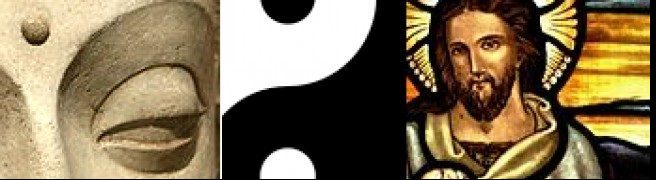
Looping into Peace

My father was this first to point it out to me, following a conversation in which he kept pausing to prompt me to finish his sentences. Feigning curiosity, he asked “Brian, do you understand how you keep on finishing my sentences for me?” When I shrugged my shoulders, he was more specific, “Do you understand just how far ahead of us you are?”

I was somewhat more conscious of it during a congregational meeting. We were to vote on a capital campaign, and I opened my mind to the community, trying to ensure that all viewpoints were considered and honored. Towards the end of the discussion, I took the microphone and asked a question. The rest of the congregation stared in confusion. Finally, one of the elders offered “Could you repeat that for us?” I tried again, with the same result. The elder said, “I’m sorry, I still didn’t catch that.” Finally I had this strange sense of my mind slowing down to come into synchronization with everyone else, asked my question one more time, and received an answer.

Most of these moments come to me in dreams. The first found me on an ancient battlefield, following a commander as he skirmished with exhausted warriors. Dispatching the last, he began trotting across the field, seeking a bow. Taking one up, he notched an arrow and fired it into the sky. My will followed the flight, bound to the arrowhead, seeking a target, finally rushing downwards to pierce the forehead of the enemy commander.

But there have been so many others. As I entered Barnes and Noble one afternoon, a man accosted me “You know the pope is looking for someone?” After John Paul II died on Good Friday, I played a requiem for him at work on Monday. During the Choral of Beethoven’s Ninth, I had a clear impression of Karol standing in the quarry in Warsaw just after WWII, and sent him the message “Come find me.”

Or of the woman that I identified with the Magdalene, one night reaching into her left fallopian tube and sending a gift way back to the foundation of her relationship with Christ, satisfying her deeply-held desire.

I do not know how to characterize this process. To be loved is to give strength to our desires, producing both sublime relation and corrupted entanglement. The will of Christ seeks to re-enter the world, and must clarify its manifestations. Can anyone claim to be the focus of that timeless power, or are we all just points of contact used to render more efficacious its engagement with us?

These are the moments most precious to me: when I lose sight of myself, and feel rising above the pain of tomorrow that future of love that calls back to steel our resolve and stimulate our hopes. It is to no longer be an “I”, but an “us” that blossoms from isolation into limitless possibility, all fears vanquished, all needs met, all questions answered. In those moments, all that I know is that simply to be a conduit of that realization is to receive a gift beyond any justification. I cease my restless dancing to bask in peace.

Folding into Sorrow

It some ways, it is getting easier. When the weight settles during the Agnus Dei, I’ve decided to simply go with it. With “takes away the sins of the world,” I raise my hands to my shoulders and push it away into the void. And with “grant us peace,” I motion for the powers to descend from heaven into the space prepared for them. I know that the gestures must seem odd to those around me, but at least I’m not weeping any more.

Still, there are these irrational and inexplicable waves of sorrow in response to the elements of the Easter story. It’s not the crucifixion that causes my throat to clench and my chest to lock against grief. Rather it’s in the middle of this verse from In Christ Alone, which I’ve been looping on the car stereo:

There in the ground His body lay
Light of the world by darkness slain
Then bursting forth in glorious Day
Up from the grave He rose again
And as He stands in victory
Sin’s curse has lost its grip on me

It’s in the declaration of victory that sorrow overwhelms me, accompanied by a sneering voice in the back of my head.

Having gained a certain sense of control over the experience, I am now able to stand back and analyze it. It’s not in the past that the grief lay, not on the Cross. It’s in the future.

And with that realization come to mind those mysterious promises. Of the Law [NIV Matt. 5:18], Jesus says (emphasis added):

For truly I tell you, until heaven and earth disappear, not the smallest letter, not the least stroke of a pen, will by any means disappear from the Law until everything is accomplished.

Only to announce the New Covenant in the Last Supper.

Of the End of the Age, Jesus promises [NIV Matt. 24:34] (emphasis added):

Truly I tell you, this generation will certainly not pass away until all these things have happened.

And on the cross to the repentant thief [NIV Luke 23:43]:

Truly I say to you, today you shall be with Me in Paradise.

Finally surrendering life with [NIV John 19:30]:

It is finished.

In Tyranny Vanquished by Love, I explain that the dimming of the sun on Good Friday was not an eclipse, it was the sun pouring its power into the Savior. What was that power used for? The only way to reconcile these statements above with the iniquity of modern human existence is that Jesus was unbound from time. The power he was granted was guided into the future by his mercy and love, seeking relentlessly for an opportunity to realize the kingdom of peace.

So Easter was not two days later to him as it was to his followers. Rather, as Peter suggests [NIV 2 Peter 3:8-9]:

But do not forget this one thing, dear friends: With the Lord a day is like a thousand years, and a thousand years are like a day. The Lord is not slow in keeping his promise, as some understand slowness. Instead he is patient with you, not wanting anyone to perish, but everyone to come to repentance.

So now I understand: the reason that I feel so much grief in the Resurrection is because we are at the turning point in his journey. The wall of pain stands right in front of us. The final resistance of sin, having consumed all the available resources, is flagging. It is ours to walk the narrow path, to pierce that veil with love, and bring him home to us.

And then send him back to rise from the grave and celebrate love’s victory with his dearest friends.


Tyranny Vanquished by Love

As an advocate of the healing manifested in the world through divine love – that is to say, as an apologist – the most painful apology is that offered by those that justify violence in the defense of received truth.

In modern America, those justifications are flavored with desperation. For many years, Christian culture was synonymous with the dominant Caucasian culture. The twenty-first century promises an end to that dominance, but that eventuality was clearly forecast in the last century. The misguided hope that change and accommodation can be avoided breeds irrationality, manifested in the religious extremism that spawned death-threats against doctors that prescribe chemical abortions or that drives parents to resist education in evolutionary biology. Fundamentalism bred in the military, where “Warriors for Christ” sometimes coerce religious conduct in their subordinates, and issue death threats against leaders in organizations (such as the Military Religious Freedom Foundation) that oppose that unconstitutional practice. In each case, the instigators see the tenets of their faith as justifying imposition of their values upon others, and therefore implicitly justifying a broader defense of inherited social privilege.

In both Judaism and Islam, this tendency is heightened by the intervention of God in martial struggles against those seeking to subdue the faithful. It is only in Christianity that radical non-violence is upheld. That the bookends to Christianity both deny the divinity of Christ may be symptomatic of a pragmatism that makes violence inescapable.

In Islam and the Destiny of Man, Eaton explicitly upholds this principle. A Sunni scholar, his survey of Muslim history after the death of the prophet concludes with the observation that the practical realities of maintaining control of an Islamic culture meant at least paying lip-service to its theology, which was often solidified by investments in public works that facilitated its spread. Through that means, tyranny was turned to the service of faith. But it goes beyond that – Eaton makes a deep statement that truth cannot survive in the world unless evil is divided from it, and that division requires violence. Indeed, the hypocrites of the ruling class in the Umayyad and Abbassid dynasties were short-lived.

In discussion with my Shia colleague at work, I have been slowly establishing the validity of the contrasting proposition of Christian faith: Jesus demonstrated that the pragmatic truths of this world are dust in the hands of those that manipulate them. What is known to be “true” is far less meaningful than what is possible. While the common reaction is “good luck with that,” I keep on pointing out that far more power is available to us than is required to solve the problems we face. A billion times as much energy leaves the sun as reaches the earth. It is not allowed us for the same reason that parents don’t give matches to children – one selfish miss-step can destroy us all.

But, you see, it wasn’t a solar eclipse on Good Friday. It was the sun pouring its power through him.

I discovered Lauren Naigle through BJ out at The River Runs. The compositions on Lauren’s debut album don’t rival those found in the secular (and often profane) debuts of Ricky Lee Jones or Norah Jones, and subscribe to a simple lyrical formula. But they encapsulate the fundamental truths of Christian experience: it is the loving heart that bled for humanity that demonstrates the preconditions for true power. Surrender self-concern and trust that all those that you love ultimately will love you in return.

Lauren is young, and among her tracks are jingles that might be dismissed as overly exuberant. But she has not been without suffering, losing two years of high school to an auto-immune disorder and a beloved grandfather. In How Can It Be’s closing homage, she pleads for self-surrender:

There is victory in my Savior’s loss
In the crimson flowing from the Cross
Pour over me, pour over me. (Yes!)

Oh let this be where I die
My Lord with thee crucified.
Be lifted high, as my kingdoms fall
Once and for all, once and for all.

Oh Lord I lay it down.
Help me to lay it down.
Oh Lord I lay it down.

Bad things happen to good people not because they are weak.

Evil walks in the world, and hungers for the power that originates from love, but love recoils from its grasp. In Richard Nixon, the great lesson of abused power was visible when he bade farewell to his staff, tears streaming down his face as he juxtaposed his experience of political life with the love he had received from his mother. That is another way of reading Lauren’s lyrics: “Be lifted high, as my kingdoms fall. Oh Lord I lay it down.

There are those immune to these realizations – Beria, Stalin’s security chief, spat on the corpse just moments after his master’s death. But Stalin has already been forgotten by history, replaced by Vladimir Putin, a man who justifies his power by promising to allocate money for road repairs left undone by the local governments impoverished by the corruption he organizes.

Putin’s political aspirations were conceived when unrest in East Germany paralyzed the embassy staff. Stepping in with a firm will, he saw people galvanized to action. It is this strength of will that he relies upon, but the lesson that is demonstrated by history is that the will to power is no match for the discipline required of those that love unconditionally. Tyrants can concentrate spiritual power, but they cannot hold it in any confrontation with a wise and loving adversary. The tyrant simply serves as a dark well in which light shines more brilliantly into the spirits of the oppressed.

The mistake of religious fanaticism is to believe that the institutions of tyranny must be dismantled, for that strategy only justifies oppression. The truth found in Christianity is that we don’t need to destroy the institutions of tyranny. Instead, in service with he that died once and for all, we can dismantle the personalities of the tyrants.

Oh, Lauren, what an joy it is to celebrate your wise old soul!

The Pope on the Pill

Pope Francis has published an encyclical on the family that clearly states that contraception is a mature and moral practice that ensures that children grow up in a loving environment. We’ll see how this interacts with the Supreme Court’s decision in a recently-heard case brought by Catholic nuns who insist that they shouldn’t be forced to offer contraception as part of their health care insurance. The nuns, who have children only under the most irregular circumstances, had argued that the First Amendment guarantee of religious freedom trumped the requirements of the Affordable Health Care Act, which requires in part that health care plans offer contraception.

Islam Reflected

While my understanding of Christianity is rooted in my personal spiritually, my reflections on other religions are stimulated by my encounters with writings that I feel express an authentic immersion in cultural experience. Among these writings I include Wouk’s This is My God, which celebrates the depth of Jewish faith while revealing honestly the costs of its insularity. Thich Naht Hahn’s The Heart of the Buddha’s Teaching is similarly powerful, though Ethan Nichtern’s The Road Home serves better to situate Buddhism in the modern world.

As regards Islam, apologists have the enormous benefit of written records that describe the formation of the faith. This is abused, perhaps, in their claims of authenticity and authority. But it also means that we are allowed a more intimate look at the personal and social transformations generated by a prophet. In Islam and the Destiny of Man, Charles Le Gai Eaton rendered this history appropriately, disentangling cultural and religious influences, but also with a sympathy found only in one steeped in spiritual experience. This summary of the essence of the Qur’an is not untypical:

Other books are passive, the reader taking the initiative, but revelation is an act, a command from on high – comparable to a lightening flash, which obeys no man’s whim. As such, it acts upon those who are responsive to it, reminding them of their true function as viceregents of God on earth, restoring to them the use of faculties which have become atrophied – like unused muscles – and showing them, not least by the example of the Prophet, what they are meant to be. To say this is to say that revelation, within the limits of what is possible in our fallen condition, restores to us the condition of fitrah. It gives back to the intelligence its lost capacity to perceive and to comprehend supernatural truths, it gives back to the will its lost capacity to command the warring factions in the soul, and it gives back to the sentiment its lost capacity to love God and to love everything that reminds us of Him.

The universality of this formulation reflects Eaton’s awareness that revelation is not unique to Islam. Mohammed and the Qur’an are manifestations of the Divine intention in circumstances that were unique to Arabia. Eaton dwells lovingly on those unique characteristics: the vast open spaces traversed by spice traders, the restricted word roots that make Arabic a richly allusive language, and the culture of the warrior poet – all were aspects that made the people’s minds uniquely susceptible to wisdom in the form emanated by the prophet.

But Eaton was also a European writing in 1985. The Occident was just recovering from the first of the OPEC oil crises, and the paroxysms of WWII were kept fresh in mind. Israelis and Palestinians blew each other up in hotels and apartments across Europe, to be succeeded shortly by kidnappings and bombings by home-grown radicals. The scheduled deployment of tactical nukes heightened global tensions between the US and USSR, threatening a conflict that would leave a radioactive waste along the fault line dividing NATO and the Warsaw Pact.

Seeking prescriptions for healing, Eaton’s comparative anthropology led him to elevate the virtues of Arab and Muslim culture. He places much of the blame for the onset of social decay in Muslim states on colonialism (including Zionism) and Westernization of the elite. Worse, his analysis tends to dismiss the virtues of European culture, characterizing our economics as an obsession with administrative efficiency, Christianity as immature idolatry, separation of church and state as self-destructive materialism, and our rational science as justifying exploitation of the natural world.

Placed in proximity, these attitudes seem damning, but Eaton presented them without polemics. To the Muslim, these are obvious realities not worthy of great fanfare, and generally of no great concern except in that the instability of Occidental nations threatens to engulf the Muslim world. But the comparison seemed also to blind Eaton to the subtle miscegenation of Islamic and Arabic virtues, and so perhaps blinded him to the lessons that could beneficially be learned from the history of other nations.

Among the characteristic values of Muslim culture, Eaton lists the sword, manifesting as a willingness to embrace risk in seeking greatness, and a conciliatory attitude towards death. But the symbolism is pertinent: the Muslim world was always a world of conquerors financed by the Central Asian traders whose camel trains linked the Orient with Europe. As in feudal Europe, religion forced the warlords to rationalize their ambitions in religious terms, but it was in large part the constraints of technology and flesh that limited  hardship among the people. Remove those constraints, as happened in Europe following industrialization, and both rational analysis and experience proves that there are no winners in modern warfare. It is far easier to destroy infrastructure than it is to build it. And so, after two great paroxysms, Europe chose to ensure that the struggle for dominance between national leaders was constrained to the free market. Rather than learning from this history, today we witness the Muslim world slowly grinding itself up in Lebanon and Iraq and Iran and Yemen and Egypt and Libya and Afghanistan and Pakistan. Yes the sword created the Muslim empire, but replace it with rifles and suicide bombers and tanks, and no culture has proven itself wise enough to resist the rush to self-destruction.

To the degree possible, restless aggression is moderated by the second Arab fascination: women. Eaton celebrates coitus as the most direct route to spiritual union, but then turns around and supports strict cordoning of the masculine and feminine worlds to guard against sexual immoderation. In a culture of aggressive males, these constraints inevitably fell most heavily upon women. This catering to masculine weakness discourages expression of the feminine virtues, principally among them conciliation and healing. In America, conversely, in my lifetime we have seen a steady disciplining of institutionalized misogyny, starting with removal of cheesecake calendars, passage of anti-harassment laws, and finally aggressive reconstruction of the workplace to assimilate graduating college classes that are more than fifty percent female. If the West is failing anyone today, it is the men that have not been provided the spiritual tools to control their youthful passions.

But can Islam, celebrating a man with twelve wives, offer anything more? Considering the brutal enforcement of female dress codes throughout the Muslim world, it would seem not. Yes, the West is in the ugly stage of the transition to sexual equality, but we are learning from the process, and will emerge far stronger for the investment. The Muslim world should take note.

But this criticism does not detract from the power of Eaton’s presentation. Like a great novel, his work immerses the reader in the Muslim mind-set, aided in no small part by a detailed rendering of the heroism of the founder and his heirs. It is a great story, guided by a holistic faith that has inspired artistic and intellectual achievement for more than a millennium. In recognizing defects, I seek merely to inoculate the Western reader against making too much of them, and to warn the Muslim reader to appreciate the costs of their insularity.

Islam and the Destiny of Man presented its religion as a profoundly human story, much as Christianity did in casting God’s devotion to us as the sacrifice of a son. In that commonality, the true Christian should find all necessary means to reach across the divide, inspiring and being inspired by the greatness that faith calls from humanity.