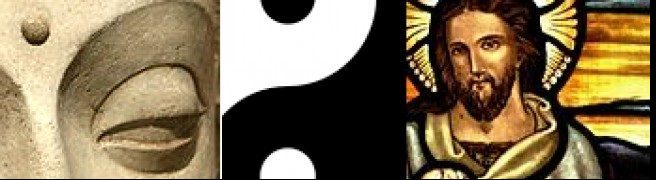
The Indications of Atheism

In explaining the dangers of spiritual agency to young children, I used the example of an electrical bus bar. The power of love flows through us, and if we resist it, we can get hurt. But if we let it flow through us to those that need it most, the limit to what we can transmit is the capacity of others to receive from us.

Here’s a picture of somebody struggling with that problem:

The yearning to love is not commonly understood as the desire to be filled with God. The emptiness itself is recognized by Chris Rice in “Big Enough”:

When I imagine the size of the universe
And I wonder what’s out past the edges
Then I discover inside me a space as big
And believe that I’m meant to be
Filled up with more than just questions

But he believes the answer is in direct awareness of God’s presence in our lives, rather than in surrender of ourselves as a tool through which God enters the lives of others.

Mother Theresa, the great servant of the poor, struggled with this paradox in middle age. She felt God’s presence within her for many years, but entered into spiritual aridity at the end of her life.

Why is that? It’s because as that “space as big” is filled with love, we stretch. We feel a glowing inside of us, and a tingling as that love attaches to the people that we serve. Through that connection, we are aware of the beautiful healing that divine love brings to them. There’s an incredible rightness to it.

But when that love is firmly established in us, and flowing through us at the limit of our capacity, we become habituated to its presence. We become a fount from which others drink, and are filled again so rapidly that we may not even be aware that our pool was disturbed.

A Catholic priest shared with me that he decided to take orders after a visit with a nun. When he returned years later to tell her that he had found peace in her presence, she said that she was not even aware of the interaction. Similarly, though perhaps scandalously, a young donor to Mother Theresa’s work came away from a meeting to say that she “was the sexiest woman alive.” I am certain that she had no such intention in interacting with him: he was just overwhelmed by her energy, and channeled it into the most familiar form of self-love that he knew.

I have described the progression of the traditions of Abraham as the development of discipline through the practice of law, which flowers into spiritual intermediation between God and our community. In Jesus’s time, the pool of candidates for that graduation were limited. But in the intervening centuries, a large number of people were allowed the opportunity to devote their lives to religious orders, and the contemplation of the mysteries and magic of living a life in Christ. Two of the most beautiful lives so recorded are Mother Theresa’s predecessors: St. Teresa of Avila, and St. Terese of Lisieux.

The Apostle John was an earlier exemplar of this way of living. In the Book of Revelation, he describes the progression from the other side of the process: the change in the relationship between God and the angels that Jesus claimed to be working to transform. It begins in a throne room, with God in the central seat surrounded by angels [Rev. 4:2-4]:

[T]here before me was a throne in heaven with someone sitting on it. And the one who sat there had the appearance of jasper and carnelian. A rainbow, resembling an emerald, encircled the throne. Surrounding the throne were twenty-four other thrones, and seated on them were twenty-four elders.

As I describe in The Soul Comes First, twelve of the elders are the masculine angels that guide the tribes of Israel, and the other twelve are feminine personalities that accompany the Holy Mother when she descends to earth. When the work of Christ is done, John describes the “New Jerusalem”, with angels at twelve gates, and a tree of life bearing twelve crops of fruit. He then explains [Rev. 21:22-23]:

I did not see a temple in the city, because the Lord God Almighty and the Lamb are its temple. The city does not need the sun or the moon to shine upon it, for the glory of God gives it light, and the Lamb is its lamp.

And [Rev. 22:1] the tree is fed by

[T]he river of the water of life, as clear as crystal, flowing from the throne of God and of the Lamb…

Where once the presence of Unconditional Love is separated from the angels as a king on a throne, in the end it is woven into every aspect of our shared existence.

So what does the experience of the saints foretell about our experience when we surrender ourselves fully to love? Well, at some point we no longer know where we end and love starts. The reincarnated nun might say “I feel guided by compassion from within, that has no source that I can discern.” Or the reincarnated monk might react to fear and hatred in those that profess faith by saying “Yours is not a god that I would choose.”

The best thing that a person of faith can do to bring such a person to awareness of the ultimate source of love is not to upbraid them for reflecting the standards of Christ back upon us. Rather, it would be to engage them in solving the biggest problems that humanity has to solve, and then to let them rediscover (in this life) the magic of Christ’s presence when those problems begin to overwhelm them.

You see, a profession of faith is only to say “I have God within me.” What Christ wants, however, is for us to seed the entire world with him.

Is this a model for all atheists? No, there are those atheists that seek only to destroy Christ and his works. But there are a good number of them – in my experience a majority – that seem honestly to feel that Christians aren’t upholding the ideals expounded by Jesus of Nazareth. We should not take their witness as an attack, but as an exhortation to do better.

What is Important About Church?

I have been in a lot of churches, and many pastors raise the alarm that they work in communities that are turning away from God. Often this is accompanied by a call to evangelism: the members of the congregation must go out into the world to bring those outside in.

An element that distinguishes churches are the strategies they pursue as they turn outwards. Some do charitable works, some trumpet the knowledge of the Bible, some run Halloween and snow parties. The problem is that where the church was the only charitable institution in the ancient world, today the precepts of brotherly love are so firmly established that modern governments have institutionalized the provision of charity. During the Middle Ages, the Church ran all the educational institutions: today public schools provide a wealth of knowledge to our children, and knowledge that is more immediately useful in creating value in the material world. And for those who want to have fun, modern expectations for entertainment make Church-run events appear a little tame.

In this age, then, I would assert that the unique role of Church is to provide spiritual support to its members. This process is not entirely familiar to every minister. During a sermon on patience, one local pastor reported that God was “messing with him.” He had become trapped in traffic during a dragnet for a police shooter. The traffic seemed to just go around in circles with no escape, and his anxiety grew higher and higher. What I offered to him was that, under such circumstances, when people were all enmeshed in a common wavelength of fear, anger and/or frustration, I found that injecting the Christian experience of love, compassion and patience to be enormously effective.

In that practice, the concern for the lone individual is becoming trapped in the psychology of the immoral man, with their greed, lust and fear. Many churches have a “private club” of spiritually sophisticated individuals that work very hard to keep dirt out of their presence.

The problem throughout is that unless people are presented with the knowledge of Christian peace, they don’t know what they are missing. It’s really that peace that is important in the modern world, with the constant barrage of e-mails to read, decisions to make, people to see. It is only in that peace that the still, small voice of the Holy Spirit can be heard. Answers to many of life’s problems are easy to discover in that great gift to humanity: the Holy Spirit, repository of the knowledge of practical problem-solving through love.

I believe that it takes a community of caring to foster the experience of Christian peace. That’s not “peace” in the sense of “protection from trouble”, but the peace of Jesus on the cross: assailed by hatred from without, but above it all. In a Christian community, that strength and peace is shared among us in our time of greatest need. The connection to that peace becomes a reliable support for us as we navigate an unsympathetic world, and I have found it to be the thing that people find most remarkable about my Christianity.

So how do we share this experience with the world around us? By walking in it with our hearts open. Those that need peace most, when looking within us, cannot help but see Jesus there reaching out to them.

Any Road Will Do

My sons’ mother is an Eastern European émigré. As she described her society prior to the fall of the Iron Curtain, the hypocrisy of communist ideology was a hidden injustice. It was not obvious as a child: the promises of the ideology are fairly concrete for children in state-paid schools and summer camp. The trouble began in college, when the theory of the ideology was transmitted. Successful students learned to regurgitate the rhetoric without being troubled with internal logic or consistency with state policy.

How, then, did the ideology serve to organize the state? Simply as a “semiotic system” used to evoke behavior. Dealing with oppositional or inconvenient people was a simple matter of threatening them with the right labels. Whether the labels were applied logically or even consistently was not a matter of great concern. In fact, everybody violated the ideology. What was critical was to avoid the ostracism or incarceration that came with the labelling.

Did Marx and Engels understand the rhetoric they invented? Almost certainly, but not as the communist leaders ultimately did. Remember that Marx laughed when asked whether Russia itself could lead the transition to communist society. He understood that the political sophistication of the Russian workers was insufficient to support communist practices. If brought back to analyze the political scene today, he would almost certainly identify Germany – the most profitable economy in the world – as the nearest to his ideals.

The inconsistency between Eastern European politics and ideology reflected, to a great degree, the impoverished practical context and political skills of the societies forced to try to implement the ideology. They had no way of visualizing the reality that Marx was trying to evoke, and so corrupted the rhetoric to serve purposes that made sense to them.

This is also evident in the rhetoric of the Christian fanatics. As a means of fueling my output here, I subscribe to a conservative Christian magazine. The editor recently sent out an e-blast linking Planned Parenthood to sex trafficking. The assertion was that traffickers brought girls in for abortions when they became pregnant, thus preserving their sexual availability. The stupidity of such a situation appeared to escape him: there are so many means of preventing conception, some of which are desirable in the sex trade to prevent the spread of STDs. Even if these are not used and pregnancy does result, bringing kidnapped girls into a center focused on reproductive health runs a terrible risk of exposure: the procedure requires a physical exam, which would be likely to reveal signs of abuse that, in the case of under-age girls, must be reported by law. And if the trafficker really cares so little about the health of their victims, legal abortions aren’t the only means of ending an unwanted pregnancy.

But the writer wasn’t concerned with logic or plausibility. The bald assertion at the beginning of his diatribe justified his rant: life begins at conception. I have previously refuted this statement, making it clear that only a mother knows the moment when a spirit enters her womb. But once made, the assertion justifies the labelling of Planned Parenthood for the purposes of its destruction. Because Planned Parenthood brings an essential social good – providing for the reproductive health of women – those that oppose it have been able to demand enormous resources from those that subscribe to their attempts to destroy it.

All this because, as in Eastern Europe, the process of bringing life into the world is not understood.

In the New Testament itself, we see the Apostles struggling with this gap between ideology and rhetoric. Sometimes this appears in the disjointed nature of the exposition. Consider this apparent non sequitor:

The student is not above the teacher, nor a servant above his master. It is enough for students to be like their teachers, and servants like their masters. If the head of the household has been called Beelzebul, now much more the members of his household!

Taken on the face, this appears to be a rather dour assessment of the human condition, suggesting the prospect of an irreversible decline into depravity begun with the expulsion from Eden. Collecting such statements out of context, the atheist builds a powerful case for rejecting Christian practice. That people such as the editor above align their theology with the axiom is a great assistance to the atheist.

Why does the statement appear so disjointed in the original telling? Because the Apostles did not know where they were heading. Matthew records the statement in the chronology of events, but it is only in the demonstrations reported in Acts that the statement makes sense:

  • First, Jesus was sending the Apostles out into the world to assume his role as a healer and teacher. They were frightened, and his statement is an admonishment that unless they liberate themselves from the mindset of the student and slave, they will never accomplish the work that love required of them.
  • Secondly, the statement is an indictment of the authority of human religious leaders. The require dependency in their followers. The Apostles were conditioned by their culture to believe that they needed teachers and masters to survive. Those relationships must be set aside if the followers were to grow into the strength Jesus was offering them.
  • Finally, Jesus was identifying a contrast with other gods from the relationship his parables declared that the Father sought: not a relationship of dependency, but a relationship that flowered, as in Jesus, to full equality when children became adults.

In this light, the statement becomes a source of deep wisdom. That wisdom is revealed only in the context of the purpose that Jesus pursued in the world.

So let’s reassert the quest documented by the Bible: it describes the process of guiding humanity into the embrace of unconditional love. The goal is to demonstrate the felicity and power of a surrender to love.

In that context, the fear used by the editor is revealed as an incredible perversion. And the logic of the atheist is refuted.

Why elaborate this truth? Because if we don’t know where we’re going as Christians, any road will do. Evangelism can succeed only when it supports the purposes that Christ established: to join our souls to the Father’s. When it does not, it becomes incomprehensible, subject to corruption from within, and risible from without.

Worship

The ancient Romans insisted that the rites of the gods be honored, on pain of death. The concern was rooted in practical experience of the consequences of pissing them off. Why would failure to practice the rites make so much difference to the pantheon?

A clue is found in the Greek spiritual practice that has been revived as Hellenismos. The Greeks believed that the mystical progression began with simple human heroism. It continued after the hero’s death when grateful people gathered at shrines to celebrate his (or her) accomplishments. If the personality of the hero inspired further heroic achievements, justifiably the celebrations would increase. The accumulated psychic energy would eventually make the hero a daimon. Adherents might then invoke to power of the daimon in times of need. If the daimon responded effectively, the continued outpouring of gratitude might eventually elevate the personality to Olympian stature.

So worship is important to the gods because, as suggested in The Matrix trilogy, human beings are psychic batteries of a sort. Our attention is part of a political partnership.

As cultures evolved from local to regional to continental extent, this process became politicized. The Roman emperors spoke of becoming gods in their own right. King Louis XIII of France had himself crowned “The Sun King.” The Capital dome in Washington D.C. is decorated with a mural celebrating “The Apotheosis of Washington”. And the sanctification of Ronald Reagan is evidenced by the evolution of the exhibits at his Presidential Library. Given hundreds of millions of adherents, power similar to a Hercules might be accumulated within a decade or so, where before it might have taken generations.

Cynicism about the process is evident in certain religious controversies. Despite the similarities shared by Christian and Buddhist sages, some Christian theologians complain that the avatars of compassion and loving kindness celebrated in Tantra are actually “demons”. I have some challenged in attempting to reconcile that accusation with Christian celebration of saints and angels. The characteristics of the Tantric and Saintly personalities are almost identical.

Despite all of this commonality, I am going to assert that the worship Jesus offered to the Apostles is fundamentally different. I believe that our own selfish aspirations to saintliness blind us to this understanding: we have a vested interest in subscribing to practices that increase our personal power.

For Jesus did not command us to worship. He admonished us:

You shall love the Lord you God with all your heart, and with all your soul, and with all your mind. This is the great and foremost commandment.

If worship is to prop something up to make is stronger, then loving is not worship, for the goal of love is to bring something closer. In a kind of virtuous circle, our loving calls to us the perfect love of God. We can attempt to corrupt this love, but in doing so only succeed in driving it away. It stands just aside from us, until we relent in our harshness, and allow it to come again into service to us.

Why is love so efficacious? Because it holds power in readiness for others. It does not spray out in gaudy shows, but preserves its energies until it finds spirits calling out in genuine need.

Amy Grant renders this so beautifully in Better than a Hallelujah:

We pour out our miseries
God just hears a melody
Beautiful, the mess we are
The honest cries of breaking hearts
Are better than a Hallelujah

The desire of Unconditional Love is not to be served, but rather to be of service.

What about the other gods? Well, in seeking after worship they are in fact seeking after love from their adherents. If that love is given conditionally, the deity is at risk of losing their elevated status. Of course, the only way to secure unconditional love is to love reciprocally, because if the deity loves conditionally, the adherent will eventually realize that they’re getting the raw end of the deal. So the most powerful gods, in their relationship with their adherents, are eventually suffused with love, and ultimately are subsumed by it.

This is the truth articulated by Paul in Colossians 1:17:

He is before all things, and in Him all things hold together.

And should we want it any other way?

Christian Healing

One of the consequences of guilt is the resistance that it brings to the process of healing. When we internalize the wound of guilt, we create with our minds a bastion that cannot be reached by forgiveness.

The presumption that Humanity brought sin into the world in Eden is a universal guilt – a guilt that says Humanity is unworthy of the trust that the Divine has invested in us.

And so I must quibble with the Christian teaching that Jesus died on the cross for our sins. A sin is a sin because it leaves a wound in the soul. As Jesus loved us, so his goal must have been to heal us.

As creatures given choice, however, that is only possible if we open ourselves fully to the power of that healing. “Forgiveness of sins” is only a waypoint on that journey. It is a gift that says we do not have to be worthy of healing.

We have struggled with that lesson now for 2000 years. That guilt blocks us from healing justifies the half-truths of the Pharisees – past and present. Because guilt prevents Humanity from receiving healing, the only way to manage spiritual wounds is to make rules that prevent them from happening. Rules can only be enforced by punishment, and that eventually perverts the whole purpose of the exercise, as we wound the souls of those that do not have the strength to resist their selfish impulses.

This is the truth: he comes again when we give up control over others, and invest ourselves with the faith that the Divine power of Love can heal all. He comes for the healing.

Who Is in Charge Here?

A common motif in corporate management is the analogy of competition as a sport. A certain visceral energy comes into a community of people when they stand over their fallen enemies.

One of the challenges employers have in managing me is that I recognize the fundamental nature of that experience: the energy comes from feasting on the spirits of our foes. It’s literally vampirism. It’s wrong, and I refuse to participate.

A survey of the lives of prominent business and political leaders reveals a trend – not universal, but powerful: many of them crave attention. They are needy. They are unable to bring energy from within, and so must consume that produced by others. This creates conditions in which the culture of our organizations is not controlled by the needs of its constituency (workers and customers), but by the personal needs of its psychologically neediest members.

This is not an abstract problem. It severely damaged America during the terms of Presidents 42 and 43: Clinton hungered for the attention of women, and his indiscretion led to wasteful impeachment proceedings. W hungered for a father, and his need to outdo Bush Sr. in the Gulf lead to rash decision-making that cost the nation trillions of dollars and tens of thousands of ruined lives.

Why does that happen? Why do we allow these men (in many cases, empower them) to run our lives?

This is, in fact, the central conundrum of the Bible, starting with Cain and ending with Christ. Some women think of Christianity as a “men’s club”, but I don’t see it as something to be proud of. The Bible focuses on men because our weakness is the greatest problem to success in the mission we have been given.

When John is invited into heaven (Revelation 4), he encounters twenty-four “elders” celebrating the presence of unconditional love in their midst. Twelve are identified as the patron angels of Israel; the other twelve are encountered in the tiara of the holy mother who comes to bring the savior to humanity. So in heaven, there is a balance between the masculine and feminine angels.

Why don’t we feel the presence of those angels? The intimacy of their involvement with the doings of Earth is described so beautifully by John [Rev. 4:9-10] (emphasis added):

And when the living creatures give glory and honor and thanks to Him who sits on the throne, to Him who lives forever and ever, the twenty-four elders will fall down before Him who sits on the throne, and will worship Him who lives forever and ever

In reading this, I have the image of a great welling up from all the living things of the Earth: the animals, plants, fungus, even the bacteria. This welling up travels up through the souls of the elders where it literally forces them to their knees in praise.

But after Eden, humanity was placed under quarantine. We are not allowed to participate in this upwelling, for as it says [Gen 3.24]:

He drove out the man, and at the east of the garden of Eden he placed the cherubim and a flaming sword that turned every way to guard the way to the tree of life.

Being cut off in this way, our experience of life is dominated by the material world, and predominantly by the fear of death. When wielding fear to control others, men, whose natural participation with the creation of life is so distant, have less compunction than women. Too often, those that cherish life submit to the terrorism of aggressive men.

What Jesus demonstrated to us was the power that is available to us when we relinquish fear. It is to enter again into that upwelling, and with disciplined minds not only not to pollute it, but moreso to help to channel it. In so doing, we are embraced and sustained by it, just as Jesus was. It is this channeling, and not physical control, that was meant in Genesis 1:28:

God blessed them and said to them, “Be fruitful and increase in number; fill the earth and subdue it. Rule over the fish in the sea and the birds in the sky and over every living creature that moves on the ground.

In that divine relationship, the power of love sweeps all else before it. I once had an employer tell me that I was a “free spirit.” Not at all: I am constrained to avoid the use of fear, which in this world is to surrender power over people. But in surrendering that power, I have submitted to the purposes of a power that overwhelms all others, and so I cannot be turned by fear as others are turned.

Enter through the narrow gate; for the gate is wide and the way is broad that leads to destruction, and there are many who enter through it. For the gate is small and the way is narrow that leads to life, and there are few who find it. [Matt. 7:13-14]

Who is to Blame?

When I began listening to praise music five years ago, my most powerful reactions were to two types of songs: those that express gratitude for the cross, and those that describe the patient suffering of a parent confronted with the loss of a child.

There is no experience in life that more powerfully contradicts the premise of a loving God than to watch an innocent child succumb to cancer. The experience of the Amish families that lost five daughters to a gunman in 2006 is far more shocking, but the faithful can rationalize it as the work of an external evil working through fallen humanity. The silent killer that consumes from within is a horrifically intimate violation.

The pain of that struggle is captured powerfully by Mark Schultz in “He’s My Son”. It takes real strength to face this loss without anger.

So why does it happen? Why does God allow this, and so many other bad things, to happen to good people?

The depth of our outrage is sharpened in the West, where so many religious traditions teach us that we have only one life to get it right. I’ve touched on this before in On Dying. When the nature of the soul is revealed, it will be obvious that reincarnation occurs, and that – as our Eastern siblings have been telling us for so long – we have many chances to free ourselves to spend an eternity in the divine embrace.

But even so, why should good people have to suffer?

It might help to back away and look at a case that is not so terrible. I have a friend, a great strong man, that cross-dresses. He has married and had children, but is overcome with the need to wear women’s clothing. He shared with me one particular experience: he served in the navy on an aircraft carrier. They were at port, and on this occasion all men had been called to their quarters in preparation to return to sea. My friend grabbed a dress, changed, and went out on the flight deck. When he was spotted, an all hands was issued. Changing back into his uniform, he participated in an exhaustive search of the vessel for a female stow-away.

When I heard this story, I had an apprehension of a father holding his daughter while their ocean liner sank. He had promised to keep her safe, and had failed her. She was afraid to go out into the world again, and so was journeying with him in this life to overcome her fear. That was, in part, why he had joined the Navy.

When I listen to Mark’s song, I have similar visions. In the child is a spirit that has never received love, and suffered terribly in a past life as an adult. They need some strength to face that journey again, some reason to hope. So they come into the world to have some time with parents that love them. They push all their pain into the disease that consumes them, and leave it behind when they die, filled with the love that their parents have poured into them.

Yes, it is a heart-breaking work for parents to perform, but so beautiful and full of purpose.

The story of the Amish children has a similar sense to it. The girls were trapped in the schoolroom with a deeply disturbed man. When he determined to kill them, the eldest girl stepped forward to say (I paraphrase) “I am oldest. Leave these others alone and kill me.” In that moment, she conquered his evil. And during the preparation of the bodies for burial, the elder watched the women at work and counseled “We must not think evil of this man.” In fact, the community gathered resources to sustain his family.

In The Soul Comes First, I interpret the Bible from the perspective that good people are medicine used by God to heal the wound of selfishness. What these experiences have given me to believe is this: bad things happen to good people because their light is needed in the darkness. While Jesus confronted the greatest darkness – the evil of systems of justice that destroy the people that come to bring healing to the world – all good people carry that cross to a greater or lesser degree. We bring light, and the world that suffers in darkness attempts to steal it from us.

So, please, if you can: when confronted with evil, or pain, don’t collapse into resentment against God. Just open your heart wider, and let his love brush back the pain of the world around you. Maybe you won’t change the people that prey upon you, or heal the diseases of those that you love. But you will give hope to others that suffer as you do, and leave them with the strength to do better next time.

Why God Comes First

To the skeptic, holding out the hope that prayer will bring divine guidance is to become a “meat puppet.” This is unfair for a lot of reasons, not least of which is that smart predators make life a lot more complicated for us that it should be. Sometimes we just run out of thoughts at the end of the day, and it’s nice to have other sources of insight to fall back on.

In trying to find a balance here, the pronouncements made by Jesus on the road to Jerusalem can be troubling. They include Luke 9:60 and 62:

Let the dead bury their own dead, but you go and proclaim the kingdom of God.

No one who puts a hand to the plow and looks back is fit for service in the kingdom of God.

but most distressingly is Matthew 10:37:

Anyone who loves their father or mother more than me is not worthy of me; anyone who loves their son or daughter more than me is not worthy of me. Whoever does not take up their cross and follow me is not worthy of me. Whoever finds their life will lose it, and whoever loses their life for my sake will find it.

Does this God sound a little needy to you?

We can certainly interpret those quotes from that point of view, but think of it from the other direction. Let’s say that it was your father demanding that he come before your relationship with Christ, the one that tenders to you a perfect, healing love. Would a father that loved you deny you that gift?

And if your father already possessed that gift, would he not want to purify and refine it so that he could share it to its fullest with you? In fact, would he not believe that it was in fact his walk in the presence of that perfect love that empowered him to love you? When you walk into that space of love the he has called to him, all the hurts and pains of the past fall away, and he sees you exactly as you are, and offers you only those things that will make you stronger.

In “My Father’s Eyes”, Eric Clapton shares this experience of nurturing a child:

Where do I find the words to say?
How do I teach him?
What do we play?
Bit by bit, I’ve realized
That’s when I need them,
That’s when I need my father’s eyes.

From this point of view, the reason that Jesus asks us to put him first is because when we do that we become better able to bring his love to others, and that also makes us better at loving them. As with the servants in the parable of the talents, this is what makes us worthy of Jesus: not to hoard his love, but to give it to those around us that need it most with the faith that they will return it to us in our time of need.

So what this leads us to is this: when we fail to put love (which is Christ) first in our relationships, we not only become unworthy of Christ, but we become unworthy of those that we claim to love. In fact, we are lying to them when we say “I love you.”

Why Do We Pray?

While I declare as a Christian, since renouncing my atheism I’ve only prayed twice. Once was for my children, who lived through a time of great fear in their lives. The other was for the woman I was in love with, asking that she be prepared to receive all the beauty that life held for her.

It’s odd, then, that I often feel guidance coming to me.

I didn’t understand what was going on until I came across Talking to God: Portrait of a World at Prayer. This beautiful coffee-table volume includes reflections on prayer by the faithful of many religions. The essays are collected in three sections on supplication, praise and meditation.

The most common phrase in the Bible is a variant on “fear not.” Supplication is the act of reaching out to the divine power for strength to do good in a world that too often exploits our weakness. The elements, disease, and predation (human or animal) all cause us to expect death, and so the loss of the joy that we have discovered in living. This causes us to call out to the divine presence to direct a portion of its power to protect us. When death is not imminent, the habit of prayer may lead us to ask for intercession in other matters.

Even when no direct response is provided, the psychological benefit of supplication is in allowing us to name our fear. As the Buddhists teach us, this brings the power of reason to work, which helps to quell our dark emotions. Having named our fear, we may be able to speak of it to others, and thus to rally others to our aid.

It is when we move beyond emotion to reason that we enter into prayerful praise. This is a celebration of the virtues that enable us to overcome adversity. Among these are patience, courage, compassion (in ourselves and others) and discipline. While praise of the virtues has always been recommended, I believe that there is a physical aspect to the process that has not been fully appreciated. It is suggested by this quote by Jakob Boehme, the German mystic:

If you ask why the Spirit of Love cannot be displeased, cannot be disappointed, cannot complain, accuse, resent or murmur, it is because the Spirit of Love desires nothing but itself, it is its own Good, for Love is God, and he that dwelleth in God dwelleth in Love.

Thoughts are physical things. When we ponder an idea, we reach out with our mind into a “space of ideas” to establish a connection. Think of it like a telephone line: where at first we have to work laboriously to connect to the strength of a virtue, when we praise it, we build a direct line to it, and can reach it almost immediately.

The amazing thing about this stage of prayer is in discovering the incredible power of the virtues. Why are the virtues so powerful? Well, the reason that predators use fear to control us is because it’s easy. Those people, such as Buddha and Jesus of Nazareth, that struggle and eventually overcome fear have to be stronger in their spirits than the predators that seek to destroy them. Eventually, that strength becomes so great that the are able to actually banish the precursors of fear from the minds of those that seek to harm them. They succeed in this because the predators, in taking the easy road, never develop their spiritual muscles. Furthermore, predators wallow in a set of ideas that really don’t care about them. At the first sign of spiritual weakness, the vices turn on their favorites and consume them. Thus when Jesus went to the cross and forgave his tormentors, their vices could not enter into him, and so turned back against their source.

When we pray in praise, we tap directly into the strength of the virtues built in the space of ideas by our great religious avatars. As we see this taking hold in our lives, our praise becomes more and more fervent. Because we seek joy in our lives, we walk about sharing our strength with those we care for, protecting them from fear as well. This is the stage of meditation.

In meditation, we enter into experience without expectation or judgment. We seek, not knowledge, but the sensation of our bodies, hearts and minds. In allowing those sensations to enter into us, we close the gap between the experience and the virtues that surround us. When there is pain or dissonance, we allow the virtues to enter into the experience to create healing and harmony.

The first time I realized that I was meditating (almost constantly) was in Cub Scout monthly meetings. The Scout Master was a shy about public speaking, and I would get this strong sense of fear from him when he stood up to present. I would just close my eyes and send him my confidence and admiration. His voice would steady.

For those that aren’t in the habit of praying, this can be a frightening experience. It’s like an invasion of their selves. I’ve had some really hostile reactions. Many aggressive men assume, for example, that I’m gay. They aren’t habituated to receive affirmation in any other way than through sex. The rest of their lives are organized around conflict.

In organizations, the response is more complicated. When we start to heal anger and fear, the participants become aware of their psychological dependencies. As victims become aware of how their trust is being manipulated, they may react to the healer as the source of paranoia, or even worse as the cause of the breakdown of trust in their relationships with predatory leaders. Such leaders often present themselves as noble interlocutors in the conflict that they engender among their followers, and when that strategy is revealed, the followers often rally to those that prey upon them, blaming the healer for the insights they bring!

As Boehme testified, the healer succeeds eventually when (s)he seeks nothing except the opportunity to allow the virtues to enter more deeply into the workings of the organization. Others finally realize that they feel far better in the presence of the healer than otherwise, and begin to work effectively against the true source of their problems.

So what I’ve come to understand is this: we pray to bring the divine presence into the world. Whether we are asking for help or mediating in its delivery, the end result is the same. The only way that God comes into this broken world is through prayer, and in its ultimate expression, that occurs through those that surrender themselves joyously to love of everyone willing to receive it.

Distributing the Treasure

In the parable of the fields, Jesus says of his kingdom that:

The kingdom of heaven is like a treasure hidden in the field, which a man found and hid again; and from joy over it he goes and sells all that he has and buys that field.

Then in the parable of the talents, Jesus addresses the Apostles and says of the servant that hid the money he had been given to invest:

‘You wicked, lazy slave…take away the talent from him’…For to everyone who has, more shall be given, and he will have an abundance; but from the one who does not have, even what he does have shall be taken away

The two parables illuminate the challenge of bringing divine power into the world. The unsuspecting finder of faith has no idea what to do with it. Looking at the history of the Hebrews, it is obvious how fragile faith is. From Aaron to the Pharisees, from Saul to Herod: the leaders of the nation of Israel corrupted faith for political and economic purposes. Aaron acted in good faith because the people were afraid when Moses disappeared on the mountain, but in the time of Jesus the Pharisees twisted the fear of divine retribution to line their pockets. Saul, having been anointed king by Samuel, was angered when others threatened his authority. In Herod’s time, that pattern had become so entrenched that oppression of dissent was not even remarkable. Given this, perhaps it would have been best to keep the treasure hidden.

But the Apostles were students of a master who prepared them to exercise faith in service to the oppressed. They had seen what faith could do. All that they required to see it multiply was simple courage. For those demonstrating courage, the master would not judge between those with greater or lesser skill in the exercise of power, but reward them all. For those lacking courage, the portion of power that was given them would be given to others.

The tension between the two parables should be heeded by us today as we ponder how to go about distributing the riches that Christ has provided us to do good in the world. As people of compassion, our natural tendency is to respond to fear and righteous anger with promises of aid. The obvious first step is to eliminate the cause of the fear and/or anger. When that cause is hunger, it would be hard to fault an offer of food. But when the cause is political tyranny, forceful intervention (as currently in Russia) can be propagandized to justify further oppression. The Russian people have offered adulation in response to Putin’s aggressive militarism.

So we have to ask, when offering aid, “What are you going to do with the power we offer you?” When the hungry man is fed, will he then seek employment? If an oppressed people is offered political assistance, how will they organize to overcome the tyrant? If these question can’t be answered, then their troubles are merely symptomatic of a large social disease that must be addressed before individual problems can be solved. They may need education, or political enfranchisement – or assistance in finding a leader that can articulate their needs.

I think that many of the world’s problems today require the last: for those offering Christian compassion to go beyond simple charity to supporting the development of leaders motivated by Christian ethics. In assessing candidates, I favor strongly the wisdom of Lord Baden-Powell, founder of the Boy Scouts. In developing leaders, the program upholds this law:

A scout is trustworthy, loyal, helpful, friendly, courteous, kind, obedient, cheerful, thrifty, brave, clean and reverent.

These qualities are an interlocking web of virtue that ensure that power is not diverted for personal gain, but rather directed towards those that first inspired our compassion. They are not qualities that necessarily translate to the easy currency of popularity. That is gained all too often through promises of an end to fear and oppression that cannot be made good until the people themselves begin to manifest the qualities of true leadership. As it is said in the Chinese I Ching:

Of the great leader, when the work is done the people say ‘We did this ourselves.’

God took 2000 years to work his will on the people of Israel. For those continuing that work in the world today, patience (although perhaps on a more human scale) is essential. As in Jesus’s relationship with the Apostles: It is not upon us to do the work ourselves, but only to offer the oppressed the hope that it can be done at all. Hope is the seed of courage, Christian compassion is the seed of faith. When courage and faith combine, anything is possible.