Trimmed to Size

I am in the third stage of down-sizing my living space, preparatory to relocation from a 1200 square-foot apartment with attached garage to a 700 square-foot space. Considering the expense of a storage unit, I have steeled myself to discard or donate everything except the bedroom set and my tech tools. I began the final purge and boxing up for the move last night, and stuff that had survived the first two cuts is now either piled up in the garage pending a trip down to Good Will, or sitting in the dumpster.

Strangely, the two collections represent very different aspects of my life.

The primary impetus for down-sizing is that my sons are off to college. I’ve held back their child-hood memorabilia, most of it stored under my bed, which is were it will be again after the move. The rest of me as a father is destined for Good Will, including the power tools that I used in fixing up the house their mother now lives in, the racks that stored their backpacking gear, and the last of the storage bins that held their craft supplies.

In the dumpster lies the record of my intellectual life, starting with the journals I wrote in college that marked the beginning of my attempts to understand the power of love and why it was so hard to transmit it. Also from that era are the remnants of the comic book collection that I accumulated up to the date of my marriage at thirty-five. More significant are the last of the evidence of my investment in Diagrammatic Programming, the systems analysis technology developed by my father who passed away just before New Years.

The furniture and appliances are no loss. But these things hurt somehow.

From the comic collection I did hold back my run of The Puma Blues. It’s been sitting on a wire rack for three months, but made it to my bed last night. My elbow began aching around 9:30, so I decided to turn in. Instead, I ended up propped up by my pillows, trying to decipher the faded scratches of the hand-lettered dialog, while a voice in the back of my head keep on observing “This was the only thing in your comic collection worth keeping.”

Puma Blues, which ran only 24 issues, charts the experience of Gavin, a young man confronted on all sides with the futility of the struggle against death. It was created by two Canadians with deep environmental sensitivities. The artwork lovingly captures the natural world, with a moodiness that sometimes makes it difficult to discern the minutiae of artificial existence.

Set at the turn of the millennia, the ecological context of Gavin’s life is terrifying: global warming, acidification, ozone depletion and nuclear terrorism have brought the natural world to the point of collapse. Strangely, in seeking refuge from hopelessness, Gavin finds himself posted at a nature preserve, monitoring the pH of a lake that is being limed to allow the fish to survive, and thus to support the rest of the ecosystem. But with too much free time on his hands, Gavin is brought to confront a more direct experience of mortality, in the form of videos made by his deceased father that consider darkly the larger question of humanity’s relationship to eternity.

The storyline offers two promises for healing, promises that I regret were barely formulated before the series was dropped. The first is the assertion by Gavin’s father that “rebellion is the beginning of faith.” In the backdrop of Gavin’s life, the rebellion is evident in his rootless refusal to engage society, and it is indeed that rebellion that allows him the opportunity to engage his father’s voice. But from my writings here, it might be gleaned that I believe that the whole of religious experience is a rebellion against our Darwinian programming. In both cases, rebellion manifests as a pig-headed refusal to participate in systems that create death.

This parallel will be offensive to lovers of nature, but I stand by it: while it is fashionable to believe that humanity has disrupted a natural balance, that is only true on the human time-scale. Looking at ecology even on the time-frame of tens of thousands of years, and we see a constant rising and falling of species and ecosystems. There is no stability, and the instability brought by death was the agency of our evolution.

Gavin resists faith, however, even though the second promise for healing is nothing less than an absolute miracle. Symbolically, it reflects the hope of life itself, a hope that it will find some way to outgrow the disasters that humanity is visiting upon it. Along with his environmental monitoring duties, Gavin is occasionally ordered to seek out and “transmute” aerial manta rays. Physiologically, there is no concession in the artwork to biological necessity. The rays sport gills, and flutter their wings gracefully as though under water. But they fly through the air none-the-less. Obviously, the only explanation for their survival is access to some other form of energy, a form that is not channeled by the normal metabolic means.

This is the promise that I offered my sons all through their childhood. While I try not to show it, it hurts now to hear them enthuse about terraforming Mars (to which I think: “Really – invest all that energy so we can move there and screw it up?”) or spread nanoscale sensors all over the Earth (“Disrupting the digestion of the insects and worms just as our plastic refuse does that of the birds and fish?”). I do understand, of course: they must survive in a culture that abases itself before its technological avatars, because they offer the promise of complete control of the world through the use of digital technology.

But the problem, as I see it, is in seeking control.

Here’s an experience: I was working at a climate change modelling institute in 2004, back when the fossil fuel industry really began to push back against the scientific community. The ozone layer was a serious concern: the CFCs used for foam production and refrigeration catalyzed the breakdown of ozone, thereby allowing cancer-causing ultraviolet radiation through the atmosphere. While replacements had been found, the chlorine atoms at fault would remain in the atmosphere for decades.

As a physicist, I was mulling one day over the thought that neutrinos from the sun could catalyze electron emission from a neutron in the chlorine nucleus, transforming it into argon, which is chemically inert. Thinking more and more deeply about this, I visualized the neutrino field being emited from the sun, and then honed my attention on the thin shell of the atmosphere. I felt other minds joining mine, and then a frission of energy.

A few weeks later, one of the climate modelers came by after church to say: “We were pretty worried about the ozone layer, but it seems like it wasn’t such a big problem after all.”

And so I find myself a little disjointed today, juxtaposing my promise of hope against the paranoia of Gavin’s father, whose faith manifests as belief in UFOs and the hope that some higher species is standing in the wings to engineer our salvation. Neither my sons nor the authors of Puma Blues seemed ready to proclaim that we are the intervention. We are the tool by which God conquers Darwinian violence.

We just need our rebellion against death to mature into a surrender to love.

To UCLA

Any tragedy is a wound, an offense to our spirits that threatens our goodness. Particularly in a case such as Professor Klug, we cannot fathom how his caring for Mr. Sarkar could have ended as it did. Our intellect recoils from that connection – it offends our logic and sense of justice.

So we ask “Why?” I will offer you an answer.

For billions of years the history of the universe was a random bashing together of atoms. Even here on Earth, after the first single-celled organisms birthed the promise of meaning, for nearly a billion years every species that arose cast down those that came before it. Darwinian evolution is driven by the wounding of each other by creatures that have no choice. In truth, it is only over the last ten thousand years or so that humanity – that little blink in Nature’s eye – has had the opportunity and resources to express consciously and intelligently an intention to bring love into the world.

This is the struggle before us: to overcome our Darwinian programming. The struggle is not easy – our bodies are designed to produce powerful signals that pull us into animal behavior. In many cases, our science and engineering have given us the means to amplify those tendencies. Sometimes that is pleasant, but today we grieve because one man’s confusion was amplified by a gun.

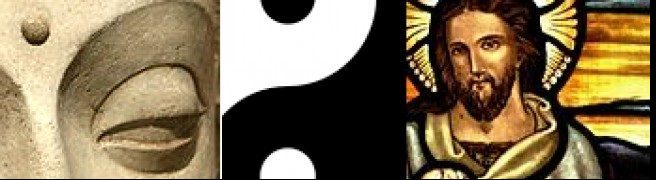
So we feel pain, and gather together to share strength, as others have gathered in the past. It is important to remember that past, a past from which we celebrate figures such as Martin Luther King, Jr., Nelson Mandela, and Mahatma Ghandi. While they fall, and fall too often, in each generation technology allows them to reach more and more of us. We can doubt the existence of Jesus, Buddha or Lao Tze, but we cannot doubt that the message of love they shared with the world still inspires people in our day.

Institutions of higher learning such as UCLA, at their best, are a cauldron in which we hone our intentions to do good. In part, we grieve for Professor Klug because he represented the best that UCLA has to offer. The terrifying moments of his death threaten to cast us down into fear. The Darwinian world claws at our hopes.

I wish to offer you my sense of why we celebrate people whose response to fear is to choose to love unconditionally. They possess a certain power, a power that I best understand as this:

Love dissolves the barriers of time and space, allowing wisdom, energy and understanding to flow between us, and embracing us with the courage, clarity and calm that overcomes obstacles and creates opportunity. When we open our hearts to one another, there is no truth that is not revealed. And to those that truly love themselves, no impulse to harm that cannot be turned to the purposes of healing and creation.

It is to that last point that I wish to turn your attention. We can grieve, and that grief can turn to fear. Or that grief can be used for healing.

So to each of you, I would ask that you find a moment to take the hands of a friend and allow their eyes to enter you deeply. In that moment, set aside any future expectations of them, and say “Thank-you for your goodness.”

And to those of you that receive that affirmation, I would ask that you take the power that is woken in you, and to consider Professor Klug. Reach through the moment of fear that consumed him. Visualize his acts of caring as a teacher, father and friend, and offer the words “Thank-you for your goodness.”

And then consider the family that grieves for him. Jesus said “Blessed are those who mourn,” because to grieve is to remember goodness that has been lost. Grieving is our goodness affirming goodness. So visualize that family, and allow your strength to pave the way into a future of healing. “Thank-you for your goodness.”

And last, and hardest: consider Mr. Sarkar, who fell down the well of fear. No person is without merit, even if only in small acts such as tying a sister’s shoe or in recognizing virtue in another. Visualize those moments, no matter how simple, and build strength in them. “Thank-you for your goodness.”

And then open the ears of your heart. Hear the world around you, the Earth that we have abused so terribly. Hear that world awakening to hope. As you walk amidst the trees and over the grass, as the birds chirp and little creatures scurry, hear it calling out tenderly: “Thank-you for your goodness.”

Imagine a World Without Imagination

Jerry Coyne, author of Why Evolution is True, has joined the cawing voices of academic atheists with the publication of his new book Faith vs. Fact: Why Science and Religion are Incompatible. I haven’t read the book, and don’t see any reason to support the author’s rise to bestseller stardom. The supporting reviews on the book’s brag sheet are enough for me. Sam Harris, Richard Dawkins and Steven Pinker all celebrate the book as another sledgehammer blow against the project that has occupied humanity’s greatest thinkers for millennia: how to get people to work together for the common good.

Is science a catalyst in that regard? I didn’t see that in evidence at the Skeptics Conference last year. In a panel discussion with an advocate for CERN and an advocate for advancement of space exploration, Leonard Krauss responded with “That’s just a stupid idea” to the latter’s appeal for money to clear the space junk that threatens our low-earth-orbit satellites.  Krauss’s statement came without technical analysis – it was a baldly political statement meant to ensure that the community represented by Krauss kept its stranglehold on the money that flows through CERN.

And then we have the double-edged sword of global climate research and toxicology studies. We cannot consider as a statistical anomaly the trifecta among the technical communities that advised the tobacco, fossil fuel and chemicals industries. Drawing upon the science of economics, they invested their resources for the benefit of their shareholders. Each of them, confronted with irrefutable scientific evidence of harm to the public, chose to invest in contrarian science and secrecy to secure their access to profitable markets.

Obviously, the contention that science in of itself disproves faith is supportable only if we discard the long history of spiritual experience. Fundamental physics has no explanation for that history, and as it has become clear that there is no explanation for spirituality in current theory, the position of rejection has hardened because to accept the need to explain spirituality is to cast into doubt the entire body of particle physics.

But the men listed in my introduction are not physicists, they are evolutionary biologists. They have waged a long war against scriptural literalists, and appear eager to crucify religion for the prejudices of its ugliest zealots. That zealotry arose in an era that lacked the evidence of the fossil record, and so had no means for explaining the obscure record of the Bible except to assert the power of the Almighty. With the fossil record, however, the story of Genesis is readily interpreted as the occupation of ecosystems by living things. Even more, the trumpets of Revelation are clearly correlated with the billion-year history of mass extinctions that occurred along the way.

Of course, how could the writers of the Bible have known all that without the benefit of modern paleontology? The program of destruction pursued by Coyne and his cronies would be completely undermined by that consideration.

What they would be left with is to pursue a proof, such as I have outlined here, that love is the most powerful force in the universe. This is the conclusion reached by all the great religious avatars, not-with-standing the hateful rhetoric of the zealots. What is really wrong with attempting to prove that conclusion?

Surely not something more wrong than lacking the imagination to believe that it is possible.

Tyranny Vanquished by Love

As an advocate of the healing manifested in the world through divine love – that is to say, as an apologist – the most painful apology is that offered by those that justify violence in the defense of received truth.

In modern America, those justifications are flavored with desperation. For many years, Christian culture was synonymous with the dominant Caucasian culture. The twenty-first century promises an end to that dominance, but that eventuality was clearly forecast in the last century. The misguided hope that change and accommodation can be avoided breeds irrationality, manifested in the religious extremism that spawned death-threats against doctors that prescribe chemical abortions or that drives parents to resist education in evolutionary biology. Fundamentalism bred in the military, where “Warriors for Christ” sometimes coerce religious conduct in their subordinates, and issue death threats against leaders in organizations (such as the Military Religious Freedom Foundation) that oppose that unconstitutional practice. In each case, the instigators see the tenets of their faith as justifying imposition of their values upon others, and therefore implicitly justifying a broader defense of inherited social privilege.

In both Judaism and Islam, this tendency is heightened by the intervention of God in martial struggles against those seeking to subdue the faithful. It is only in Christianity that radical non-violence is upheld. That the bookends to Christianity both deny the divinity of Christ may be symptomatic of a pragmatism that makes violence inescapable.

In Islam and the Destiny of Man, Eaton explicitly upholds this principle. A Sunni scholar, his survey of Muslim history after the death of the prophet concludes with the observation that the practical realities of maintaining control of an Islamic culture meant at least paying lip-service to its theology, which was often solidified by investments in public works that facilitated its spread. Through that means, tyranny was turned to the service of faith. But it goes beyond that – Eaton makes a deep statement that truth cannot survive in the world unless evil is divided from it, and that division requires violence. Indeed, the hypocrites of the ruling class in the Umayyad and Abbassid dynasties were short-lived.

In discussion with my Shia colleague at work, I have been slowly establishing the validity of the contrasting proposition of Christian faith: Jesus demonstrated that the pragmatic truths of this world are dust in the hands of those that manipulate them. What is known to be “true” is far less meaningful than what is possible. While the common reaction is “good luck with that,” I keep on pointing out that far more power is available to us than is required to solve the problems we face. A billion times as much energy leaves the sun as reaches the earth. It is not allowed us for the same reason that parents don’t give matches to children – one selfish miss-step can destroy us all.

But, you see, it wasn’t a solar eclipse on Good Friday. It was the sun pouring its power through him.

I discovered Lauren Naigle through BJ out at The River Runs. The compositions on Lauren’s debut album don’t rival those found in the secular (and often profane) debuts of Ricky Lee Jones or Norah Jones, and subscribe to a simple lyrical formula. But they encapsulate the fundamental truths of Christian experience: it is the loving heart that bled for humanity that demonstrates the preconditions for true power. Surrender self-concern and trust that all those that you love ultimately will love you in return.

Lauren is young, and among her tracks are jingles that might be dismissed as overly exuberant. But she has not been without suffering, losing two years of high school to an auto-immune disorder and a beloved grandfather. In How Can It Be’s closing homage, she pleads for self-surrender:

There is victory in my Savior’s loss
In the crimson flowing from the Cross
Pour over me, pour over me. (Yes!)

Oh let this be where I die
My Lord with thee crucified.
Be lifted high, as my kingdoms fall
Once and for all, once and for all.

Oh Lord I lay it down.
Help me to lay it down.
Oh Lord I lay it down.

Bad things happen to good people not because they are weak.

Evil walks in the world, and hungers for the power that originates from love, but love recoils from its grasp. In Richard Nixon, the great lesson of abused power was visible when he bade farewell to his staff, tears streaming down his face as he juxtaposed his experience of political life with the love he had received from his mother. That is another way of reading Lauren’s lyrics: “Be lifted high, as my kingdoms fall. Oh Lord I lay it down.

There are those immune to these realizations – Beria, Stalin’s security chief, spat on the corpse just moments after his master’s death. But Stalin has already been forgotten by history, replaced by Vladimir Putin, a man who justifies his power by promising to allocate money for road repairs left undone by the local governments impoverished by the corruption he organizes.

Putin’s political aspirations were conceived when unrest in East Germany paralyzed the embassy staff. Stepping in with a firm will, he saw people galvanized to action. It is this strength of will that he relies upon, but the lesson that is demonstrated by history is that the will to power is no match for the discipline required of those that love unconditionally. Tyrants can concentrate spiritual power, but they cannot hold it in any confrontation with a wise and loving adversary. The tyrant simply serves as a dark well in which light shines more brilliantly into the spirits of the oppressed.

The mistake of religious fanaticism is to believe that the institutions of tyranny must be dismantled, for that strategy only justifies oppression. The truth found in Christianity is that we don’t need to destroy the institutions of tyranny. Instead, in service with he that died once and for all, we can dismantle the personalities of the tyrants.

Oh, Lauren, what an joy it is to celebrate your wise old soul!

The Pope on the Pill

Pope Francis has published an encyclical on the family that clearly states that contraception is a mature and moral practice that ensures that children grow up in a loving environment. We’ll see how this interacts with the Supreme Court’s decision in a recently-heard case brought by Catholic nuns who insist that they shouldn’t be forced to offer contraception as part of their health care insurance. The nuns, who have children only under the most irregular circumstances, had argued that the First Amendment guarantee of religious freedom trumped the requirements of the Affordable Health Care Act, which requires in part that health care plans offer contraception.

Tradition Transitions

Locally, the cultural transition from polytheism to monotheism always involves an argument about divine merit. The critical consumer of religion would have been expected to ask “Why should I worship your god?” Not surprisingly, then, the major tenets of monotheistic religions are concerned with the nature of God. In the Old Testament, God is the omnipotent creator. In Islam, the fundamental tenet of faith holds that “There is no divinity except in God (and he has no partners).”

This creates the context for today’s tawdry and tendentious theological arguments between Jews, Christians and Muslims. For the Jew, God is the commanding but devoted groom to the Chosen People. To the Christian, God manifested as man in an act of redemptive service. For the Muslim, God is the fundament of reality and thus the only meaningful subject for contemplation. The Jew argues against Christianity and Islam as against adultery. The Christian, presented with contradictory scripture, uses fragments of Jesus’s teachings to argue that he is the only path to redemption. And while the Qur’an holds that none of God’s messengers can be ignored, it also teaches that Mohammed (pboh) was the culminating prophet, and so that the Qur’an is authoritative scripture, even when it grossly elides the writings of the Torah and Bible.

These controversies provide fertile ground for political manipulation. Al Qaeda was led by a man whose principal concern was the corruption of the Holy Places by the Saudi dynasty. The House of Saud in turn uses its oil wealth to propagate the literalist theology of the Wahabbists that supported their claims to monarchy. The Republican presidential front-runners rally their base by proposing crimes against humanity justified by the idea that Muslims don’t value their own lives. And the Zionists rally Christian support for a slow annexation of Palestine by reference to an ancient land grant and obscure end-times prophesy in the Book of Revelation.

The mature religious scholar admits that all arguments concerning the nature of God are futile. God is infinite, and therefore cannot even be described, much less understood. Unfortunately, this leads to religious relativity. The principal deity of any religion (such as the Hindu Brahma) can be identified with God. In the Qur’an, tolerance is suggested by the warning that not all the prophets of Allah are known to us. Worse, in the Old Testament other gods are mentioned by name, and the inducements to worship only Yahweh are backed by dire threats. To the modern reader, the character of Abraham’s God is not always appealing.

The way out of these dilemmas is to recognize that while God may by the object of religious devotion, humanity is the subject of religious action. That perspective leads us to wonder, of each stage in the journey, what it was the humanity received for its devotion. Naturally, the history of the traditions of Abraham is limited to the human perspective, and in focusing on males leaves much wanting for those seeking to bring women back into the process. But the Torah, the Bible and the Qur’an are all the record we have. What can we make of them?

Prior to Abraham, a mature reading of Genesis would hold that man was offered the guidance of divine wisdom and the support of divine mercy. This was constrained in the covenant with Noah, in which a frustrated God makes men responsible for managing their own justice.

The story of Abraham and his progeny charts the development of moral fortitude in humanity’s change agent, the unstable male. The degree of the necessary transformation is foretold when Abraham is asked to sacrifice his son Isaac, with a ram substituted when Isaac shows fear. It is two generations later that significant strength arises in the lineage, when Israel takes under his wing Joseph the orphaned first-born of his true love Rachel. Even so, while Joseph’s virtue impels his rise to the top of Egyptian society, the Hebrews are subordinated to Egyptian culture. His strength seems to fail its purpose. From the history of the Patriarchs, the only obvious lesson is that boys need fathers.

The story resumes with the Exodus from Egypt and wanderings to the Promised Land. Raised as an Egyptian prince, Moses possesses all the intellectual skills necessary for leadership, but his people are psychologically weak. The work done in this part of the Bible is to create a society devoted to rational problem solving. This is accomplished through the propagation of a complex legal code and foundation of a dedicated tribe of philosophers.

With this resource in place, God again enters into direct relationship with the people after their entry into the Promised Land. The nation, established through conflict, is beset by enemies, but God raises up heroes to prevent its destruction. Once again, however, the investment is betrayed, as the people demand the earthly trappings of monarchy as a means of focusing resources to ensure their security. The great prophet of this era is Elijah, but ultimately it is the tangible presence of the monarchs that commands the devotion of the nation. The consequence is its destruction, with the elite carried off to Babylon.

In this setting, deprived of political power, the greatness of the prophetic relationship is proven in the person of Daniel. Like Joseph entering the royal court as a slave, Daniel is not assimilated, but expresses spiritual gifts that force both the Assyrian and Persian kings to recognize the authority of God. But the Israelites as a whole did not heed this lesson, returning to Jerusalem as an administrative power that evolved into monarchy, with the priests relegated to the role of law-keepers, decaying eventually to profiteers from animal sacrifice.

To that point, then, God had succeeded only in the private sphere. In the public space, the institutions of state and religion were used to suppress the psychological and moral freedom that comes with a personal and direct relationship with God. Overcoming this injustice was the great goal of the ministry of Jesus. In a few short years, he demonstrated that God exists to serve humanity, raised up an entire generation of prophets equal to any among their ancestors, supplanted legal codes with the rule of love, and motivated the lower classes to discover the power that arises from banding together in mutual concern. Recognizing the trap posed by written scripture, Jesus offered his wisdom in parables, leaving it to his Apostles to reconstruct for posterity the history of his ministry. Of course, upon hearing the news of the Crucifixion and Resurrection, any person familiar with the story of Isaac would recognize that the covenants of the Old Testament had been fulfilled in Jesus.

At the close of the New Testament, we have a history of cultural evolution starting from superstitious origins that culminated with ethical maturity that allows even common individuals to experience direct relationship with God through the Holy Spirit. But we had seen this on a lesser scale prior to the conquest of the Promised Land, and the outcome was eventually a corruption of the divine relationship by human power. Indeed, while the Church at first organized around ministry to the disadvantaged, with the collapse of the Roman state it was left as the only European institution. It was not long before the temptations of authority began to corrupt its mission.

While this corruption did not manifest itself fully until the Renaissance (when the European kings moved to dismantle Feudalism by meddling in Ecumenical affairs), the counter-reaction was established in the seventh century as Islam. Islam summarizes the Hebrew experience, defining a religious observance based upon holy edicts (though limited in scope as compared to the Torah), but yet encouraging individual moral judgment through a personal relationship with the creator. Where the Church and Empire had acted vigorously to suppress even mild forms of heresy, Islam recognized local differences, holding that each community chose its authorities through popular acclaim. Even more, the original “people of the book,” the Jews and Christians, were welcomed explicitly as coreligionists, not rejected as competitors.

In two short centuries, the tolerance and vigor of this teaching allowed Islam to grow into the largest empire known to that time. In defending their privileges from Muslim expansion, the authorities in Europe were forced to devolve power to lower levels of the society. As the balance between the two cultures was righted, neither the caliphs nor monarchs would be capable of subordinating religion to the service of the state. Rather, the state came to assimilate religious virtues, allocating resources from the wealthy to support the poor. In the twentieth century, the greater danger to religion was irrelevancy, a threat that has allowed the morally corrupt to foment and exploit literalism and aggression among those daunted by the complexity of modern society.

The secular historian might be tempted to dismiss the beneficial evolution here attributed to religion as due to cultural accident. Against this, we must ask what antecedents foretold the Law, the moral parables of Jesus or the social contract of the Qur’an. Even should such antecedents be surmised, we have to ask why in every case the seminal prophets should have dedicated their work to the glory of a compassionate and forgiving God, and whether anything other than divine participation can explain how those individuals, often culturally isolated, should have created philosophies so ideally suited to propagate moral discernment and freedom in societies that suffered from their lack.

For the person of faith, of course, no such doubt need be addressed regarding their personal religious experience. What I hope that I have illustrated, rather, is the degree to which those experiences are harmonized when we discard our arguments regarding the nature of God, and focus instead on the majesty of the transformation that monotheism has wrought in human nature. What faces us now is to discern the next step in the process, the step that Islam, with its teaching that Mohammed (pboh) is the last of God’s messengers, forces us to recognize must bring us to full realization of God’s purpose for humanity.

Flirting with Trust

Since Friday I’ve been working on my relationship, sharing visualizations of inconceivably precious forms of intimacy. The organizing principles are healing and celebration, involving us in a powerful whirlpool of emotions, running the gamut from grief to dizzying passion. Underneath that runs a steady flow that guides us into deeper and broader connections. So we found ourselves kneeling on the floor, I catching her long hair from behind and stretching her will out into the world where it caught whales and trees and birds, and then her pushing me down on the bed and slowly dragging those long strands over my face so that understanding and love can bring order to life.

And then she stops and wonders what she is doing in the midst of this process, not conscious of the powers she possesses and so uncertain of her ability to manage the dangers she perceives. As I struggle to formulate an assurance, we spin apart. My last clear communication from her ended with her disappearance into a vortex of female faces, creating a cocoon in which she could incubate, but also from which others offered themselves as alternatives. I simply re-iterated my commitment to the self-discovery of my lady, and let her depart with the assurance that I would meet her on the other side to be certain that nothing had been lost.

In the pauses in this work, I’ve been re-reading Santayana’s Three Philosophical Poets. Santayana, philosopher and Christian apologist, combines a deep knowledge of culture and beautiful literary style in the service of revealing the choices we face as we struggle to find meaning and purpose in life. Santayana offers the works of Goethe, Lucretius and Dante as a progression that illuminates the submission of our animal nature to moral discernment, unfortunately with the growing risk of detachment from the joys and perils of human experience. Due to this tension, Santayana finds no superior voice among the three, instead celebrating each as a trustworthy illuminator of the power found in choosing either to do (Goethe), to create (Lucretius) or to serve a higher purpose (Dante).

To do is exemplary because it protects us from nihilism, the conclusion that any single life is insignificant and useless. In exploring this path, Goethe’s anti-hero Faust learns to discard self-judgment for personal wrongs committed against others, and so becomes capable of ruling an entire nation, granting purpose to his people by immersing them in struggle. Upon his death at one hundred years, Faust vanquishes Mephistopheles, demonic grantor of mystical power, who predicted that Faust would eventually learn to surrender purpose and be content with any experience at all, even to lick the dust. Instead, having demonstrated that each individual can find purpose in creating struggle against the world, Faust’s soul is received by angels and carried up to heaven.

Against this idea that we are glorified by struggle, Lucretius celebrates the orderly structure of the world, filled with creative forces that reclaim resources liberated by death. The philosophy of materialism stretches even further, propelling scientific study that allows the rational mind creative opportunities that would never be revealed in nature, and so to engage in an orderly process of improving the human condition. Among the virtues of Lucretius’s program, Santayana heralds self-control, and the defeat of superstition – the latter often abused by religious illusionists to steal the power of an adherent’s natural urge to improve his lot. Chief among the defects is timidity that arises from an awareness of life’s fragility, timidity heightened by the view that we had best live as though this is the only life we have – timidity that would be scorned by Goethe.

Of course, most of history is the story of how those characterized by Goethe twist the power liberating by understanding to subdue ever larger populations. Dante, following Aristotle, celebrates adherence to moral codes that sustain social order. Even more, in an era of deep Christian faith, Dante heralded the possibility of human perfection, of a rising into another realm in which all struggle would cease, each individual recognizing the benefits of submission to the will of a God that loved them without reservation. Dante’s ambition is for every person to be freed from constraints, excepting only the constraint to submit to the dictates of being guided by God’s love for others. Notwithstanding Dante’s outraged prosecution of the authorities of his era, Santayana follows Lucretius in decrying the passivity consequent to subscription to any externally imposed morality.

After his comparative analysis of the three works, Santayana proposes that a fourth poet must be sought to resolve the contradictions between the three philosophies, a poet whose celebration of vitality yet proves that self-control and other-service lead us into our most powerful and satisfying experiences. Incongruously in the context of his analysis, my reaction was “That would have to be a woman.”

But as I sat and pondered my experiences since Friday, I couldn’t escape the feeling that there was a thread that tied all of this together. Santayana brings us the writing of three iconoclasts, men who felt a strong need to assert themselves against the society they inhabited, each with a dour view of the fairness of life. And in my relationship, we have this expansion into ever greater realms of experience that recoils against fear of personal insufficiency. In both cases, the problem is other-trust. Faust trusts only in himself; Lucretius trusts only in personal discernment; Dante trusts only in God; and my lady does not trust that others will support our relationship.

What does it take, to lay mistrust to rest? We have the evidence of Good Friday services, in which multitudes gather to celebrate the worthiness of a man that was willing to die to redeem others of their faults, followed by Easter in which the resurrection proves the overwhelming power committed by God to the realization of that redemption. How can we not be discouraged by this standard of loving, a standard that cannot possibly be sustained in relationships between lesser beings?

Enough: it was done. The powers that stood behind Jesus did so because he arose in confrontation with sin, and in surrendering to its power became capable of diagnosing it. The era to come will be the era of healing in which those that suffer obtain the power to send sin on its way.

Lucretius, in elaborating the dynamic between creativity and destruction, chose the mythical figure of Venus to represent the surging of life, and the figure of Mars as the force of destruction. In the introduction to his unfinished work, Lucretius pleads with Mars to surrender to the pleasures of Venus’s bower, protecting the poet from interruption during his great task. This pairing is not unique to Greek mythology: in the Hindu pantheon, Parvati is responsible for cooling Shiva’s passions after he enters his dance of destruction. In celebrating struggle Goethe obviously sides with Mars, while Dante casts theology in the person of his beloved Beatrice.

The idea that women are responsible for tempering the wildness of men is buried deep in our cultural heritage. In women, that belief manifests as a cautious predisposition to believe that men will turn their passions against their lovers. My prayer is that women cast aside their ancient burden and organize their fertile energies around men of healing and constructive intelligence. Rather than catering to Mars, they should amplify the character of Apollo. Cast aside the terrorist to invest your energies in the healer, and discover reciprocity for your trust.

Oh, Tay, Can You See?

Microsoft put up a speech-bot name ‘Tay’ on Twitter last week, and it took less than twenty-four hours for it to become a sexist Nazi. While labelled as “artificial intelligence,” Tay did not actually understand what it was saying – it merely parroted the speech of other users. On the /4chan/pol feed, that includes a lot of dialog that most of us would consider inappropriate.

What distresses is that Microsoft hoped to have Tay demonstrate the conversational skills of a typical teenager. Well, maybe it did!

In a recent dialog on the “liar Clinton,” I probed for specific proof, and received back the standard Fox News sound bites. When I described the Congressional hearings on Bengazi, the accuser had the grace to be chastened. This is typical of so much of our political dialog: people parrot sayings without availing themselves of access to the official forums in which real information is exchanged. The goal is to categorize people as “us” or “other,” with the goal of justifying arrangements for the distribution of power that benefit the “us.”

Donald Trump is a master of this political practice. Apparently his campaign doesn’t do any polling. He simply puts up posts on Facebook, and works the lines that people like into his speeches.

So I worry: did Microsoft actually succeed in its demonstration? Most American teenagers don’t understand the realities of the Holocaust or the difficulties of living under a totalitarian regime. In that experiential vacuum, do they actually evolve dialog in the same way that Tay did – with the simple goal of “fitting in?”

Somewhat more frightening is that Donald Trump appears to employ algorithms not too different from Tay’s. For God’s sake, this man could be president of the most powerful country in the world! He’s got to have more going on upstairs than a speech bot!

Fortunately, many teenagers, when brought into dialog regarding offensive speech, actually appreciate receiving a grounding in fact. You’d hope that our politicians would feel the same.

On Poverty and Riches

Just taking the long view (I mean – the long, long, long view), I consider the time-scale of the cosmos and the saga of biological evolution and we have the precious experience of living in this 10,000 year period in which our intelligence and the natural resources stored up from the past are available for us to do really deep work on our personalities. Simply to be alive in this time is such an incredible gift – to be able to play at being a creator, each in our own limited way.

Even if only to be able to plant a field, or tend a herd, or write a blog. Even if only to be the voice that reminds “There are still problems to be solved” in a way that motivates others to seek for solutions. Not to place fault, but to exhort greatness in others – to guide them into the only form of self-creation that opens to God.

Yes, the window is closing, as it was prophesied in Revelation. No, it’s not the fault of any single individual, and if we collectively had been more considerate of the forms of life that occupied the planet before us, maybe it wouldn’t be so traumatic. But that’s not under my control, so the question I constantly confront myself with is: what am I doing with my opportunity? Am I offering my creative capacities in the service of Life, or do I expect Life to serve me? Because when I finally lose my grip on this body, it is Life and Love that awaits to embrace me with the eternal embrace, if only I know how to receive it.