Then What are 1000 Pictures Worth?

Reports of the dimming of the star KIC 8462852 have been debunked, causing SETI to revise its claims to have proven the existence of extra-terrestrial intelligence. The news also caused a crash in Appalachian coal futures, as CO2 sequestration speculators cancelled orders.

One insider, speaking anonymously to avoid being labelled as a “Koch-head,” revealed “when my employers were convinced that no earthly engineering team could dig an ocean through the Rockies, they were hoping that the ETs would do the work in the course of removing the sub-surface CO2 stockpiles they were hoping to establish in New Mexico and Arizona. No ETs, no CO2 sequestration, no last-grasp strip-mining in Appalachia. Oh well, there’s always that land trade for the Panama Canal!”

More seriously: it turns out that the original study of KIC 8462852, drawing upon analysis of old photographic plates, had failed to account for differences in the equipment used to capture the pictures. By comparing the apparent brightness of KIC 8462852 to that of other stars in the plates, it was determined that the the relative brightness had not changed.

Systematic effects (related to the design of the experimental system) were also a large factor in fueling the “cold-fusion” hype that I got involved in debunking back in the ’80s.

In Service to Eve

This was inspired in discussion with Linda Boeckhout.


Interview Purpose

Concerned that contemporary culture is forcing women to interpret their lives in terms of masculine virtues, In Service to Eve is dedicated to celebratory expression of the feminine virtues. You have been chosen because the author finds you to be inspirational.

The interview is free-form, organized as prompts rather than questions with answers. Drawing upon notes and memory, the interviewer will create a portrait in blog post format. Some of the terms used by the subject may be changed to ensure consistency with a philosophical system. To avoid misapprehension, the portrait will be submitted for approval by the subject, and not published unless it is found acceptable.

The ultimate goal of the interview is to empower the subject through an affirmation of their virtue.

Interview Prompts

Describe yourself.

How would you like to inspire others?

Who is your most profound feminine influence?

What frustrates you?

Who is your most profound masculine influence?

What resources do you rely upon in bringing your inspiration to the world?

Getting in Line

More than a decade ago, I proposed the idea that the universe is composed of one-dimensional structures. My motivations for seeking an alternative to the reigning standard model of physics, along with a fifty-year research program, were published as the Generative Orders Research Proposal (follow the New Physics link at the top of this blog). The idea is now making its way into the physics journals. (Did the Universe Begin as a Simple 1-D Line?)

What’s curious is that the Live Science report on the work is headed with a graphic that summarizes the reigning inflationary model of the early universe (still commonly referred to as the “Big Bang” model).

It’s nice to see the basic concepts of Generative Orders gaining traction – it moves us one step closer to a reconciliation of science and spirituality.

Beautiful Words of Surrender

From Hillsong’s I Could Sing of Your Love Forever (I’ve been looping a live version on the car stereo):

Over the mountains and the sea
Your river flows with love for me
And I will open up my heart
And let the Healer set me free
I’m happy to be in the truth
And I will daily lift my hands
For I will always sing
Of when your love came down

When they were young, I taught my sons that the two worst things that we can do to ourselves are to lie and hide from those that love us. When we lie and hide, we cannot be known, and so we cannot receive love. Lying and hiding both arise from shame, which is a wound that we make in ourselves.

Remember that this happened in Eden before the expulsion – Adam and Eve clothed themselves and hid from God when he came. What would have happened if they had stepped forward and asked for restoration?

In opening our hearts to God, we reveal everything about ourselves – we live in truth. The river of love enters and heals us, and then flows out from us to others. So the song concludes:

Oh I feel like dancing
It’s foolishness I know
But when the world has seen the light
They will dance with joy
As we’re dancing now

Ideas, Ideally

I have been trying to reclaim (see 1 and 2) the philosophical tradition of ldealism that in the West was first articulated clearly by Plato. Idealism is one of two threads of discourse that attempt to explain the relationship between ideas and our experience of the world around us. The paradox for Plato was that the real world does not contain perfect representatives – no line is absolutely straight, and no horse manifests all the ideal characteristics of horses (fast and powerful, for example). Convinced that the world originated from a source of absolute good, Plato therefore held that the idea of a perfect line or perfect horse was the original, with the physical examples as imperfect manifestations.

To the scientific thinker, this assertion fails to satisfy because it does not specify a mechanism for the manifestation, and therefore cannot be disproved. The solution proposed by scriptural literalists is that the ideals did exist when the Holy will created the world, and were accessible for our appreciation during the inhabitation of Eden. It was through our selfishness and disobedience that the connection with the divine source was sundered. Not only human nature was corrupted in the Fall, but all of Creation.

Reacting against Plato’s idealism, Aristotle advanced the program of Empiricism. From our observation of the world around us, we intuitively recognize similarity between things. We might choose to call some things “dogs.” There is no ideal dog, but all dogs share certain characteristics. Through the mechanism of the syllogism, we can therefore transmit a great deal of understanding by simply designating the type of something. The most famous syllogism is “All men are mortal. Socrates is a man. Therefore, Socrates is mortal.” In general form, we might write “All A are B. If C is an instance of A, then C is B.”

Aristotle employed this program to a comprehensive classification of the world around him. The power of classification becomes most obvious in the physical sciences, where saying “an electron is massive and charged” allows us to apply mathematical deduction to predict its behavior. But classification is also conditional: Linnaeus, the inventor of the phylogenic scheme for categorization of living creatures, recognized only plants and animals. Modern biochemistry has demanded the addition of three new phyla, with the consequence that things once considered to be “plants” have been reclassified as “fungi,” which recognizes that all along they actually lacked some of the characteristics of “plants.”

Aristotle recognized that all ideas are abstractions, and so that when applied to a specific instance, information is lost. This should be unsettling – it means that the world is populated by exceptions to our ideas. This is consequential: If a member of a tribe asks you to care for his dog, how do you know which among the dogs is his pet ‘Akela’?

Ultimately, the pragmatic successors to Aristotle re-introduced the concept of moral good to deal with this problem. What is important is whether ideas have practical utility. This has both good and bad consequences: Darwin’s theory of natural selection was used to justify ethnic prejudice in Nazi Germany and in certain parts of America. Against that, we have housing codes that ensure that disasters do not displace entire populations, such as occurred after the 1906 earthquake in San Francisco or the great urban fires of the 19th century.

So let us now return to the larger umbrella: I hold that philosophy is the study of the operation of the intellect, which manifests as the capacity to synthesize mental states. Among the sources of mental states, I listed sensation, emotion, thoughts and spirits. Where are ideas in this categorization? They seemed to be related to thoughts, but thoughts can also be random associations without plausible manifestations, such as – Kia Soul advertising not-with-standing – “my hamster is break-dancing.”

As might be expected, the exclusion of ideas from the list of mental states is not an oversight.

I have asserted elsewhere that Idealism reflects an affinity in its adherents for soul-relation. This manifests most powerfully to the mystic as a gift of energy that suffuses moral good with joy. This is the experience that I believe informed Plato’s affiliation of ideas with “The Good.”

Where I depart from Plato is in the belief that all ideas originate from The Good, only to be expressed in corrupt form in the world around us. To me, this is the terrible deficiency of scriptural literalism. It denies us agency in moral progress in the world. In The Soul Comes First, I take this head-on, using paleontology and evolutionary biology to demonstrate that the seven days of creation and the trumpets in Revelation actually correspond to a process of uplift from primitive forms of life towards an intelligent integration that will heal the spiritual wound of selfishness.

The role offered to humanity in this process is to sort through our thoughts to identify those that empower the expression of moral good. This is “the Knowledge of Good and Evil,” and the serpent’s characterization of the Fall in Genesis is a political posture that seeks to delay the perfection of our discernment.

In re-interpreting scripture through the lens of science, I show obvious affinity for Aristotle’s empiricism. Where I depart from his formulation is in the belief that ideas are merely abstractions of experience. Thoughts are those abstractions.

In the model of physics I have offered, I understand the human mind as the interaction of soul with the empirical world through the interface of the brain. In that interaction, our thoughts are temporary modifications of our soul. An idea is a thought reinforced by multiple successful episodes that instills energy that causes the thought to bloom into the world of spirit. An important consequence of this penetration is that the thought becomes accessible to other thinkers. In other words, Plato’s Ideas do not originate from The Good, but rise into the realm of spirit most readily when they serve a moral purpose, increasing the life-time of their subscribers, and therefore gathering ever greater energy through continued application to the survival of living things.

In terms of the framework I have established, with stimulation and combination as the two types of intellectual synthesis: ideas arise from the intellect’s capacity to stimulate thoughts from sensation, and then to combine thought and spirit. Ideas do not originate from The Good, but the strength of an idea is ultimately determined by the degree to which it allows us to improve our moral discernment. When mature discernment is realized in a personality such as Jesus of Nazareth, The Good that seeks to facilitate our healing actually touches the material world, shattering all of our categorizations with consequences unimaginable to the empiricist.

I hope that in this formulation that faith and science recognize the shape of a reconciliation that can organize collaboration that will speed the development of moral discernment, fundamentally changing our relationship with reality, and liberating Life in general from our vicious cycle of angry and ineffectual claims to authority defended by reference to incompatible and ultimately meaningless standards of “truth.”

fascia

Mary Margaret’s installation down at Pomona College was amazing. I arrived a little late for the reception, and wandered around the rooms wondering which contained her work. When I entered the last room and encountered “fascia” as the exhibit title, I immediately thought of the beginner’s class offered at Full Contact Improv late last year. In it, we were taught how to project our intention without forcing its manifestation. The trick is to move the skin until the fascia – the connective fibers that tie our body parts together – reaches its elastic limit and begins to tug on the bone. If you get to that point, your partner isn’t willing to come with you, and alternatives need to be found.

My intuition was confirmed when I found a brief summary of the exhibits. What did surprise me was the complexity of the conception. Mary Margaret uses words like “ontological.” With a clearer understanding of the installation’s evocative goal, I returned to the room for deeper immersion.

As I didn’t take photos, I’ll start with an analogy. It was like walking into a 3-D Picasso executed with the energy of Jackson Pollack (if Pollack had been a woman). The materials appear to be sailcloth tinted and spattered with diluted acrylic. The panels – some forty or fifty of them, principally pale blue or hues of red and yellow – are cut into irregular shapes and sewn together with black thread. The central mass, roughly eight feet in diameter, depicts recognizable body parts in a jumble of cut-outs and overlays. From there the construction spreads pseudopods that fall flat on the floor and arc overhead to form ample tunnels. A large panel on the right, perhaps ten by ten, is evocative of pathology cultures, but cut through by a pale blue channel that descends on the right into a hand. Finally, two chest-sized pods hang in the air, with a third pod blocking the middle of the floor.

The black thread manifests a variety of methods for tying the panels together. Some pieces appear to have been sewn together with a machine, and indeed some panels are pleated subtly with this method. Others are held together with large, irregularly spaced hand stitching. Finally, in some places the panels do not join at all, but are pulled together across holes as large as eight inches across. Here the thread aligns to suggest a direction of tension – though spare strands, yet relaxed, may loop through the taut fibers.

The entire mass is suspended from anchors on the ceiling with transparent nylon thread. The nylon is extravagant in its allocation, the free ends hanging in long spirals that refract and reflect light. In the center of the display a nylon spool is captured in one of the larger weaves of black thread – a hint that we should consider this element as a part of the artist’s expression.

In her pamphlet, Mary Margaret offers this motivation:

Western culture often views connection as something that is made, but I think it is more appropriate to view connection as something that is manifest. I have often found that attempting to accomplish connection actually gets in the way of allowing the connection that already exists to flow through our bodies.

The artist has provided a rich set of interpretative elements to guide our consideration of this theme. The three-dimensional structure involves us physically in interaction with the work. While we were invited to step on it, most tip-toed cautiously through and over. When considered closely, the lyrical style of the rendering caresses the eyes, mostly with warm tones that are cut incongruously by the blue panels. The pods have deep folds, hinting at seeds within. And then we have the thread, its two types and different modes of employ.

I found myself fascinated by the interplay between exterior and interior imagery. If we pay attention to the sensation of our bodies – the sensation that Mary Margaret asks us to consider, when we move our muscles and bones we also move our organs. Sometimes that’s a shifting, but in other cases it can manifest as a delayed settling.

The most profound urge to connection is the procreative urge, represented in the pods but also matter-of-factly in the jumble of limbs, where a man’s pale-blue legs, spread and crossed at the ankles, are capped by a stylized and erect phallus. And the panel by the back wall descends into a rent that spills a brownish-red flow onto the floor.

The looping pseudopods reminded me that no matter how we connect, the connection lingers, stretching across space and time, influencing us in ways that are often difficult to analyze.

And then we have the glistening nylon thread descending from the ceiling. I interpreted this from a religious perspective, but that is merely a layering on the universal experience of spiritual connection.

As I finished my ruminations, Mary Margaret returned to the room, and interrupted her pamphlet folding to thank me for coming and offer a gentle embrace. I didn’t stay for the performance studies – I had already projected my admiration into the room, and didn’t want to interfere with her expression. As described, the performance includes recorded reflections on the struggles her peers have experienced in seeking fulfilling intimacy, as well as her own meditations. (When I asked about this, she said that it was a “little wonky”, but didn’t clarify.) It also includes movement, which she invites others to enter with her. I think that she would have enjoyed it if I had stayed, rolled up my sleeves, and helped her demonstrate how alive we become when we relate through dance. But it may also have blown everybody’s minds. Many of the students appeared overwhelmed to begin with.

I’ve always wondered why Mary Margaret uses so many syllables to announce herself to the world, and for some reason it makes me think of Mary and Martha, the two sisters in Luke. The first sits at Jesus’s feet as he preaches, while the second rushes about complaining that the house preparations have been left to her. Jesus admonishes Martha, pointing out that Mary has chosen the better part. But in considering this display I wonder whether the Lord wouldn’t have done better to suggest that if they integrated their two tendencies, they could do powerful good in helping people to organize and heal their souls.

Which is probably the best insight to offer in concluding my exploration of the work of a brilliant, generous, gentle and courageous spirit as she seeks to birth her purpose into the world.

Translucence

I applied for a job out in Monrovia last week. My intuition is that an interview will not be forthcoming, but the opportunity caused me to realize that Pasadena is a center of activity that resonates well with the forces that attract my attention. Not only are JPL and CalTech premier technology centers, the latter hosts the Skeptics Society, a community of relatively free-thinking people. Just down the freeway in Claremont we have a divinity school, public policy college and Harvey Mudd. Sierra Madre hosts Reasons to Believe, a group of Christian apologists led by the Hugh Ross, who is nearing retirement. Finally, I’d be able to join the contact improve community, work out at the Bikram studio, and hike in the San Gabriel mountains.

But in my reflections on the general milieu, a specific personality came to the fore. It was a part of the experience at last year’s Skeptics Conference that I didn’t reveal at the time.

In reading intellectual history, we almost always find that liberal communities have as their nucleus a forum in which self-assured and beautiful women can meet brilliant men. That was readily apparent to me at the conference, although I found myself a little embarrassed by the age differential between the men and the ladies. Not being an anomaly in that regard, I focused on the ideas that were presented.

But as I was wandering from the conference hall to the snack table, an alabaster woman in a cerulean silk shift caught my attention. The combination was striking in itself, but as she turned away from me, the plunging back of her dress revealed a pink welt where her lower ribs had pressed against her seat. I was completely beguiled by this evidence of her physical vulnerability, and allowed myself to enjoy deeply the desire to protect her.

She froze and turned to glance at me out of the corner of her eye, lips parted gently in surprise, then took refuge with her friends. But as the conversations wound down and the attendees wandered back to the hall, I found her standing in my way, ten feet apart from a little semi-circle of her friends, and had to resist the impulse to escort her back to her seat.

I have my own evidence of vulnerability, deep scars on my face from eczema that did not clear until I was in my late twenties. My father suffered similarly in his youth, and his uncle treated him with x-rays, probably contributing to the skin cancer that left him disfigured at the end of his life. My own case evolved into deep abscesses, left untreated until my mother was approached by a counselor in high school. This left me terribly humble in the presence of women in college, exacerbated by my awareness that when I found a young lady trying to draw her boyfriend’s attention to me, I would be beset by hatred that caused the pimples to burn.

All of my life, I have caught unguarded glances from my intimates that reveal just how disfigured I appear in direct sunlight, and many people have advised me to have my skin smoothed. But I have never bothered, because I almost always found that the pity was replaced by an apologetic smile. The smile seemed to be accompanied by a recognition that it was my heart and mind that were precious to them, and that my outward appearance was only so jarring because of the contrast with what they encountered within.

The evening with the Skeptics Society ended with a performance by a Ukrainian band led by brilliant pianist. I sat in the front row on the left side where I could see his hands on the keys, and was surprised to discover that nobody else sat in the row with me. Rather, the crowd, greatly reduced from the day’s attendance, was scattered around the hall. The pianist was an instigator, though, and commanded us all to get up and dance. Michael Schermer’s wife caught sight of me cutting the rug in my socks, and came over to bump hips with me. But across the center row, I caught sight of the alabaster woman again, clapping her hands and bouncing gently on her heels.

For the last number, we were called onto the stage itself. I found myself dancing toward the piano. The performer laid himself atop the lid and played backwards on the keys while I raised my encircled hands over his heart, guiding energy into him. He finally staggered away, stopping next to his brother, the lead guitarist, pointing at me and shaking his head in wonder. As the number wound down, I turned to go, the calm center of a stunned gathering, and found the young lady offering me her admiration and desire.

I have tried to communicate this before: women are designed to bind personality to matter, and deep in their hearts there is nothing they desire more than to do that in partnership with love. But her wonder reflects a common feminine reality: men want to project their greed into them. As a society, we have conditioned them to accept that, and so as a form of protection they dis-integrate themselves. The sacred vessel of the womb is divided from their heart and mind. My deepest shame as a man originates in the sympathetic cry of my heart in the presence of women that have been so wounded. I try to put them back together again, and the response is often a desire to take me into them.

There used to be a saying about a man “moving heaven and earth” to safeguard a woman’s love. But the wounds on my face are evidence of engagement in a deep spiritual conflict. More than once, I have had visions of offering a woman the earth to tend with me. They flee in sorrow, return it upon realizing they don’t know what to do with it, or surrender it to their more acquisitive sisters. Fortunately, its preferences are clear – while it took me decades to gather it the first time, in the last instance I regained it in a few hours.

Mary Margaret invited us out to Pomona College this evening for her senior art exhibit, and I decided to make a day of it out in Pasadena at the Huntington. As I drove down the 101, I was again in the presence of the lady in blue, and found myself revisiting that scene outside the conference hall. Stepping in front of her, I stooped to whisper “You understand that your skin is suffused with the light that seeks to come into the world through you?” The wonder in her eyes allowed me to encourage her “I can unlock that for you, but you have to understand that it’s too much for your body to contain. You have to let it out into the world – into the trees, the little creatures of the air and field, the very air, the clouds and sun themselves. Do you understand?” She nodded, and I stepped behind her and placed my hand over heart.

To feel her expand in radiant fluorescence that was celebrated by all the world around her.
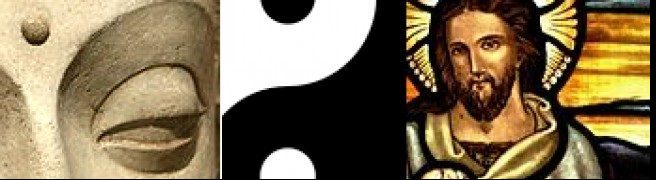
Nothing is Sacred

Because of the facial hair, I at first didn’t recognize Richard. He plopped down an eclectic pile of esoterica and headed off to the café counter. Glancing at the titles, I had to admit that my curiosity was piqued. So when he sat down I struck up a conversation.

His authoritative tone brought recollection. As is common with those possessing encyclopedic knowledge, the conversation caromed across mystical frameworks: Knights Templar, the Qaballah, Chakras, Theosophy, and ninja traditions were highlighted in a nearly impenetrable mash-up of terminology.

As he leafed through his books, he stopped at the Masonic eye of the pyramid. I offered, “I’ve met one of those.”

“What, the cap on the pyramid?”

“It’s not a cap. See, it’s not a three-dimensional object. It’s a triangle.” I paused for that to sink in. “It’s a representation of a personality embedded in two dimensions.”

“Two dimensions? Really. What did you do with it?”

I shrugged. “It asked me for help.”

Attempting to reassert control, he then dove into a history of encounters with Uriel, the angel of wisdom. As he began to skip across theological boundaries, I reined him back in.

“So given that offering of power, what purpose have you chosen?”

“Purpose?”

“Yes. When we enter into the spiritual flow, we encounter many messages. Not all of them are intended for us. In the time of Jesus, there were many self-proclaimed Messiahs. Today, we have Rev. Moon. I have found that pursuit of a chosen purpose helps me to filter the messages.”

“Oh. I guess that I haven’t done that.” Then he slipped into a cynical analysis of idolatry.

“So what makes something sacred?” I interrupted.

“That’s the point. Nothing is sacred.”

“Well, let me offer this perspective: a sacred experience links the past to the future through a conduit of love. They can only be established through the genuine exchange of love, because if selfishness arises on either end, the connection is blocked. So to the cynic the saint’s bone is just a bone, while the faithful find it to have great mystical power. The bone is not necessary to the connection, but can facilitate it.”

He broke off at that point, as my brother Ben sauntered up. Somehow, though, I don’t think that he was done with the conversation.

On Intellect

In Reductio ad Consterno (reduction to the point of alarm), I threw out the idea that philosophy, considered properly, is the exploration of the operation of intellect. The thought wasn’t deeply considered – it was rather a convenient bridge in the essay, a way of linking what preceded with what followed.

But as I continue my reading of The Philosophy Book: Big Ideas Simply Explained (TPB below, by Buckingham, et al. with DK Books) I am realizing that it’s actually central to the project of my life. In Ma, my celebration of the feminine virtues, I illustrate various expressions of intellect (as defined below) through the main characters. This has the unfortunate effect that the narrative is rendered disjoint by the shifts in perspective. As I thought about this post yesterday morning, I considered the subtitle “The Philosophy of Ma and Golem” with the hope that readers might gain some insight into those works. But, given that after my father’s passing I am the only extant reader of that collection, I must now conclude (with some chagrin) that the earlier works were a type of “narrative study” for the thoughts that are crystallized below.

To set the table again: TPB contrasts the viewpoints of Plato and Aristotle as the central issue in philosophy, which the authors characterize as the search for a firm foundation for knowledge. Plato held that all events are ephemeral and rendered indistinct by our senses, and so that all knowledge is in the realm of ideas. Aristotle countered that ideas that do not arise from experience are not knowledge, but fantasy. As the history of philosophy is traced, the Aristotelian perspective is bolstered by scientific study, and in fact the proponents of Plato’s view appear less and less coherent.

Of course, the Aristotelian empiricists materialists have a huge advantage in this quest. Science, in the large, is the study of things without personality. That means that the subjects of scientific research don’t evolve new behaviors when we study them. An insulator will not start to conduct electricity, and an electron won’t shed its mass. Conversely, Plato and all of his followers insist that knowledge emanates from some form of “The Good,” which was understood to be “God” in Islamic and Christian cultures. The Good does not reveal itself, but must be courted with disciplined moral intent. So while empiricists materialists can describe things that anyone can experience, the mystic must grope for terms to describe perceptions that often are completely foreign to the reader. The empiricist materialist is popular; the mystic is obscure.

This insight sets us on a path to reconcile the two primary views of philosophy. Indeed, while much of modern philosophy tends toward  a social focus, often that is driven by reaction to cultural dysfunction that arises from trying to force people to behave as if only one view was valid. But I do not believe that our reconciliation is sufficient. There are unexamined deficiencies in Philosophy as a whole, manifested most obviously in the fact that almost all of its luminaries are men.

So I am going to conclude this post with a definition of intellect that may serve only to make it clear just how complex the problem is.

Intellect manifests in the capacity to synthesize mental states.

Our mental states are not only thoughts. They are a complex amalgamation of sensory perceptions, physiological response (or emotions), thoughts and spiritual interactions. Synthesis is accomplished through either stimulation or combination of those states.

The job of philosophy, as I asserted before, is to understand the virtues and pathologies of intellect, and to establish means to strengthen the first and heal the second. The complexity of the problem is seen in that most of the history of philosophy was spent in a fruitless search for some solid ground to stand on – some truth beyond Descartes’ “I exist.” Fortunately for humanity, most of us continued to carry on with our exploration of what is possible.

In that search, we must recognize that the intellect also has variable expressions. Just as species adopt different forms in the struggle to secure an ecological niche, so does the intellect vary. There are those dominated by sensory perception, those immersed in emotion, those lost in the whirlpool of their thoughts, and those with their eyes locked on the heavens. Each of them brings a piece of the puzzle to our attention. No perspective can be denigrated or ignored without threatening the integrity of the whole.