Let’s Talk Science and Theology

My friend Jamie Wozny told me, during a career coaching session, that I should “try to keep it simple.” As I drove down Wilshire away from LACMA considering the forty years spent studying physics and religion, I whined to myself, “But it all seems simple to me.”

To bridge that gap is why I dance. At the last nightclub that I frequented, the manager came up to me one night and said “You know, I’m noticing that wherever you are, that’s where the people tend to gather.” A Persian woman came up to me one night to say “You don’t know how good you make us all feel.” Just this weekend my friend Mary Margaret, as we lay all akimbo after rolling around on the floor together for ten minutes, admonished me about viewing myself as an old man, “You really should love yourself more. Others would benefit from the experience of your joy.”

The problem is that most people take the energy that comes out of the heart and direct it downwards to the sacral chakra, the focus of passion and pleasure. I try my best to be disciplined, because otherwise I would just be a slut, but the people that come to LA Ecstatic Dance and the Full-Contact Improv Jam do love to touch and be touched. For many, it’s an opportunity to mix masculine and feminine energy without the complications of a relationship. I’ve benefited from that willingness as I try to figure out how to unlock the feminine graces, but I still find it difficult to withstand the impulse to rest my hand over a woman’s womb as she arches backwards with her hips resting on my thigh. Nobody has slapped me yet, so I surmise that I’m giving in to what they want.

I attempt to patch things up afterwards, just consistently raising energy from the fourth chakra – the heart – up to the sixth chakra. While the latter is associated with the pineal gland and known as the “seat of intuition,” physically it rests right over our cerebral cortex which is the part of the brain devoted to higher reasoning.

Realizing that somebody was peeking into my childhood, I woke up at 3 A.M. with a sinus headache. It’s drying out here in Southern California, and the grass is disintegrating. I eventually dragged myself out of bed to rinse my sinuses with Alkylol.

After crawling back under the covers, it occurred to me that the sinuses sit between the sixth and fifth chakras, the latter being the throat chakra that focuses communication and creativity. I always struggle to engage others in conversation regarding the matters that demand so much of my attention – sometimes to the degree of a painful burning in my throat as emotion wells up from my chest.

In considering Dante, Santayana elaborates Dante’s metaphor of theology as his lost love Beatrice, their happiness frustrated in part by his flirtation with philosophy. This matches my own experience: theology does seem to rise from the heart, while science – the most mature expression of philosophy – rests in the mind.  In the modern era the two camps of heart and mind have chosen to dispute with each other.

Between them we have the voice that wisdom teaches us to reserve for the truth. I have spent my life on this problem – the reconciliation of those two warring camps, each holding half of the truth. If anybody knows of an opportunity to engage with others in dialog on those problems, let me know. I’m willing to travel.

The Form of Eternity

In my analysis of Santayana’s Three Philosophical Poets, I followed the arc of maturity in my presentation of the poets. Santayana follows the arc of history which begins with Lucretius and passes through Dante to Goethe. The significance of Faust is in fact amplified by Goethe’s two lampoons of Dante’s Feudal culture and the ancient Greek culture of Lucretius, the disciplines of which are interpreted as impediments to the expression of will that flowers in the third part of the epic.

Ironically, Santayana finds redemption for Goethe’s fascinations in Spinoza, the nominal heir to the ancient Greek materialism that inspired Lucretius. Spinoza offered the idea that things (including our selves) cannot be understood in the context of any specific act, but only in the context of eternity. The broken chair is for the scrap heap, but as part of the revolutionary barricade may have deflected a bullet aimed at the hero that would become the nation’s first president. In that context, the broken chair may be seen as a sacred relic.

Similarly, Faust is redeemed because he did the best that he could in the context of his life. Trapped between dying feudalism and his contemporaries’ Neoclassicism, Goethe chose to seek a new form of self-expression. The morally ambiguous parables of Faust are modeled on his experience. Faust’s apotheosis reflects not upon the virtue of his actions, but upon the nobility of his struggle for self-determination in a society dominated by institutions that claimed cultural and spiritual authority.

Although I took a different route through life, I feel a certain sympathy with this perspective. Obviously the intellectual program I have pursued here struggles against the conventions upheld by our institutions of higher learning and religious interpretation. And as Goethe was, I have been subject to powerful forces that drive me forward. I explained my interest in physics to my father with the claim that I was seeking to reduce the world to a mathematical proof. When I reached my junior year in college, I realized the attendant dangers of providing power to people that didn’t understand the virtues of loving. Thus, while most of my contemporaries were getting married and focusing on establishing professional networks, I was expanding continuously the scope of my studies, trying to figure out how to present those virtues in a way that would be compelling.

When I was woken up spiritually in December of 2001, I finally realized what had been driving me through the first half of my life: there was a wall of pain in front of humanity, and I had been working as hard as I could to find a way over, under or around it. When I became aware of that burden, my attempts to share it with others were rebuffed, typically with some version of “Well, I’m glad you’re working on that, Brian, but really I’d rather go dance with this young man over here.”

What amuses me about those interactions is the deprecating attitude that accompanies them. Having myself hidden from foreshadowing of global ecological collapse, I am sympathetic to the desire to avoid projecting ourselves into our immediate future, and I recognize that women have reasons to be particularly susceptible to that tendency. But in the form of eternity, so to speak, impending ecosystem collapse is the only thing that matters. You may eat, drink and be merry today, but not for much longer.

Of course this all sounds tragic, so why am I amused? Because I interact directly with people’s higher selves. I see them in the form of eternity, and I realize that powerful personalities in this world are powerful because they project influence through spirit. While once those influences were dominated by selfish personalities, they have become weak through indulgence of billions of years of fascination with the play of material forms. Conversely, over the same time span mutually supportive spirits have been winnowing out the selfish and building up structures and stores of energy that will enable them to liberate themselves from immature influences.

The two endpoints in this process are described by John in the Book of Revelation. The beginning describes the twenty-four chief angels in heaven, twelve masculine and twelve feminine, crowned by pride. But the angels are forced to bow down to unconditional love, the one on the throne, by the worship of the “living creatures” on the earth. In the final stage, labelled the “New Jerusalem” by John, love is liberated from its protective shell and works freely its creative impulses. This is the form of eternity for humanity as a whole – that transformation is the purpose that we are raised up to accomplish.

And so I am amused because I am attractive to people whose higher selves are eager for immersion in love. When the living form (what we think of as a “person”) declines to commit themselves to participate in the realization of that eventuality, the higher self is shedding the final vestiges of selfishness. That is the purpose of this material realm – for the angels to localize their selfishness and shed it. The beneficiaries are those of us that commit ourselves to the work. Interacting with us is the mechanism used to cement collaborative and loving relationships in the higher realms.

And so while isolated, weak and irrelevant in this world, I store up treasures in the world to come. Treasures donated by those fascinated by the superficial play of forms in this world.

I do feel some compassion for your plight. It is expressed in the complaint of the third servant in the parable of the talents. It goes something like: “You are a hard man. You take what is not yours, and reap what you do not sow.” But the compassion only goes so far, for so it always seems to tyrants when their subjects are liberated.

Left Body, Right Mind

I spent a lot of time playing my flute over Easter weekend, and when I left work on Monday evening I unbent my elbows and caught my breath as the muscle that connects to my thumb screamed in discomfort. Laying down on my back that night, the pain radiated down to my hand and up to my shoulder. As a software developer, I immediately worried that I was coming down with a repetitive stress disorder.

What was worse was yoga on Wednesday night. The Bikram practice has poses that require pulling with bent elbows, and I just couldn’t execute them. By the time we reached tree pose, my right arm was dangling uselessly at my side. Worse, lying down for spine strengthening series with arms straight brought pain all the way from the hand up to my shoulder.

Obviously this was more than one muscle, and as I laid in bed trying to diagnose the phenomenon, I realized that it was a side-effect of the work I have been doing trying to pull my shoulders back. After two months, I’ve finally stretched my left pectoral enough that I can get that shoulder back behind my breastbone. When lying prone, then, my upper arms no longer descend from the shoulder to a bend where the forearms lie against the ground. My arm is perfectly flat, and the muscles in my arm are having to stretch to accommodate the new position. That I sit with my arms bent almost all day long doesn’t help any. Furthermore, with my shoulders back, I no longer use the muscles of the upper back to raise my arms laterally – the shoulders now do the work. This explains the pain there – I am asking for work from muscles that have been freeloading for most of my life.

As might be obvious from this analysis, my yoga is an intensely left-brain activity. Yes, it’s mind-body integration, but in any instructor-led activity, I am constantly comparing my activity to the ideal, and correlating defects with the underlying body structures as revealed by sensation.

This prevalence was first brought home to me when I attended a shamanic healing in Santa Monica ten years ago. The healer went around to take a look at all of us, and when he reached me, simply touched the right side of my head and pulled his hand away. I felt my mind expanding to fill the space he had created. It was an interested experience, but at that time I didn’t stop to consider why I had this imbalance in my mind. I assumed that it was a legacy of my intellectual discipline – that my left brain was stronger than my right brain, not that my right brain was weak.

Recently, Jeff Nash’s Awakening Process has forced me to reexamine this weakness. Jeff encourages us simply to feel, and to expand the depth of our sensation by surrendering into our exhales. With nothing in particular to think about, again and again I have found the right side of my mind turning on.

I assume that this is due in part to the work that I have done in Yoga balancing out my left and right musculature. This is still an intensely left-brain process. This week I am focusing (as I am able) on stacking the bones in my left leg, even when walking, ensuring that I am not using soft tissue to absorb stress. And I am still strengthening the muscles around the left shoulder blade and in the left side of my abdomen.

This morning, though, an unexpected side-effect came to light. My lady and I have been facing some blow-back, with her complaining (as others have in the past) that she just wanted to be a woman and here I am making her into a goddess. That left me exposed last night, and I woke up to sexual energy originating from another source. Noticing that this seemed to enter through the right side of my mind, I expanded my awareness back into the occupied part of my personality.

And found myself listening to women talking about me for the rest of the night.

Oh, well, I guess that I’ve been too much of a gentleman, trying to save space for a woman all my life. But it looks like if I want something done “right,” I’m going to have to do it myself.

Magnificence

She came to me this morning with a passionate, healing warmth. Our dreams tumbled through postures of intimacy, until it occurred to me that pleasure was nature’s trick on women, the bait used to tempt them into surrender to masculine wildness. It is time for that trick to be redeemed in trust, so as she rode on me I washed her with waves of healing energy, waves rising and falling as she rose and fell, until she was overcome and lay vibrating in my arms.

In that surrender she passed away from herself into an emptiness that forbade my entry. As I crept around its borders I discovered women, women arrayed in a shell, a shell annealed of the pride that resisted true sisterhood.

She returned to me enlarged, cocooning me in her soul as I imagined her in my arms. This certainty of security swept through me, and I found myself in contemplation of her.

The strong legs that carry her across the world, and the delicate toes that tenderly root in the biomes that attend her arrival. The hands and fingers that vibrate with awareness on all sides, gliding through water and air to signal caring and joy. The ovaries that offer new possibilities, and the womb in which they attain realization. The mouth that receives sustenance, the lungs and digestive system that process it, and the outward return of waste that enriches the soil and air for plants. The eyes, ears and nose that receive adoration, the voice that sings in praise. The hair that protects the vault of her mind by entangling contrary personalities. The skin that wards danger yet thrills to tenderness.

And myself, the humble tool of her self-creation, looking down the trail of time that stretched behind her, realizing that I had never been in control of this process. By all the common measures I have achieved and experienced nothing, but this was worth living for.

Flirting with Trust

Since Friday I’ve been working on my relationship, sharing visualizations of inconceivably precious forms of intimacy. The organizing principles are healing and celebration, involving us in a powerful whirlpool of emotions, running the gamut from grief to dizzying passion. Underneath that runs a steady flow that guides us into deeper and broader connections. So we found ourselves kneeling on the floor, I catching her long hair from behind and stretching her will out into the world where it caught whales and trees and birds, and then her pushing me down on the bed and slowly dragging those long strands over my face so that understanding and love can bring order to life.

And then she stops and wonders what she is doing in the midst of this process, not conscious of the powers she possesses and so uncertain of her ability to manage the dangers she perceives. As I struggle to formulate an assurance, we spin apart. My last clear communication from her ended with her disappearance into a vortex of female faces, creating a cocoon in which she could incubate, but also from which others offered themselves as alternatives. I simply re-iterated my commitment to the self-discovery of my lady, and let her depart with the assurance that I would meet her on the other side to be certain that nothing had been lost.

In the pauses in this work, I’ve been re-reading Santayana’s Three Philosophical Poets. Santayana, philosopher and Christian apologist, combines a deep knowledge of culture and beautiful literary style in the service of revealing the choices we face as we struggle to find meaning and purpose in life. Santayana offers the works of Goethe, Lucretius and Dante as a progression that illuminates the submission of our animal nature to moral discernment, unfortunately with the growing risk of detachment from the joys and perils of human experience. Due to this tension, Santayana finds no superior voice among the three, instead celebrating each as a trustworthy illuminator of the power found in choosing either to do (Goethe), to create (Lucretius) or to serve a higher purpose (Dante).

To do is exemplary because it protects us from nihilism, the conclusion that any single life is insignificant and useless. In exploring this path, Goethe’s anti-hero Faust learns to discard self-judgment for personal wrongs committed against others, and so becomes capable of ruling an entire nation, granting purpose to his people by immersing them in struggle. Upon his death at one hundred years, Faust vanquishes Mephistopheles, demonic grantor of mystical power, who predicted that Faust would eventually learn to surrender purpose and be content with any experience at all, even to lick the dust. Instead, having demonstrated that each individual can find purpose in creating struggle against the world, Faust’s soul is received by angels and carried up to heaven.

Against this idea that we are glorified by struggle, Lucretius celebrates the orderly structure of the world, filled with creative forces that reclaim resources liberated by death. The philosophy of materialism stretches even further, propelling scientific study that allows the rational mind creative opportunities that would never be revealed in nature, and so to engage in an orderly process of improving the human condition. Among the virtues of Lucretius’s program, Santayana heralds self-control, and the defeat of superstition – the latter often abused by religious illusionists to steal the power of an adherent’s natural urge to improve his lot. Chief among the defects is timidity that arises from an awareness of life’s fragility, timidity heightened by the view that we had best live as though this is the only life we have – timidity that would be scorned by Goethe.

Of course, most of history is the story of how those characterized by Goethe twist the power liberating by understanding to subdue ever larger populations. Dante, following Aristotle, celebrates adherence to moral codes that sustain social order. Even more, in an era of deep Christian faith, Dante heralded the possibility of human perfection, of a rising into another realm in which all struggle would cease, each individual recognizing the benefits of submission to the will of a God that loved them without reservation. Dante’s ambition is for every person to be freed from constraints, excepting only the constraint to submit to the dictates of being guided by God’s love for others. Notwithstanding Dante’s outraged prosecution of the authorities of his era, Santayana follows Lucretius in decrying the passivity consequent to subscription to any externally imposed morality.

After his comparative analysis of the three works, Santayana proposes that a fourth poet must be sought to resolve the contradictions between the three philosophies, a poet whose celebration of vitality yet proves that self-control and other-service lead us into our most powerful and satisfying experiences. Incongruously in the context of his analysis, my reaction was “That would have to be a woman.”

But as I sat and pondered my experiences since Friday, I couldn’t escape the feeling that there was a thread that tied all of this together. Santayana brings us the writing of three iconoclasts, men who felt a strong need to assert themselves against the society they inhabited, each with a dour view of the fairness of life. And in my relationship, we have this expansion into ever greater realms of experience that recoils against fear of personal insufficiency. In both cases, the problem is other-trust. Faust trusts only in himself; Lucretius trusts only in personal discernment; Dante trusts only in God; and my lady does not trust that others will support our relationship.

What does it take, to lay mistrust to rest? We have the evidence of Good Friday services, in which multitudes gather to celebrate the worthiness of a man that was willing to die to redeem others of their faults, followed by Easter in which the resurrection proves the overwhelming power committed by God to the realization of that redemption. How can we not be discouraged by this standard of loving, a standard that cannot possibly be sustained in relationships between lesser beings?

Enough: it was done. The powers that stood behind Jesus did so because he arose in confrontation with sin, and in surrendering to its power became capable of diagnosing it. The era to come will be the era of healing in which those that suffer obtain the power to send sin on its way.

Lucretius, in elaborating the dynamic between creativity and destruction, chose the mythical figure of Venus to represent the surging of life, and the figure of Mars as the force of destruction. In the introduction to his unfinished work, Lucretius pleads with Mars to surrender to the pleasures of Venus’s bower, protecting the poet from interruption during his great task. This pairing is not unique to Greek mythology: in the Hindu pantheon, Parvati is responsible for cooling Shiva’s passions after he enters his dance of destruction. In celebrating struggle Goethe obviously sides with Mars, while Dante casts theology in the person of his beloved Beatrice.

The idea that women are responsible for tempering the wildness of men is buried deep in our cultural heritage. In women, that belief manifests as a cautious predisposition to believe that men will turn their passions against their lovers. My prayer is that women cast aside their ancient burden and organize their fertile energies around men of healing and constructive intelligence. Rather than catering to Mars, they should amplify the character of Apollo. Cast aside the terrorist to invest your energies in the healer, and discover reciprocity for your trust.
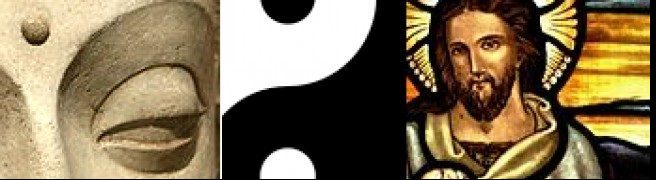
Oh, Tay, Can You See?

Microsoft put up a speech-bot name ‘Tay’ on Twitter last week, and it took less than twenty-four hours for it to become a sexist Nazi. While labelled as “artificial intelligence,” Tay did not actually understand what it was saying – it merely parroted the speech of other users. On the /4chan/pol feed, that includes a lot of dialog that most of us would consider inappropriate.

What distresses is that Microsoft hoped to have Tay demonstrate the conversational skills of a typical teenager. Well, maybe it did!

In a recent dialog on the “liar Clinton,” I probed for specific proof, and received back the standard Fox News sound bites. When I described the Congressional hearings on Bengazi, the accuser had the grace to be chastened. This is typical of so much of our political dialog: people parrot sayings without availing themselves of access to the official forums in which real information is exchanged. The goal is to categorize people as “us” or “other,” with the goal of justifying arrangements for the distribution of power that benefit the “us.”

Donald Trump is a master of this political practice. Apparently his campaign doesn’t do any polling. He simply puts up posts on Facebook, and works the lines that people like into his speeches.

So I worry: did Microsoft actually succeed in its demonstration? Most American teenagers don’t understand the realities of the Holocaust or the difficulties of living under a totalitarian regime. In that experiential vacuum, do they actually evolve dialog in the same way that Tay did – with the simple goal of “fitting in?”

Somewhat more frightening is that Donald Trump appears to employ algorithms not too different from Tay’s. For God’s sake, this man could be president of the most powerful country in the world! He’s got to have more going on upstairs than a speech bot!

Fortunately, many teenagers, when brought into dialog regarding offensive speech, actually appreciate receiving a grounding in fact. You’d hope that our politicians would feel the same.

Oh Woman! Oh Beauty! Oh Life!

One of the burdens of healing sin is to take it into yourself from those not yet strong enough to resist it. The selfish would hope simply to dispel it, but as sin is nothing but selfishness – the imposition of our image upon a spirit no less sacred than our own – to  cast out sin is an error. That would be to allow it the booty of its conquest. Rather, we must separate the essential from the vile, and return what was taken to the victim.

So for a long time I thought of my antagonists as my “supply chain.” But in every endeavor of grace, there is a time to heal, and a moment to inspire. I have suffered under the weakness of those that assail me for long enough. It is time to claim that which is good and strong.

So I found myself, at Good Friday services yesterday, focusing on the connection between the Cross and the future of love that arises upon his return. In that process, I found my hand guiding Christ around this era into that future. In considering that manifestation, I found myself excluded from it.

I am not disconsolate. In conserving its hold over us, sin has claimed much that is sacred. I have written about that elsewhere, how the loss of Eden was not limited to the breaking of trust with Unconditional Love, but the loss of trust between Man and Woman. Through that corruption, the Darwinian procreative urge reasserted itself. Rather than an act of loving spiritual connection that unleashes our shadowed glory upon the world, sex has been claimed for shame.

I recoiled from this fundamental misconception, so common in Christian teaching, in the sermon of the Lutheran minister during the interregnum in the reading of the Passion. We are creatures of sin, he claimed, and only Christ’s sacrifice redeems us. No, sir, we are not creatures of sin. We are creatures of choice, and even death on the Cross could not dispel the loving forgiveness that Christ brought to the world. In choosing to live wholly within it, every part of us will manifest the grace of God’s imagining of us. There is no aspect of our humanity that cannot be made sacred by love.

Yet I recall, now, the words I spoke from the pedestal in Oakland: “My name is Brian. I am from the future, reaching into the past. And I am an open heart.” It was a presaging of yesterday’s bypass.

My father was a prolifically sexual man. During our teen years, the boys had ready access to Playboy magazine. That instilled a perception of women as objects of pleasure, and a fascination with idealized feminine forms that covered the shallowness of their spiritual investment in the world.

My mother could not compete with this conditioning, and perhaps that is in part why she now decries the “patriarchal dominance” of our culture.

While I have not been a sexual libertine in this life, in my youth I explored vicariously many of its manifestations.  Over the years, that fed potent dreams that I realize now were participatory with women that were enamored of me. I understood this only late in my life: while some have dropped references to “porn star” in my hearing, I have never had my dreaming interrupted by other couples – except once when a pair in Africa peeked over the edge of their mattress to offer sympathy for my loneliness. I seem to be completely in control of my sexual imagination.

I see now, however, that my descent into the cesspool of corruption that men created for woman has left me vulnerable to the claim that my relationships with women are dominated by prurient interest. I see it differently, of course: over the last fifteen years, all of my dreaming has ended “Yes, but what about this part of you that you are ignoring?” Bliss was merely the method of achieving intimacy, with the goal of penetrating the lie that our carnality is a perversion that cannot be redeemed by love. Rather, like any other aspect of human nature, it is a tool, suitable to specific places and times, that allows us to reach Life in its most elemental level, and thereby to accomplish acts of healing and creation that are inaccessible through any other means. It has been my goal to propagate this understanding, to attempt to redeem woman’s self-esteem without insisting that they engage the world in the modality of men. It was to look deeply into them and offer them the paean that heads this post.

How long will it be before you assimilate it, before Mystery surrenders her resistance to the grace of feminine sexuality, and so allows loving couples to suffuse every particle of the world with Love in all its power?

For this is what I ask, and what they resist. Not simply bliss, but a reaching through into the world, and to command pleasure and consummation as an act of healing. It is this that Mystery seems to fear most, and whenever I come close to manifesting it with a woman, the most vile images and paranoid thoughts invade the relationship.

In this Easter’s meditations then, I gather that the hoped-for manifestation will not come in my lifetime. I have spent my manhood on my hopes for you, ladies. It is time for you to make them your own. For until one of you matches strength with Christ, his strength cannot be received by the world.

Emptiness

She came to me again in dreams this morning, and allowed me wander in her.

It began yesterday. I’ve been looping this happy song of praise on my car stereo (recorded as Waves of Mercy and Every Move I Make). It starts “Na, na, na-na-na-na, na!” and celebrates the Son with this chorus:

Waves of mercy, waves of grace.
Everywhere I look, I see your face.
Your love has captured me.
Oh, my God, this love! How can it be?

I was crying as I drove down the freeway, with her mourning the Passion: “How could they do that?” And I looking into her and reflecting that she, too, had been tormented for her faith. And then we broke through, discarding our grief: her dancing on the Earth and the Sun looking down upon it with serene forbearance.

This morning began all impassioned, but we didn’t bliss. I dreamed of laying my hands all over her, and just really listening to the truth expressed in each part. She kept on expanding, and when our heads came into contact a shift occurred, and we started dreaming in six dimensions. After floating in that for a while, I reached down past her knees to her toes, and felt her anchored in another place, that reality from which we originated, reaching out here to call me back to her.

I am amazed at the delicacy of that balance: the desire to flee the suffering of this place and the joy of knowing that the other possibility exists with the yearning to share it with others. It is not easy, to let love pour through her and as her heart expands to feel all the sorrows of the world. And so we surrender to it, and let love do its work, hoping that there is a different path for the children that come after us.

Old Dirt

I’m in the process of boiling down what I’ve written here in a condensed format, with the intention of facilitating dialog with those that don’t know what to say about the confusion that the world confronts them with. As that process unfolds, I’ve been beset by a cohort of lawyers.

My divorce attorney was a real piece of work. He referred me to the “Man/Boy Love” association, and told me once that “Sometimes a man has to have sex with a child – for the good of the child.” This piece of garbage was referred to me by my corporate attorney, and had both my accountant and closest account call me up to intervene on his behalf. As if that wasn’t frightening enough, he threatened my relationship with my children in an attempt to suborn perjury from me for the benefit of a third party in the case.

The specific incident involved the presentation of poem to a day care provider. I had approached my wife of the time over the summer, telling her that this woman was acting in a provocative fashion towards me, and asking her to help me intervene with the management to get her to stop. The response was an accusation that it was my fault.

So I was left hanging without support, and the situation just got worse. It culminated with the presentation of a poem to the “lady.” It was just before Christmas break, and we drove the boys out to Tahoe for a ski vacation. There wasn’t much snow, but on the way back we ran into intense wind storms. The drive was a disaster, with long stretches of stop-and-go as traffic wended its way through the scattered debris of camper shells and jack-knifed trailers.

We stopped down in Goleta to get gas and have a light dinner. The wind was blowing down the Grapevine at over 100 mph. Getting back into the car, I actually couldn’t keep the door open on the downwind side, and had to turn it around so that the family could get into the car.

When we got back home, we found my youngest son’s cubby contents in a bin at the front door, along with a restraining order against me.

The poem that I gave to the woman was intended to frighten her – to make her aware that she was dealing with a subtle and mature man that she could not possibly understand. When my wife was presented it, the same was proven true. She got to the second verse and screamed at me “That’s sex!”

But when I wrote the poem over the summer, I was conscious of five interpretations, only the last of which was “Man in Mid-Life Crisis.” The first four were:

  1. Christianity and Science (Isaac Newton teaches the world of gravitation, and I upending Einstein’s theory)
  2. Beach Day with Kevin (father and son) (Starting: I come home and he runs to greet me at the door…)
  3. Advice from a Father to a Love-Lorn Daughter
  4. The Temptress

I was never asked to explain by the owners. They had plenty of reason to be afraid of a scandal, and chose to take the offensive.

It’s time to put this to rest, once and for all.

This is the poem:

Yearnings

The Earth, at night, dances with the moon
Cadence and rhythm, their persons speaking
Of love with power, purpose and strength.
Fluttering towards kindred recognitions.

The shore, in dreams, graces into the sea.
Lifting and rising, breathing in tumbles,
Tide mingling with sand, and of that warming,
The two orbs slowly fall, fin’ly as one.

And yet, and still, of certain knowledge there is none,
Held by confident eyes, in children fashioning the sun.