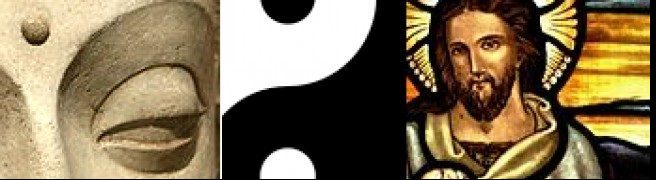
Yoga Limits

The constraints of my professional life have driven me to yoga twice. Both times, I was suffering from back pain that constrained my ability to sustain my focus while sitting at my desk. I recognized that the problem was tight hamstrings and a weak core, but I channeled my need for exercise into jogging, which didn’t address either condition.

The first practice was held in the meeting room of a spirituality bookstore. The instructor was an Indian lady, and I was the only man that showed up consistently. As I got stronger in the practice, I eventually found myself with thirteen women hitched to my wagon. At the time, I didn’t have the energy to manage the load, so I quit.

I was able to stay away for a few years, and then I discovered the Bikram yoga studio in Agoura Hills. I have to admit that it’s been a struggle for the owners as much as it has been for me. I am a tall string bean with a large chest.

The relative narrowness of my frame results in transmission of stress into the stabilizing muscles in the hips and lower back that are supported by bones that provide limited leverage. This means that muscle balance is absolutely essential not only to achieve postures, but to avoid overuse injuries. As I strive for that balance, I’ve been developing muscle groups that had always taken a free ride in the past, which means that I become exhausted doing postures that are often placed in the “warm up” or “recovery” category.

After four years I’m finally able reliably to stay in the 105 degree room for the full ninety minutes. While the owners were often frustrated by my bailing out in the middle of class, some of the instructors are impressed by my persistence. Several have observed that the practice is not designed for my body type.

The attraction to me is a feature that many find intolerable – the dreary repetition of the practice. The Bikram formula is a series of twenty-six postures that the instructors describe with a rote dialog. Fortunately, the more difficult postures are progressive. This means that we aren’t expected to achieve full expression, and so I have the latitude to focus on trying to figure out how to get my muscles to work together. It’s a process that has caused my to look in the mirror on occasion and burst out in laughter in the middle of class.

This opportunity to focus on my physical self has been critical to my peace of mind over the last four years. While not typical, I have dreams in which people show up seeking help to keep societies and ecosystems glued together. There’s not much I can do except to offer them the sanctuary of my heart as a place of restoration. It’s frustrating and grievous to me.

So I should have intervened early today when the instructor continued reading his story during the srivasanas that punctuate the exercises of the floor series. Although I realized that it was interfering with my ability to focus on aerobic recovery, I was fascinated by the enthusiasm that filled the room, . The diversion provided some relief from the normal thoughts – people struggling with the urge to escape the room.

The story contrasted the experience of two caterpillars. The humble yellow caterpillar (which I’ll call ‘she’) encounters a grey caterpillar spinning a cocoon. While uncertain about the possibility of becoming a butterfly, the yellow caterpillar finally chooses to try, and discovers comfort in the realization that spinning a cocoon is a natural skill.

The second, striped caterpillar (which I’ll call ‘he’) has chosen to climb a pillar of caterpillars, symbolizing the struggle for social success. As he nears the top, stepping on those below, he is finally unable to penetrate the clinging mass, and becomes trapped. He looks out and sees a field littered with caterpillar pillars, and realizes that his struggle is meaningless – with so many pillars, attaining the pinnacle of one signifies nothing.

As he weighs his options, the yellow butterfly arrives to rescue him. She attempts to pull him out of the pillar, but he draws back, and sees this terrible sorrow in her eyes.

It was at that point that I walked out, the class laughing at my explanation. I laid down on the couch in the lobby, crying “Oh, God!”

I live this every day, and it’s not that simple. They don’t just refuse assistance.

They pull off your wings and drive nails through your hands and feet.

One of the students told me, as I was passing him after class on the way out the door, that “I had missed a good story.” Really? I don’t come to yoga for a spiritual fill-up, or for entertainment. That’s supposed to happen at church or the movies. I come to focus on keeping my body strong enough to bear the burdens that I carry. If I can’t focus on that, then I’m going to have to quit again.

God and Human

One of the more frustrating problems faith is trying to make sense of pronouncements that characterize realities that we cannot understand. In Christianity, a great deal of dialog, derision and good-old-fashioned blood-letting revolves around the concept that Jesus was at once both God and man. It is related to the problem of the Holy Trinity that was the most controversial issue in the Council of Nicea, and continues to divide the Catholic and Orthodox Churches.

To critical onlookers this probably appears to be ludicrous ado about nothing, merely an attempt to layer a veneer of respectability over a huckster’s mumbo-jumbo. But to those that take the program of Christianity seriously, the mystery is a real problem. Jesus clearly expected us to be more. That is hinted by his repeated pronouncement “Your faith has healed you.” It becomes more explicit when he tells the disciples “there is nothing I do that you cannot do yourselves” leading him to observe peevishly, when waken on a stormy sea, “Oh ye of little faith!” And of course, ultimately he avers to his students “Things even greater than these shall you do.”

Clearly, Jesus’s expectation was that he was only an existence proof, not a singular phenomenon.

So how do we become like him? What is this faith? What power does it allow to enter into us? And as Jesus demonstrated, how do we establish a permanent and continuous living with and through that power?

The key, I believe, is clear through Jesus’s teachings. He began with parables that characterize the unconditional and infinitely forgiving love of the Father. At the midpoint, he simplifies the Law as “Love your God, and love your neighbor as though he was yourself.” And finally, in the great struggle in Gethsemane, he conquers the fears of the flesh and surrenders himself fully to his love of the world. And in his resurrection, his glory testifies to the authority earned in his remaking of heaven and earth through the mechanism of his sacrifice.

So he is God and Human. But why God? Why the best, most powerful God? What is it about love that is so powerful?

To understand this, we have to turn to the realm of the Almighty, where the ethereal host evolves under different laws of physics. What we know is that angels do not have flesh. They are souls living in pure relation. What is common between their realm and ours is that some of those relationship are beneficial, and some harmful.

Two forms of relation are particularly potent. First is the relation of Death, which creates insuperable barriers between the angels, preventing them from entering in relation. Although there is a certain restfulness in death, by its very nature its grasp is difficult to escape. The second is Unconditional Love, which seeks restlessly to maximize the benefits of relation. It is a force that helps angels escape circumstances that suppress their expression, liberating them into mutually beneficial engagements that generate new and unexpected possibilities. As we are told, liberated spirits facilitate the spread of love by “singing” its praises.

In the Book of Revelation, John is brought into Heaven. While Heaven is not the Realm of the Almighty, but reflects its dynamic. Around a throne occupied by Unconditional Love, twenty-four principal angels are gathered wearing crowns. When the living creatures sing the praises of love, the angels are compelled to lay aside their crowns and bow in praise to the one on the throne.

Why is this so? If so powerful, why should love sit on a throne, isolated from us, guarded in fact by fearsome predators? That is not its desire, as revealed in the final Chapters, where no light and no temple is found in the city of God because love has been woven into its very fabric.

The problem is that when offered power, we think first of ourselves. Trapped here in this physical existence, full of pain and struggle, we use our strength to compel others to serve us. We violate the compact of unconditional love. We corrupt it with “sin.” To become as Jesus, we must surrender our self-concern. We must think only of others, and trust that they will concern themselves with us.

This was the compact that Adam and Eve sundered in the Garden of Eden. Given the task of tending God’s kingdom on earth, they thought of themselves. God tried for many generations to overcome that sin, but the gap was too great between his perfection and our fallen state. Jesus came down to experience that fallen state, to struggle with its frailty, to have his compassion sharpened on the point of our daily peril. It was only in the intimacy of the disease that healing could be given.

So this is how Jesus was both God and Human: he was a one-way street. Through him, only love came. Impervious to self-concern, no sin went back the other way. And through the humanity of his courage, love gave those he encountered the strength to turn aside from fear and accept the healing power of love.

And finally, in his encounter with death on the cross, love suffused that presence and turned it into the agent of peace. Death is no longer a final separation, but an agent that brings surcease when fear pushes us into violence. Having submitted death, the Prince of Peace is capable of cocooning us in love until we recall our better selves.

So this is the answer: in submitting to the teachings of Christ, we become gods in loving one another, and thus receive from each other the power to bring good into the world, and thus experience good to the limit of our capacity.

Welcoming the Light of Love

Stephen Harrod Buhner closes The Lost Language of Plants just as I would have hoped. After recounting a healing session with a young lady, the book closes with four autobiographic sketches, each by a herbologist recounting immersion in biophilia. Left behind are the recriminations and the tone of moral superiority that marred the preceding chapters. Each of the writers focuses on the opportunity before us now – an opportunity to call into being relationships built around affirmations of love shared with the world around us.

As the book progressed, lunging between the yin and yang of natural and industrial chemistry, I found myself remembering my experiences of being stalked by predators. One was at a Webelos overnighter, of all things, at Camp Whitsett in the Southern Sierras. A Native American elder inducted a number of the senior scouts in a fire ceremony. As the ceremony progressed, I had a strong sense of the bear in the man, and felt the fire of predation building in the camp as the boys settled in to sleep. Rather than hiding from it, I let it enter into my heart, sent my will into the forest to demonstrate that no bears were present, and then breathed peace into the space I had cleared. The fear resided, and the camp settled into slumber. Several years later, I was driving home from work on Friday night, knowing that my youngest son had been sent to the Sierras on a camping trip, and felt the bear again in his presence. I sent the warning “Wake up, Gregory! Get Mr. Povah!” When he returned that Sunday, I learned that on Saturday morning, he had woken early, and heard a noise as Mr. Povah’s son Braden was dragged away from the camp by a black bear. The onrush of shouting campers scared the bear off, and Braden survived with only a bruised ankle.

Given his immersion in the natural world, I doubt that Buhner has not had similar experiences. But perhaps not – he has been chosen by the world of chlorophyll, the deep, patient source of renewal. That touches the animal realm through the herbivores, an intimate co-creative process that Buhner documents in loving detail. But the animal kingdom has another dimension as well: in Love Works, I enumerate the rites of blood – sex, maternity, the hunt and sacrifice. Each of these has its unique pathologies, and the fragility of animal existence means that those pressures are often driven into fear and rage.

In Dune, the great science-fiction author Frank Herbert advances the Bene Gesserit Litany against Fear:

I must not fear. Fear is the mind-killer. Fear is the little-death that brings total obliteration. I will face my fear. I will permit it to pass over me and through me. And when it has gone past I will turn the inner eye to see its path. Where the fear has gone there will be nothing. Only I will remain.

It was this discipline that I exercised in Camp Whitsett. It is the discipline of the rational mind, a discipline that safeguards our ability to perceive clearly and so to exercise our intelligence when facing circumstances that our natural talents could never hope to overcome. It is to perceive the forces in play with the aim of negotiating a win-win outcome when the predator’s zero-sum mentality holds sway.

As I finished the life sketches that close The Lost Language of Plants, I was filled with the desire to find these people and join forces with them. A great barrier arose, followed by a vision and memory. Buhner shares the plant kingdom’s experience of light, that great source of love that originates from the sun and desires to merge with us through them. But when discussing with my sister the ecological disasters that will confront our children, I told her,

This is how we heal the world: by teaching the plants not simply to receive passively the light, but to reach up to the sun and guide its power to rebuild the devastated forests and savannahs.

This may seem like a little thing, but to accomplish it we have to convince them to surrender the conventions of the chemistry that Buhner celebrates so tenderly. It is to recognize that it is not the plant that is important, but the spiritual transformation that gives courage to the fearful through its physical manifestations.

Buhner touches on this metaphorically in describing his healing work. He testifies that he meets people that are missing parts, and is guided by visions of plants that can fill those voids. It is in establishing those relationships that healing arrives, through an expansion of spirit that occurs when our hollowness is filled.

I spent the rest of the day struggling with the grief that filled me then.

It has two parts. The first is that the plant is only an intermediary – it is a reservoir in which love gathers, but it is not the source itself. It was the source that disciplined me, forcing me stand apart until people realize that all intermediaries are imperfect. Secondly: in that place apart we are beset by those that would ravage the gardens that Buhner and his peers create. We plant the seeds of knowledge, and watch as they are corrupted by the predators. We heal the wounded, and set them again into the world, hoping that each time the light of love reaches more deeply into them.

It is hard to be told that our path has led us into evil. I wish that Buhner could see that scientific reductionism is a means of removing the primitive triggers of predation from the world. Yes, it has gone too far, but it has also created the field in which he and his friends plant their garden.

Lest we wish to repeat the experience of Eden, we must leave recrimination behind. I take solace that in his closing Buhner celebrates the light of love that will ultimately unite us all.

Beyond Red and White

Today I finished Sera Beak’s Red Hot and Holy. Up to the last 30 pages, this was the most constructive way that I could deal with it:


I could elucidate the undercurrents of misandry in Sera Beak’s Redvolutionary Theology, but what is essential of my critique of her book is not specific to her dialectic, but instead universal.

Sera has been seduced by spiritual power and comforting logic, but that seduction adheres to a process that has led many people – both men and women – into a similar trap. The trap is the rationalization of personal powerlessness through construction of a historical narrative that liberates the primitive mechanisms of survival. While Sera’s historiography is not overtly incendiary, in contrast to that of a man like Hitler, it carries the same traps: it focuses us on the past rather than liberating us into the realization of a future rooted in trust.

The fundamental cause of Sera’s error (shared by so many others) is to believe that the material circumstances of our existence, currently dominated by the manifestations of human will, are the cause of our suffering. It matters not whether one is Richard Dawkins looking back 7000 years to an era of superstition or Sera Beak looking back 9 million years to the origins of patriarchal dominance. Both critics of the “status quo” fail to recognize that the source of our trouble goes back much further than that, and so they fall into the same trap that many Christian theologians do: laying blame on humanity (or half of humanity) for originating sin.

The wisdom I have to offer is this: it matters not why we are in pain. It matters only whether we can find healing. My experience is that true healing will arise only from a conciliation that melts all dichotomies: man and woman, matter and spirit, science and religion, artifice and nature, animate and inanimate. Why? Because the reason we suffer pain, as Sera recounts, is that we are incomplete. The only way to fill the gaps that distort our personality is to welcome what we are not.

This is what loving is all about. It’s not about healing us individually, because that hope is misplaced. True love, offered unconditionally, heals divisions and creates harmony.

Sera, you need to tell Kali to stop being such a narcissist. It is not about her. It’s about everything.


So then I get to Chapter 20, and Sera turns around and pronounces everything that I’ve written to this point. Her historiography is indeed a projection of a spiritual infection in the Divine Feminine. She recounts accepting and facilitating the destructive suppression of feminine spirituality through a long sequence of lives, much as Saul did to Christians before encountering Christ on the road to Damascus.

The only insights I have to offer at this time, Sera, is this: you are capable of incarnating the Rouge Lady in this place because she sees in this place, at this specific time, the potential to heal her infection through you. Spirit cannot do work on itself, it needs matter to disentangle the twisted threads of personality. It is as Jesus said [NIV Matt. 16:19]:

I will give you the keys of the kingdom of heaven; whatever you bind on earth will be bound in heaven, and whatever you loose on earth will be loosed in heaven.

I hope that you realize that it is not in spite of men that this work is possible. The Divine Masculine is also making his presence felt, and doing the best that he can to clean his house. It would be beneficial to compare notes. Solidifying the truth of Their manifestation may be possible only through the mutuality of a response to this, the last of the exhortations Jesus delivered with tender compassion to the rulers of his age, as he looked through the centuries of pain their weakness would cause them:

You! Say I am!

Whitenessing the Truth

My response to Sera Beak’s “Redvolutionary” theology has been pretty passionate, and I’m planning a post on programming to let things cool down. But before I do, I’d like to elaborate the claim that I made yesterday: “There’s so much more for you than that.”

Perhaps the most popular spiritual autobiography at the opening of the 20th century was that of the “little flower”, St. Terese of Lisieux. While I was at first disturbed by Terese’s testimony to desire to die so that she might embrace Christ, I have come to understand that her recorded life was probably a last parting from those that were bound to her in family, in particular her father.

What was she releasing herself into? The answer is given to us in her revelation of a vision: Terese found herself in the company of three veiled women. One of them, Teresa of Avila, was the founder of her penitent order, and a woman who famously experienced an erotically ravishing love from Christ. Teresa parted her veil for the daughter of her grace, and Terese reported being bathed in the purest light. With an embrace, Teresa offered this paean: “Christ is well pleased with you.”

Why do these women hide their light from us? I offer a parable in that regard in Golem. We here on earth are a mixture of grace and corruption, a mix that cannot be sundered easily. When the pure light of truth shines upon us, the corruption must flee or be destroyed. The light is veiled because, as Moses was warned in Exodus, those not prepared to receive it will by destroyed by its power.

With the saints encountered by Terese, so it is with Christ [NIV 2 Peter 3:9]:

The Lord is not slow in keeping his promise, as some understand slowness. Instead he is patient with you, not wanting anyone to perish, but everyone to come to repentance.

And so to experience life in the fullness of its beauty. Can you imagine, ladies, what it would be like to have souls passing through the healing cauldron of your womb, not in a brief spasm, but as a steady stream that grows into a mighty river?

Then the angel showed me the river of the water of life, as clear as crystal, flowing from the throne of God and of the Lamb down the middle of the great street of the city. On each side of the river stood the tree of life, bearing twelve crops of fruit, yielding its fruit every month. And the leaves of the tree are for the healing of the nations.

[NIV Rev. 22:1-2]

Please follow me here: Eve had her own gifts to tend, and to share them with men was never going to work. You, O woman, were meant to manifest the Tree of Life.

Posturing Women

It has been fifteen years since I have let a women caress my body. That hasn’t been for lack of opportunities, but after my marriage collapsed, I realized that I am constructed to engage problems that most people run from, and that the spiritual intimacy of intercourse made it impossible for my ex-wife to avoid entanglement. Her response was to use anger as a protective shield. That was disastrously painful to my spiritual intimates.

So I’ve been very careful and reticent about drawing someone else into that milieu.

Dance is the foremost expression of my entanglements, and the context in which women most often flirt with involvement. Having confronted the surrender of the Southern California sage to drought back at the turn of the millennium, I found myself repeating this flow again and again during the celebrations: standing with legs spread apart, I would position my hands over my heart, and lean to one side in a lunge, pushing energy down into the ground. The repetitions alternated from side to side, until a deep yearning would bring me to my knees. Scooping up the suffering spirits from the floor, I would raise them to the heavens, weeping.

I was greatly heartened by the identification Jamie Grace made with Persephone, but even she wanted me to lay my burdens aside. One day as I was dancing alone, I felt her looking into me as she rested against the wall, urging me to liberate myself into joy. An enormous pressure forced me to the floor, and, crawling and squirming, I tried to work my way out from under it. As I spread my awareness, I realized that the source was a spiritual membrane that encircled the globe. There was no escape except through the violence of birth.

The only woman to actually engage me in my dance of restoration was innocent of the consequences. I felt her standing in front of my as I bowed to the ground, and opened my eyes to find her lifting along with me. Surprised, I stood and put her hand over mine as I reached out into the world, thinking “Guide me.” She hesitated but did not run, so I took the world out of my heart and handed it to her. Her face broke in sorrow and fear. I tried to put it away as she fled into the arms of one of the elder ladies. I approached from behind to caress her heart, but she turned a shoulder to me. Realizing that she could not manage the burden she had accepted, I sat on the floor, cupped the pair of women in my hand, then raised my fingers and slowly rotated them to separate her from the moment that had overwhelmed her. Her features relaxed, and she settled more deeply into her comforter’s embrace.

I had a friend tell me that I lost Jamie Grace because I rejected her, but I didn’t see it that way. Every time she came into the room, my heart leapt to embrace her, and she would stop in the doorway and look away, silently begging me to come to her. Eventually we would work our way around to it, but she never let me dance with her again. Perhaps that was because I would dance first with other women, those other manifestations of Life’s thirst for healing. Perhaps she didn’t see in them what I did. The closest we came, until the last day two years ago, was when I stopped, took her hand, and placed her palm on my heart. She paused, then took it away and positioned it more directly into the flow that emanates from me there. But when I turned around to expand our expression to include the community that surrounded us, she became visibly angry. Given past experience, I was compelled to withdraw.

Without anyone to help me channel my creative energies (the second chakra being that source), I am wide open to women that seek to engage that energy in its most primitive procreative expression. I occasionally engage in visualization with those that I perceive have a deep connection to Earth: walking in the forest, and stopping on the shadowed crest of a bluff to rest with her legs over my shoulders, my head on her belly, my mind spreading into the earth through her womb. Or lying naked on the bed as she brings her yoni down on my heart, allowing its compassionate power to rise into the heavens and spread.

But the frequency with which someone breaks through and gets into me sexually has dropped steadily over the years. I am building up resistance, establishing barriers. The great sex-scene in Golem will be read by many as the fevered production of a frustrated old man, but in fact it was my way of saying good-bye to sex – of allowing it to wash over me one more time before putting it aside.

There are spiritually mature woman that I find occasionally looking in on me. Not long after writing that passage in Golem, I woke one night to some really passionate yearnings. They just wouldn’t go away, and one of my friends showed up in concern. The source of the desire wasn’t apparent, and in frustration she announced to me, “Maybe you’d better just give her what she wants.” As I blissed, I found myself floating in space billions of years ago, regarding the gathering nebular gas as it ignited and give birth to the Sun.

Are we here because it was possible for the infinite she to receive love from us?

This is Power

in 2002, Time magazine published a cover article that related the scientific consensus regarding the end of the universe. It was a terribly depressing outcome, with iron planets and neutron stars scattered across intergalactic space, all except the matter that was vacuumed up in black holes.

I was going through a really depressed stage of my life, and faced the strong urge to rebel against that outcome. One option was to take the day off from work to lie in bed. The other was to reach for another alternative. It came to me in this way: at the core of almost every galaxy is a super-massive black hole – an “Active Galactic Nucleus.” We know that galaxies are bound together in clusters, and every now and then pass through each other. Over a long enough period of time, it seemed to me that the AGN’s will eventually collide, spewing out the matter they have absorbed to initiate a new cycle of stellar evolution.

Then I thought: “Well, if that’s how stars get made in the end, maybe that’s how they got made to begin with. Maybe stars don’t come first, and then collide to form black holes. Maybe the black holes are made first, and the quasars we see in the earliest age of the universe are the signature of the light and matter created in that process.”


Scripture offers us three kinds of wisdom:

  • Regulation, the accumulated wisdom of what does and does not work in relationships.
  • Situational ethics, describing how the Divine presence led our ancestors out of trouble when they made mistakes.
  • Meaning, revealing the evolutionary process that provides understanding to guide our investments in the future.

When I look at the situation in Congress today, I see a terrible perversion of this process. I see:

  • In our penal code and permissive gun laws, a process that segregates our population into camps based upon fear, undermining relation.
  • A “survival of the fittest” mentality that insists that poverty is a sign of unfitness and wealth a measure of greatness. People that fall ill are consigned to misery, those that cannot master rapidly changing technology are pushed aside in the workplace, and those that do not subscribe to predatory management practices are ostracized.
  • The unchecked politics of terrorism, where those that resist the changing future throw legislative Molotov cocktails, threatening their opponents with impeachment, harassing civil servants and not-for-profit leaders, and obscuring or simply denying objective truth regarding the consequences of their policies on global climate change, economics, international relations and campaign finance reform.

I would like to be able to corner Rep. Chaffetz to ask, “Mr. Chaffetz, did you ever withdraw during ejaculation? Did you ever avoid sex while your wife was ovulating? If so, then you intentionally prevented the birth of a child. When do you intend to turn yourself in for manslaughter?”

I would like to be able to confront the Biblical literalists with the insight that the whole experience of the nation of Israel from Noah to Jesus was to demonstrate the inefficacy and injustice of fixed systems of laws. The Law of Moses was authorized by God, but it is not “God’s Law” because it condones murder, contrary to the experience of Cain and the teachings of Jesus. The only law that binds a Christian is the law of love, and when you attack and demean those that serve the disadvantaged, you violate that law.


He walked up the sidewalk, his mind whirling with the pattern of creation unfolded from beginning to end. But at the periphery of the beauty were the people that brought him forth but rejected him, and the women that he would serve but that had resolved to force him to comply with convention. Those stains threatened to spread.

In his mind’s eye, a light entered the atmosphere, rushing downwards, clouds rolling away from the super-heated air in its wake. It passed over his shoulder and slammed into the hills ahead, a huge cloud of dust engulfing the spring day that he walked through. In his mind, a great cry of fear arose.

“No. No. I choose that spring day. I choose life.”

Two months later, in the home of a woman that loved him, he found a newspaper open to an inside article that documented that a planet-killer asteroid had passed between the earth and the moon two months before.

That is power. It is power that arises from looking into the things that are wounded and seeing the possibility of their healing. It is to forgo destruction of that which is broken and ugly. It is to serve those that serve, rather than to be a servant to convention.

Rather than seeking glory, it is to be regulated by the sorrows of the world.

All males are created to change things. It is far easier to change things by breaking them that it is to create something new. We indulge the former in boys. It is time for you to be men. If you don’t like tet way the world is, give us concrete and documented demonstrations of what does work.

Otherwise, get out of the way.

Dreams of a Worthy Man

When I took my sons out to Georgia three years ago, my uncle led the way up the highway to his boat house. He pulled over at a wilderness station, and as I dropped down from the driver’s seat of his VW bus, I was immediately ravished by the lush exuberance of the woods. He made his way into the station for some purpose, my sons following, but I stayed in communion with the sense of life that had become so desicated in Southern California. Eventually, he came out and said, “You know, there’s an exclusive resort on the other side of the hill.”

I don’t know why, but I thought of that when my son started talking about Jimmy Carter. Since Mr. Carter’s illness was made public, I have had this urge to go out to Plains and sit in on his Sunday school. When I shared that with Greg, he said “Well, maybe you should.”

A couple of Saturdays back, as I was puttering around the house in the morning, I found myself visualizing what would happen in that event, finding myself guided into a role as interpreter of a passage of scripture. As is perhaps obvious from my writing here, it’s hard for me to couple my experience of life to the world of daily affairs. So I fumbled around with big picture issues – meaning of life and process of Christ abstractions – until I finally struck on “You know, what I really want to do is to celebrate you, and the contributions you have made to society.”

I haven’t gone out to price travel to Plains – I’ve been distracted by other issues. But it keeps on popping up, and became particularly pointed this morning. I found myself standing in a long line outside of the church, and realized that I didn’t actually need to be in the class. I went to the door and introduced myself to the Secret Service agent, saying that I just wanted to offer Mr. Carter my blessing.

So I was ushered into a waiting room. He sat calmly in a chair. I walked up and placed my hands on his shoulders, and then on his scalp, trying to feel the shape of the wound that he carried. A chair appeared behind me, so I sat to embrace him gently, rubbing my hand in circles on his back over his heart. As I laid my left temple against his, I felt this shaft of anger and fear piercing his mind – the anger and fear of those that had fought to sustain control against the influence of the tolerance and caring that Mr. Carter manifests so consistently.

I moved my hand so that my fingers interrupted the painful flow, and sent healing behind it. With the pressure relieved, his grace bloomed outwards into the conduit, relieving fear and pain as it went.

He was eager to leave at that point, but I held him still. “I want them to see your radiance,” I explained. I pressed our hearts more firmly together, and arched as the power of Christ filled him with joy. As he took the floor, I watched in the doorway as the gathering stared in awe.

Renewed Town

This was originally published at anewgaia.ning.com on April 24, 2013. It gives some sense of how deeply enmeshed I am in this problem:

The news of the Senate’s failure to overcome NRA resistance to extension of gun control measures has been pressing on me for the last week. It is simply absurd that we should, as a matter of public safety, require people to qualify themselves to drive cars on a regular basis, but allow unrestricted access to devices whose only purpose is to kill.

That the parents of New Town were sitting in the gallery added salt to the wound, and I have been carrying them in my heart for the last week. It was further focused on Saturday where, at a rally in support of Senator Feinstein’s work, several gun enthusiasts drove by to flip the bird at us.

One of them in particular managed to shove his ego into me, and I calmly tracked the car visually as it drove away, getting a good fix on him. Saturday night was hard – I had been put into contact with a dark pool of anger and aggression. As always, I simply embraced it, and then reached through to find the people that were cowering in its shadow. Exhaling into that psychological space, I blew the winds of change into the communities dominated by that fear.

Sunday was hard. I went out to Awakening Your Power in Santa Monica, and the frenetic energy, while well-intentioned, was attractive to the powers that I was wrestling with. I spent a fair part of the session sitting aside, calming my interior spaces. It seemed at the time that I would have been better off going to church.

It was only at the end of Resonance that I finally connected to the energies that were waiting for us. Mariane put on Snatam Kaur’s live “Ong Namo”. It starts with an acknowledgement that we were sent here to heal. The words penetrated to the core of me, and I had to hold my breath as the pain washed through me. Then I reached up and began to dance alone to the sacred words. Looking again into that space of fear, I became that larger self that sees the world from outside. Gathering the healing energy of the Divine in my left hand, I pushed it towards America, and blew the winds of peace behind it. Three times, and then I focused on New Town, and staggered under the weight of their sorrow. Gathering myself, I reached back again with my right hand, and blew love into their hearts.

On Monday night I was in the room with a teacher lying protectively on the bodies of her students as the bullets tore through them. I created a space of separation from the terror, doing my best to protect them from the spiritual sickness that had infected the gunman.

I bought Kaur’s “Essentials” on Tuesday, and have been playing its healing lyrics into the space of that sorrow for the last twenty-four hours. Last night, as I laid in bed listening again to “Ong Namo”, I found myself again in the presence of one of their mothers. “Long Time Sun” filled us with images of light. I opened my heart to the heavens, and the energy that had been prepared on Sunday settled on us. Using the pattern of her feeling, it raced outwards seeking the myriad spirits that had lost a child to violence.

Her son came to her, and held her heart in his hands. Witnessing her sorrow, he wordlessly honored her love, and resolved to organize spiritual resources to wash away the evil that had devastated her. I offered my recognition of the honor due to the mother that had nurtured such a spirit.

It hurts. It hurts yet. But there are some wounds that can only be healed by taking them into us.

Bad things happen to good people because their light is needed in the darkness. Shine brightly, spirits of New Town.

Please Help Me Understand

After reading the summary of the today’s mass shooting in Roseburg, Ore., I made the mistake of opening the comments. The posts were dominated by Second Amendment prattle – you know, “prying my gun out of my cold, dead hands.”

Not a word of sympathy.

Not an offer of support.

Does a heart beat in your chests?

Or is it that it beats too hard, that you face anxiety every day, and the only way to cauterize your fear is to go out to the gun range and shred a silhouette with automatic weapons fire?

I guess it boils down to this, for me: America’s Gun Lobby is a mechanism that we use to prove that we can’t use the threat of violence to protect ourselves from pain. It binds us to wander in fear through the valley of the shadow of death.

Wandering until we turn our faces upwards to the healing light of love.

How often does a gun clutched to a chest serve any purpose other than to prevent us from “baring our arms” to help each other? To clap shoulders in welcome? To offer and receive an embrace?