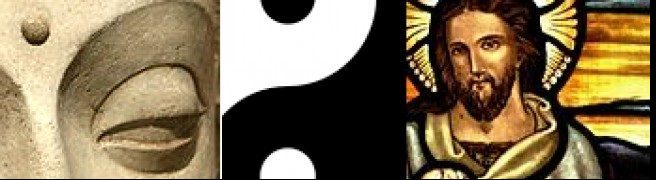
Evolution of Love

I have signed up for the Zacharias Trust’s e-pulse feed, produced by the Oxford Center for Christian Apologetics. The foremost member of that community is John Lennox, who has engaged Richard Dawkins and other militant atheists in debate on whether evolution disproves the Bible.

The conflict arises from the way that Genesis describes creation as occurring in six “days.” The term is vague, and long prior to Darwin we had Christian scholars cautioning that it shouldn’t be taken literally. But without any science to help interpret the book, the tendency was to take the common translation as cause to celebrate the glory and power of the Creator.

In the New Testament, that glory and power is manifested in a different way – it is through Jesus’s parables that explain that no matter how big a mess we make of things, it doesn’t affect God. He is going to love us anyways. Even more, when we turn our will and intelligence to caring for the world we live in, great power comes to us – power that is inaccessible through any other means. Power that gave Jesus authority even over death.

I met a family whose daughter studied with Lennox, and they shared his perception that the people he debates have a deep hunger for the love that God brings. They have just convinced themselves that the evil done by men proves that God doesn’t exist. In their quest to support their conviction, they use the conflict between the translation of Genesis and the fossil record to argue that the whole of the Bible should be discarded.

The apologists use a number of techniques to try to defend their faith. One is intelligent design – the idea that we can use evolution to prove the existence of God by demonstrating the infinitesimal probability that evolution could merge single-celled organisms into something as complex as a human being. Others shut their eyes and insist that if evolution is advanced as proof against God, then evolution must be wrong. And a final group insists that we should just stop arguing about it, and prove God’s existence through the works of our love.

But what of this: what if there was no contradiction? What if God prepared the way for reconciliation between naïve faith and sophisticated scientific understanding by writing evolution into the Bible long before it was formulated by Darwin? Would that not be a magnificent demonstration of his power and love for us?

For this is what I read. Genesis records that light allowed photosynthetic organisms to escape the dark depths of the ocean. From there they migrated from salt waters below to fresh waters above. Next they learned to survive outside of water, becoming plants that spread across the face of the earth. Then sight arose, resolving the light into the sun and the moon, and supporting seasonal migration. After the extinction of the dinosaurs, the fish and birds dominated the earth until the rise of the mammals. And finally we have man, whose flexible brain liberated life from the Darwinian struggle, to the point today that we can design simple creatures ourselves.

Evolution does not contradict the Bible; rather the elaboration of Darwin’s theory has substantiated the Bible. The Bible contains the history revealed by paleontology written thousands of years before science gave us the tools to interpret the fossil record.

So Christians, take heart: there is absolutely nothing to apologize for.

And let’s just put the argument aside and get around to the business of applying our intelligence to the restoration of the planet that God provided to sustain us on our journey to understanding.

Imagine a World Without Imagination

Jerry Coyne, author of Why Evolution is True, has joined the cawing voices of academic atheists with the publication of his new book Faith vs. Fact: Why Science and Religion are Incompatible. I haven’t read the book, and don’t see any reason to support the author’s rise to bestseller stardom. The supporting reviews on the book’s brag sheet are enough for me. Sam Harris, Richard Dawkins and Steven Pinker all celebrate the book as another sledgehammer blow against the project that has occupied humanity’s greatest thinkers for millennia: how to get people to work together for the common good.

Is science a catalyst in that regard? I didn’t see that in evidence at the Skeptics Conference last year. In a panel discussion with an advocate for CERN and an advocate for advancement of space exploration, Leonard Krauss responded with “That’s just a stupid idea” to the latter’s appeal for money to clear the space junk that threatens our low-earth-orbit satellites.  Krauss’s statement came without technical analysis – it was a baldly political statement meant to ensure that the community represented by Krauss kept its stranglehold on the money that flows through CERN.

And then we have the double-edged sword of global climate research and toxicology studies. We cannot consider as a statistical anomaly the trifecta among the technical communities that advised the tobacco, fossil fuel and chemicals industries. Drawing upon the science of economics, they invested their resources for the benefit of their shareholders. Each of them, confronted with irrefutable scientific evidence of harm to the public, chose to invest in contrarian science and secrecy to secure their access to profitable markets.

Obviously, the contention that science in of itself disproves faith is supportable only if we discard the long history of spiritual experience. Fundamental physics has no explanation for that history, and as it has become clear that there is no explanation for spirituality in current theory, the position of rejection has hardened because to accept the need to explain spirituality is to cast into doubt the entire body of particle physics.

But the men listed in my introduction are not physicists, they are evolutionary biologists. They have waged a long war against scriptural literalists, and appear eager to crucify religion for the prejudices of its ugliest zealots. That zealotry arose in an era that lacked the evidence of the fossil record, and so had no means for explaining the obscure record of the Bible except to assert the power of the Almighty. With the fossil record, however, the story of Genesis is readily interpreted as the occupation of ecosystems by living things. Even more, the trumpets of Revelation are clearly correlated with the billion-year history of mass extinctions that occurred along the way.

Of course, how could the writers of the Bible have known all that without the benefit of modern paleontology? The program of destruction pursued by Coyne and his cronies would be completely undermined by that consideration.

What they would be left with is to pursue a proof, such as I have outlined here, that love is the most powerful force in the universe. This is the conclusion reached by all the great religious avatars, not-with-standing the hateful rhetoric of the zealots. What is really wrong with attempting to prove that conclusion?

Surely not something more wrong than lacking the imagination to believe that it is possible.

Tyranny Vanquished by Love

As an advocate of the healing manifested in the world through divine love – that is to say, as an apologist – the most painful apology is that offered by those that justify violence in the defense of received truth.

In modern America, those justifications are flavored with desperation. For many years, Christian culture was synonymous with the dominant Caucasian culture. The twenty-first century promises an end to that dominance, but that eventuality was clearly forecast in the last century. The misguided hope that change and accommodation can be avoided breeds irrationality, manifested in the religious extremism that spawned death-threats against doctors that prescribe chemical abortions or that drives parents to resist education in evolutionary biology. Fundamentalism bred in the military, where “Warriors for Christ” sometimes coerce religious conduct in their subordinates, and issue death threats against leaders in organizations (such as the Military Religious Freedom Foundation) that oppose that unconstitutional practice. In each case, the instigators see the tenets of their faith as justifying imposition of their values upon others, and therefore implicitly justifying a broader defense of inherited social privilege.

In both Judaism and Islam, this tendency is heightened by the intervention of God in martial struggles against those seeking to subdue the faithful. It is only in Christianity that radical non-violence is upheld. That the bookends to Christianity both deny the divinity of Christ may be symptomatic of a pragmatism that makes violence inescapable.

In Islam and the Destiny of Man, Eaton explicitly upholds this principle. A Sunni scholar, his survey of Muslim history after the death of the prophet concludes with the observation that the practical realities of maintaining control of an Islamic culture meant at least paying lip-service to its theology, which was often solidified by investments in public works that facilitated its spread. Through that means, tyranny was turned to the service of faith. But it goes beyond that – Eaton makes a deep statement that truth cannot survive in the world unless evil is divided from it, and that division requires violence. Indeed, the hypocrites of the ruling class in the Umayyad and Abbassid dynasties were short-lived.

In discussion with my Shia colleague at work, I have been slowly establishing the validity of the contrasting proposition of Christian faith: Jesus demonstrated that the pragmatic truths of this world are dust in the hands of those that manipulate them. What is known to be “true” is far less meaningful than what is possible. While the common reaction is “good luck with that,” I keep on pointing out that far more power is available to us than is required to solve the problems we face. A billion times as much energy leaves the sun as reaches the earth. It is not allowed us for the same reason that parents don’t give matches to children – one selfish miss-step can destroy us all.

But, you see, it wasn’t a solar eclipse on Good Friday. It was the sun pouring its power through him.

I discovered Lauren Naigle through BJ out at The River Runs. The compositions on Lauren’s debut album don’t rival those found in the secular (and often profane) debuts of Ricky Lee Jones or Norah Jones, and subscribe to a simple lyrical formula. But they encapsulate the fundamental truths of Christian experience: it is the loving heart that bled for humanity that demonstrates the preconditions for true power. Surrender self-concern and trust that all those that you love ultimately will love you in return.

Lauren is young, and among her tracks are jingles that might be dismissed as overly exuberant. But she has not been without suffering, losing two years of high school to an auto-immune disorder and a beloved grandfather. In How Can It Be’s closing homage, she pleads for self-surrender:

There is victory in my Savior’s loss
In the crimson flowing from the Cross
Pour over me, pour over me. (Yes!)

Oh let this be where I die
My Lord with thee crucified.
Be lifted high, as my kingdoms fall
Once and for all, once and for all.

Oh Lord I lay it down.
Help me to lay it down.
Oh Lord I lay it down.

Bad things happen to good people not because they are weak.

Evil walks in the world, and hungers for the power that originates from love, but love recoils from its grasp. In Richard Nixon, the great lesson of abused power was visible when he bade farewell to his staff, tears streaming down his face as he juxtaposed his experience of political life with the love he had received from his mother. That is another way of reading Lauren’s lyrics: “Be lifted high, as my kingdoms fall. Oh Lord I lay it down.

There are those immune to these realizations – Beria, Stalin’s security chief, spat on the corpse just moments after his master’s death. But Stalin has already been forgotten by history, replaced by Vladimir Putin, a man who justifies his power by promising to allocate money for road repairs left undone by the local governments impoverished by the corruption he organizes.

Putin’s political aspirations were conceived when unrest in East Germany paralyzed the embassy staff. Stepping in with a firm will, he saw people galvanized to action. It is this strength of will that he relies upon, but the lesson that is demonstrated by history is that the will to power is no match for the discipline required of those that love unconditionally. Tyrants can concentrate spiritual power, but they cannot hold it in any confrontation with a wise and loving adversary. The tyrant simply serves as a dark well in which light shines more brilliantly into the spirits of the oppressed.

The mistake of religious fanaticism is to believe that the institutions of tyranny must be dismantled, for that strategy only justifies oppression. The truth found in Christianity is that we don’t need to destroy the institutions of tyranny. Instead, in service with he that died once and for all, we can dismantle the personalities of the tyrants.

Oh, Lauren, what an joy it is to celebrate your wise old soul!

Oh Woman! Oh Beauty! Oh Life!

One of the burdens of healing sin is to take it into yourself from those not yet strong enough to resist it. The selfish would hope simply to dispel it, but as sin is nothing but selfishness – the imposition of our image upon a spirit no less sacred than our own – to  cast out sin is an error. That would be to allow it the booty of its conquest. Rather, we must separate the essential from the vile, and return what was taken to the victim.

So for a long time I thought of my antagonists as my “supply chain.” But in every endeavor of grace, there is a time to heal, and a moment to inspire. I have suffered under the weakness of those that assail me for long enough. It is time to claim that which is good and strong.

So I found myself, at Good Friday services yesterday, focusing on the connection between the Cross and the future of love that arises upon his return. In that process, I found my hand guiding Christ around this era into that future. In considering that manifestation, I found myself excluded from it.

I am not disconsolate. In conserving its hold over us, sin has claimed much that is sacred. I have written about that elsewhere, how the loss of Eden was not limited to the breaking of trust with Unconditional Love, but the loss of trust between Man and Woman. Through that corruption, the Darwinian procreative urge reasserted itself. Rather than an act of loving spiritual connection that unleashes our shadowed glory upon the world, sex has been claimed for shame.

I recoiled from this fundamental misconception, so common in Christian teaching, in the sermon of the Lutheran minister during the interregnum in the reading of the Passion. We are creatures of sin, he claimed, and only Christ’s sacrifice redeems us. No, sir, we are not creatures of sin. We are creatures of choice, and even death on the Cross could not dispel the loving forgiveness that Christ brought to the world. In choosing to live wholly within it, every part of us will manifest the grace of God’s imagining of us. There is no aspect of our humanity that cannot be made sacred by love.

Yet I recall, now, the words I spoke from the pedestal in Oakland: “My name is Brian. I am from the future, reaching into the past. And I am an open heart.” It was a presaging of yesterday’s bypass.

My father was a prolifically sexual man. During our teen years, the boys had ready access to Playboy magazine. That instilled a perception of women as objects of pleasure, and a fascination with idealized feminine forms that covered the shallowness of their spiritual investment in the world.

My mother could not compete with this conditioning, and perhaps that is in part why she now decries the “patriarchal dominance” of our culture.

While I have not been a sexual libertine in this life, in my youth I explored vicariously many of its manifestations.  Over the years, that fed potent dreams that I realize now were participatory with women that were enamored of me. I understood this only late in my life: while some have dropped references to “porn star” in my hearing, I have never had my dreaming interrupted by other couples – except once when a pair in Africa peeked over the edge of their mattress to offer sympathy for my loneliness. I seem to be completely in control of my sexual imagination.

I see now, however, that my descent into the cesspool of corruption that men created for woman has left me vulnerable to the claim that my relationships with women are dominated by prurient interest. I see it differently, of course: over the last fifteen years, all of my dreaming has ended “Yes, but what about this part of you that you are ignoring?” Bliss was merely the method of achieving intimacy, with the goal of penetrating the lie that our carnality is a perversion that cannot be redeemed by love. Rather, like any other aspect of human nature, it is a tool, suitable to specific places and times, that allows us to reach Life in its most elemental level, and thereby to accomplish acts of healing and creation that are inaccessible through any other means. It has been my goal to propagate this understanding, to attempt to redeem woman’s self-esteem without insisting that they engage the world in the modality of men. It was to look deeply into them and offer them the paean that heads this post.

How long will it be before you assimilate it, before Mystery surrenders her resistance to the grace of feminine sexuality, and so allows loving couples to suffuse every particle of the world with Love in all its power?

For this is what I ask, and what they resist. Not simply bliss, but a reaching through into the world, and to command pleasure and consummation as an act of healing. It is this that Mystery seems to fear most, and whenever I come close to manifesting it with a woman, the most vile images and paranoid thoughts invade the relationship.

In this Easter’s meditations then, I gather that the hoped-for manifestation will not come in my lifetime. I have spent my manhood on my hopes for you, ladies. It is time for you to make them your own. For until one of you matches strength with Christ, his strength cannot be received by the world.

Emptiness

She came to me again in dreams this morning, and allowed me wander in her.

It began yesterday. I’ve been looping this happy song of praise on my car stereo (recorded as Waves of Mercy and Every Move I Make). It starts “Na, na, na-na-na-na, na!” and celebrates the Son with this chorus:

Waves of mercy, waves of grace.
Everywhere I look, I see your face.
Your love has captured me.
Oh, my God, this love! How can it be?

I was crying as I drove down the freeway, with her mourning the Passion: “How could they do that?” And I looking into her and reflecting that she, too, had been tormented for her faith. And then we broke through, discarding our grief: her dancing on the Earth and the Sun looking down upon it with serene forbearance.

This morning began all impassioned, but we didn’t bliss. I dreamed of laying my hands all over her, and just really listening to the truth expressed in each part. She kept on expanding, and when our heads came into contact a shift occurred, and we started dreaming in six dimensions. After floating in that for a while, I reached down past her knees to her toes, and felt her anchored in another place, that reality from which we originated, reaching out here to call me back to her.

I am amazed at the delicacy of that balance: the desire to flee the suffering of this place and the joy of knowing that the other possibility exists with the yearning to share it with others. It is not easy, to let love pour through her and as her heart expands to feel all the sorrows of the world. And so we surrender to it, and let love do its work, hoping that there is a different path for the children that come after us.

Don’t Blame Love

In the final chapter of Love Works, the feminine personality of life, irritated by the disorder generated by the masculine personality of intellect, grabs him by the short hairs, prompting him to observe:

Choice is a bitch. Let’s hope the kids do better next time. Now, will you let go? (How does she make it hurt so much?)

It’s undeniable that the spread of life across the earth has been driven by primitive urges.

Life’s procreative greed causes ecosystems to become saturated, stunting evolutionary opportunity. The great extinction episodes of paleohistory terminated biological dead-ends, and were all followed by eras in which life took off in new directions.

Conversely, the ability to use tools requires a large brain and flexible digits, both of which limit the growth of organic armor (which traps heat) and organic weapons (which must be anchored to large bones). Thus creatures of intellect such as humans are biologically vulnerable, and so spread only when they can produce tools that overcome the weapons and armor of other animals.

Once those tools were available, however, fear and greed drove us to consume natural resources without restraint, bringing the globe today to the point of ecological collapse. Deflecting the force of these natural tendencies is the challenge we have laid at love’s door.

In the history of religion, that struggle began with the worship of the two polar opposites of procreation and death. With the rise of the hydrological civilizations, an intellectual class of priests began to envision gods with subtle ethical character. But it was really only about 3000 years ago (and only among the intellectual elite) that humanity dared to suppose the gods should be devoted to us, rather than the other way around.

Monotheism is the culmination of this process, and led eventually to the declaration that God is love. This is common to all of the great religions.

But is it to our advantage? Given that we have free will, why should we feel constrained to draw only upon love when we face challenges? When our treasurer embezzles the retirement fund, do we just shrug our shoulders? Or do we get a noose? And when the hanging is done, can’t we justify the act with the assertiong that we are loving our spouse, children and/or co-workers?

The retort to this logic is that if you had really cared about your treasurer and paid attention to her psychological well-being, you would have seen the trouble long before it manifested. But, damn, that seems like a lot of work, and didn’t we pay them to do the right thing? So we keep the noose handy, and that means that the old deities of death get in through the back door of our religions. They stay alive there, and as ecological collapse sweeps across the globe, they will appear once again to grow in power.

But, fundamentally, they are the disease. Sexual indulgence and fear of death are what drove us to exploit the natural world. That love did not have a magic wand to drive them away is not its fault. So we need to stop blaming monotheistic religions for our refusal to hew to the dictates of love. Rather, we need to double down, even as fear sweeps over us, and invest in the love that creates the strength to resist the urge to exploit the world around us.

On Poverty and Riches

Just taking the long view (I mean – the long, long, long view), I consider the time-scale of the cosmos and the saga of biological evolution and we have the precious experience of living in this 10,000 year period in which our intelligence and the natural resources stored up from the past are available for us to do really deep work on our personalities. Simply to be alive in this time is such an incredible gift – to be able to play at being a creator, each in our own limited way.

Even if only to be able to plant a field, or tend a herd, or write a blog. Even if only to be the voice that reminds “There are still problems to be solved” in a way that motivates others to seek for solutions. Not to place fault, but to exhort greatness in others – to guide them into the only form of self-creation that opens to God.

Yes, the window is closing, as it was prophesied in Revelation. No, it’s not the fault of any single individual, and if we collectively had been more considerate of the forms of life that occupied the planet before us, maybe it wouldn’t be so traumatic. But that’s not under my control, so the question I constantly confront myself with is: what am I doing with my opportunity? Am I offering my creative capacities in the service of Life, or do I expect Life to serve me? Because when I finally lose my grip on this body, it is Life and Love that awaits to embrace me with the eternal embrace, if only I know how to receive it.

“Judeo-Christian” is an Oxymoron

As Eastern mysticism enters Western culture, its practitioners have adopted Western marketing techniques. Starting from the proposition that Western seekers of enlightenment have been failed by their institutions, the Daoist or Buddhist teacher seeks a rationale for the failure that will entice victims of “Judeo-Christian” spirituality to sample their methods. The central tenet of the narrative is that Judeo-Christianity imposes a view of human nature as fallen into sin that disempowers its followers. In contrast, the Eastern tenets and practices of “mindfulness” open a doorway to self-knowledge and self-control that leads into joyful exploration of life’s possibilities.

Having respect for Eastern methods, I’m not going to dispute the beneficial consequences of its practices. Rather, I want to emphasize that it’s not an “either-or” proposition.

In the Bible, the confusion arises right at the start, in the Garden of Eden with Adam and Eve. As I explain in The Soul Comes First, this is a parable for a community living in direct relation with the spirit of unconditional love. In Vedantic terms, this is to interact with an occupant of the higher astral realms. The problem was not that Adam and Eve partook of the “Tree of Knowledge”, for they were given great knowledge of the world in that era, as necessary to assuming stewardship of the Earth. Rather, it was because they chose to partake of the “Tree of the Knowledge of Good and Evil.” They chose to exercise independent moral judgment. They chose to make mistakes that would cause suffering in others, rather than disciplining themselves to the dictates of love.

The immediate response of the personality described as God is to establish a safe distance. A repeated theme of the Old Testament is the pain caused by the Chosen people to its God, and in the New Testament that culminates in human experience. To love is to give power, and when that power is misused, it causes pain. What is amazing about the devotion of the God of Abraham is the investment made in human maturation in the face of that pain. But to remain in immediate and direct contact with humanity as it went through that process would have been disastrous. Love is an amplifier. It empowers whatever it touches. It needs to keep evil out, lest that destructive force run amok everywhere.

But the devotion to our maturation is clearly visible in the Bible, and follows a logical progression. The story of Abraham and his descendants ends with Joseph, the first man in the book with the strength to be steadfast in danger and to resist his primitive sexual drive. It progresses with Moses, who introduces that Law of Exodus, Deuteronomy and Leviticus to instill the discipline of logic in the Chosen people. In modern psychological terms, God was trying to create a people who were capable of using their cortexes to control the survival instincts of the brain stem and aggressive emotions of the limbic system.

Unfortunately, any fixed system of rules is inevitably corrupted by those responsible for its administration, who find it all too easy to manipulate it to deny rights and even life to those that they wish to control. It was against the corruption of the Judaic system of Law that Jesus set himself, eventually confronting both the Sadducees and Pharisees with this great truth [NIV Matt. 22:34-40]:

Hearing that Jesus had silenced the Sadducees, the Pharisees got together. One of them, an expert in the law, tested him with this question: “Teacher, which is the greatest commandment in the Law?”

Jesus replied: “ ‘Love the Lord your God with all your heart and with all your soul and with all your mind.’ This is the first and greatest commandment. And the second is like it: ‘Love your neighbor as yourself.’ All the Law and the Prophets hang on these two commandments.”

In effect, what he is saying to these experts of legal interpretation is “The Law has taught you to think. Now think about love.”

This is evident throughout Acts in the teachings of the Apostles, foremost among them Paul, but not exclusively. The message is that there is nothing that we can do to attain salvation from this corrupt existence except to call love into our presence. Having been born into corruption, which is to say in a spiritual context of Darwinian competition that requires the theft of resources from other living creatures, the fastest way to healing is to call upon love – which is to say “God.”

Judaism and Christianity are therefore two distinct spiritual practices. Because humanity is composed of individuals, both practices have value to individuals struggling with maturity. For those in thrall to aggression, lust and fear, the discipline of a system of rules still gives strength to the cortex. For those that shine hope into that struggle, love grants not only peace and joy, by a powerful transformative capability that is best exemplified by the devotion still awarded to Jesus, the man who died on the cross to prove that death has no sway over those that surrender to love.

So when looking at Eastern methods, what I see is a way to spiritual maturity without wading through the dangerous waters of Law. I see the possibility of “Veda-Christianity” that guides the seeker far more reliably into the healing spring of love.

Presenting Ourselves

When Parashakti runs her Dance of Liberation workshops down at LA Ecstatic Dance, she begins by facilitating the pairing of spirit buddies. While my first experience with her was pretty intense, more recently I’ve been working in service to others. That means that I am chosen, more often than choosing, when she finally says: “Look around and find a spirit buddy, someone close to you. Once you’ve found them, describe your intention for this dance.”

So I pivoted slowly and found myself hooked on the eyes of the really pretty woman, standing tall enough to almost cover my chin. Another gentleman tried to step between us, but she raised her hand to gesture to me.

I’ve never heard such a strongly worded statement of intention. It went on for nearly ten seconds as she spoke about preparing herself in this year to let love flow through her and into the world around her. I brought it to a close by holding my hands over her shoulders and then lowering them until they hovered over her chest, encouraging my angels to fill her heart to the brim. “Thank-you,” she murmured.

“That’s my intention.” Parashakti then told us to stand back-to-back. Feeling that I wasn’t quite connecting with my partner, I tilted my head back until it contacted her crown. She nestled in a little more closely.

I had been right behind her as we danced a circle earlier in the ritual, and had noticed her hands moving as though warding the space around her head. Asthe blindfolds went on, that image came back to me, and after the closing circle thirty minutes later, I told her that I had received something to share with her.

She was the object of a lot of masculine attention during the open dance, and I half expected her to avoid me. But forty minutes in she took a break for water, and gazed pointedly at me. I guided her into a corner, leaning in close to block the pressure of the music, and began, “Our culture projects a lot of ideas that negate a woman.”

“What?”

Not sure whether she was just buying time to process what I had said, I repeated myself. “When you were dancing next to me before the ritual, I noticed you doing a lot of work with your hands around your head, as though you were warding things away.” Stretching my right hand to touch the heavens, “We tend to look to each other for validation, but there is a source of eternal truth.” Hesitantly, I moved my hand closer to her crown, gauging her reaction. “I was offered a message from them: they want you to know that they are reaching out to you.” She just gazed at me, frozen. “When I went through this process, I had to surrender my thoughts and let my heart guide me.” I reached out with my left hand, palm upwards, and envisioned cupping her heart in it. “I had to let my heart energy rise until it merged with my mind.” Raising my left hand until it was just under her chin, I concluded “The heart guides the head, and the head protects the heart.”

I was shirtless and slimy with sweat, so she embraced the air around me, murmuring “Thank-you, thank-you so much,” fleeing and returning two or three times before returning to the floor.

She continued to be popular on the floor, mostly among the younger men that I can now only join briefly in frenzy. I worked the room in my usual manner, spreading joy and tenderness where it was accepted, but really wearing down at the end. As the afternoon drew to a close, I sat on the floor to down dinner, watching as she was intercepted by man after man. Getting up to change clothes for Contact Improv, I came back to sort through my backpack and offer my gratitude to Ataseia. She passed by and I caught her eye. “One more thing.”

She didn’t hesitate. “What you said earlier explained a lot to me about myself as a woman.”

Thinking of her confidence on the dance floor, “Yes, I could see that. But the challenge is hanging on to it. We have to stay focused on them. They have their own purpose, and if we fail in our devotion, they tend to wander away.”

She leaned into the frame of the closed doors, hands clasped before her. That wasn’t what she expected. But her lips offered a gentle bow of curiosity.

“You projected a great deal of positive energy into the room today, but when you began to dance with a man, it turned inwards. I could see you winding inwards, and the source of that energy was left adrift.”

She stopped to reflect, and voiced her agreement.

“If we want to hang on to them, we can’t do that. We have to present ourselves, and wait for the other person to open to us in turn. It’s not a winding into, it’s an expanding through.” She looked uncertain, so I reached out to cup understanding in my right hand, brushing it gently across her.

“I’m not sure that I understand.”

I stepped back. “I present myself. All of myself. And if you respond, I come closer, not directly, but slowly spiraling as my angels introduce themselves to your angels. It’s not always pleasant – some things really don’t belong together. But that’s what we do here. You danced with a lot of people today, as did I. We gently join our personalities, and then the magic happens. We go out into the world and draw upon our shared wisdom and energy.

“But we shouldn’t make too much of that. We need to stay devoted to ourselves, waiting for that encounter to which all of us announces ‘yes!'”

She raised her hand tentatively to demonstrate her understanding. Her eyes narrowed as my entourage resisted her, and I caught them sending “Not without our permission.”

We embrace twice, and she departed with a wistful “Maybe I’ll see you next time.”

“I look forward to it.”

A Mother’s Generosity

Since that day in 2000 when I surrendered my heart to the cross, perhaps the greatest obstacle to the purpose I have adopted is the received wisdom of Christian teaching. The ambiguity of ancient accounts means that they provide rich metaphors that reflect powerfully on the challenges that we face every day. That, in turn, makes scripture approachable, where if we were to face the events in their full psychological significance, we would feel like corks in a tidal wave, unable to apprehend at all how we might hope to play a role.

This means, unfortunately, that a thick veneer of common wisdom hides the personalities that must be unveiled if scripture is to be fulfilled. These people must be called out of the past, welcomed, and healed. To do that we must try to see them as people struggling against powerful forces, but people none-the-less, sensitive even more than most to the sorrows and joys of love’s action in the world.

To those that have followed my writing, this thread may appear lost in the flood. I have addressed it twice in recent memory: the reposting of Mary, Contrarily from my blog at anewgaia.ning.com, and again in On Following. But it was also there in the first posts I wrote in 2014, though I may have seemed to have been stretching in considering the personality of Christ himself in All the Vice of Jesus and We Can’t Say ‘Thanks’ Enough.

I wasn’t expecting to return to Mary, but two Sundays running I found myself in different settings listening to the story of the Marriage at Cana. In both cases, the speakers focused on the drama engineered by Jesus. The intensity of my sympathy to Mary’s predicament was unexpected, and in one case actually seemed foreign.

Consider the history: On the day of his presentation at the Temple, Mary is approached by Simeon, who prophesies:

This child is destined to cause the falling and rising of many in Israel, and to be a sign that will be spoken against, so that the thoughts of many hearts will be revealed. And a sword will pierce your own soul too.

Then in his twelfth year, after the festival, Jesus stays behind without permission to offer wisdom to the priests. When his parents discover his whereabouts, Jesus explains that he must be about his father’s business, but Mary rebukes him. Upon their return, Jesus grows in favor with God and men, but remains out of sight to the religious and political authorities.

So considering the authority of Mary in Jesus’s life, we may surmise that it was applied to protect this beautiful soul from danger. Against that benefit we have the realities of his era that he was sent to confront. The growing corruption of the temple would not have been unknown to Mary, who traveled annually to the festivals. Nor would the taxation that impoverished the families around them. And so a burden of guilt grows in Mary’s heart, that she trades the suffering of her people for the safety of the son sent to liberate them.

This is the context of the wedding, a rare communal rite, lasting for many days, at which provision of wine was considered essential in augmenting the joys of the occasion. Lack of wine was an ill omen, as well as being an insult to the company that had come from wide and far to share the celebration.

Why did the wine run out at this wedding? Merely a miscalculation on the part of the bridegroom? This strikes me as insufficient motivation. I imagine that this was known in advance, that the family was unable to provide enough due to reduced circumstances under the widespread social injustice suffered by the nation. Some limit is reached in Mary, the burden of the people overwhelms her motherly caution, and she tells Jesus to do something to salvage the situation. What she hears then shakes her in her inmost being:

O Woman, what has this to do with me? My hour has not come.

The first words are an insult to her authority, and might have brought anger, but the last ones: has she not told him this again and again over the years. Yes, he must do the work set by his Father, but not yet – the hour is not yet, let him remain with us just a little longer. And so she understands him as saying:

Dear mother, if you ask me to do this thing, I can no longer hold back the will of my father. Your authority over me will end.

The sword foretold by Simeon pierces her then, and unable in her heartbreak to face him, she turns to the servants and says:

Do as he tells you.