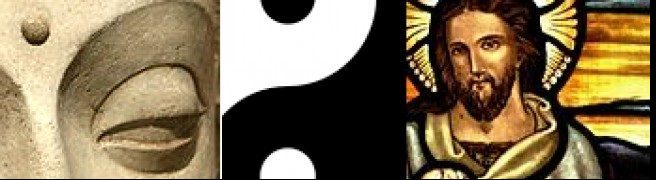
He Will Reign – Won’t He?

One of the challenges in building a brand is to ensure that prospects receive a consistent message concerning value proposition. The Church fathers and Emperor Constantine addressed this problem in the fourth century, establishing the Nicean dogma and creed that the Catholic Church and its heretical variants enforced through preaching, training and – in the breach, until recently – torture and death.

Normally, we’d talk of offended authority as “spinning in the grave.” In this case, given the last, we must be glad for Jesus’s resurrection, because otherwise the globe would have been whirling around his tomb.

The early Church fathers, confronted with the evidence of civil decay following the decline of the Roman Empire, seem to have concluded that empire was a part of God’s plan of salvation. They spent the twelve centuries following Nicea working to centralize political authority in Europe. At the end of that era, Renaissance Europe sprouted a dozen kingdoms capable of reproducing the accomplishments of Rome. Their response to Church meddling was to interfere in Papal selection, and when coming out on the losing end of that struggle, to support the rise of reforming heresies.

So what might Christ think of that?

In Scripture, I see three high points in the relationship between Humanity and God. The first is in Eden, where Adam and Eve experienced the ravishing grace of a direct relationship with God. Next is the era of Judges immediately following the entry into the Promised Land. The Hebrews as a people lived in gratitude for the Father’s gift, and when their occupancy was threatened, God found heroes to guide them through danger. That era ended with the people throwing their trust onto the human institution of monarchy. In the final act, Jesus arrives to expose the iniquity of the human institutions of his day, and proclaims that redemption is not bound by any contract or tradition, but is available to all the peoples of the Earth.

The modern Dominionist interprets this proclamation as a call to spread the institutions of Christianity across all the globe. The question is: what is the true church? Or is it simply enough that each individual should recognize Christ as lord and master in his heart?

Jesus is a little coy on this point, stating [John 10:14-16]:

I am the good shepherd; I know my sheep and my sheep know me — just as the Father knows me and I know the Father — and I lay down my life for the sheep. I have other sheep that are not of this sheep pen. I must bring them also.

In The Soul Comes First, I consider the parallels between the spiritual trajectory in Judaism (culminating with Jesus) and Buddhism. In Islam and Christ, I examine the choices made in the formulation of Islam, choices made to facilitate such developments in cultures still practicing polytheism.

These insights, supported by the evolution of the covenant recorded in the Bible, lead me to the conclusion that Unconditional Love reaching to us from Christ meets us where we are. It does not care about structures and institutions, and in fact idolatry is often evident in human attempts to sustain those forms. Rather, as Jesus says, it enters into our lives in twos that grow into threes, thereby empowering us to care for one another.

Witnessing the end of this process, John testifies of the “New Jerusalem”, that {NIV Rev. 21:22]:

I did not see a temple in the city, because the Lord God Almighty and the Lamb are its temple.

Remember that Jesus does not ask us to submit, but to learn [NIV Matt 11:29]:

Take my yoke upon you and learn from me, for I am gentle and humble in heart, and you will find rest for your souls.

And [Math 20:28]

…the Son of Man did not come to be served, but to serve, and to give his life as a ransom for many.

The temple of God is the individual human heart. His age is consummated when we allow his sensibility to enter into us. As I said recently to a priest:

Sometimes words serve no purpose, and the only thing I can do is to allow the broken heart of Christ within me to speak for itself.

It is when we offer our hearts as he did, offering them in the service of supporting the weary and burdened, that his will for us is achieved. This is a service beyond understanding, for we cannot explain all the suffering in the world. It is beyond us, having its origins billions of years ago, and woven into our living through the predatory competition that is Darwinian evolution. All that we can do, as Jesus did, is to offer ourselves in the service of healing the wounds it has created.

So is the modern fragmentation of Christianity – exposing contradictory messages that erode faith – is that fragmentation a problem? Or should it be interpreted as the process by which Christ dissolves the human institutions that stand between the seeker and Unconditional Love? If Eden was the ideal, should we not be seeking to recreate that ideal for every man and every woman? And if that is the goal, how can we doubt Christ’s word that he will gather all of his flocks – all of those traditions that declare a covenant and discipline that opens our hearts to the power of Divine Love – how can we believe that any one of them will be unreconciled to Christ? Or judge any of them as inferior to our own path?

Loving Ourselves For Who We Are

My first encounter with transgender reality came when I was in graduate school. I worked on the top floor of the physics building at Lawrence Berkeley Laboratory. This was not a stuffy community – facility announcements were prefaced by a breathless woman asking “May I have your attention please? May I have your attention, please?!” But on the floor just above, at the end of a long dark hallway, the only female technician in the building had her workroom. Nobody seemed to spend much time down there, and a machinist finally clued me in “He went away one summer and came back a woman.”

I have to admit that this choice is problematical to me.

Here’s a less extreme example: I met a man who explained that he felt like he had two personalities, one male and one female. He was a large man, but felt compelled on occasion to wear women’s clothes. What I eventually came to understand was that as a father in a previous life, he had gone down in a ship with his young daughter. The girl had hidden herself in him as they drowned, and part of the work he was doing in this life was to give her the opportunity to work her way out again.

There are men that spend all their lives trying to get into a women’s bodies, and often they do so using methods that are psychologically or physically abusive. There’s a certain symmetry in being reincarnated as a woman. Should we have sympathy for their desires to become men again? That was the opinion expressed by a Unitarian Universalist minister. The UU movement famously supports LGBT choices, and the minister asked us on that day to try “walking in his shoes.” I had to hold my tongue, knowing that she wouldn’t understand, but what came to mind was: “But that’s just what he’s doing – learning what it’s like to be a woman so that he can have some respect for their needs! How is that end going to be furthered by supporting him as he – yet again – mutilates a woman’s body?”

Carlos Castaneda described the view of the Yaqui sorcerers regarding gender. Masculine and feminine souls have different topologies – one projecting and one receiving. His adherents evolved a discipline called “tensegrity”, and believed that the womb gave women enormous spiritual power, power that a man’s genitals could never challenge. But the Yaqui view was that all such power originated in the soul – in fact Castaneda encountered a masculine sorcerer that had turned himself inside out, and so presented as a woman.

If the soul is what matters and persists, then a man like Bruce Jenner will find himself back in a woman’s body again. In this life, why not get as much benefit from being a man as he can? He was put here in a man’s body for a reason.

But his struggle to become a woman may be of help to the rest of us. Science can’t really explain our sense of gender identity. Maybe Jenner’s choice creates another opportunity for society to recognize that gender is not simply about biological form.

Sexual arousal is a consequence of a yearning of one spirit for another that causes blood to pool in the parts of our bodies that feel most pleasure. That yearning is complicated by procreation, which at this point is overburdening the carrying capacity of the earth. Perhaps homosexuality is a way of freeing our ecosystems of the physical side-effects of the deepening of our spiritual relations?

But isn’t that a distorted view of life – that our sexuality defines our deepest relationships? In my thirties, I was taken aside on two occasions and warned that gay men weren’t accepted in the top levels of the institution that I was working in. Being someone that dreamed every night about women, I never got the message: my failure to engage sexually made people assume that I was gay. That I was committed to a relationship built upon intellectual and emotional compatibility seemed to escape them.

I know that my workmate in college was a terribly unhappy person – their physical transformation was incomplete, and therefore unsatisfying. It also came with terrible social ostracism. Why do doctors then pursue this craft? Is it merely so that the superficial external presentation matches the internal reality, so that those that see sex as a mechanical activity will not be surprised when the inner personality – the very soul of the man or woman they are loving – comes to the fore? Wouldn’t it just be better to prepare people to recognize the nature of the soul that they are pursuing, and thus to learn something about their inner selves at the same time?

In spite of all of my questions, I feel no hostility to the transformation being pursued by Jenner and others, unless that it seems to involve an enormous investment of energy. I guess that as long as they can afford it, it’s just another experiment in living. Let us know how it works for you!

Golem

This post celebrates submission for production of my next book, Golem. Here’s the preface:

When in 2000 I resumed my journey into faith, I found myself wondering whether people had any sympathy at all for Jesus. It wasn’t enough that he had to suffer the pain of all the wrong-doing on our planet – no, he had to be responsible for everything, everywhere.

It has been painful for me to witness the success of escalatory monotheism in public debate. Even the atheists buy into it, blaming religion for all the magical thinking and selfishness that infects the world. The contradictory evidence of the natural world seems to escape their attention – predation has an enormously long pedigree. The anti-religious seem to have no sense of just how difficult it is to heal creatures that nature has programmed to hurt each other. Religion has no magical talisman to protect us from the prejudicial instincts of our neighbors – that requires us to relate to them.

Because life is so complex, every generation seeks solutions for the problems that are immediately obvious, often failing to realize that those problems are the cracks in the solutions to uglier problems addressed by their ancestors. The misguided impulse to sweep away rules and restrictions brings a satisfying sense of activity, but it also polarizes public debate. Both sides of the struggle advertise the proclamations of hysterics, impeding rational discussion and informed problem solving.

In this famous dictum, the Catholic philosopher George Santayana characterized the problem:

Those that cannot remember the past are condemned to repeat it.

In Three Philosophical Poets, Santayana marshaled his wisdom to illuminate the difficulties of living well. His source material, spanning two millennia, are the writings of Lucretius, Dante and Goethe. The first extolled the virtues of reason, but Santayana observes that complexity runs reason into the ground with “analysis paralysis.” Dante upheld faith in Divine Love in his allegory of universal redemption, but reliance upon forces beyond our control leads to passivity and dependence. Goethe celebrates the accomplishments of forceful will now trumpeted by the elitist libertarians of the Republican Party, but a failure to negotiate with our peers generates ever mounting resistance that eventually crushes the solitary man, and brings the pyramid of tyranny crashing down under its own weight.

My first work of fiction, Ma, celebrated the feminine virtues of intuition, anticipation and compassion as a means of escaping these traps. It chronicled the psychological struggles of men caught in the limitations of Santayana’s world-view, and their liberation through submission to the caring of their women. The parallel story of Leelay suggests the psychological experience of a woman learning to support such men.

The deus ex machina of Jesus’s appearance at the end of the book was jarring to me. I rationalized it at the time as an assertion that Christ is called into being by the harmonization of masculine and feminine virtues. But it suggested to me that there was still more to be said.

I was also aware that Ma left many unanswered questions. The strategy of its construction was actually to overwhelm reason, forcing the reader to focus on the psychological experiences of the characters. When readers complained that I left a lot of loose ends dangling, I found myself playing with ideas that would tie them together.

Thus was born Golem. As a firm believer that love is universally redemptive, the work expands upon the dysfunctionality of digital technology, still characterized here as a unique manifestation of Earth’s unstable ecology, and then imagines its applications in reconciling the divide between gods and mortals.

But at the heart of the writing is a plea for sympathy for our great religious figures. In the crushing grip of the enormously destructive forces that oppress humanity, to be a seed of light can be both humiliating and painful. Adherents to faith may seem foolish or misguided, but ultimately they serve to dissipate those contrary forces, allowing the pure light of love to be liberated for all to see.

Two Conversations

Down in Carson yesterday, I was trying to teach a young Hispanic girl how to shoot set-shots. I kept at it for a half an hour, and she just wanted to prance and play, so we didn’t get very far. That’s not true – she did get better over time, and seemed to improve in her accuracy. But after twenty minutes of encouragement and silly dancing around, she asked me:

How old are you?

Well, that didn’t seem fair, so I asked her how old she was. Then I told her I was more than five times her age. She kept on going with guesses until she learned that I was fifty-four. When I asked her why she asked, she said:

You act like you’re younger than that.

So I asked: “If I came here all serious and stuffy, would you be shooting baskets with me?”

“No.”

“But that’s what I’m here for. It doesn’t make a difference what you think about me – this is all about you. I work five days a week writing software and doing mathematics. But when I come here, it’s all about what works for you.”

My father says that if her parents find out, they’ll never let her come again.

And then this morning, to the priest who had just announced that he was leaving religious orders because his out-spoken passion for Christ had caused too much friction in the community:

As someone who has been told that his expressions of faith frighten people, my experience has been that sometimes I have to choose to say nothing, and let the broken heart of Christ within me speak for itself. Sometimes words will not do – we just have to let others feel what we feel. We have to take people into our hearts. It is as Jesus said: ‘Take my yoke upon you and learn from me. For my heart is humble, my yoke is easy, and my burden is light.’

The Abuses of Tyranny

As I considered in The Uses of Tyranny, communities lacking experience in self-management often call forth people with over-sized egos to lead. Even when they are reviled, as was King Juan Carlos in Spain, the psychological bond is deep. Many Spaniards wept upon learning of his death, for fear of what the future might bring.

In the case of monarchy, at least there is some institutional structure passed on from generation to generation, which means that the monarch is bound, at the very least, by dependency on people who actually know how to get things done. This is something seen in growing up, and helps to check the ego of the ruler.

For nations undergoing dramatic social change, such as occurred after the retreat of the colonial powers, no such institutional checks exist. Leadership is established through visceral struggle, and held largely through intimidation and fear. Once the opposition has been beaten down, there is no brake upon the ego of the ruler, who may even imagine himself to be a divine favorite. Witness, for example, Idi Amin of Uganda.

Of course, it is rare for such nations to be able to project much power on the international scene. This can make them dupes for more sophisticated partners, such as negotiators from multi-national corporations. The convenience of the dictator as single point-of-contact are tempting to those negotiators. It is little known that militant Islam actually was born in Northern Africa, where the people used the ethics of the Qu’ran to structure their criticism of exploitative resource extraction. When Western governments and multi-nationals propped up the abusive regimes, jihad was declared against the West as a whole – and deservedly so, under the circumstances.

So perhaps the grossest abuse of tyranny is the tendency of tyrants to form privileged clubs that prop each other up. The ultimate downfall of such clubs is that they devolve into echo chambers, with the tyrants agreeing upon self-serving policies that cannot actually be implemented by the communities they control. This occurs in two parts: first, the tyrants become divorced from reality, and then they destroy social cohesion and resilience in their attempts to coerce their impossible outcomes. Such was the downfall of the planned economies in China and Russia.

It was this realization – that institutional structure was the ultimate victim of tyranny – that prompted Western philosophers to concern themselves with the creation of institutional forms that mitigated against tyranny. This has manifested not only in the constitutions of governments, but in the legal framework of corporate governance. Separation of powers is visible in the three branches of US government, but also in the allocation of responsibilities between corporate boards and executives. One of the primary benefits of these arrangements is survival of institutional memory, which means that situations that seem new and exciting to the surging tyrant are just old hat to the grey-beards in the institutions.

It is amusing to watch this psychology unfold in Putin’s relationship with the West. Putin paints Obama as his primary adversary, and broadcasts propaganda that projects the image that tensions will dissolve when he leaves office. As a tyrant, Putin does not understand that the West has a huge number of historians and policy analysts in corporate, academic and governmental circles that have studied Russian history, and recognize this view as the view of Stalin and Kruschev and Brezhnev and Andropov. Attack Obama all you want, and circulate as much propaganda among the European public as you want: our institutions have played this game before, and will win it again.

Understand, Putin: you are who you are because Western nations agreed to trade with Russia, providing you with the opportunity to siphon hundreds of billions of dollars into your personal accounts. Do you really think that they don’t have the means to discipline your international adventurism?

And what our institutions also remember is that, following Juan Carlos and Stalin, their nations adapted to the experience to establish systems that regulated tyrannical behavior. When that occurs, the tyrant’s legacy is erased. Yes, Vladimir, you are a big noise now in the world. You’re able to force a lot of people to think about you. But you’re on the wrong side of history. Your destruction and perversion of the institutions of the Russian state ensure that you will leave no lasting mark.

And hear as much, Koch brothers! How much money are you spending to force people to do what makes you money? And how much more could you make if you invested, as did Henry Ford, in their capacity to participate in new markets and opportunities?

Jon-Rolled

When I first put The Soul Comes First in front of readers, one was a young Jew working in the coffee shop at Barnes and Noble. I began summarizing the book, and got as far as Moses before he broke in to challenge, “Yeah, well, I’ve concluded that no Bronze Age religion has anything to offer us in the 21st century.”

A couple of months later, he agreed to read the book (it’s only 70 pages or so), and came up to testify:

This is the only thing I’ve read that makes sense of the Bible.

So my jaw fell open when, following an advertisement from the Freedom for Religion Foundation, Jon Stewart introduced a satirical skit on Christianity by saying “I can do this because, as a Jew, my religion is thousands of years older than yours.”

An appropriate comment, because in the entire skit, the only serious criticism of Christianity was a reference in Exodus to ownership of slaves. Argh! Christ promised to fulfill the law, which means that the old contract with God was concluded, and a new one begun. The covenant of Christ supersedes the Covenant of Moses, and it says simply:

‘Love the Lord your God with all your heart and with all your soul and with all your mind.’ This is the first and greatest commandment. And the second is like it: ‘Love your neighbor as yourself.’

As for the Freedom from Religion Foundation, the ad draws upon the authority of the Founders, many of whom drew their moral and ethical philosophy from Jesus, which includes:

Render unto Caesar those things that are Caesar’s.

I find satire to be a lot funnier it is rooted in understanding of the basic tenets of the culture. So, if the FFRF and Jon Stewart show really want to have an impact on Christian fundamentalism, they could try teaching Christianity while making fun of the way it’s presented to society. As they have succeeded so well in attacking the political hogwash served up by the elitist, libertarian right, that might actually get Christians to recognize and challenge false teaching.

As it was done, they merely come off as tediously shallow.

The Battle Over Personality

In attempting to penetrate the cultural prejudices against spiritual experience, I sometimes feel a certain historical sympathy for those arguing against flat-earthers. The doubter could argue against the roundness of the earth by insisting that he has never had any reason to believe that the world isn’t flat. That his experience was limited to a ten-mile radius around his place of birth didn’t matter much.

Against declarations of faith in the existence of God, the scientific materialist will often say things like “Well, I know that when I jump off a bridge, I’ll fall into the river. You can’t say that about God.” When I describe my experience of spirituality, including events that can’t be explained by accepted scientific theory, I am told “Well, it’s OK for you to believe in God.” That these events are just as real to me (and others that have witnessed them) as jumping off a bridge seems to escape their grasp. I really don’t need anyone’s permission to have them – and as scientists shouldn’t they be at least at little bit curious as to why I do and they don’t?

I have suggested that Christ doesn’t create faith through force – but rather by posing people a problem bigger than they can solve, and then giving the power to solve it. When my children worried to me about my financial circumstances, I always said to them “Well, money is only a means of storing power – and all my power is wrapped up in trying to solve a very, very difficult problem. There’s just none left over to save.” But because love does not wait, I am confident that if the problem can be solved at this point in history, it will be solved. Otherwise, well, I’ll have left some bread on the water for when I come back to try again.

So I might suggest that the difference between me and those that judge my faith is humility. Scientists are really proud of their science, and of the skills and strength of mind that allows them to apply it. Conversely, my experience includes being told by a fortune teller one night “Brian, we know that you think that you’re failing, but try and remember what it would have been like if you hadn’t been here at all.”

So if the problem for the scientist is pride, do they have no basis for their pride? I would say that, yes, they do have a basis for pride. We have turned the world into a garden, and so tend to forget that nature is just a terribly destructive place. Science – which is the study of the behavior of things that don’t have personality – has allowed us to mitigate against disease, predation and the elements, and helped us to anticipate and manage natural disasters. That success is obtained with theories that completely ignore personality. So we think of the animals in a stock yard as simple meat factories. The trees that we chop down are just wood.

The value of the scientific pursuit is, of course, to extend our lives, but it does so at the cost of our spirituality. Living is the opportunity to do work on our souls through the experience of having a body. We need to reclaim that ground from the scientific mindset that sees us as simple flesh popsicles, dancing on the axonic threads that originate in our brains. We need to reclaim our personality – which is to say the conscious engineering of our souls through engagement with the physical reality around us.

And when we have surrendered our pride and greed, an even greater adventure awaits us: calling out of hiding those spirits that we have terrorized with our science, and bringing their skills to bear in creating a garden that serves all the forms of life on Earth, rather than just humanity.

Coffee and Coaching PodCast Recording

Caryn FitzGerald had me on today for her inspirational author series at http://www.coffeeandcoachingradio.com. I told her it was an honor to be her guest for “Render Unto Caesar” day (which brought a gracious laugh), and she prompted me to share the greater journey that led to the creation of my web site (www.everdeepening.org), my four books, and this blog. Reconstructing that experience – and reflecting on how they all support each other and the purpose I serve – was really valuable to me. It’s been a long intellectual and emotional journey.

The podcast should play in a month or so. I’m just worried that (as is typical, I guess) I had a lot of surprising things to say. When Caryn remarked that I was a very complex man, I had to admit that was why I am single – I’m just too much work. And then I turned around and remarked that it all seemed pretty simple to me.

Love is like quantum mechanics – it applies to everything, which can be confusing until you understand how it changes things. So while I was rattling on about corporate management, men and women, raising children, and Jesus, it was really all about one thing: let’s make life simple, people. Let’s just love one another.

Caryn is a gracious and affirming host, and the questions she asked were a powerful force in shaping the interview. She invited me to come on again, and I’m expecting to face interesting questions – and continue to benefit from the learning that entails – when I do.

The Relative Incoherence of Special Quantum Spirituality

We in the West see the attempt to reconcile physics and spirituality as an Eastern concern. Indeed, it is the Vedantic philosopher Deepak Chopra who most vigorously engages Western science in that debate. The Western prejudice, however, is supportable only for those with a selective memory. Following the discovery of magnetism in the 19th century, “Mesmerists” were popular in Europe. The practitioners would demonstrate their mind-control abilities by touching the cranium of a susceptible assistant. When one was brought to trial for fraud, the scientists of the era actually testitfied in his defense.

Keeping in mind that history, I tend to be sympathetic to Chopra and his partisans. Unfortunately, they are chasing after rainbows, and creating a lot of confusion as a result.

Richard Feynman, brilliant quantum theorist, observed that quantum mechanics was a mathematical procedure without philosophical foundation. That’s pretty unique to 20th century physics. Prior to that time, the scientist could always build mental pictures of the interactions between the elements of the model. This was a practice that they attempted to apply to Quantum Mechanics and Special Relativity as they evolved, with unfortunate results.

This desire to provide explanations was carried forward during an era in which the basic tenets of the theory were still being worked out. Sometimes the preliminary theory would be applied in way that later scientists would consider incomplete, but a sensible answer would be obtained. The answers were published, often with popular interpretations of what was going on in the underlying reality. What is perhaps not surprising is that the popular interpretations are more widely known today than the actual theory itself. Because the interpretations were based upon bad science, they create confusion in the public mind.

To illustrate: in Special Relativity, Einstein held that clocks appear to tick more slowly when they move rapidly with respect to the observer. Based upon this, a thought experiment was constructed involving two twins, one of whom travels to a distant star and returns much younger than his sibling that stayed home on Earth. The calculation assumes, however, that the traveling twin reverses instantaneously his speed and direction upon arrival at the distant star. Obviously, if this was the way that the space ship was designed, the traveling twin would be just so much pate upon returning to Earth. No, the ship must decelerate and accelerate. When that part of the mission plan is included in the calculations, it turns out that the special relativistic effects disappear completely. The twin paradox is a hoax.

In quantum mechanics, we have the famous “wave-particle duality” and “wave function collapse”. Wave-particle duality was “proven” by electron self-interference: an electron impinging upon a screen with two closely-spaced slits will not be seen in two spots on the far side of the screen, as though it had passed through one slit or the other, but instead be distributed over numerous islands of intensity, as though it was a wave that had passed through both slits. The problem in this calculation is that in quantum mechanics, the behavior of any one electron can only be understood by considering the behavior of all the electrons in the system. The failure to include the electrons in the screen in the calculation leads to at least one paradox, and precludes alternative explanations of the observations.

“Wave function collapse” was an extension of “wave-particle duality” to scattering problems. In classical mechanics, when two billiard balls collide, we can predict the final state of the balls from the initial state. Not so in quantum mechanics: scattering objects spray about more broadly. However, the rules of energy and momentum conservation still apply. Therefore, measuring the final state of one of the scattered particles determines the state of the second. The first measurement causes the possible final states of the second to “collapse” to a single allowed result. This led to the idea that the conscious act of observation affects the behavior of physical systems. The “Schrodinger’s cat” thought experiment is the popular expression of this idea. But there are many types of uncertainty in quantum mechanics, and just because the observer doesn’t know the final state of the particles doesn’t mean that they particles don’t have a definite state. They may “know” perfectly well what their direction and speed of motion is.

The weak practice and explanations offered by early quantum and relativity theorists open the door to mystics seeking to explain their experience of reality. The acausal connectedness of mystical events (what Jung called “synchronicity”) seems to correspond to the complex structure of time in special relativity. The interaction between consciousness and physical events in Schrodinger’s world corresponds to the mental powers of the guru.

But the fact is that the theories, while describing unfamiliar behavior in fundamental particles, are completely inapplicable to the behavior of macroscopic composites such as people. The probability of seeing quantum behavior in a macroscopic object is so minute that the Eastern mystic must hold his experience as a refutation of quantum mechanics. That leads in the direction of new physics.

At this point, I would argue that the most powerful laboratories of the modern era will be our minds, rather than the billion-dollar observatories that the scientific-industrial establishment insists the public must fund. The ultimate proof of the power of a theory will be not in how it empowers us to manipulate objects without personality, but rather in the degree to which it makes us transparent to the flow of Divine Love.

In God’s Hands

My book signing on Saturday started off slowly. The venue is a wonderful place to browse, though. (If you live in the Thousand Oaks area, please stop by and check out The Open Book in the Oaks Mall.) So, to avoid filling the air up with anxiety, I tried to find the second part of The Tales of Genji (alas – they had sold the collection of vintage books that I had pulled it from), and ended up perusing a collection of 19th century horror stories.

Being clever people, the staff had set my table up in front of the New Age and religious inspiration section. I had a few chances to say “hello” to those that stopped to browse the blog posts I had reprinted or look at the book covers. The reactions weren’t always encouraging: one man simply scowled and went around to the New Age section. Another woman engaged me with a hostile tone of voice, asserting “Love works because people make it work.”

This was beginning to feel like my first book signing, when I spent most of the day dealing with the baggage brought by people who had found reasons to stop believing. Feeling a little food coma along with the disappointment, I stepped out to buy myself a coffee. When I came back up from the lower floor, I found the scowler with a new book, sitting in an armchair across from the store. I smiled and remarked “Well, you found something!”

A little uncertainly, he said that his brother had survived a near-death experience, and while he wasn’t quite sure about the whole business, he wanted to investigate. As we discussed religion and spirituality, I learned that he had been raised Christian, but was an atheist. Without prompting on my part, he explained that he suffered from a form of spinal arthritis. For most of his life, he had prayed to God for relief, and never received an answer. Then he had found a doctor who took interest in his case, and received treatment that made life bearable.

I couldn’t preach in the face of this testimony. There is nothing more difficult to bear than suffering that has been laid in the hands of God. But I did offer that God works through people, and that I was glad that his doctor had shown the compassion to take interest in his case. Then, hoping that somehow he’d find his way back to the source of Divine Love, I encouraged him to continue to study spirituality.

We parted amicably, and I went back into the store. When I reached the table, all of his loss and pain came pouring down on me. All I can do in those situations is try to breath, and let it settle through me into the floor. It passed in two great waves, and then I looked back into the doorway. He was staring at me, and I lowered my gaze to the floor. When I looked back up, he was gone.

For those in similar situations: don’t keep your eyes turned up to heaven. Yes, leave your suffering in God’s hands, but understand that, as Paul experienced in Damascus, his response is often to allow a compassionate person the opportunity to receive your gratitude. That is the great gift that the meek offer to those that bring them respite. Don’t deny it to the world!