Decrescendo

For the last two years, I have had my head “catch on fire” in Catholic services when the congregation sings:

Lamb of God, who takes away the sins of the world, have mercy on us.

Today was different. After finishing Sera Beak’s Red, Hot and Holy, I perceive a pathway out of annihilation – to offer destructive personalities the option of surrender through the Divine Feminine for rebirth on another planet.

That still left me scratching my head and wondering why I’m going about it this way. The only hint comes from the practices that governed access to the Holy of Holies during the years in the Desert. The High Priest would prepare himself carefully for his annual encounter, lest he corrupt the energies within and bring ruin upon the people.

So what rules apply to those in the vicinity of events that bend the tide of history? We find some clues in the Bible: only John stood at Calvary with Christ, and only he died a natural death. Was it the will of Christ that the others suffer as he did, or was it their guilt that fed into the stream he forged through time? And what of Mary Magdalene, obviously deeply in love with Jesus, who was warned “Do not cling to me!” Raised to believe that the Messiah would rule as king, how would she not have been dreaming of bearing his child, and securing eternal peace for her people? What would have become of those dreams, cast into the river of Jesus’s will, in the circuit of time that leads from the cross to judgment day and back again?

And what of all those, such as Judas and Pilate, who saw themselves as pawns caught up in events beyond their control? Tied in remembrance and spirit to their cowardice and treason, would they have injected rationalizations of their virtue into the stream of time, attempting to bend it to their own benefit?

One way to deal with that pollution is to confront them with the same choices under circumstances that ensure they won’t face any personal threat (either material or spiritual) from either choice. It is to say to them, in effect: “You didn’t understand the weight of the decisions you were making. Now you do. Well, do you wish to participate or withdraw?”

In my particular case, they are all withdrawing, which liberates me from codependency. I think that I’ve given the last of them their freedom. It’s time to rest, heal from the pathologies they bred in me, and prepare myself for the work to come.

As for this audience: I think that this has actually been a tool for expanding my radar. It may have served its purpose.

It’s amazing. After all the strain and passion, I finally feel peace, alone here in my “nation of one”, as a Jewish elder characterized me one night in a dream.

Beyond Red and White

Today I finished Sera Beak’s Red Hot and Holy. Up to the last 30 pages, this was the most constructive way that I could deal with it:


I could elucidate the undercurrents of misandry in Sera Beak’s Redvolutionary Theology, but what is essential of my critique of her book is not specific to her dialectic, but instead universal.

Sera has been seduced by spiritual power and comforting logic, but that seduction adheres to a process that has led many people – both men and women – into a similar trap. The trap is the rationalization of personal powerlessness through construction of a historical narrative that liberates the primitive mechanisms of survival. While Sera’s historiography is not overtly incendiary, in contrast to that of a man like Hitler, it carries the same traps: it focuses us on the past rather than liberating us into the realization of a future rooted in trust.

The fundamental cause of Sera’s error (shared by so many others) is to believe that the material circumstances of our existence, currently dominated by the manifestations of human will, are the cause of our suffering. It matters not whether one is Richard Dawkins looking back 7000 years to an era of superstition or Sera Beak looking back 9 million years to the origins of patriarchal dominance. Both critics of the “status quo” fail to recognize that the source of our trouble goes back much further than that, and so they fall into the same trap that many Christian theologians do: laying blame on humanity (or half of humanity) for originating sin.

The wisdom I have to offer is this: it matters not why we are in pain. It matters only whether we can find healing. My experience is that true healing will arise only from a conciliation that melts all dichotomies: man and woman, matter and spirit, science and religion, artifice and nature, animate and inanimate. Why? Because the reason we suffer pain, as Sera recounts, is that we are incomplete. The only way to fill the gaps that distort our personality is to welcome what we are not.

This is what loving is all about. It’s not about healing us individually, because that hope is misplaced. True love, offered unconditionally, heals divisions and creates harmony.

Sera, you need to tell Kali to stop being such a narcissist. It is not about her. It’s about everything.


So then I get to Chapter 20, and Sera turns around and pronounces everything that I’ve written to this point. Her historiography is indeed a projection of a spiritual infection in the Divine Feminine. She recounts accepting and facilitating the destructive suppression of feminine spirituality through a long sequence of lives, much as Saul did to Christians before encountering Christ on the road to Damascus.

The only insights I have to offer at this time, Sera, is this: you are capable of incarnating the Rouge Lady in this place because she sees in this place, at this specific time, the potential to heal her infection through you. Spirit cannot do work on itself, it needs matter to disentangle the twisted threads of personality. It is as Jesus said [NIV Matt. 16:19]:

I will give you the keys of the kingdom of heaven; whatever you bind on earth will be bound in heaven, and whatever you loose on earth will be loosed in heaven.

I hope that you realize that it is not in spite of men that this work is possible. The Divine Masculine is also making his presence felt, and doing the best that he can to clean his house. It would be beneficial to compare notes. Solidifying the truth of Their manifestation may be possible only through the mutuality of a response to this, the last of the exhortations Jesus delivered with tender compassion to the rulers of his age, as he looked through the centuries of pain their weakness would cause them:

You! Say I am!

Whitenessing the Truth

My response to Sera Beak’s “Redvolutionary” theology has been pretty passionate, and I’m planning a post on programming to let things cool down. But before I do, I’d like to elaborate the claim that I made yesterday: “There’s so much more for you than that.”

Perhaps the most popular spiritual autobiography at the opening of the 20th century was that of the “little flower”, St. Terese of Lisieux. While I was at first disturbed by Terese’s testimony to desire to die so that she might embrace Christ, I have come to understand that her recorded life was probably a last parting from those that were bound to her in family, in particular her father.

What was she releasing herself into? The answer is given to us in her revelation of a vision: Terese found herself in the company of three veiled women. One of them, Teresa of Avila, was the founder of her penitent order, and a woman who famously experienced an erotically ravishing love from Christ. Teresa parted her veil for the daughter of her grace, and Terese reported being bathed in the purest light. With an embrace, Teresa offered this paean: “Christ is well pleased with you.”

Why do these women hide their light from us? I offer a parable in that regard in Golem. We here on earth are a mixture of grace and corruption, a mix that cannot be sundered easily. When the pure light of truth shines upon us, the corruption must flee or be destroyed. The light is veiled because, as Moses was warned in Exodus, those not prepared to receive it will by destroyed by its power.

With the saints encountered by Terese, so it is with Christ [NIV 2 Peter 3:9]:

The Lord is not slow in keeping his promise, as some understand slowness. Instead he is patient with you, not wanting anyone to perish, but everyone to come to repentance.

And so to experience life in the fullness of its beauty. Can you imagine, ladies, what it would be like to have souls passing through the healing cauldron of your womb, not in a brief spasm, but as a steady stream that grows into a mighty river?

Then the angel showed me the river of the water of life, as clear as crystal, flowing from the throne of God and of the Lamb down the middle of the great street of the city. On each side of the river stood the tree of life, bearing twelve crops of fruit, yielding its fruit every month. And the leaves of the tree are for the healing of the nations.

[NIV Rev. 22:1-2]

Please follow me here: Eve had her own gifts to tend, and to share them with men was never going to work. You, O woman, were meant to manifest the Tree of Life.

The Physicist Contemplates Life

After I finished my graduate course in Quantum Mechanics, I came to realize that even in a blade of grass there is enough going on to humble the grasp of the human mind. The miracle of life’s operations, manifested in subtle chemical variation, constantly unfolding into new expression – we are embraced by a diversity of wonders far more magnificent than the rigid panoply of the cosmos!

Derevolutionary

My last two posts (Red, Hot and Holy Part I and Posturing Women) may have seemed to be unrelated. Actually, they represent the working toward the middle of the critical problem of my life.

It reared up again last night as I left Barnes and Noble, where I had been continuing my study of C#. As I walked to the door, a grace-filled young lady came to my attention, and a surge of sexual predation boiled up from deep within me. It took only an instant to beat it down. It wasn’t the first time, and it won’t be the last. I know where it comes from, and we’re locked in a visceral struggle that threatens the survival of us both.

For the last fifteen years, every time that I engage seriously the thought of entering into an intimate relationship, a powerful female voice at the deepest layers of my consciousness throws women at me, cackling “See, he’s just like other men. All that he wants is sex.” This was a serious problem in my relationship with Jamie Grace, as in dancing with other women, I would place myself in service of their joy. That would work itself gradually into a series of lifts that would terminate with their legs wrapped around me and their yoni pressed against my abdomen. What observers of such scenes failed to report to Jamie Grace was that I immediately drew a line and backed out of the dance.

I have made it through the next twenty-three pages of Sera Beak’s Red, Hot and Holy and now find myself filled with grief and shame. I know that I must continue to slog through the work, and will see it to the end, but what I perceive now is the slow breaking of this grace-filled woman’s will to Mystery.

The battle lines are laid down for all to see in Chapter 11, titled “Red Night of the Soul.” The setting is her “Cosmic Family Therapy.” In this experience, Sera is invited to allow a group of intuitives to model the psychic tensions that have led her into a dark night of the spirit. The stage is set with stand-ins for Sera’s family, but her parents rapidly fade from view. The scene is instead dominated by a pool of blood, into which a man stands on a chair to adopt the posture of the cross. Ultimately, Sera finds herself on the floor, immersed in this pool of blood, curled up in a fetal position. The therapy session breaks off at that point, as Sera offers rather proudly, with this comment from the facilitator: “You’re pretty out there.”

In my book “Love Works”, in setting the stage for the passion that brought Jesus to the cross, I observe that in reading the Gospels, I sense a grim change in Jesus’s attitude towards his ministry with the death of John the Baptist. John was the only man that heralded openly the Savior’s presence, and as a result was jailed by Herod. Herod feared to destroy John, who was beloved by the people. But John continues to proclaim truth in the court, eventually denouncing Herod’s marriage. As is well known, Herod’s wife sends Salome to seduce her father through sensual dance. In the creepy finale, Herod’s lust moves him to offer his daughter anything, and – at her mother’s prompting – she asks for John’s head on a platter.

The women of the Jewish Sisterhood decry the paternalism of their tradition, but the influence of Beak’s “Red” spirituality is seen throughout the Bible. It is in the line of Hebrew inheritance through the mother. It is Leah sending out her sons to slaughter those that submitted to Dinah’s sexual adventurism. It is Judith using sex to defeat Holofernes. (What is it about sexual temptresses and severed heads?) It is in the Book of Esther, devoid of any mention of God, in which the “Whore of Babylon” grasps the knob of the Persian king’s “scepter” and leads her people into the seductions of royal power that culminated in Herodian corruption of the Law.

In the Christian era, it is priestly celibacy, established not on the basis of ambiguous Biblical verse, but because early bishops used their privilege to secure for their wife’s sons the titles of grace and communal lands of the church. It is, against the backdrop of pedophilia in the Catholic Church, a rabbi offering to an interfaith gathering an anecdote in which he observed that if the choice was between ham and sex, he’d chose the second. The proceedings were interrupted by an angry priest, who stood up to offer that he had two hundred wives, and “they all finish my sentences for me.”

It is my arrival at a Jewish home during Yom Kippur to observe a grandfather demanding that his granddaughter recognize her father as “lord and master”, with the adult women smirking in the kitchen as the girl demurred. It is to awaken to the departure of a coven of women, heralded only by the straggling neophyte, gazing upon me lovingly and announcing “So we’ve won.” It is the pastor at Saddleback Church standing up to announce that he “speaks to Jesus every day,” and my discovery, upon discrete investigation, that it was his wife playing the counterfeit. It is the female minister of my church responding to my trauma at being raped painfully in my dreams with the retort “You’d better be careful with that. Being raped physically is an entirely different matter.”

It is to wade in the deep pool of menstrual intimacy with blood, a pool imbued with all the creative joys of maternity, where men enter only through violence.

Yes, only through violence. Only through self-destructive competition.

So what was the response of Christ to this imbalance between the sexes?

To seize the cross with his broken body, smearing it with his own blood. To carry it to the mount and surrender to death, drowning in his own fluids. To do so while proclaiming forgiveness. To do so in love.

After watching me dance at a pagan ceremony, my minister observed to me that there were still a few Shaker women alive. I eventually came across the Shaker hymn “I Danced in the Morning.” These verses resonate powerfully with the scene described by Sera Peak:

I danced on the Sabbath and I cured the lame,
The holy people said it was a shame.
They whipped and they stripped and they hung me on high,
And they left me there on a cross to die.

I danced on a Friday when the sky turned black;
It’s hard to dance with a devil on your back.
They buried my body and they thought I’d gone,
But I am the Dance, and I still go on.

During her therapy session, Sera did not see Christ dancing – not in the flesh. He hung there passively, immersed in the blood that he entered through the gift of his submission to spiritual rape at the hands of violent men. It was his soul that danced, imbued with the spirit of Unconditional Love, lighting the darkness, washing away fear, and becoming so thoroughly enmeshed in the healing of women that, despite the long millennia of rejection, they find themselves unable to envision their separation from him, and so their avatars, Kali among them, turn their will to his seduction.

Dear ladies, dear Sera: there is so much more for you than that. Try to see yourselves as we do.

I cannot, and will not, much as I might enjoy it, submit to your redcidivism.
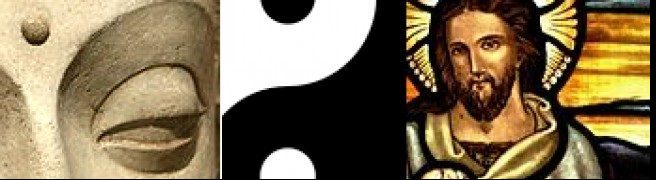
Posturing Women

It has been fifteen years since I have let a women caress my body. That hasn’t been for lack of opportunities, but after my marriage collapsed, I realized that I am constructed to engage problems that most people run from, and that the spiritual intimacy of intercourse made it impossible for my ex-wife to avoid entanglement. Her response was to use anger as a protective shield. That was disastrously painful to my spiritual intimates.

So I’ve been very careful and reticent about drawing someone else into that milieu.

Dance is the foremost expression of my entanglements, and the context in which women most often flirt with involvement. Having confronted the surrender of the Southern California sage to drought back at the turn of the millennium, I found myself repeating this flow again and again during the celebrations: standing with legs spread apart, I would position my hands over my heart, and lean to one side in a lunge, pushing energy down into the ground. The repetitions alternated from side to side, until a deep yearning would bring me to my knees. Scooping up the suffering spirits from the floor, I would raise them to the heavens, weeping.

I was greatly heartened by the identification Jamie Grace made with Persephone, but even she wanted me to lay my burdens aside. One day as I was dancing alone, I felt her looking into me as she rested against the wall, urging me to liberate myself into joy. An enormous pressure forced me to the floor, and, crawling and squirming, I tried to work my way out from under it. As I spread my awareness, I realized that the source was a spiritual membrane that encircled the globe. There was no escape except through the violence of birth.

The only woman to actually engage me in my dance of restoration was innocent of the consequences. I felt her standing in front of my as I bowed to the ground, and opened my eyes to find her lifting along with me. Surprised, I stood and put her hand over mine as I reached out into the world, thinking “Guide me.” She hesitated but did not run, so I took the world out of my heart and handed it to her. Her face broke in sorrow and fear. I tried to put it away as she fled into the arms of one of the elder ladies. I approached from behind to caress her heart, but she turned a shoulder to me. Realizing that she could not manage the burden she had accepted, I sat on the floor, cupped the pair of women in my hand, then raised my fingers and slowly rotated them to separate her from the moment that had overwhelmed her. Her features relaxed, and she settled more deeply into her comforter’s embrace.

I had a friend tell me that I lost Jamie Grace because I rejected her, but I didn’t see it that way. Every time she came into the room, my heart leapt to embrace her, and she would stop in the doorway and look away, silently begging me to come to her. Eventually we would work our way around to it, but she never let me dance with her again. Perhaps that was because I would dance first with other women, those other manifestations of Life’s thirst for healing. Perhaps she didn’t see in them what I did. The closest we came, until the last day two years ago, was when I stopped, took her hand, and placed her palm on my heart. She paused, then took it away and positioned it more directly into the flow that emanates from me there. But when I turned around to expand our expression to include the community that surrounded us, she became visibly angry. Given past experience, I was compelled to withdraw.

Without anyone to help me channel my creative energies (the second chakra being that source), I am wide open to women that seek to engage that energy in its most primitive procreative expression. I occasionally engage in visualization with those that I perceive have a deep connection to Earth: walking in the forest, and stopping on the shadowed crest of a bluff to rest with her legs over my shoulders, my head on her belly, my mind spreading into the earth through her womb. Or lying naked on the bed as she brings her yoni down on my heart, allowing its compassionate power to rise into the heavens and spread.

But the frequency with which someone breaks through and gets into me sexually has dropped steadily over the years. I am building up resistance, establishing barriers. The great sex-scene in Golem will be read by many as the fevered production of a frustrated old man, but in fact it was my way of saying good-bye to sex – of allowing it to wash over me one more time before putting it aside.

There are spiritually mature woman that I find occasionally looking in on me. Not long after writing that passage in Golem, I woke one night to some really passionate yearnings. They just wouldn’t go away, and one of my friends showed up in concern. The source of the desire wasn’t apparent, and in frustration she announced to me, “Maybe you’d better just give her what she wants.” As I blissed, I found myself floating in space billions of years ago, regarding the gathering nebular gas as it ignited and give birth to the Sun.

Are we here because it was possible for the infinite she to receive love from us?

Meeting Graziella H.

Graziella has a fashion and family blog out at Sweet Pea, Apple of My Eye. Having seen a couple of my comments out at Ramona Chrisstea’s blog, she flattered me with a request to review and critique her work. Looking at her most recent post, I found myself thinking that any mom that can get kids to participate like they do must have a really constructive relationship with them. I was also impressed by the thoughts she shared on Father’s Day.

This captures our conversation back and forth up to this point, and creates a space for us to continue to dialog:

Graziella:

I love your insightfullness! Maybe you can look over some of my posts and give me your honest, constructive opinion of them?

Brian:

Thanks for the compliment, Graziella. I’ll be happy to take a look after I have lunch!

Graziella:

Sure no problemo! Take your time!

Brian:

Lol. We’re chasing each other’s responses around.

I didn’t know whether to post this on your home page, as it brings some criticism – hopefully constructive, as you requested.

OK – first off, you have a beautiful family, and the affection and bonds are really evident. Congratulations and GOOD JOB!

I’d recommend being a little more selective with the shots, and trying to work the text around them. Your experience of the environment would also be a plus, particularly when it involves elements that are unique or personal . For example, the rusty smiley face in the last post with your children, or the horse farm in “A Little Country, a Little Rock and Roll.”

As a example, you might look at Ramona Crisstea’s blog (ramonacrisstea.com). What comes from her writing is a sense that she’s sharing a journey with others. I think that you and Ramona have different stories at this point, and so you might gain a lot without risk of becoming “me-too.”

Your post on father’s day reveals that capacity. I’d like more of that! While not everybody can look as adorable as your family does, there are a lot of fashion blogs. The ones that spark my interest are those that relate fashion to the life journey.

So, for example – how did your little boy react to having a daddy tie put on him?

Thanks for the follow. If this is helpful, let me know and I’ll follow back to see how things develop.

Graziella:

THANK YOU. And you know what, I actually found you on Ramona’s blog. I saw your comment and figured you’re the guy I need to talk to. You are so right. I have been battling with myself trying to incorporate my first love, which is writing and my intellectual side, all while hosting a fashion blog. All the advice I’ve gotten in the past was to keep it short and simple, a fashion blog is one thing and a journal is another. But I felt confined! After seeing her blog I saw how you can add pieces of your mind and your own two cents along the way without it becoming too much or boring, and without the risk of losing the reader’s attention. What a fantastic idea to incorporate more of the experience of the surroundings, that’ll be easy to do. I was also thinking maybe write under some photos as if it’s a story book (similar to hers). I love the handwriting quotes, I love expressing my unique view and beliefs of the world, but I didn’t know how to incorporate Fashion, Parenting, & Writing all in one without losing a direct focus or target audience. Like you said, my family and my babies is the one thing that separates me from all the other fashion bloggers. I’ve been told to drop the kid fashion stuff and just stick with me, but that’s ridiculous too. Why can’t I be a fashionable woman, a mother, and a writer all at once? I love my kids so much and even in my about me page it says I’m doing this all for them, and it’s true so I could never think about NOT having them involved in my blog. I only just started on Oct 1st so people and advice like you REALLY help. Thanks a million, I hope we can keep in touch and you can see if I improve as time progresses 😊

Brian:

It’s the exploration of fashion as expressive symbolism that is the key, as I value it. It’s a hard call, because ultimately it’s about selling things, but here’s an anecdote for you: After my sons saw Fast and Furious 6, I asked whether there was any character development. They stopped and thought, and said “Hey, now that you mention it, there was! Wow, that was different!” Which elicited my observation, “I guess that the producers have brought the audience along far enough that they can handle it.” So don’t worry about fitting into a box.

Graziella:

Absolutely. And I was hoping to express the same ideal in the future posts I have with my daughter where a lot of what I’m wearing has nothing to do with fashion per say at all, but with being in tune and in love with her as she serves as an inspiration to me. For example, there’s some necklaces I have that are pastel colored and have hot air balloons on them. I only bought that because of my daughter, it reminded me of her. And the story and pictures that I envision came to mind immediately as soon as I saw the necklace. Because it reminded me of her, and through her all these thoughts and motivations were born, as it always is constantly in every aspect of my life, not just fashion.

Brian:

And there’s a lot that you might be able to do in the way of relating fashion to the preparation of your children for their life transitions, or for parenting them through their joys and traumas. In other words, making it about dressing them in what they need, rather than dressing them to please us.

Not that they shouldn’t look adorable. And, being the kid that wore stripes and checks to school, not that I have much real-life experience in the matter…

An administrative detail: I may try to relocate this conversation to a new blog post (“Meeting Graziella”), just so it doesn’t distract from the topic of this post, which was really important to me.

Graziella:

Ok you do that or let me know where I can respond back because I really like your thoughts and wanted to not only thank you again but chip in and elaborate a little further and see what you think 😊

Red, Hot and Holy, Part I

In the introduction to Buddha, Deepak Chopra remarks that he had become much closer to Guatama than he was before the writing. I took that on face value, and gained great insight from the book. But when he followed up with Jesus, I could not bring myself to read the book. I mean, really, who was he to explain my avatar to me?

So it was with some trepidation that I picked up Sera Beak’s Red, Hot and Holy: A Heretic’s Love Story. Indeed, the first half of the book has manifested my concerns. Sera projects the myth of feminine victimization onto Christianity, perhaps not being aware that the very power that she celebrates in female erotic experience is that prison that men were trying to cast off through the celebration of a masculine god. Has the pendulum swung too far the other way? I would agree with that argument, but the question then remains: What kind of balance should we be seeking?

Sera divides her book into two parts, the dividing line being her relationship with a spiritual guide named Marion Woodman. The first part of the book charts her exploration of female spirituality and divine manifestations. From her academic study, she reports that Christian female mystics often reported a deep erotic element in their relationship with Christ. (I asked a nun once whether that was why they were called “Brides of Christ”, and she retorted “We don’t say that any more.”) But Sera goes further than that, identifying herself with the Hindu goddess Kali. From that relationship, Sera celebrates a feminine erotic power that goes far beyond sexuality, bringing healing to those that she pours it out upon.

I will not criticize Sera’s celebration, because in many ways I recognize that she is right. While I see the Whore of Revelation as a manifestation of primitive and destructive sexual urges that originated in ancient eras predating humanity (See the opening chapter of Conrad’s White Fang for elaboration), I understand that sex is a gift that men and women can use to bring love into the world. It cannot be suppressed, and so it must be sacralized. For that reason, there is much to honor in Sera’s writing. Just as the Virgin of Guadalupe and the Mormon angel are ancient gods that chose to survive through Christianizing themselves, so Kali attests that “red and hot” erotic experience is an expression of love for humanity.

But it is here that Sera’s myth of feminine victimization becomes a true liability. Human spiritual experience is terribly complex – look at the Hebrews as they struggle against the primitive will to destroy that is manifested in their God. But what Christ, the final manifestation of our exploration of “Good and Evil”, tells us about the journey is that it is our job to remake both earth and heaven. It isn’t all about us – spirits have their issues as well. That they are far more ancient than us means that they can justify, through the gifts they bring, the sense that we should consider it an honor to participate in their manifestation. But it is not an honor – it comes with the responsibility to push back when they express themselves in destructive ways, and so to force them to evolve.

There are incredibly beautiful and erotic passages in Revelation that inform that process. Sera, as a devotee of Elaine Pagels, does not remark upon them. I have celebrated them elsewhere, but this one deserves to be reiterated: it is the scene encountered by John as he enters the hall of the Lord:

Whenever the living creatures give glory, honor and thanks to him who sits on the throne and who lives for ever and ever, the twenty-four elders fall down before him who sits on the throne and worship him who lives for ever and ever.

The “twenty-four elders” are the mightiest and proudest angels of the realm. It is only the celebration of the one on the throne (Unconditional Love, as John tells us elsewhere) by the creatures living on Earth that forces them to lay down their crowns and submit to love’s authority. Sera should not see herself as a protégé of Kali, but as Kali’s mediator – one of a number of human filters that discipline Kali’s expression.

From my understanding of Christianity, this is the wisdom I would offer to Sera: the erotic power of women is the power to bind spirit to matter. That power is sacralized when it is used to bind love to the world around us. I see this view fortified through a throw-away line from the Book of Daniel. In predicting the reign of kings, it is said:

He will show no regard for the gods of his ancestors or for the one desired by women, nor will he regard any god, but will exalt himself above them all.

The “one desired” being Christ. The reason that female mystics in the Christian tradition have an erotic response to Christ is because it only through that intimacy that they can use the power of their wombs to bind to the world the love that was manifested in him.

As Sera reports, that does not occur only through sex, and I have often found myself in recent years beating away (in the wee hours of the morning) sexual attentions from young women by explaining to them that this is something that they can express even while just walking in nature. Sera indeed heralds this power as a critical part of saving the world from the problems that we have created in it.

I hope for further examination of this process in the second half of the book. You see, in buying the book, then, I was hoping that Sera would reveal Mystery so that I could negotiate with this hidden figure. I may have to do that in person at some point.

Reflection

In Golem, the goddess Zenica turns to her protégé Beilda and asks,

Does a man have free will if he cannot count his options?

I am coming up on a year of consistent activity at Word Press, and see that I have published 200,000 words here this year, on topics ranging over human nature, religion, politics, physics and programming. Reflecting on that experience, what comes to mind is the assessment of a friend who went spelunking in my mind one night,

There’s no bottom to you.

The problem, of course, is that there’s also no place to stand. No one will ever come to EverDeepening and think “I see where Brian’s coming from.”

And while that means that I probably don’t have much appeal, that’s all very well, because it’s for the counting of options by others that I write.

I alluded a few days back to the tyranny of convention that I have struggled against. It has a valid basis, which is observed in the psychological maturation of children. They go through phases of trust and distrust with the world, driven largely by their experience of significant trauma. Convention is a strategy that we use to protect ourselves from traumatic experiences.

Unfortunately, the sense of some anthropologists (see my summary of Jared Diamond’s perspective) is that the conventions of modern cultures foment mistrust. My own observation is that there are few adults that sustain a perspective of trust. But as a Christian, I am committed to the arrival of an era in which all of our relationships are anchored in trust.

That may appear paradoxical, in that much of my writing is to decry the untrustworthiness of those that sustain the conventions of mistrust. So what’s that all about? Am I not just adding my voice to the echo chamber?

First, I hope that it is clear that I don’t just deconstruct the logic of mistrust. I do try to describe the alternative as I experience. Yes, the world is in pain, and many of my posts are great cries from the heart, but what I find is that in expressing that pain, a lightening occurs. That lightening has two parts: the suffering spirits are relieved of their fear of being forgotten and so lost; and then God enters into the darkness through me, remaining even after I turn my attention elsewhere.

When I revealed my burdens to Diane Hamilton at a Buddhist Geeks conference, her first reaction was to declare “No one person can carry that burden.” A day later, she testified that the “Cosmic Mind” enters to assist us when we open our hearts to problems that are beyond our strength. Her reflection was in response to my testimony that its essential nature was to be “infinitely enamored of the potentiality of living things.”

So that’s one half of the coin, and I hope that I have presented that choice to my readers. I may sound crazy at times, but this is really the way that I experience life, and my experience does contain great and inexplicable gifts of beauty.

But there is a flip side to the Cosmic Mind: “inexorably destructive of selfish personalities.” That seems contradictory: if the Cosmic Mind is committed to the creation of living things (“selves”), why is it set against them? The reason is that selfishness impedes the elaboration of the potential of life. The predator would consume all its prey, and so must die if any life at all is to survive.

So for those of you that still read this, I must beg your pardon. Much of what I write here is a form of exorcism – it is a violent characterization and excommunication of ideas that contradict the formation of trust.

I had great hopes, in beginning this project last year, that it would stimulate reading of the parables that express my dreams for humanity, and so to inspire others with hope. I realize now that is unlikely. But I do feel that I have come to a much brighter place through this work. There are far fewer dark corners in my mind.