What is Evil?

This is a response to this post by Insanity Bytes on “There’s this Thing Called Biology”:


IB:

This is a terribly complex problem, but fundamentally, I see it this way: love (which is God) enters into all things, because everything desires the power that it offers (the essence of loving is to offer power). But that power comes with constraints – love will abandon us if we hurt others. So love turns everything to its purpose, which is loving. To preserve their identity, the things that love embraces will do terrible things to push it away.

You began your post with a meditation on dysfunctionality in relationships. Often, that is what I see going on: people struggling for control against the dictates of love.

Jesus taught on many occasions about this struggle: the parable of the talents, the exhortation to “die to yourselves.” He understood how difficult it was, confronting the surrender to Death in Gethsemane and pleading “take this cup away from me.” The reason it is hard is because the world is full of the pain of our attempts to assert ourselves over the needs of others. Rather than the graceful patience of accepting that “this is not my moment, but my moment will come”, we lash out in fear, seeking to make every moment our moment. Paradoxically, we only augment our suffering, because in that lashing out we drive love from us.

Jesus was confronted with the obligation to shoulder that burden, surrendering everything else to it. I don’t know if you’ve seen “The Green Mile”, but the jailed healer in the movie pleads in the end for death. He says that walking around in the world is like living with broken pieces of glass in your mind.

You allude to Christ as the solution to evil, but he is the “Prince of Peace” for a reason. Death separates our souls – we mourn the loss of those that loved us, and often celebrate the end of those that hurt us. But Death consumes us, stealing from us the memory of our lives. Jesus changed all that. He suffused Death with love, and so now has the power to say: “These two enemies need to be separated for the sake of peace.” So I don’t think that he sees anything as evil. He sees sickness that as a surgeon he has the power to heal.

Pope Francis, in reaction to his predecessors characterization of homosexuality as a sin, said “Who am I to judge?” As humans, we might recognize the existence of evil in the world – the presence of personalities so committed to themselves that they will never accept the dictates of love. But it is not our place to pass judgment on them. Jesus redeemed death when no other believed that it was possible. Until we enter fully into his mind, we should be cautious about casting people into the abyss, seeking instead to educate and heal.

I recognize your participation in that in your work. Thank-you.

Anger Got the Best of Me

I apologize to those who have been following my commentary on Roseburg. I spent most of Friday morning at work with the Kleenex box when I wasn’t holding my head in my hands. I am emotionally worn out, and have been indulging my anger when I should have been focusing my intentions toward the community that has been so deeply wounded. I pray that they find the strength to open their hearts to Christ in this moment, so that he may help them bear the burden of their sorrow.

However, Friday day ended with a message from James Kushner, who heads the Society of St. James, publisher of a number of conservative Christian magazines. His message regarding abortion echoed many of the statements I made in my post on September 30th. He pronounced the Supreme Court decision as the beginning of a long descent into moral darkness for America.

Given the use of abortion as a political issue to redirect attention from inaction on gun control and financial justice issues, I felt obligated, as the shooter in Roseburg specifically targeted Christians, to respond with following message.


Mr. Kushner:

I know that this is a contentious issue, but following the killing of Christians in Roseburg yesterday, your message touches a raw nerve.

As evidenced by Jesus’s crucifixion, laws are no substitute for compassion. I won’t prescribe policy for you – you need to follow your own conscience. But as you do not write of specific spiritual experience, I hope that these thoughts give you some sense of the complexity of the problem of abortion as I navigate it. The spiritual aspect of pregnancy is something that not every man is sensitive to.

I therefore ask your consideration:

1. A sin is a sin because it leaves wound in the soul, delaying our reunion with God.
2. I am concerned by your resort to material reductionism. Life does not begin when the sperm penetrates the ovum. It begins with the infant soul enters the womb. This can happen long before material conception, or well into the process of development, and typically ONLY THE MOTHER KNOWS.
3. Early in development, the fetus is a weak anchor for the infant spirit. The primary wound of an abortion is therefore entrapment of the infant spirit in the womb. A loving father has the capacity to rescue the unborn child. I have done this upon encountering spirits trapped for years after the procedure. They were ready to give life another chance.
4. The wound of an abortion is not less than the wound of growing up unloved or in a household ruled by fear. Rather the opposite, in my judgment. It is up to the parent(s) to negotiate with the unborn spirit the circumstances of its birth. I have participated in one such negotiation, and the consensus of the mother and child was that they should wait until a man was joined to the family. To be explicit – they agreed that the pregnancy should be terminated.

While most pregnancies abort spontaneously, I would prefer that no surgical abortion be committed. However, as a child I was confronted by the story of a young woman in my religious community who came back from Mexico in a pine box. Making abortion illegal is not going to prevent harm when out-of-wedlock pregnancy carries powerful stigma. The only lasting solution is to make our youth stronger. Those of us with the opportunity to create strong children should not judge too harshly those that grew up without that benefit – and we should certainly not force a woman to carry the burden of a weak man’s aggression. As Jesus did, we need to meet people where they are, and focus on healing and learning, rather than beating them down with the cross of their mistakes.

In entering through the “narrow gate” of self-control, I see our struggle with our sexuality as an essential part of the journey, much as is our struggle with gun violence and “freedom” (the “broad gate” that Jesus warned us against). But I doubt that any surgeon finds satisfaction in performing an abortion, unlike the youth who taunted the Christians he murdered yesterday, or the hedge fund manager who takes home a billion dollars a year. Not everything can be settled on this one issue, and abortion policy should not be offered as a cover for those committing far more egregious crimes of governmental negligence.

Brian Balke

Renewed Town

This was originally published at anewgaia.ning.com on April 24, 2013. It gives some sense of how deeply enmeshed I am in this problem:

The news of the Senate’s failure to overcome NRA resistance to extension of gun control measures has been pressing on me for the last week. It is simply absurd that we should, as a matter of public safety, require people to qualify themselves to drive cars on a regular basis, but allow unrestricted access to devices whose only purpose is to kill.

That the parents of New Town were sitting in the gallery added salt to the wound, and I have been carrying them in my heart for the last week. It was further focused on Saturday where, at a rally in support of Senator Feinstein’s work, several gun enthusiasts drove by to flip the bird at us.

One of them in particular managed to shove his ego into me, and I calmly tracked the car visually as it drove away, getting a good fix on him. Saturday night was hard – I had been put into contact with a dark pool of anger and aggression. As always, I simply embraced it, and then reached through to find the people that were cowering in its shadow. Exhaling into that psychological space, I blew the winds of change into the communities dominated by that fear.

Sunday was hard. I went out to Awakening Your Power in Santa Monica, and the frenetic energy, while well-intentioned, was attractive to the powers that I was wrestling with. I spent a fair part of the session sitting aside, calming my interior spaces. It seemed at the time that I would have been better off going to church.

It was only at the end of Resonance that I finally connected to the energies that were waiting for us. Mariane put on Snatam Kaur’s live “Ong Namo”. It starts with an acknowledgement that we were sent here to heal. The words penetrated to the core of me, and I had to hold my breath as the pain washed through me. Then I reached up and began to dance alone to the sacred words. Looking again into that space of fear, I became that larger self that sees the world from outside. Gathering the healing energy of the Divine in my left hand, I pushed it towards America, and blew the winds of peace behind it. Three times, and then I focused on New Town, and staggered under the weight of their sorrow. Gathering myself, I reached back again with my right hand, and blew love into their hearts.

On Monday night I was in the room with a teacher lying protectively on the bodies of her students as the bullets tore through them. I created a space of separation from the terror, doing my best to protect them from the spiritual sickness that had infected the gunman.

I bought Kaur’s “Essentials” on Tuesday, and have been playing its healing lyrics into the space of that sorrow for the last twenty-four hours. Last night, as I laid in bed listening again to “Ong Namo”, I found myself again in the presence of one of their mothers. “Long Time Sun” filled us with images of light. I opened my heart to the heavens, and the energy that had been prepared on Sunday settled on us. Using the pattern of her feeling, it raced outwards seeking the myriad spirits that had lost a child to violence.

Her son came to her, and held her heart in his hands. Witnessing her sorrow, he wordlessly honored her love, and resolved to organize spiritual resources to wash away the evil that had devastated her. I offered my recognition of the honor due to the mother that had nurtured such a spirit.

It hurts. It hurts yet. But there are some wounds that can only be healed by taking them into us.

Bad things happen to good people because their light is needed in the darkness. Shine brightly, spirits of New Town.

Please Help Me Understand

After reading the summary of the today’s mass shooting in Roseburg, Ore., I made the mistake of opening the comments. The posts were dominated by Second Amendment prattle – you know, “prying my gun out of my cold, dead hands.”

Not a word of sympathy.

Not an offer of support.

Does a heart beat in your chests?

Or is it that it beats too hard, that you face anxiety every day, and the only way to cauterize your fear is to go out to the gun range and shred a silhouette with automatic weapons fire?

I guess it boils down to this, for me: America’s Gun Lobby is a mechanism that we use to prove that we can’t use the threat of violence to protect ourselves from pain. It binds us to wander in fear through the valley of the shadow of death.

Wandering until we turn our faces upwards to the healing light of love.

How often does a gun clutched to a chest serve any purpose other than to prevent us from “baring our arms” to help each other? To clap shoulders in welcome? To offer and receive an embrace?

Ms. Richards Goes to Washington

While Ms. Richards’ performance yesterday was inspiring, I would caution against any belief that the ugliness of the tactics used by her accusers is a reflection of desperation. The statistics displayed by Chaffetz, despite the context of lies in which they were wrapped, reveal the success of the partisans in the anti-abortion crusade. The reason that Planned Parenthood is offering more abortions is because in many parts of the country, states have all but shut down the provision of abortions by others. They believe that the goal they have pursued since Roe v. Wade is within reach. Many of them arose out of states in which this moral issue has been tied to electoral funding, not only for religious reasons (applied somewhat hypocritically, as evidenced by yesterday’s execution in Georgia), but also because the moral fever protects Republican fundraisers from scrutiny that would reveal the ties between their misogyny and the anti-tax policies that have shifted so much wealth from the Republican middle-class to the ultra-rich.
 
These men know who signs the checks, and they will continue with this ugly parade of hearings until the Christian rhetoric is confronted by the truth that Jesus died to demonstrate that the use of government to enforce morality leads to enormous injustice that is painful to God the Father. If you want women to not have unplanned pregnancies, gentlemen, DO MORE TO LOVE THEM.

America Through the Papal Lens

We Americans might be expected, as members of the most powerful nation on Earth, to be used to thinking that every political issue ultimately will be a domestic issue. I expect, upon reading the analysis of the Pope’s message, to be confronted with arguments regarding the merit of his pronouncements regarding the death penalty, immigration, climate change, economic justice and the primacy of statesmanship over armed might. I myself will offer analysis on immigration in a future post.

But is that how we should interpret the lesson on political civics offered to us by Pope Francis in his oration before the Joint Meeting of Congress? For that is indeed what it was: a reminder that politics is an act of service to the people, and that the measure of political success is not the towering monuments of wealth, but the hope and opportunity served to the most desperate of our citizens. Did Francis attempt to resolve the delicate balance between, on one hand, the creation and maintenance of infrastructure that generates opportunity, and, on the other hand, the basic needs that sustain individual initiative? No, he did not, but long experience has shown that a resolution is impossible, and so could not have been his goal.

His goal was far simpler: to remind the United States how important it is as an example to the world. To this end, he raised to our attention four great personalities: Lincoln, MLK Jr, Dorothy Day and Thomas Merton. He did not dwell on their accomplishments, only offering the briefest analysis of their virtues before plunging into an elaboration of how those virtues relate to the challenges facing the world today.

Many will not see it that way. Many will see his pronouncements on immigration, for example, as meddling in domestic politics. But from his perspective, the problem is a global problem. The displaced refugee does not appear only as an illegal within our borders, but on every inhabited continent. If America cannot sustain the compassion to see them as human beings in need of support, then what nation can?

And so with his civics lesson: our tolerance of aggression in American politics is to authorize tyrannical pronouncements by despots all around the globe. That we tend to use economics to elaborate Clauswitz’s dictum (“War is the continuation of politics by other means”) cannot be expected to register on those without our economic sophistication. Tyrants will use the tools available to them when hostility is sparked by rhetoric, and often their tool of choice will be violence. Our political discourse should be civil, and thus set a better example for the rest of the world.

So I stand in awe of the presentation today. The negative was left implicit. Instead, Pope Francis offered us a paean to American excellence, and exhorted us to heed our better angels when crafting policy.

I do wish that Pope Francis would have extended a practical hand to the politicians that resist collaborative policy making. Early in his speech, he did offer that his goal was to reach not just those present, but all those they represent. The tenderness and humility of this man are a manifestation of divine authority that has changed many hearts over the course of human history. To have indicated some of the many Catholic initiatives intended to address our shared difficulties might have – as did Kennedy’s exhortation to reach the moon – provided an impetus to those that fear the problems are too large, and nothing can be done.

And I know that as an observer of reconciliation in Argentina, Pope Francis must have many profound personal stories to share regarding the political power of love, and the healing that it brings. While his personal example of charity and compassion is profound, those engaged in the cut and thrust of politics may see indulgence in such demonstrations. For those struggling with that resistance, personal testimony of political reconciliation might have been beneficial.

Islam and Democracy

When others criticize religion, I tend to find that the charges they level are often addressed directly in scripture itself.

1100 years before the American constitution was written, the Muslims of the Arabian peninsula, under the guidance of the prophet Mohammed, adopted a process for selecting the leader of the Ummah, or holy community. It was that he should be chosen, not by inheritance or coercive might, but by popular acclaim.

That process was upended by political leaders centered in Baghdad, who had claimed Muslim identity in order to pull the community in Mecca into their struggle for control of the caliphate. When the leaders in Mecca attempted to expose their hypocrisy, they were murdered ruthlessly.

There was a period that allowed me to attend Friday teachings at the Conejo Valley Islamic Center, and the Imam there, addressing the prejudice facing Muslims in the world today, simply observed that if Muslims followed the tenets of Islam, such prejudice would be immaterial. His exhortation was for a return to the teachings of Mohammed.

So to Ben Carson and others, I would suggest that if they returned to the history books, they would recognize in the early years of Islam a democratic struggle that was mirrored in the formation of our nation. And maybe find cause to say that they would be pleased to be led by a man that manifested Islamic tenets both in his private and public life.

Freedom from Government through the Governance of Love

In explaining the necessity of God in Tragic Sense of Life, the Jesuit philosopher Miguel de Unamuno asserts that it arises when every man, naturally desiring to control the world, confronts the inevitability of death. As the latter treads on our heels, even the most powerful are pressed to the conclusion that the only way to live forever is to embrace a God that loves us enough to grant us life.

Atheists are inclined by this logic to conclude that faith is a delusion. Marx certainly saw it that way, declaring that “religion is the opium of the masses.” But the underlying pressure is evidenced in the pronouncements of some technologists, among them the man I described yesterday who saw our digital sensors, networks and software as empowering us to build God. Others are more humble. At the ACM fiftieth anniversary symposium in 1997, Nathan Myhrvold, then chief architect at Microsoft, envisioned (somewhat playfully) a future in which we could escape death by creating digital simulations of our brains. The video skit included Bill Gates rubbing his chin as he thoughtfully considered the reduction in Microsoft’s benefits budget.

But if delusion is pathetic, oftentimes in the powerful avoidance is grotesque. We have Vladimir Putin, assassin of Russian patriots, proclaiming that Jesus will find no fault with him on Judgment Day. Or the effrontery of Donald Trump who, protected by his army of lawyers, knows that so long as he asserts righteousness, no one has the means to contradict his claims of competency and benevolence. Thus he continues to assert – in contradiction of the actual birth certificate – that his lawyers have compelling evidence to reveal regarding President Obama’s citizenship. Both of these men suffer from the same affliction, the tendency of our bodies to respond to successful acts of aggression by manufacturing more and more testosterone, the chemical driver for aggression. This is a positive feedback loop that was broken only by death in the cases of Hitler, Franco, Mao, Stalin, Kim Yung Un and so many other tyrants. In the prelude, millions of people were sacrificed on the altars of their psychological invincibility.

This dynamic is writ small in the lives of many businesses, congregations and families. People addicted to the rush of adrenaline and the power of testosterone manufacture experiences that stimulate their production. This is why it is said “absolute power corrupts absolutely.” The desire for power arises from the biological thrill of success, and to continue to receive that thrill, the addict must continue to risk his power in ever greater contests. In the heat of passion, the suffering visited upon others is ignored.

There are three antidotes to this dynamic. The first is popular rebellion. Paradoxically, this is the very force that pushed Putin and Trump to prominence. At a stump speech yesterday, Trump opened the floor to questions, and the first person to the microphone began to rant hatefully about President Obama and an imagined domestic Muslim threat. Trump did not defuse the situation, instead responding “We need to hear this question!” But often rebellion is merely another manifestation of the drive to power. Unless tempered, it rages out of control, as happened in the Jacobian tyranny following the French Revolution.

The second antidote is reason. Reason builds discipline that forces us to reconcile our actions with their consequences, thereby disciplining our aggression with objective evidence of failure. The tension between reason and will is not just moral, however: heightened levels of adrenaline actually degrade the higher thinking centers of the brain. This creates a terribly contradictory dynamic, perhaps manifesting itself in the fact that most academics do their greatest work in their youth. While testosterone serves the reasoning mind in creating the thirst to conquer and claim ideas, as the successful mind expands, so do levels of testosterone and adrenaline, which destroys the power of reason. In that context, the methods used to sustain power are not as brutal as those used by the social tyrant, but have their own unique form of cruelty, and leave lasting scars on the psyche. Isaac Newton, cheated of credit for a scientific insight by his predecessor as head of the Royal Academy of Sciences, had the satisfaction of burning the man’s portrait. Most victims of intellectual tyranny are consigned to obscurity.

It is natural for supporters to gather around the social or intellectual tyrant during his rise to power. Claiming benevolent intention is a great way of rallying support from the oppressed. Unfortunately, this dictum holds: A man will change his beliefs before he will change his behavior. When that behavior is organized around aggression, enemies must be created when there are none left at hand. All tyrants eventually turn on their lieutenants, often using hallucinatory rhetoric to justify their actions.

A peer once offered to me that all the greatest scientists were lovers of humanity. This brings us to the third antidote: love. This arrives upon us through many pathways. It can be through sex and maternity. It can be when an infant first grasps our forefinger. It can be through service to those in want. In those moments a bond is established, a linkage that makes palpable the suffering we visit upon others. That can be rationalized in material terms: tears on a beloved face or cries of shame are evidence of our failure. That breaks the vicious cycle of success and aggression.

But there is another aspect that goes beyond negative feedback. Aggression stimulates the loins and the mind, but barely touches the heart. Exchanging love with someone just feels good. It opens us up to a world of experience that can be touched in no other way. Ultimately, its rewards are far greater because no one that loves themselves objects to being loved. They do not turn on their friends for satisfaction, because their friends offer them satisfaction every day.

Democracy attempts to combat the urge to power by institutionalizing rebellion. In America, the two Presidents that were awarded most authority were George Washington, who gracefully surrendered power after two terms of service following universal acclamation by the Electoral College, and FDR, who literally worked himself to death through four terms in office. Both those men were governed by a sense of duty and love for their country, a commitment affirmed by the popular voice that is expressed in elections. At the end of the 20th century, those that seek the freedom to act always as they please (the ultimate manifestation of power) responded to electoral constraint by attacking our faith in government. Driven by testosterone and thus unable to govern themselves, they have invested huge amounts of money creating personalities such as Newt Gingrich, Rush Limbaugh and Bill O’Reilly. As visible in the Oklahoma City bombing and the events surrounding the Republican nominating process, the end result has been to stimulate the resort to violence by others.

Thus we have the wisdom of Jesus: “Render unto Caesar those things that are Caesar’s.” We have the promise of Jeremiah: “For I will write my law on their hearts, and no man will be told ‘Come learn about my God’, because all will know me.” And we have Christ’s summation of the Jewish experience with law (the rule of reason) and governmental control: Love God and your neighbor.

It is through self-regulation that we discover truth and peace[NIV Matt. 7:13-14]:

Enter through the narrow gate. For wide is the gate and broad is the road that leads to destruction, and many enter through it. But small is the gate and narrow the road that leads to life, and only a few find it.

But what other government would we choose, except the governance of our hearts? And to what other authority would be choose to submit, other than the authority of compassion in another? Why do we delude ourselves that there is any other way?
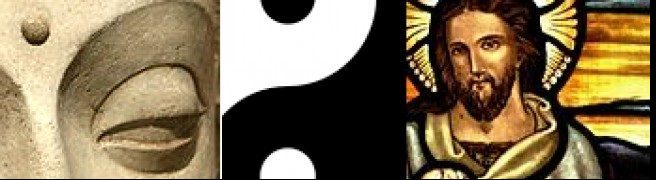
Peek-a-boo with the Prince of Peace

When the disciples received the Holy Spirit, they were at the end of their rope. There was no resistance to its presence, because they had surrendered their lives already. There was no place to go but up.

As the repository of truth, the Holy Spririt opens us into understanding that may make our prior lives seem shallow and vain. That was certainly true for the disciples, but it was an experience that they received joyfully for suffering had been their prior occupation. To have revealed the purpose of that struggle was to discover the extent of their own strength.

To understand the mechanisms whereby Christ arranged this transformation, we have to understand the nature of Death. Not “death”, which is the end of our physical existence, but “death” as revealed in Revelation: one of the six forms of selfishness that-  approximately three billion years ago – were released upon the world when the seals of the scroll were broken.

Death is not the destroyer, but a divider. When we die, we pass through a door that human love can rarely penetrate. In moments of intense psychic focus – when our lives are threatened, for example – messages may pierce the veil, but the grieving that survivors suffer reflects the loss of a relationship with the departed soul. Death is the personality that manages that barrier.

Sometimes there is value in separation. It allows us to shed associations that are harmful to us. As suggested in the parables of Hades and the Inferno, that process may continue even after dying, as we surrender to Death the destructive energies we accumulated during our lives. Consider the pride of the pathetic Sisyphus, mindlessly pushing a rock up against the pressure of Death’s will, like a galley slave pulling an oar. This is why the evil fear to die – they know intuitively that their spirits will be broken and repurposed in the afterlife.

So why did Christ struggle for us against Death? Because Death serves no purpose but the spread of its influence. It is a greedy spirit, and loathes to surrender its captives. Indeed, it held sway in the world for a long, long time. The drives of Darwinian evolution are simply an impotent exploration of biological strategies for avoiding Death’s grasp.

This is why the innocent Adam was told “Do not eat of the fruit of the tree [of the Knowledge of Good and Evil], for surely you will die.” The pull of death on our physiology is manifested by a deep winding of its influence within our DNA. When God “breathed life” into Adam, it was to dispel that presence. When the fruit was eaten, we opened our hearts once again to death.

We are nearing the end of the long road of pain and suffering that was set before us. The key is to embrace the Prince of Peace. Looking at the degree to which human history is defined by our wars, we need to step back and consider why that has been so difficult.

The short answer is because it is like dying.

You see, when Jesus took up his cross, he did not conquer death. He confronted it, let it work its will on him, and suffused it with love. Jesus tamed death, chaining its hunger to the service of love. There are things in the world that do not work well together. The tension between Hitler and Stalin is an illustration, as is the tension between freedom and government. To prevent those tensions from flaring into destruction, sometimes things need to be separated. They need to “go to their rooms,” not as punishment, but to give them time to relax and envision a resolution of their differences.

This is the authority that Christ gained on the cross: To turn the talents of Death to the purposes of healing and creation.

The challenge that we must confront is our investment in the psychological practices of death avoidance. For many of us, they define our existence. We create conflict around ourselves as a means of protecting ourselves from loss of life. In a sense, the strong still eat the weak, it’s just that they do it indirectly, using the police to impose the Sisyphean burden on our underclasses. Having acquired that power, we console ourselves with the construction of a facade of elegance and civility, a facade now being torn away most notably by Donald Trump.

So to accept the Prince of Peace is to become aware of that social vampirism. It is to become aware that there are others that need his attention more. It is to become aware that we are the cause of our own pain.

That is why those that have the power to elaborate it instead run from the Truth that transforms the world.

Pity poor Christ in his suffering for the oppressed. Calling out with love to the powerful is the only method allowed to him.

The Final Surrender

With others, I am repelled by the “violent apocalypse” model of the Second Coming. It’s propagated by addictive personalities that enjoy the adrenaline rush that comes with fear.

But what would you expect from a religion that’s all about men’s problems?

The  three books I have published all attempt to redirect that misguided intention. I think that there’s too much padding, though.

Let’s try this as a means of characterizing Christ’s victory:

“We” (the protective group) has victory. “I” (the creative self) has victory. They stop struggling long enough to surrender to love – which was never fighting with them in the first place.