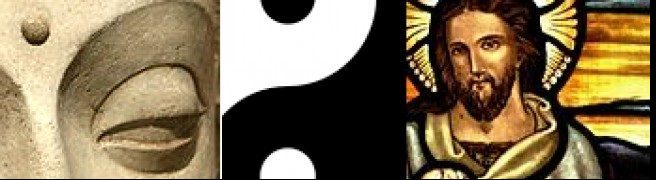
Worship

The ancient Romans insisted that the rites of the gods be honored, on pain of death. The concern was rooted in practical experience of the consequences of pissing them off. Why would failure to practice the rites make so much difference to the pantheon?

A clue is found in the Greek spiritual practice that has been revived as Hellenismos. The Greeks believed that the mystical progression began with simple human heroism. It continued after the hero’s death when grateful people gathered at shrines to celebrate his (or her) accomplishments. If the personality of the hero inspired further heroic achievements, justifiably the celebrations would increase. The accumulated psychic energy would eventually make the hero a daimon. Adherents might then invoke to power of the daimon in times of need. If the daimon responded effectively, the continued outpouring of gratitude might eventually elevate the personality to Olympian stature.

So worship is important to the gods because, as suggested in The Matrix trilogy, human beings are psychic batteries of a sort. Our attention is part of a political partnership.

As cultures evolved from local to regional to continental extent, this process became politicized. The Roman emperors spoke of becoming gods in their own right. King Louis XIII of France had himself crowned “The Sun King.” The Capital dome in Washington D.C. is decorated with a mural celebrating “The Apotheosis of Washington”. And the sanctification of Ronald Reagan is evidenced by the evolution of the exhibits at his Presidential Library. Given hundreds of millions of adherents, power similar to a Hercules might be accumulated within a decade or so, where before it might have taken generations.

Cynicism about the process is evident in certain religious controversies. Despite the similarities shared by Christian and Buddhist sages, some Christian theologians complain that the avatars of compassion and loving kindness celebrated in Tantra are actually “demons”. I have some challenged in attempting to reconcile that accusation with Christian celebration of saints and angels. The characteristics of the Tantric and Saintly personalities are almost identical.

Despite all of this commonality, I am going to assert that the worship Jesus offered to the Apostles is fundamentally different. I believe that our own selfish aspirations to saintliness blind us to this understanding: we have a vested interest in subscribing to practices that increase our personal power.

For Jesus did not command us to worship. He admonished us:

You shall love the Lord you God with all your heart, and with all your soul, and with all your mind. This is the great and foremost commandment.

If worship is to prop something up to make is stronger, then loving is not worship, for the goal of love is to bring something closer. In a kind of virtuous circle, our loving calls to us the perfect love of God. We can attempt to corrupt this love, but in doing so only succeed in driving it away. It stands just aside from us, until we relent in our harshness, and allow it to come again into service to us.

Why is love so efficacious? Because it holds power in readiness for others. It does not spray out in gaudy shows, but preserves its energies until it finds spirits calling out in genuine need.

Amy Grant renders this so beautifully in Better than a Hallelujah:

We pour out our miseries
God just hears a melody
Beautiful, the mess we are
The honest cries of breaking hearts
Are better than a Hallelujah

The desire of Unconditional Love is not to be served, but rather to be of service.

What about the other gods? Well, in seeking after worship they are in fact seeking after love from their adherents. If that love is given conditionally, the deity is at risk of losing their elevated status. Of course, the only way to secure unconditional love is to love reciprocally, because if the deity loves conditionally, the adherent will eventually realize that they’re getting the raw end of the deal. So the most powerful gods, in their relationship with their adherents, are eventually suffused with love, and ultimately are subsumed by it.

This is the truth articulated by Paul in Colossians 1:17:

He is before all things, and in Him all things hold together.

And should we want it any other way?

Suffering Children

A former football player held court after yoga yesterday morning, explaining his role as a private coach. He is a huge name, so strong in the arms that the instructor warned him against straining his leg muscles in the binding poses. “It’s not just the athletics: I try to be an advocate for the athletes.”

“I suppose that’s only for boys?” asked one of the mothers present.

“Well, I used to think that, but I am opening the program to girls. I realize that they need that advocacy, too. They need a strong father figure to help them believe in themselves.”

Down in Watts yesterday, surrounded by people that came barely to my solar plexus, those words echoed dissonantly in my mind.

I have sought opportunities to share the energies that I possess with the youth of my community. I gave a service at church one Sunday a couple of years ago, and the next week one of the children sought me out and sat on the floor next to me. His mother, a firm atheist, gave me an irritated look and dragged him back to his seat.

Or a more extreme example from seven years ago: I had taken my sons out on Easter to the mega-church down the freeway, pastored by a charismatic speaker. As I walked up the steps into the stadium seating, a young lady gave her heart to me. After the service, the boys enthused about the charismatic pastor, and urged me to fill out an information card. The next weekend, I was woken early on Saturday morning by two parents. The wife asked, “Excuse me, who is this?” before her husband demanded “We want to know where our daughter is.” He carried on until she broke in “He doesn’t know, dear.”

I still have my sons, but – whether they understand it as such or not – they have already learned to draw energy form the eternal source. They really don’t need me any more. So when I read in Unite 4 Good about the Red Eye program down in LA, I was open to the calling.

The prospect down on 114 Street was daunting. It is lined by split-level apartments, perhaps four hundred square feet on each floor, windows and doors heavily barred. A long block breaks the progress of the street about three blocks down from Compton. The program address was the recreation center. Across the street, a group of middle-schoolers were gathered around adults in azure t-shirts. The basketball court inside was occupied by high-schoolers and adults. I asked around about the Red Eye program, but those loitering at the entrance claimed no knowledge of it.

There was one other Caucasian present, a young woman hiding in the hallway. Next to her, a dark-skinned girl, almost her height, regarded me with reluctance. I struck up a conversation, discovering that we were all there for the same reason. When I asked for her name, the girl said “I don’t have one,” but then relented when I just shrugged and turned my attentions elsewhere, and offered “Dazzle.” We admired the antics of the four-year-old on his four-wheeled scooter (the kind that moves when the front wheel is turned).

Brenda, the young woman, identified the organizer Justin when he pulled up, and we all congregated in the gym. I asked about registration, and was pointed at Edna, who advised me that there was no agenda – our role was just to “pour loving” on the kids. I spent most of the next two hours on the basketball court, watching the older elementary-aged boys heave up shots from well outside their range, and trying to keep the bricks and outright air-balls from beaning the younger ones.

With some surprise, I did discover that my efforts in hot yoga were paying off: the bone spurs in my right elbow have subsided. I’m able to snap at the top of my release again. The first ten minutes on the floor were pretty embarrassing, though. My muscle balance is grossly different than when I last picked up a ball seven years ago, and my only form of exercise involves holding isometric poses. But things began to come back, and the boys were admiring, asking me, in order, whether I could dunk, how old I was, and how tall I was.

I was by far the oldest person on the floor. Most of the other volunteers were twenty-somethings.

The real connections began to develop as the adults and kids trickled out to the playground. I started giving advice to some of the kids regarding their shot mechanics. My focus was to get them to come in a little closer and get their muscles to work smoothly together. As the arc of their shots increased, the ball began to fall more softly on the rim, and bounce its way in instead of out. When I enthused “Look at that! That’s how it’s supposed to work!”, they opened up to me, one by one, and I’d feel this surge of energy move into them. They took it all in stride, just going back to their practice with extra enthusiasm.

Edna finally broke camp in the gym and brought everybody together up front for the walk to the store, along the refuse-lined sidewalk between the apartments. It was a local market, full of alcohol and snack foods. I was worried that I didn’t have any cash, but learned that Justin was covering the charge for snacks and drinks. A number of high-school boys and hookers joined the parade, but Justin didn’t mind. He even waved across the street to an older man in a wheel-chair, and sent his friend inside to get a drink for him.

As we stood in line, I noticed Dazzle braiding a friend’s corn rows into a pony-tail. She felt me looking at her, and glared back. I stepped closer and sympathized, “I know it’s hard to open our hearts, but we have to keep trying.” She got this vulnerable look on her face, and went back to her work.

I chugged down a bottle of 24-oz Gatorade, then squatted with my heels on the curb to meditate in support of the good will that was gathered. My little friend on the scooter stopped in front of me and shouted “You’re sleeping!” I opened my eyes to find him with a finger pointed accusingly at me.

“No. I’m meditating.”

“What are you meditating on?” Wow, this kid didn’t miss a beat.

“About good people.”

“Good people?” His tone suggested that it wasn’t a concept that he encountered very often.

“Yeah. Everybody here is a good person. I’m meditating to support that.”

Either satisfied or mystified, he walked off. I turned around to discover a three-year-old sucking the frosting out of his mini-bite cookies and tossing the crackers into the dirt. I advised: “Oh, you should eat the cracker, or we should throw them away. If we leave them there, animals will come, like rats.”

“I don’t want to talk to you.”

“I’m sorry, I can’t help it. It’s just the way the world is.”

He started chewing the cookie in his hand. His older sibling came by, mouth full of metal caps on his teeth. The little guy admitted, “My Mom has rats in her house.”

On the way back to the rec center, I saw their future on the sidewalk. A cluster of five thirty-year olds was gathered around a dice roll. The two contestants danced about with money in their fists, the roller throwing down or picking up bills after each toss. Energy bled from the scene and dissipated into the harsh light reflecting off the pale blue stucco.

Most of the volunteers and kids didn’t go back into the gym. I found a cluster of boys on the bleachers, and spent another fifteen minutes with them. Getting really hungry, I found Edna out front and said that I had to leave. She remarked that it looked like I had fun, and, not wanting to ask whether that was the point, I shared that it was good to pick up a basketball again, and talked about my bone spurs.

But as I drove away, I reflected that I had been allowed by the children to pour water into their thirsty spirits, and recognized what a blessing that had been to me.

Who Is in Charge Here?

A common motif in corporate management is the analogy of competition as a sport. A certain visceral energy comes into a community of people when they stand over their fallen enemies.

One of the challenges employers have in managing me is that I recognize the fundamental nature of that experience: the energy comes from feasting on the spirits of our foes. It’s literally vampirism. It’s wrong, and I refuse to participate.

A survey of the lives of prominent business and political leaders reveals a trend – not universal, but powerful: many of them crave attention. They are needy. They are unable to bring energy from within, and so must consume that produced by others. This creates conditions in which the culture of our organizations is not controlled by the needs of its constituency (workers and customers), but by the personal needs of its psychologically neediest members.

This is not an abstract problem. It severely damaged America during the terms of Presidents 42 and 43: Clinton hungered for the attention of women, and his indiscretion led to wasteful impeachment proceedings. W hungered for a father, and his need to outdo Bush Sr. in the Gulf lead to rash decision-making that cost the nation trillions of dollars and tens of thousands of ruined lives.

Why does that happen? Why do we allow these men (in many cases, empower them) to run our lives?

This is, in fact, the central conundrum of the Bible, starting with Cain and ending with Christ. Some women think of Christianity as a “men’s club”, but I don’t see it as something to be proud of. The Bible focuses on men because our weakness is the greatest problem to success in the mission we have been given.

When John is invited into heaven (Revelation 4), he encounters twenty-four “elders” celebrating the presence of unconditional love in their midst. Twelve are identified as the patron angels of Israel; the other twelve are encountered in the tiara of the holy mother who comes to bring the savior to humanity. So in heaven, there is a balance between the masculine and feminine angels.

Why don’t we feel the presence of those angels? The intimacy of their involvement with the doings of Earth is described so beautifully by John [Rev. 4:9-10] (emphasis added):

And when the living creatures give glory and honor and thanks to Him who sits on the throne, to Him who lives forever and ever, the twenty-four elders will fall down before Him who sits on the throne, and will worship Him who lives forever and ever

In reading this, I have the image of a great welling up from all the living things of the Earth: the animals, plants, fungus, even the bacteria. This welling up travels up through the souls of the elders where it literally forces them to their knees in praise.

But after Eden, humanity was placed under quarantine. We are not allowed to participate in this upwelling, for as it says [Gen 3.24]:

He drove out the man, and at the east of the garden of Eden he placed the cherubim and a flaming sword that turned every way to guard the way to the tree of life.

Being cut off in this way, our experience of life is dominated by the material world, and predominantly by the fear of death. When wielding fear to control others, men, whose natural participation with the creation of life is so distant, have less compunction than women. Too often, those that cherish life submit to the terrorism of aggressive men.

What Jesus demonstrated to us was the power that is available to us when we relinquish fear. It is to enter again into that upwelling, and with disciplined minds not only not to pollute it, but moreso to help to channel it. In so doing, we are embraced and sustained by it, just as Jesus was. It is this channeling, and not physical control, that was meant in Genesis 1:28:

God blessed them and said to them, “Be fruitful and increase in number; fill the earth and subdue it. Rule over the fish in the sea and the birds in the sky and over every living creature that moves on the ground.”

In that divine relationship, the power of love sweeps all else before it. I once had an employer tell me that I was a “free spirit.” Not at all: I am constrained to avoid the use of fear, which in this world is to surrender power over people. But in surrendering that power, I have submitted to the purposes of a power that overwhelms all others, and so I cannot be turned by fear as others are turned.

Enter through the narrow gate; for the gate is wide and the way is broad that leads to destruction, and there are many who enter through it. For the gate is small and the way is narrow that leads to life, and there are few who find it. [Matt. 7:13-14]

Who is to Blame?

When I began listening to praise music five years ago, my most powerful reactions were to two types of songs: those that express gratitude for the cross, and those that describe the patient suffering of a parent confronted with the loss of a child.

There is no experience in life that more powerfully contradicts the premise of a loving God than to watch an innocent child succumb to cancer. The experience of the Amish families that lost five daughters to a gunman in 2006 is far more shocking, but the faithful can rationalize it as the work of an external evil working through fallen humanity. The silent killer that consumes from within is a horrifically intimate violation.

The pain of that struggle is captured powerfully by Mark Schultz in “He’s My Son”. It takes real strength to face this loss without anger.

So why does it happen? Why does God allow this, and so many other bad things, to happen to good people?

The depth of our outrage is sharpened in the West, where so many religious traditions teach us that we have only one life to get it right. I’ve touched on this before in On Dying. When the nature of the soul is revealed, it will be obvious that reincarnation occurs, and that – as our Eastern siblings have been telling us for so long – we have many chances to free ourselves to spend an eternity in the divine embrace.

But even so, why should good people have to suffer?

It might help to back away and look at a case that is not so terrible. I have a friend, a great strong man, that cross-dresses. He has married and had children, but is overcome with the need to wear women’s clothing. He shared with me one particular experience: he served in the navy on an aircraft carrier. They were at port, and on this occasion all men had been called to their quarters in preparation to return to sea. My friend grabbed a dress, changed, and went out on the flight deck. When he was spotted, an all hands was issued. Changing back into his uniform, he participated in an exhaustive search of the vessel for a female stow-away.

When I heard this story, I had an apprehension of a father holding his daughter while their ocean liner sank. He had promised to keep her safe, and had failed her. She was afraid to go out into the world again, and so was journeying with him in this life to overcome her fear. That was, in part, why he had joined the Navy.

When I listen to Mark’s song, I have similar visions. In the child is a spirit that has never received love, and suffered terribly in a past life as an adult. They need some strength to face that journey again, some reason to hope. So they come into the world to have some time with parents that love them. They push all their pain into the disease that consumes them, and leave it behind when they die, filled with the love that their parents have poured into them.

Yes, it is a heart-breaking work for parents to perform, but so beautiful and full of purpose.

The story of the Amish children has a similar sense to it. The girls were trapped in the schoolroom with a deeply disturbed man. When he determined to kill them, the eldest girl stepped forward to say (I paraphrase) “I am oldest. Leave these others alone and kill me.” In that moment, she conquered his evil. And during the preparation of the bodies for burial, the elder watched the women at work and counseled “We must not think evil of this man.” In fact, the community gathered resources to sustain his family.

In The Soul Comes First, I interpret the Bible from the perspective that good people are medicine used by God to heal the wound of selfishness. What these experiences have given me to believe is this: bad things happen to good people because their light is needed in the darkness. While Jesus confronted the greatest darkness – the evil of systems of justice that destroy the people that come to bring healing to the world – all good people carry that cross to a greater or lesser degree. We bring light, and the world that suffers in darkness attempts to steal it from us.

So, please, if you can: when confronted with evil, or pain, don’t collapse into resentment against God. Just open your heart wider, and let his love brush back the pain of the world around you. Maybe you won’t change the people that prey upon you, or heal the diseases of those that you love. But you will give hope to others that suffer as you do, and leave them with the strength to do better next time.

Call Me Crazy

In The Soul Comes First, I suggest that the only way to make sense of the Bible is to think of this reality as a place of healing for wounded souls. That was something that we were originally meant to do as innocents in Eden. Given our tendency to wonder “Why?” (which is really what got Eve into trouble), it was perhaps unavoidable that we would wander from that role, and end up serving that purpose only after graduating from the school of hard knocks.

In science, the discipline that most directly deals with these issues is psychiatry. From Wikipedia, we have the definition “Psychiatry is the medical specialty devoted to the study, diagnosis, treatment, and prevention of mental disorders.” It has two sub-disciplines: psychiatric medicine and psychotherapy.

I am not going to survey the complex social issues of modern psychiatric practice. Our friend at Taking the Mask Off surveys many of the disconnects between drug-based therapy under DSM guidelines and actual human needs. What I can offer, however, is an attempt to trace the source of the disconnect.

The root is in the mechanistic model of the mind. This is the idea that our minds – the seat of our intelligence and consciousness – can be explained fully through study of the brain. This is based upon the success of neurophysiologists in explaining the behavior of simple organisms (such as worms), and the correlation between damage to human brains and loss of function.

In On Intelligence, Jeff Hawkins of the Redwood Neuroscience Institute explored the challenges of explaining adaptive behavior using the mechanistic model of the brain. The Institute has put together some simple paper-doll cutting illustrations of these methods. However, my assessment was that the scaling was simply not going to work. When Jeff came to speak at my place of employment in 2005, I offered to him “Maybe the brain is a time-travel device, and you’re focusing on how it works looking into the past.” That thesis is the only way I have of explaining my personal experiences of precognition.

As for the correlation between brain damage and loss of function: correlation does not imply causation. If our creative intelligence and consciousness resides in a soul, and the brain is the interface to that soul, then damage to the brain will result in loss of function because the exchange of information with the soul is cut off.

The “fuzzy” side of psychiatry was recognized by many of its original practitioners (including Jung), and we can still find recent testimony on the matter. A great example is A General Theory of Love, by Lewis, et al. In that work, the therapeutic process is summarized as follows: the therapist walks the patient up to the moment of their trauma, and suggests “No, go this way instead.” As they testify, the two most important factors in therapeutic success are the moral clarity and courage of the therapist. If either fail, then the therapist becomes trapped in the patient’s trauma.

The connection to the problems described in The Soul Comes First can be found in F. Scott Peck’s Glimpses of the Devil and Father Amorth’s An Exorcist Tells His Tale.

Peck was a world-renowned theorist of applied morality and a practicing therapist. He was conned by a priest into accepting two patients with severe psychological disorders. As the relationship developed, Peck was driven inescapably to the conclusion that the disorders were caused by possession. The final course of treatment, in both cases, was exorcism.

Father Amorth was a Catholic exorcist who was alarmed that the Church has accepted the psychiatric models of personality disorders, and has therefore left its flock unprepared to manage spiritual infestation. He documents a lifetime of experiences that defy explanation using modern theories of physics.

Psychiatric medication is the alternative for those seeking to avoid such confrontations. It isolates and shuts down the neural pathways that are triggered by defective souls (whether damaged or infested) to generate antisocial and self-destructive behaviors. The problem is that it doesn’t address the root cause: the defective souls survive, and simply go about seeking strength to exercise their will through other pathways.

In my own experience, I have found that faith in Divine Love allows me to navigate waters that terrify professionals. I find that most destructive personalities are simply doing what was done to them in the hope of discovering someone who can show them how to survive their experience. What I share with them is my experience in opening my heart to the source of my pain until they are bathed in the divine source.

In my New Year’s message, I said that we find compassion, creativity and courage when we share the divine presence with each other. I believe that this addresses the limitations described by Lewis: the practitioner is not responsible for overcoming the evil experienced by the patient, but only for making the power of healing available to them. Both Amorth’s and Peck’s experience substantiate this truth.

Whose Free Will Is It Anyways?

“Let’s say that you are on a camping trip with your son, and he suffers a snake bite. What if there was a source of information, freely available everywhere in the world that could tell you how to prepare the leaves on that bush to make an antidote. Would you accept that information?”

“Nobody tells me what to do!”

That was a real conversation on a Boy Scout outing. I didn’t say that there was a connection between receiving the gifts of love and choices that we make elsewhere in our lives, but that was assumed by the listener. Not that I didn’t make different choices: I was the father that stayed behind on that trip when the other dads went off to gamble, or to the topless bar.

As a physicist, the whole proposition of free will makes no sense to me. Given the initial conditions of the universe, things will unfold according to the laws of nature. Given that I believe that the soul can be encompassed by our theories of nature, there doesn’t seem to be any room left for choice at all. We are simply machines moving through time. Choice is an illusion.

But we have choices forced upon us all the time, don’t we? When a vulnerable person turns to us for security in exchange for sex, we have to decide whether to be faithful to our spouse. When a problem in a contract threatens our company, we have to decide whether to miss coaching the youth soccer playoff game or risk being fired. Those are hard choices, but nothing compared to the man watching his children starve who puts a gun into his pocket and goes out to find money for food. Or in an abusive family, the sensitive child that turns to drugs to block out the psychic pain.

What does making any of these choices have to do with “free will”? It seems like there’s no good solution, at least no solution that allows us to feel good about ourselves. If we have “free will”, wouldn’t we choose to have better choices? And if God truly loved us, wouldn’t he give us better choices to make?

But the fact of the matter is that humanity creates our own choices. We decide to accept sex in exchange for the promise of security, when we could donate to charities that provide a safety net for people in trouble. The lack of that safety net pushes that man out the door with his gun. We could narrow our role in the family to “bread-winner”, never be that soccer coach, and vent our frustrations on that child.

This, then, is the Christian promise: God promises that your soul won’t be trapped in the bad choices you make. Your soul, when it sees the opportunity to receive love, will always be free to accept that offering. That may mean death, as so many Christian martyrs have joyously accepted as a surcease from their struggle against hatred, but they receive it willingly because they can feel God’s love reaching down to them in that moment.

Do you ever think whether God is free to choose not to rescue us when we are in need? Think about it: it’s certainly not easy.

When the adulterer is caught in the lie, is he still going to receive love from the spouse that promised to love in the name of God? When the abuser is finally caught by the social services, is she going to receive love from the child that was blessed with the emotional sensitivity to understand her sorrows?

No, because we were offered love, and chose to strengthen the parts of our spirit that don’t want to receive it. Of those parts that we have denied, we have to look for replacements, because often they have fled back to God of their own free will. Is it right for God to force them to come back so that we can try again?

This is the true miracle of this day, the day of the Savior’s birth. Unconditional Love came as man to prove that we have all the parts that we need right here. We have each other, we have the gardens and animals: we can choose to love them, and when that choice is abused by the recipient, God is there to fill us up again, and rescue us when the physical world rejects our gift.

You see, it’s not “free will” from love, which is the choice that only a crazy person would make. It is freedom from the crazy people that refuse love. It is the promise of an escape from the boot on the neck: we don’t have to succumb to the bastards that want control more than they want to share in our choices.

And for the crazy people, it’s the promise that there’s a way back that doesn’t depend upon fixing all the wrongs that you’ve committed. Eventually, yes, you will want to make up for them, but the door opens for free.

Did love have a choice? No. The sacrifice of Jesus was the only way that it could be done: Humanity was given the gift of intelligence to do this work of salvation of the world. It wasn’t enough. Love had to come in human form to show us how it was done.

But it was a gift given freely, of love’s own free will.

The Soul Comes First

Particularly during life’s difficult moments, religion is a source of comfort for us. When a child dies, when we lose a job: we are sustained by the relationships and wisdom that we develop in worship, study and charitable work.

Because this aspect of religion is so important to us, we seek in scripture for meaning that applies to us in our lives as human beings. We tend to emphasize that part of the story, and when we don’t find what we’re looking for, maybe even expand our searching into parts of the story that don’t really apply to us.

But if spirit is a part of the natural world, a form of consciousness woven into the very fabric of space, why should intelligence have manifested only here on Earth, in humanity? If spirit began evolution when the universe formed, or even earlier, it stands to reason that it’s got a long history of its own. What would coming to a planet be like? How would spirit go about learning about a new world? How would it go about improving itself through that investment?

When I re-read the Bible after developing a physical model of spirit (not really a theory, because the mathematics needs to be elaborated), I saw it in this light. The Bible made a whole lot more sense to me than it did when I turned away from it as a teenager.

That understanding is captured in The Soul Comes First, which you’ll see as a link on my sidebar.

Now the Bible is a complex book, with a lot of ideas in it. Summarizing it in seventy pages, even when looking at it from 30,000 feet, means compressing a lot of ideas into very few pages. So it’s heavy going. Here’s the short skinny:

  1. This reality was designed as a place of healing for souls infected by selfishness.
  2. The creation myth in Genesis records the investment of a collection of such souls as they explored the Earth through the evolving senses of living creatures.
  3. The founding of monotheism through Abraham is about creating masculine strength in a culture dominated by powerful women.
  4. The Old Testament, from Exodus on, records the expansion of monotheism as a national culture. The investment made by God at this point was in creating a capacity to reason through adherence to the law. The experiment failed for various reasons – the most significant being the desire of the people to centralize human authority. This eventually led to demotion of spiritual leadership in favor of political leadership, and destruction of the nation.
  5. Jesus came to demonstrate that love will overcome any system of tyrannical laws. Not only did he demonstrate the power of love through miracles, he trained a collection of men (the Apostles) to emulate his mastery.
  6. The Book of Revelation is exactly what John said it was: he was taken up to heaven, where the angels shared with him their relationship to and experience of Christ.. The visions of the seals are interpreted as the forms of selfishness that the infected angels brought to the Earth with them; the trumpeted disasters are the extinction episodes revealed to us by paleontology; the bowls describe the exhaustion of the natural resources humanity is exploiting.

Items 2 and 6 establish that paleontology and evolution science have revealed things that were known to the ancients long before we had the science to study them.

Mary, Contrarily

A statue of the Holy Mother at St Paschal’s has been a soothing presence to me for the last 18 months. I typically stand on her side of the sanctuary, as it puts me across from the children’s choir whose invocation has such a compelling simplicity. But the calling that reaches me through her image has become a compulsion of its own.

“Come here. Rest in my peace for a time.”

This confident and generous assertion of self contradicts the popular image of the young virgin. It began nagging at me this Christmas. Was she simply the passive, albeit perfect, receptacle for her nation’s Messiah?

I cannot reconcile that with the Gospel of Luke. The song that he records she sang to Elizabeth was not a literal event, but rather a way of placing into context the spirit that moved her into the tide of events. It reads, in part [NIV Luke 31-33]:

He has brought down rulers from their thrones but has lifted up the humble.

He has filled the hungry with good things but has sent the rich away empty.

Would these have been the words of a 14-year old? Obviously not, but would they have been far from her concerns?

What is it like to be a child in a state ruled by tyranny? We in the developed world forget, but it is to be told to look to the ground when the tyrant’s men appear, to hide when they come with weapons at the ready, to whispered news of families taxed into poverty. Not lessons shared idly, but as a parent’s moral necessity to ensure that children survive.

Would it have been unexpected for an empathetic and intelligent girl to contrast this reality with the promises of her faith? Would it have been a surprise for her to conclude that this was a time for God to honor his promises to his people?

There are two ways to fall on the edge of this dilemma: into doubt, and onto certainty. What I feel is the presence of certainty in this young lady. Certainty that God would honor his promises. Certainty that holy men always came into the world through a woman that loved their God. Certainty that such a woman would be found, perhaps a woman like her mother or a beloved aunt. Certainty expressed in prayer early in the morning and before laying down to rest at night.

And through that expression of faith, the angel that had waited, as angels must, for the day of their service to Love, awoke in heaven, and came down to explain: “Yes, it will be done, and this is how.”

The Gift I Would Give

Just this awareness I have of being surrounded by spirits that want so much to participate in my loving of myself and the people around me. That sense of them preparing the moments for me, of guiding my words and my hands, of giving gratitude for the opportunity to enter the world through me.

Such an amazing kaleidoscope of them, of all interests and persuasions, just seeking a place in which they fit, in which they are welcome, in which they are useful, in which they can experience the joy of a fulfilled purpose.

I would give you the gift of yourself, and the beauty of the angels that support your living.

Believe in you! It breaks my heart when you do not.

The Body-Mind Connection

When I started my current job at age forty-eight, I was just beginning to get heavy on my chest and abdomen. The primary impact on a software developer is lower back pain that steals the last two hours of the work day. I ran a few miles a week and played tennis with my sons on the weekend, but I could see myself starting the long, slow slide into flabbiness.

The general manager at the company was in far worse shape, having decided to take up golf for exercise. After ruining his back with all that hyperextended twisting, he decided to bring in a yoga instructor. I took a few classes with her, but with zero-period drop-offs for the son that was taking AP chemistry, I couldn’t make more than one session a week.

My introduction to Bikram Yoga was incidental – the studio is next door to the music shop where I took flute lessons until last month.

At this point, I can’t say enough about the discipline. To tell the truth, though, starting it at age fifty was really hell. I was riddled with tissue and joint alignments that had evolved to support my defective posture. Then there were the untreated stress injuries and left-right muscle imbalance from basketball and tennis. I’m also a long string bean, and was just really embarrassed to collapse half-way through the balancing poses held by all the little 5’2” ladies. Finally, I’m a walking bog monster: I drop ten pounds of water weight over the ninety minutes in the heated room.

So I was a train wreck for the first eighteen months. Between aggravating my stress injuries by straining too far in the poses, to just collapsing in the heat, I really drove the studio owners crazy. I still remember the first time I really compressed my gut in wind-removing pose. After the twenty-second squeeze, I uncurled to lie in corpse pose, and I could feel my body reeling as fat was released into my blood stream. Yuck!

Along with the physical challenges were some serious psychological challenges. I’m a really open and supportive person, and there are predators that come into a collective effort like group yoga and just suck energy out of people like me. Some of them don’t realize what they’re doing: they’re just hypercompetitive people that have always taken energy out of others in accomplishing their goals. Some of them are fully conscious of their abuse of people that they consider to be weak-willed. And some are just struggling with the discipline of staying in a heated room while exercising at the limits of the ability. After learning to recognize and reclaim my energies from the first two groups, most of the second year was spent learning to manage the last group. I put a lot of thoughts like “Breathe”, “Just rest” and “It’s OK. Do the best that you can” into the room. Every now and then someone comes up after class to thank me.

Some of the experiences I don’t even know how to categorize. The most intense was when lying down after an deep back bend on the floor. I felt a spark, pretty much like an electric spark from finger to metal, emanating from my liver. Everybody in the class froze, and the teacher stopped and asked “Is everything OK, Brian?”

This last year has been about building strength in the left side of my body. As I got closer and closer to balancing out the poses, I was overwhelmed by feelings of intense loss and sadness. Sometimes those feelings seemed to be related to having a specific person or persons in my vicinity, but I eventually realized that they were coming from somewhere deep inside of me.

I was exhausted last Tuesday just coming into class, and spent the first half of the floor series trying to catch my breath. The sadness was powerful, and I had to hold my breath to keep from sobbing. I finally got back into the postures, focusing this time on the left side of my neck and upper back. Suddenly, I had an amazing sensation, as though the right side of my head was filling up with energy.

I mentioned that I have a spiritual tenant on my right shoulder, something that was waiting for me in my mother’s womb following a six-month miscarriage. I realized that I had forced him out of my mind. He was a little upset, but resigned. The intensity of focus I had invested in activating the muscles on the left side of my body had worked back into the right side of my brain (the right side of the brain controls the left side of the body).

The impressions that I drew from him, regarding the sadness I had been struggling with, were related to memories of the agony he had suffered as his little fetus succumbed to death. Honoring the sacrifice that he had made, I spent the rest of class working out how to supply him energy without renouncing the right side of my brain.

What’s been amazing is the impact on my relationships. I’ve been seized by fear of rejection all my life. That’s evaporated. And the people that rely upon emotional connections to drive their relationships no longer find me to be so needy.

Of course, it’s not just me and my tenant in this situation. One of the things that I’m conscious of is that predators consider humility to be a form of weakness. I’ve been letting a certain class of them get twisted up in the right side of my mind. It’s time to infect them with the strength that comes from loving.