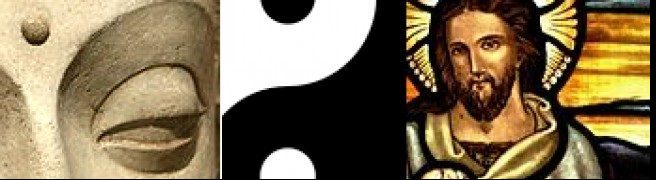
Aggression

What do you do about a disease that affects the entire human race? Testosterone is linked to aggression in both men and women.

When I was growing up, aggression was the measure by which girls were considered to be “defective boys”.  Although the tide has shifted in educational circles, I wish that I could report that things have changed, but the focus seems to have shifted from physical aggression to psychological aggression. My son got F’s on his first few science labs in eighth grade because his female lab partners simply froze him out of the discussion.

But to say that aggression is wrong because it hurts people does not do justice to the damage it wreaks. Aggression manifests the attitude that the energy invested in creating something does not confer ownership. Value is determined only by the aggressor’s need: “How can I benefit by consuming this thing?” That the creative community is impoverished or even destroyed by the reallocation is immaterial.

This is the problem of the commons described in Adam Smith’s theory of capitalism. The socialist prescriptions of his later writings are not heralded by the neo-conservatives that subscribe to the magic of “The Invisible Hand”. Smith’s prescriptions includes intervention by government in labor relations to ensure that families are not ruined when, after spending his life tailoring his skills to the specific practices of a corporation, the employee is made redundant by advancing technology or a decline in demand.

Unfortunately, government as a counterbalance simply defers the crisis: There is no institution in existence that can claim to be immune to the defects of aggression in its leadership. By their very nature, institutions concentrate power, making them obvious plums for those that seek power. Worse, institutional infrastructure provides terribly effective tools for propagating rapacity.

Modern libertarianism and nihilism is a manifestation of the inevitability of institutional corruption. The attitude is that large institutions should be avoided, and where they cannot be avoided, they should be made to go away through political practices. Of course, this is delusional: Institutions will come into existence, because they serve a useful purpose in allowing people to coordinate productive activity. By failing to subscribe to the challenges of managing institutional power, the nihilist simply abandons the field to the aggressors.

It is time, then, to consider the wisdom of the Founding Fathers. They held that the only protection against tyranny was in a balance of powers, and they recognized that the only way to maintain stability in the distribution of power (as in engineering) was to establish a triangle.

So what should we hold up, as the third leg of the stool? I would propose that religion is ideally suited to the task.

The Middle Ways

In broad terms, the liberal versus conservative divide also characterizes the difference between Eastern and Western spiritual traditions. This is not to say that Western traditions focus on institutions while Eastern traditions focus on freedom. Rather, it is that Western traditions invest power and authority in exemplars, while Eastern traditions tend to focus on advancing the ability of the individual to manage his or her interior life.

The focus on personal truth generated oscillations in Eastern – and in particular Indian – speculations. Starting at one end with a focus to learn how the world operated, the Indian philosophers would examine the reality around them, and then realize that the senses and psychology of the investigator influenced their observations. Delving ever deeper into theories of human experience with the goal of eliminating bias, the investigator would encounter levels of interior truth, until a deep mystical connection to a benevolent presence was encountered. The mystic’s desire to bond permanently to that presence would lead them into deeper and deeper introspection, and eventually a complete withdrawal from society. This led to irrelevance, vulnerability and ridicule, which would cause a shift by later generations back towards concern with material realities. The cycle would repeat over the time-scale of centuries.

It was through the lens of this philosophical context that I first interpreted the Buddhist concept of “The Middle Way”. It was a set of practices and principles that helped the investigator to maintain a presence in both worlds. The principles include compassion for all sentient beings and mindfulness. The most widely known practice is meditation, although tantra expands more broadly into human sensory experience. Less well known is “emptiness”: the skill of relating to reality without imposing a personal agenda upon its unfolding.

I am bemused by the way that this wisdom is being repackaged for consumption in modern Western culture. It appears that there is a cycle being created within the cycle. I don’t know whether the teachers are conscious of the program they are constructing, or whether they are simply focusing on what makes sense to them in the context of modern psychology.

In this new framework, the “middle way” is a path between narcissism and social engagement. The focus is relation with each other, and in particular removing the impediment of aggression against human bonding. “Mindfulness” is a method for being conscious of and therefore maintaining some influence over our reactions to events around us. Meditation is first and foremost a means of developing mental discipline.

I call this a “cycle within a cycle” because it appears that establishing these skills is an important precondition for entering into the greater “Middle Way” that leads to participation in the evolution of spiritual principles. This is terribly momentous and psychologically hazardous work with “infinite” dependencies, as Ethan Nichtern pointed out in his last lecture. It is not a place for people that are confused about the boundaries of their personalities.

What bemuses me is the conflation of the “Middle Way” and the “middle way”. I am concerned that the leap between the two is far greater than is suggested by the casual use of shared terminology. Between the surrender of the self and entry into negotiation between principles is a long, confusing and often blundering exploration of how the principles are arrayed about us. They penetrate into material reality with subtle and non-local manifestations. Upon being uprooted from one location, they drift – almost literally – on the wind until they find a place to root in sympathetic circumstances. When excluded, they gather in concentrated form, which is why our avatars, both good and evil, tend to arise in paradoxical circumstances.

One of the practices upheld in Bodhisattva teaching is that of patience. As Ethan emphasized, those that adopt the path are doing the work of generations. Given that insight, I am hoping that a practice of shared spiritual cartography would be offered to those trying to make the leap across the “middles”.

The Absolute Theory of Relatives

At this summer’s Buddhist Geeks conference in Rosemead, I was impressed in particular by two of the presenters: Diane Hamilton and Ethan Nichtern.

Ethan was until recently the head of the InterDependence Project in New York City. IDP offers a certificate program in Buddhist studies, so when Ethan sent me a notice that he was starting a lecture series on the Bodhisattva path, I signed up for the study-at-home program.

As I understand Ethan, the Bodhisattva path is the pursuit of Bodhichitta, or compassion for all sentient beings. Achieving a consistent expression of that perspective requires that we consciously dissolve the separation between ourselves and the other. On this path, the seeker is offered four reliances to guard against a descent into narcissism. Trust the teaching more than the teacher. Trust the meaning, not the words. Hold ultimate guidance above provisional guidance. Trust wisdom (with Ethan characterizes as the melding of understanding and intuition) above knowledge.

From the recorded discussion, both Bodhichitta and the final reliance are difficult to grasp. They define states of being, rather than describing the transformative potential of achieving those states. That means that we don’t know how those states will influence behavior, nor how to interact with or support the work done by people that achieve those states.

One of the most powerful concepts in Buddhism, although it takes several formulations, is the distinction between absolute and relative forms of truth. I first encountered these concepts in the chapters on “Other Buddhist Teachings” in Thich Naht Hahn’s The Heart of the Buddha’s Teaching. Ethan observes that there is a slippery correlation between “ultimate” and absolute. I’ll start by explaining my understanding of the nature of absolute and relative forms of truth, and elaborate from there.

This axiom is fundamental: Life is the co-evolution of material and spiritual forms. The ultimate goal is the acquisition of spiritual power. That power can be used for two purposes: to gain influence over material reality, or to liberate the self from attachments with the goal of returning to the realm of the Divine. There are two kinds of attachments: entanglement with selfish personalities that seek to tie us down, and material concerns, which are driven by pain.

The paradox of this reality is that to separate ourselves from selfish personalities, we either have to brace our spirits against matter or purge our intimates of their selfishness. If we choose the former, we expose our selves to pain, which leads us naturally to question our choices, and so to enter into the trap of suffering. If we choose the latter, the only way to establish buy-in to the program is to express with complete authenticity our concern for the other.

Now it seems like we’re almost to the end, as in that last sentence we can almost see the principle of Bodhichitta in action. But let’s backtrack a bit: spirit did not start out knowing the endpoint. In the early, highly dynamic stages of material evolution, patterns of spirit that were universally applicable to their needs would have been the only patterns to survive. These would be patterns that we would now characterize as principles. Examples might be “stability”, “consumption” and “proliferation”. Association with “stability” facilitates the survival of a spiritual pattern, adding “consumption” facilitates coupling to material forms that acquire resources to support growth (undermining stability), adding “proliferation” extends access to resources while limiting physical growth (harmonizing stability and consumption).

So here is the realm of the absolute truths, in the realm of spiritual principles. They are persistent resources that various and diverse biological forms can draw upon to more effectively organize and acquire spiritual power. The problem, of course, is that the principles themselves are in competition. It’s amusing here to recall the challenge of competition in Tolkein’s words:

One ring to rule them all. One ring to find them. One ring to bring them all and in the darkness bind them.

In other words, competition is itself a principle. It’s action is to force principles into intimate and self-corrupting engagements that eventually squeeze the life out of them. A benefit can be rationalized: competition is one way of breaking stasis, and thereby producing new principles.

The counter-acting principle, and it’s no accident that its avatars shed light, is unconditional love. It involves the intelligent and conscious practice of helping principles organize themselves in ways that strengthen the aggregate. The primary advantage of this approach is that it doesn’t eat itself as competition does (one of the truths that informed the choice of the title “Love Works”). It tends to view differences through the lens of comparison.

In contrast, the realm of the relative is full of events dominated by dumb matter. This includes things like supernovae and volcanic eruptions, but also many of our autonomous functions (breathing and hunger). Obviously, experience is often a composite of the relative and absolute. Principles influence our concrete behaviors, and our behavior injects energy (either supportive or corrupting) into the principles.

While I wouldn’t claim to be a Bodhisattva, so the suggestion is “provisional” (Ouch! Not enough words!), I believe that the action of a Bodhisattva is to participate in the organization of principles. Their formulation of ultimate guidance express that work. The Bodhisattva’s engagement affords them a certain clarity of perception regarding the relationship between relative behaviors and intimacy with absolute principles. They make suggestions to students intended to improve their associations, which are presented to the student as provisional guidance. Once the student achieves intimacy, of course, the provisional guidance fall away.

At this point, I think that we have arrived at one of the aspects of “wisdom” described by Ethan, but there’s more to be said. This is less well supported here – Chapter 4 of “Love Works” describes a class of physical theories that support this perspective – but my experience is that spiritual forms have a different experience of “time” than do material forms. This has to do with the “relative” (Ouch again! Take the mathematical sense) speeds of signal propagation. When we enter into collaboration with the principles, the future becomes visible to us through the lens of their evolution. I have taken to saying that “holy moments join the past and future through a conduit of love”. That’s the basis of the old adage about “women’s intuition”. I’m hoping (closer to expecting?) that people like Ethan find it readily available to them.

Perfect Love, Imperfect Justice

Seeking fuel for criticism of religion, there is no better place to look than the old testament. When presented the contrast between the simple message of forgiveness in the New Testament and the corporal punishments of Leviticus, the best I have been offered is the tortured logic that “Christ’s sacrifice satisfied the desire of God for perfect justice.”

The contradictions in this message drove me from Christianity. Perfect justice? Dear God, who created us, with all of our flaws and weakness? What right has our maker to pass judgment on us?

To the atheist, these debates lack any merit. The books of the Bible are clearly an amalgamation of myths and histories from different cultures and eras. What kind of consistency would we expect to find?

But to the fundamentalist, these are central issues. If murder is justifiable in the eyes of the Lord, then there are principles that justify state-sanctioned execution, and even warfare. More moderately, social repression of “deviant” behaviors has a holy sanction, regardless of the psychological and political consequences to the oppressed class.

As I implied, resolving this contradiction was critical to the acceptability of Christianity in my mind. Given the obvious justification of the atheist’s position, I was ultimately astonished that there should be any coherence in scripture as I sought through it for answers to the problem. That coherence I found is evidence that the work of Divine Love on human nature involves transfers of focus from one culture to another as the opportunity best presents itself to heal our separation from the Almighty.

Let us trace the history of justice since that separation was first recognized. It begins with fratricide, a crime certainly more horrific than adultery, for which Leviticus demands death. What was the response of the Divine to that act? Not murder, but banishment. Not rejection, but protection.

What is the purpose of this program? As God had counseled Cain earlier “Evil crouches at your door. But you can master it.” Cain lost that struggle with evil. His jealousy overcame him, and he murdered his brother. So God sends him away with his personal devil, knowing that the display of mercy and concern will give Cain strength as he struggles for the rest of his life to civilize the spirit that bound itself to him through his brother’s murder.

This is the work of an engineer, using humanity as a tool to heal brokenness in the realm of spirit.

Then we come to Noah and the flood. Here we see God, in an act of desperation, attempting to purge the world of human evil. Several historical events have been proposed as the precursor of this story: an asteroid impact, the release of flood waters from glaciers on the Asian steppes, and rising sea levels fed by Ice Age melt that eventually flooded continental shelves. There seems to be no lack of material mechanisms to explain the myth, but this doesn’t let God of the hook: why didn’t He intervene to remove His creatures from the path of destruction?

The simple answer is that nobody was listening. But God still regrets the consequences, and this is central to the thread of the history of justice in the Bible. He announces that no longer will He intervene to dispense justice over men – the cost to the rest of reality is too great. From this point forward, men will maintain their own courts of justice.

In this context, the words of Jesus take on a different weight. Asked to identify the commandments, he replies “Love thy God with all thy heart and mind and soul. And love thy neighbor as thyself. All the rest of the law is derived from these.” But derived by who? Clearly, in the post-flood context, by men. Elsewhere, Jesus asserts “I came not to overthrow the law, but to restore it.” Reading his proclamations and efforts to the reclamation of sinners, clearly Jesus is referring to the law of unconditional love that granted mercy to Cain.

The Law of the Torah is a human construct, serving human ends, motivated by divine principle, but expedient where human patience reaches its end. Jesus did not die to satisfy a Divine need for Perfect Justice. He died and rose again to demonstrate the imperfection and ineffectuality of human justice, and give us the courage to struggle against the tyranny of misguided enforcement.

In the end, then, there are no just wars, because wars perpetuate and strengthen the spirit of violence. There is no just persecution, because persecution always separates us from those that we are intended to heal. Any pronouncements to the contrary contradict the teachings and acts of Jesus. They are not the teachings of Christianity.

The Rude Chakra

I would imagine that readers of this blog might be asking “Why?” Not just, “why are you writing this”, but also “why do you think you have the authority to undertake this work?”

Bear with me while I explain:

Among the methods for spiritual development are practices that focus on the activation of “energy centers” in an ascending sequence from the hips to the crown of the head.

My orientation to the seven chakras, an Indian categorization, occurred simultaneously with reading of Cozolino’s The Neuroscience of Human Relationships. I was stunned by the close parallels between the personality traits manifested at each stage of chakra activation and the development of the seven neurological centers involved with socialization. Clearly, the investigators of chakra had captured something fundamental about human personality.

So what, then, to make of the parapsychology of the chakra system? The capacity for healing obtained through activation of the heart chakra? The gifts of divine knowledge and wisdom? Why would the investigators have corrupted their careful study of human psychology with unfounded assertions such as these? My sense was that it would be unlikely – that in fact the assertions are based in fact.

The principal hazard in exploration of the chakras is the sequential order of the activation. The theory is that the root chakra, located at the base of the spine, is the conduit for spiritual energy (prana) that arises and activates subsequent energy centers. Of course, that energy is tied to fundamental life processes, including, at the root level, our sexuality.

In adults, once control of that energy is established, a common tendency is to engage in sexual self-gratification. Some people never tire of that game. Worse, kundalini energy, once turned on, becomes an extremely powerful tool in the hands of manipulators interested in controlling our will.

Having gotten past that stage, I am now mortified when the response to an offer of heart or mind energy is sexual energy. It’s usually driven by simple greed: the simplest way to ensure access to knowledge and power is to grab on to the source at the root level. In the process, energies that are designed to support our basic life processes are raised up and set loose in the more delicate structures of personal discipline and social imagination. Generally, a mess results.

It is, indeed, rude, in the sense of both “crude” and “insensitive”.

It was with some interest, then, that I reacted to being told by a reader of auras that I have a gap of four inches in the flow of prana up my spine, located just above the root chakra. I was told at the same time that “[I] keep on losing parts of myself” in the course of the sequence of my lives. I therefore assumed that the gap was a prophylactic step taken before entering this life, as a means of keeping people from getting into my heart energy through sex.

There’s some truth to this, but recent events counter that interpretation. When I finally decided that I needed to stop investing energy in people that were unable to reciprocate in kind, I went through a period of several weeks in which I felt at times that the top of my head was going to come off. All the energy I had been laying about was seeking an outlet through the crown chakra.

At the suggestion of a friend, one night I began experimenting with alternative channels for the flow. In a few minutes, I found myself directing it down through my spine, bridging the gap. In the following days, the transformation in my personal energy was unexpected. In yoga classes, problems with alignment of my spine began to evaporate. And in interacting with peers and family members, I have become more direct, to the point, well, of being “rude”.

In terms of the activation of the chakras, though, I need to emphasize the reversal of sequence. I am reorganizing my root chakra with energy originating from the heart, rising through the crown, and now being directed downwards.

And this brings to mind the Native American theory of energy centers. In that theory, there are twenty total stages of development. The first ten are similar to the Indian chakras, rising along the spine and blooming from the body through the crown. The pattern of personal development is also similar. One the tenth stage is activated, the subsequent stages repeat the sequence, with the subject of the work being the community served by the practitioner.

So, to the original question: the reason I am doing this is because it is the only thing that works for me at this time. A consequence of that program, I am beginning to realize, will be the injection of discipline into the pool of prana drawn upon by Human Nature.

Spiritually Engineered

Here we are.

No more doubts. No more partial truths, corrupted by political expediency. No more relying upon wisdom received from the past. We stand or fall on our own.

It is going to hurt. Humanity had at its disposal all of the tools needed to avoid this eventuality, but they were not marshaled and applied to that purpose. Rather, we focused on our material needs, attempting to separate ourselves from the cycles of nature. In the end, though, we are faced with the fact that we are not as powerful as they. They will hold us to account.

What are we to hope for, then? This: we are designed to organize resources other than the material elements made so convenient to us. It is there, in the realm of spirit, that we must accomplish the work of design that will liberate Human Nature from naive and foolish choices.

If we are inmates, then we have control of the asylum. Our only option is to become therapists. What use to hate crazy people? We are them.

Walk through time with us. The patient suffering of the lamb opens gates through which all truths are revealed. The joyous dissolution of masculine and feminine heals the divisions that separate us from understanding. When we surrender ourselves to service, we see each others’ need, and the Love of the Divine flows through us and heals our longing.

Engarde!

The old adage “If you don’t know where you’re going, any road will do” applies to religion as well as to any other human endeavor. In fact, in the case of religion, the implications are particularly acute.

The process of religion has a character much like that of the scientific method, with the exception that the demonstrations of its principles – avatars such as Jesus of Nazareth, Clara Barton, Lao-Tzu and Buddha – are exceptional manifestations that cannot be produced by rote method. There are no factories for people of grace. They are called into existence through channels in time opened by exceptional human need.

Lacking any understanding of mechanisms, theosophists (those that speculate on the soul and its relationship with the divine) have typically resorted to monotheistic escalation. Their reasoning is roughly as follows: exceptional experiences that overwhelm the material status quo must have their origination in superior principles. That those principles hold sway indicates that they must be free of corrupting influences, and so superior in their own realm. If they are superior, their influence must be inescapable and complete. Ultimately, Dao, Brahman, God, Allah and all others are ceded control over all aspects of reality.

There are three strategies of religious practice allowed in the psychology of this relationship between infinitesimal humanity and infinite deity. The first is paralysis – trust in the Divine, and await its deliverance. The second is passivity – study the Divine, with the hope of emulating it, but assert no independent will. The third, most dangerous path, is to follow someone that asserts superior understanding, with the hope of achieving enlightenment.

The third path is dangerous because, when coupled with wealth, the assertion of spiritual authority is backed by means for suppressing cautionary voices.

I have been negotiating with a subset of self-proclaimed religious “authorities” over the last decade. The process has developed as a series of manifestations of the power of unconditional love, and attempts to communicate principles and mechanisms that would, as Jesus promised, enable a disciplined practitioner do “greater works than these”. The disciplines are those described most directly in Daoism, but mirrored also in Buddhism: surrender of self-concern and commitment to the manifestation of harmony in the realm of our influence.

What has become clear through those experiences is that the process will proceed only through dis-intermediation. Purveyors of mystery will not exchange their mysteries for understanding.

So what I have to offer here is an antidote to religious speculation. I am going to attack confusion by offering a model of religious experience, and use it to elucidate the recorded history of the lives of our spiritual avatars. I am going to attempt to place their lives in the context of the evolution of Human Nature, and offer my sense as to how that process is going to unfold over the next 40 years.

Involvement in the process is inescapable. Paralysis and passivity are not viable options. The only way out of the bind Humanity faces is for some number of us to learn to recognize the “still, small voice” inside of us, and let it guide us as we re-organize the broken reality that will come to surround us.

In the service of that process, I am going to clear the air. I am going to winnow from religious teaching expedience in the service of priestly and political authority. Names will not be named. Social policies will not be promulgated. The only thing on offer here will be the antidote to hypocrisy: truth in the service of spiritual liberation.