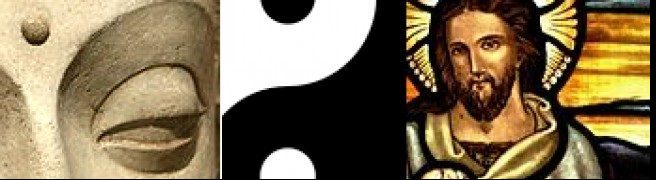
Body Call

A few years back after the local UU speaker’s forum, I was waylaid by an out-of-area couple in the cool of the spring evening. The husband explained that they were trying to relocate back to the Thousand Oaks area, but his wife jumped in to speak of her commitment to caring for the son that had been disabled in the Gulf War. She mourned that sometimes it was so hard to be strong in her faith, that it felt at times as if the window was closing on her.

These impulses come over me at times: I formed a ball before my heart with my hands, then shifted them to the right and opened them higher and lower. “Here it is.”

She paused, hand held against her breast, and offered “Thank-you.” And they looked at each other and asked, “When does Jesus return?”

“When enough of us say ‘Yes, we understand now. We are ready to love as you did. Come to us, right here, right now.’”

These are the closing lines of my exegetical book, The Soul Comes First. The most significant contribution of that work is to explain the Book of Revelation (not interpret, but explain). What is left unanswered still is the why. Why does he have to come again? Why wasn’t once enough?

One part of the answer is that we have free will. I have addressed this before: the true evil of “sin” is that it disposes us to believe that we deserve our suffering. We’re like the judges of the Darwin awards that celebrate those that have committed such incredibly stupid acts that they’ve provided the rest of us the benefit of removing themselves from the gene pool.

To recognize our “sin” is to convince ourselves that we must earn our healing. In Jesus’s era, that was transacted through the priesthood using a system of indulgences based upon blood sacrifice. Jesus came and said “Well, enough of that bullshit. I will be the last sacrifice, and for my sacrifice you will be given forgiveness for your sins.” Now, looking back to Cain and considering the eternal nature of the Divine, obviously Jesus was not changing policy. He was simply trying to get us to stop beating ourselves up so that we could be healed.

In a recent discussion, I asserted that the authority of Jesus over heaven and earth is rooted in the irresistible admiration that comes with his perception of the possibility of our wholeness. This is what gives him the ability to heal the world: the fact that it comes not with scorn, but a joyous “Good job!”, much as that offered by the father to the prodigal son. “You were lost to me, but – Lo! – you have shed your burdens and now are returned!”

So in this framework, Jesus comes again to deliver us the promise of healing that can only be received when we stop believing that we don’t deserve it.

But there’s more.

In the end-times prophesy of Daniel and Revelation, we have the appearance of three corrupted beasts. The first of these in Revelation famously bears the number ‘666.’ This was first explained to me as a numerological reference to the days of Creation, with the conclusion that the beast was man. But that is to make too much of ourselves: it was not only man created on the sixth day, but all of the mammals.

Carrying this back to Daniel, it becomes clear that the beast (the fourth to appear in the dream) is the collective spirit of the mammals. In Eden, human intelligence was protected by the presence of God, but the Fall forced us out into the world to struggle with all the primitive urges that preceded us. Daniel sees this only abstractly: the beast bears teeth and claws of iron that destroy life. These represent the machines that we use to reorder the earth. We use them as predators, not attempting to integrate ourselves with other life, but exploiting it for our gratification.

In Revelation the personality of the beast is resolved in more detail. There are two of them, the second a red beast ridden by the feminine avatar called “MYSTERY.” So what does this tell us about the second coming? The masculine expressions of the primitive urges, represented by the first beast of Revelation, are the hunt and sacrifice. Jesus confronted and mastered them on the cross. The feminine expressions of the primitive urges are intercourse (the mingling of personalities through sex) and maternity. What about this aspect of human nature? When does that submit to Christ?

I feel this confrontation in my own life like a wall around my soul. It comes to the fore when I walk into a store and the counter girl pushes her breasts up at me, or when a pastor looks at me, interrupting my meditation on the cross to suggest that I am sexually harassing the members of his congregation. It has been the focus of so much conflict in my life, from the Sterling Men’s group that tried to force me to stay in my marriage, into the family law system, and in the workplace where brilliant women at home find that I disrupt their influence over the men at work. It is a wall rebuilt every night when I wake up at the witching hour with sex crawling all over my body.

How to resolve this problem, the problem of “MYSTERY,” the influence that reaches into our souls from a distance and leaves us wondering “Why did I do that?” Is the image of Christ in confrontation with this influence that of the rock star with a bevy of beauties moaning in the audience? Or is it the image of the celibate, relinquishing all experience of sexuality?

My two fiction books, Ma and Golem, are meditations on this problem. Ma begins with two dysfunctional erotic encounters – one a casual hook-up and the other a long-term political bonding – and evolves as a slow-moving train wreck with the men struggling against the consequences of their failure to honor their women. Golem elaborates with a truly amazing sexual explosion between Corin and Leelay, both introduced in Ma, that arises as an expression of their service to the survival of Life. And it confronts us with an encounter between the Goddess Zenica (Corin’s mother) as she uses sex to break the will of an old adversary to accomplish the end of her re-incarnation. In relating the events to Corin, she simply offers “I did what I had to do.”

Is that where it ends: sex as a tool?

Revelation does offer us an image [NIV Rev 22:1-2]:

Then the angel showed me the river of the water of life, as clear as crystal, flowing from the throne of God and of the Lamb down the middle of the great street of the city. On each side of the river stood the tree of life, bearing twelve crops of fruit, yielding its fruit every month. And the leaves of the tree are for the healing of the nations.

To me, this imagery is incredibly sexual. And I think that is as it should be: there is no part of our nature that cannot be sacralized, that was not given to us for the purpose of healing ourselves and this reality of corruption by selfishness.

I believe that intercourse must be brought into the service of Christ. So this means that it should be a means of bringing Christ into our lives, of pouring the love that we receive from him out over each other. My interpretation of my experience in church is that the opposite has happened: we take sex as the center of our intimate relations, and when Christ enters into that he is perceived as a threat. Or for sexually active single women, the presence of Christ in a man is interpreted as an opportunity to have really great intercourse – that is, to receive a love that would be given to them directly by the source if only they would ask for it.

As long as this persists, we are going to continue to struggle. My question is whether this is really the business of Christ. Eve was sent to Adam as his help-mate. Jesus confronted the masculine pathologies on the cross. Is it really possible for him to do the same work on the feminine side? My sense is that the end game would be far less painful if women stood up to take ownership of their problems.

Victory over Sin

In my previous post, I promised to examine how a limited human perspective causes confusion when trying to interpret the teachings of Christ through the Holy Spirit. I’m going to take one of the most fearsome passages in the Bible, that of Revelation 21:8, in which John interprets part of his vision as a “second death” reserved for those that sin.

When confronted with the reality of sin and the pain it causes, it is natural to use threats to keep it at bay. Our legal system does this, and that is echoed in the Law of Moses that was used in the Bible between Noah and the ministry of the savior. For those that sympathize with this approach, it is natural to interpret the Crucifixion as atonement for our sins, and the terrible destruction John describes in Revelation is interpreted as justice being meted out on the sinful.

But what is sin? I have suggested here and elsewhere (see The Soul Comes First) that sin is found in any act that leaves a wound in the soul. Is the propensity to sin inextricably part of humanity? I see at is something that was carried forward from our Darwinian past. Animals tear and rend unthinkingly, doing enormous damage to the souls of the things that they consume.

In the Garden of Eden, a man and a woman are found in a privileged relationship with God. They were innocent and free from sin. We know from Revelation that ultimately sin will be destroyed. God set Adam – the creature made in his image – to that work, with his true love Eve as his helpmate. As might be expected, sin fights for survival. In both the story of the Fall and Cain and Abel, sin is represented as something outside of just relationships. The serpent comes between Adam and Eve, and God speaks to Cain directly of “sin crouching at your door.” In both cases, the effect of sin is not just to separate humanity from God – it also breaks the trust we have in each other. Adam and Eve don clothing not only to hide from God, but to hide from each other. Cain’s jealousy leads to the murder of Abel, extending the loss of trust to brothers and sisters.

Sin has its way with humanity. It entered into us as an infection. This is indeed how Jesus speaks of it, saying [Matt. 2:17]

It is not the healthy who need a doctor, but the sick.

Of course, Jesus’s healing skills are not rooted in knowledge of physiology, but in spiritual authority. He simply commands people to be well, and when they respond, honors their faith. The physical healings are paired to the casting out of sin in the form of demons. These were skills Jesus shared with the Apostles.

This work was interrupted by the ultimate sin, the Crucifixion of the savior. Jesus allows sin to have its way with him, suffering a brutal and painful death. In that process, he reciprocates with love. This is done in fulfillment of the promise that he would die for the forgiveness of sin, but that is only a waypoint on the journey. Humanity had a work to do in Eden, and we failed in that role because sin entered into our relationships. However, that work still remains to be done. Jesus came to restore us to the condition that prevailed in Eden so that we might complete the work that had been put before us.

Why didn’t Jesus just remove sin from us entirely, then? It is because we have free will. We have been convinced by sin, through the serpent and others, that we are at fault, that we deserve punishment. This is internalized to such a great degree that we punish each other for sin, compounding the damage wrought upon human nature. We cling to sin. In dying for the forgiveness of sins, Jesus was trying to break that embrace. He was saying “Humanity, let go of your burdens. Forgive each other, as God has forgiven you.” He resurrection was intended to convince us to rely upon the healing power of love.

We have trouble with that. Sin is wound deep into our spirits, and struggles still to survive. But Jesus promises to come again, and we can rely upon that promise though a day to him be like a thousand years to us [2 Peter 3]. When he does come to help us overcome sin, what will the result be like?

This is described by John in Revelation. He says {Rev. 21:8]:

But for the cowardly and unbelieving and abominable and murderers and immoral persons and sorcerers and idolaters and all liars, their part will be in the lake that burns with fire and brimstone, which is the second death.

I remind you that this is a human interpretation. Should we take the passage to mean that all those that sin will die the second death of fire and brimstone?

Well, look at it from God’s perspective: What would be the point in that, for have not we all sinned? No, Jesus’s goal is to preserve that which is good, and no one is purely evil. What John described was the destruction of sin along with the memories of the pain that it has caused. Sinful acts are written in our souls, but Jesus will return to separate us from those behaviors and their consequences so that the pure heart of humanity may be returned to heaven. When John reports people burning in hell, he is confusing the destruction of the evidence and effects of their acts. He sees the events themselves being destroyed. The fire is the fire that purges us of the infection of sin, bringing us liberty.

Will the Pope Speak for Life?

The Republican climate-change deniers were busy this week pre-empting the expected declaration by Pope Francis that responding to global climate change is a moral necessity. The foundation of their argument was that the Pope is not a scientist, and he should leave scientific matters up to those that understand the issues.

But is that the authority upon which the Pope Francis will issue his declaration? I certainly hope not. I think that the Pope should boldly speak for God, because in my meditations on this matter, it is clear where God stands on the issue.

To establish the scriptural basis for this assertion, I re-iterate the Book of Revelation. God sits on his throne surrounded by the twenty-four principal angels (in whose image we are made). In one of the most beautiful passages of the Bible, John describes (NIV Rev.4:9-11)

Whenever the living creatures give glory, honor and thanks to him who sits on the throne and who lives for ever and ever, the twenty-four elders fall down before him who sits on the throne, and worship him who lives forever and ever. They lay down their crowns before the throne and say:

“You are worthy, our Lord and God,
to receive glory and honor and power,
for you created all things,
and by your will they were created,
and have their being.”

What this is telling us is that the virtues of the angels are expressed and tied to life on earth. When life flourishes, the joy of its expression flows up through the angels to God. This is not just the joy of humanity, but the joy of all forms of life. The power of that gratitude is enough to force the angels to surrender their sovereign independence in deference to unconditional love.

But it is not limited thus. If joy and thanks is transmitted, so too must pain. I have felt this pain, a great crying out from the heart of life as it succumbs everywhere to humanity’s merciless exploitation of the bounty of the earth. Reading this passage, can anyone doubt that God would not hear and heed that grieving?

Pope Francis does not need the authority of science to speak out on this issue. That’s too bad for those who have purchased “scientific” opinions. No, if Pope Francis speaks, he will speak with religious authority, the authority of a true representative of God on earth. He will speak for all of Life. He will speak the truth of God’s anguish for the hypocrisy of those that claim to speak in his name while carelessly murdering his creation.

The Indications of Atheism

In explaining the dangers of spiritual agency to young children, I used the example of an electrical bus bar. The power of love flows through us, and if we resist it, we can get hurt. But if we let it flow through us to those that need it most, the limit to what we can transmit is the capacity of others to receive from us.

Here’s a picture of somebody struggling with that problem:

The yearning to love is not commonly understood as the desire to be filled with God. The emptiness itself is recognized by Chris Rice in “Big Enough”:

When I imagine the size of the universe
And I wonder what’s out past the edges
Then I discover inside me a space as big
And believe that I’m meant to be
Filled up with more than just questions

But he believes the answer is in direct awareness of God’s presence in our lives, rather than in surrender of ourselves as a tool through which God enters the lives of others.

Mother Theresa, the great servant of the poor, struggled with this paradox in middle age. She felt God’s presence within her for many years, but entered into spiritual aridity at the end of her life.

Why is that? It’s because as that “space as big” is filled with love, we stretch. We feel a glowing inside of us, and a tingling as that love attaches to the people that we serve. Through that connection, we are aware of the beautiful healing that divine love brings to them. There’s an incredible rightness to it.

But when that love is firmly established in us, and flowing through us at the limit of our capacity, we become habituated to its presence. We become a fount from which others drink, and are filled again so rapidly that we may not even be aware that our pool was disturbed.

A Catholic priest shared with me that he decided to take orders after a visit with a nun. When he returned years later to tell her that he had found peace in her presence, she said that she was not even aware of the interaction. Similarly, though perhaps scandalously, a young donor to Mother Theresa’s work came away from a meeting to say that she “was the sexiest woman alive.” I am certain that she had no such intention in interacting with him: he was just overwhelmed by her energy, and channeled it into the most familiar form of self-love that he knew.

I have described the progression of the traditions of Abraham as the development of discipline through the practice of law, which flowers into spiritual intermediation between God and our community. In Jesus’s time, the pool of candidates for that graduation were limited. But in the intervening centuries, a large number of people were allowed the opportunity to devote their lives to religious orders, and the contemplation of the mysteries and magic of living a life in Christ. Two of the most beautiful lives so recorded are Mother Theresa’s predecessors: St. Teresa of Avila, and St. Terese of Lisieux.

The Apostle John was an earlier exemplar of this way of living. In the Book of Revelation, he describes the progression from the other side of the process: the change in the relationship between God and the angels that Jesus claimed to be working to transform. It begins in a throne room, with God in the central seat surrounded by angels [Rev. 4:2-4]:

[T]here before me was a throne in heaven with someone sitting on it. And the one who sat there had the appearance of jasper and carnelian. A rainbow, resembling an emerald, encircled the throne. Surrounding the throne were twenty-four other thrones, and seated on them were twenty-four elders.

As I describe in The Soul Comes First, twelve of the elders are the masculine angels that guide the tribes of Israel, and the other twelve are feminine personalities that accompany the Holy Mother when she descends to earth. When the work of Christ is done, John describes the “New Jerusalem”, with angels at twelve gates, and a tree of life bearing twelve crops of fruit. He then explains [Rev. 21:22-23]:

I did not see a temple in the city, because the Lord God Almighty and the Lamb are its temple. The city does not need the sun or the moon to shine upon it, for the glory of God gives it light, and the Lamb is its lamp.

And [Rev. 22:1] the tree is fed by

[T]he river of the water of life, as clear as crystal, flowing from the throne of God and of the Lamb…

Where once the presence of Unconditional Love is separated from the angels as a king on a throne, in the end it is woven into every aspect of our shared existence.

So what does the experience of the saints foretell about our experience when we surrender ourselves fully to love? Well, at some point we no longer know where we end and love starts. The reincarnated nun might say “I feel guided by compassion from within, that has no source that I can discern.” Or the reincarnated monk might react to fear and hatred in those that profess faith by saying “Yours is not a god that I would choose.”

The best thing that a person of faith can do to bring such a person to awareness of the ultimate source of love is not to upbraid them for reflecting the standards of Christ back upon us. Rather, it would be to engage them in solving the biggest problems that humanity has to solve, and then to let them rediscover (in this life) the magic of Christ’s presence when those problems begin to overwhelm them.

You see, a profession of faith is only to say “I have God within me.” What Christ wants, however, is for us to seed the entire world with him.

Is this a model for all atheists? No, there are those atheists that seek only to destroy Christ and his works. But there are a good number of them – in my experience a majority – that seem honestly to feel that Christians aren’t upholding the ideals expounded by Jesus of Nazareth. We should not take their witness as an attack, but as an exhortation to do better.

The Soul Comes First

Particularly during life’s difficult moments, religion is a source of comfort for us. When a child dies, when we lose a job: we are sustained by the relationships and wisdom that we develop in worship, study and charitable work.

Because this aspect of religion is so important to us, we seek in scripture for meaning that applies to us in our lives as human beings. We tend to emphasize that part of the story, and when we don’t find what we’re looking for, maybe even expand our searching into parts of the story that don’t really apply to us.

But if spirit is a part of the natural world, a form of consciousness woven into the very fabric of space, why should intelligence have manifested only here on Earth, in humanity? If spirit began evolution when the universe formed, or even earlier, it stands to reason that it’s got a long history of its own. What would coming to a planet be like? How would spirit go about learning about a new world? How would it go about improving itself through that investment?

When I re-read the Bible after developing a physical model of spirit (not really a theory, because the mathematics needs to be elaborated), I saw it in this light. The Bible made a whole lot more sense to me than it did when I turned away from it as a teenager.

That understanding is captured in The Soul Comes First, which you’ll see as a link on my sidebar.

Now the Bible is a complex book, with a lot of ideas in it. Summarizing it in seventy pages, even when looking at it from 30,000 feet, means compressing a lot of ideas into very few pages. So it’s heavy going. Here’s the short skinny:

  1. This reality was designed as a place of healing for souls infected by selfishness.
  2. The creation myth in Genesis records the investment of a collection of such souls as they explored the Earth through the evolving senses of living creatures.
  3. The founding of monotheism through Abraham is about creating masculine strength in a culture dominated by powerful women.
  4. The Old Testament, from Exodus on, records the expansion of monotheism as a national culture. The investment made by God at this point was in creating a capacity to reason through adherence to the law. The experiment failed for various reasons – the most significant being the desire of the people to centralize human authority. This eventually led to demotion of spiritual leadership in favor of political leadership, and destruction of the nation.
  5. Jesus came to demonstrate that love will overcome any system of tyrannical laws. Not only did he demonstrate the power of love through miracles, he trained a collection of men (the Apostles) to emulate his mastery.
  6. The Book of Revelation is exactly what John said it was: he was taken up to heaven, where the angels shared with him their relationship to and experience of Christ.. The visions of the seals are interpreted as the forms of selfishness that the infected angels brought to the Earth with them; the trumpeted disasters are the extinction episodes revealed to us by paleontology; the bowls describe the exhaustion of the natural resources humanity is exploiting.

Items 2 and 6 establish that paleontology and evolution science have revealed things that were known to the ancients long before we had the science to study them.