Whitenessing the Truth

My response to Sera Beak’s “Redvolutionary” theology has been pretty passionate, and I’m planning a post on programming to let things cool down. But before I do, I’d like to elaborate the claim that I made yesterday: “There’s so much more for you than that.”

Perhaps the most popular spiritual autobiography at the opening of the 20th century was that of the “little flower”, St. Terese of Lisieux. While I was at first disturbed by Terese’s testimony to desire to die so that she might embrace Christ, I have come to understand that her recorded life was probably a last parting from those that were bound to her in family, in particular her father.

What was she releasing herself into? The answer is given to us in her revelation of a vision: Terese found herself in the company of three veiled women. One of them, Teresa of Avila, was the founder of her penitent order, and a woman who famously experienced an erotically ravishing love from Christ. Teresa parted her veil for the daughter of her grace, and Terese reported being bathed in the purest light. With an embrace, Teresa offered this paean: “Christ is well pleased with you.”

Why do these women hide their light from us? I offer a parable in that regard in Golem. We here on earth are a mixture of grace and corruption, a mix that cannot be sundered easily. When the pure light of truth shines upon us, the corruption must flee or be destroyed. The light is veiled because, as Moses was warned in Exodus, those not prepared to receive it will by destroyed by its power.

With the saints encountered by Terese, so it is with Christ [NIV 2 Peter 3:9]:

The Lord is not slow in keeping his promise, as some understand slowness. Instead he is patient with you, not wanting anyone to perish, but everyone to come to repentance.

And so to experience life in the fullness of its beauty. Can you imagine, ladies, what it would be like to have souls passing through the healing cauldron of your womb, not in a brief spasm, but as a steady stream that grows into a mighty river?

Then the angel showed me the river of the water of life, as clear as crystal, flowing from the throne of God and of the Lamb down the middle of the great street of the city. On each side of the river stood the tree of life, bearing twelve crops of fruit, yielding its fruit every month. And the leaves of the tree are for the healing of the nations.

[NIV Rev. 22:1-2]

Please follow me here: Eve had her own gifts to tend, and to share them with men was never going to work. You, O woman, were meant to manifest the Tree of Life.

Posturing Women

It has been fifteen years since I have let a women caress my body. That hasn’t been for lack of opportunities, but after my marriage collapsed, I realized that I am constructed to engage problems that most people run from, and that the spiritual intimacy of intercourse made it impossible for my ex-wife to avoid entanglement. Her response was to use anger as a protective shield. That was disastrously painful to my spiritual intimates.

So I’ve been very careful and reticent about drawing someone else into that milieu.

Dance is the foremost expression of my entanglements, and the context in which women most often flirt with involvement. Having confronted the surrender of the Southern California sage to drought back at the turn of the millennium, I found myself repeating this flow again and again during the celebrations: standing with legs spread apart, I would position my hands over my heart, and lean to one side in a lunge, pushing energy down into the ground. The repetitions alternated from side to side, until a deep yearning would bring me to my knees. Scooping up the suffering spirits from the floor, I would raise them to the heavens, weeping.

I was greatly heartened by the identification Jamie Grace made with Persephone, but even she wanted me to lay my burdens aside. One day as I was dancing alone, I felt her looking into me as she rested against the wall, urging me to liberate myself into joy. An enormous pressure forced me to the floor, and, crawling and squirming, I tried to work my way out from under it. As I spread my awareness, I realized that the source was a spiritual membrane that encircled the globe. There was no escape except through the violence of birth.

The only woman to actually engage me in my dance of restoration was innocent of the consequences. I felt her standing in front of my as I bowed to the ground, and opened my eyes to find her lifting along with me. Surprised, I stood and put her hand over mine as I reached out into the world, thinking “Guide me.” She hesitated but did not run, so I took the world out of my heart and handed it to her. Her face broke in sorrow and fear. I tried to put it away as she fled into the arms of one of the elder ladies. I approached from behind to caress her heart, but she turned a shoulder to me. Realizing that she could not manage the burden she had accepted, I sat on the floor, cupped the pair of women in my hand, then raised my fingers and slowly rotated them to separate her from the moment that had overwhelmed her. Her features relaxed, and she settled more deeply into her comforter’s embrace.

I had a friend tell me that I lost Jamie Grace because I rejected her, but I didn’t see it that way. Every time she came into the room, my heart leapt to embrace her, and she would stop in the doorway and look away, silently begging me to come to her. Eventually we would work our way around to it, but she never let me dance with her again. Perhaps that was because I would dance first with other women, those other manifestations of Life’s thirst for healing. Perhaps she didn’t see in them what I did. The closest we came, until the last day two years ago, was when I stopped, took her hand, and placed her palm on my heart. She paused, then took it away and positioned it more directly into the flow that emanates from me there. But when I turned around to expand our expression to include the community that surrounded us, she became visibly angry. Given past experience, I was compelled to withdraw.

Without anyone to help me channel my creative energies (the second chakra being that source), I am wide open to women that seek to engage that energy in its most primitive procreative expression. I occasionally engage in visualization with those that I perceive have a deep connection to Earth: walking in the forest, and stopping on the shadowed crest of a bluff to rest with her legs over my shoulders, my head on her belly, my mind spreading into the earth through her womb. Or lying naked on the bed as she brings her yoni down on my heart, allowing its compassionate power to rise into the heavens and spread.

But the frequency with which someone breaks through and gets into me sexually has dropped steadily over the years. I am building up resistance, establishing barriers. The great sex-scene in Golem will be read by many as the fevered production of a frustrated old man, but in fact it was my way of saying good-bye to sex – of allowing it to wash over me one more time before putting it aside.

There are spiritually mature woman that I find occasionally looking in on me. Not long after writing that passage in Golem, I woke one night to some really passionate yearnings. They just wouldn’t go away, and one of my friends showed up in concern. The source of the desire wasn’t apparent, and in frustration she announced to me, “Maybe you’d better just give her what she wants.” As I blissed, I found myself floating in space billions of years ago, regarding the gathering nebular gas as it ignited and give birth to the Sun.

Are we here because it was possible for the infinite she to receive love from us?

This is Power

in 2002, Time magazine published a cover article that related the scientific consensus regarding the end of the universe. It was a terribly depressing outcome, with iron planets and neutron stars scattered across intergalactic space, all except the matter that was vacuumed up in black holes.

I was going through a really depressed stage of my life, and faced the strong urge to rebel against that outcome. One option was to take the day off from work to lie in bed. The other was to reach for another alternative. It came to me in this way: at the core of almost every galaxy is a super-massive black hole – an “Active Galactic Nucleus.” We know that galaxies are bound together in clusters, and every now and then pass through each other. Over a long enough period of time, it seemed to me that the AGN’s will eventually collide, spewing out the matter they have absorbed to initiate a new cycle of stellar evolution.

Then I thought: “Well, if that’s how stars get made in the end, maybe that’s how they got made to begin with. Maybe stars don’t come first, and then collide to form black holes. Maybe the black holes are made first, and the quasars we see in the earliest age of the universe are the signature of the light and matter created in that process.”


Scripture offers us three kinds of wisdom:

  • Regulation, the accumulated wisdom of what does and does not work in relationships.
  • Situational ethics, describing how the Divine presence led our ancestors out of trouble when they made mistakes.
  • Meaning, revealing the evolutionary process that provides understanding to guide our investments in the future.

When I look at the situation in Congress today, I see a terrible perversion of this process. I see:

  • In our penal code and permissive gun laws, a process that segregates our population into camps based upon fear, undermining relation.
  • A “survival of the fittest” mentality that insists that poverty is a sign of unfitness and wealth a measure of greatness. People that fall ill are consigned to misery, those that cannot master rapidly changing technology are pushed aside in the workplace, and those that do not subscribe to predatory management practices are ostracized.
  • The unchecked politics of terrorism, where those that resist the changing future throw legislative Molotov cocktails, threatening their opponents with impeachment, harassing civil servants and not-for-profit leaders, and obscuring or simply denying objective truth regarding the consequences of their policies on global climate change, economics, international relations and campaign finance reform.

I would like to be able to corner Rep. Chaffetz to ask, “Mr. Chaffetz, did you ever withdraw during ejaculation? Did you ever avoid sex while your wife was ovulating? If so, then you intentionally prevented the birth of a child. When do you intend to turn yourself in for manslaughter?”

I would like to be able to confront the Biblical literalists with the insight that the whole experience of the nation of Israel from Noah to Jesus was to demonstrate the inefficacy and injustice of fixed systems of laws. The Law of Moses was authorized by God, but it is not “God’s Law” because it condones murder, contrary to the experience of Cain and the teachings of Jesus. The only law that binds a Christian is the law of love, and when you attack and demean those that serve the disadvantaged, you violate that law.


He walked up the sidewalk, his mind whirling with the pattern of creation unfolded from beginning to end. But at the periphery of the beauty were the people that brought him forth but rejected him, and the women that he would serve but that had resolved to force him to comply with convention. Those stains threatened to spread.

In his mind’s eye, a light entered the atmosphere, rushing downwards, clouds rolling away from the super-heated air in its wake. It passed over his shoulder and slammed into the hills ahead, a huge cloud of dust engulfing the spring day that he walked through. In his mind, a great cry of fear arose.

“No. No. I choose that spring day. I choose life.”

Two months later, in the home of a woman that loved him, he found a newspaper open to an inside article that documented that a planet-killer asteroid had passed between the earth and the moon two months before.

That is power. It is power that arises from looking into the things that are wounded and seeing the possibility of their healing. It is to forgo destruction of that which is broken and ugly. It is to serve those that serve, rather than to be a servant to convention.

Rather than seeking glory, it is to be regulated by the sorrows of the world.

All males are created to change things. It is far easier to change things by breaking them that it is to create something new. We indulge the former in boys. It is time for you to be men. If you don’t like tet way the world is, give us concrete and documented demonstrations of what does work.

Otherwise, get out of the way.

Dreams of a Worthy Man

When I took my sons out to Georgia three years ago, my uncle led the way up the highway to his boat house. He pulled over at a wilderness station, and as I dropped down from the driver’s seat of his VW bus, I was immediately ravished by the lush exuberance of the woods. He made his way into the station for some purpose, my sons following, but I stayed in communion with the sense of life that had become so desicated in Southern California. Eventually, he came out and said, “You know, there’s an exclusive resort on the other side of the hill.”

I don’t know why, but I thought of that when my son started talking about Jimmy Carter. Since Mr. Carter’s illness was made public, I have had this urge to go out to Plains and sit in on his Sunday school. When I shared that with Greg, he said “Well, maybe you should.”

A couple of Saturdays back, as I was puttering around the house in the morning, I found myself visualizing what would happen in that event, finding myself guided into a role as interpreter of a passage of scripture. As is perhaps obvious from my writing here, it’s hard for me to couple my experience of life to the world of daily affairs. So I fumbled around with big picture issues – meaning of life and process of Christ abstractions – until I finally struck on “You know, what I really want to do is to celebrate you, and the contributions you have made to society.”

I haven’t gone out to price travel to Plains – I’ve been distracted by other issues. But it keeps on popping up, and became particularly pointed this morning. I found myself standing in a long line outside of the church, and realized that I didn’t actually need to be in the class. I went to the door and introduced myself to the Secret Service agent, saying that I just wanted to offer Mr. Carter my blessing.

So I was ushered into a waiting room. He sat calmly in a chair. I walked up and placed my hands on his shoulders, and then on his scalp, trying to feel the shape of the wound that he carried. A chair appeared behind me, so I sat to embrace him gently, rubbing my hand in circles on his back over his heart. As I laid my left temple against his, I felt this shaft of anger and fear piercing his mind – the anger and fear of those that had fought to sustain control against the influence of the tolerance and caring that Mr. Carter manifests so consistently.

I moved my hand so that my fingers interrupted the painful flow, and sent healing behind it. With the pressure relieved, his grace bloomed outwards into the conduit, relieving fear and pain as it went.

He was eager to leave at that point, but I held him still. “I want them to see your radiance,” I explained. I pressed our hearts more firmly together, and arched as the power of Christ filled him with joy. As he took the floor, I watched in the doorway as the gathering stared in awe.

Renewed Town

This was originally published at anewgaia.ning.com on April 24, 2013. It gives some sense of how deeply enmeshed I am in this problem:

The news of the Senate’s failure to overcome NRA resistance to extension of gun control measures has been pressing on me for the last week. It is simply absurd that we should, as a matter of public safety, require people to qualify themselves to drive cars on a regular basis, but allow unrestricted access to devices whose only purpose is to kill.

That the parents of New Town were sitting in the gallery added salt to the wound, and I have been carrying them in my heart for the last week. It was further focused on Saturday where, at a rally in support of Senator Feinstein’s work, several gun enthusiasts drove by to flip the bird at us.

One of them in particular managed to shove his ego into me, and I calmly tracked the car visually as it drove away, getting a good fix on him. Saturday night was hard – I had been put into contact with a dark pool of anger and aggression. As always, I simply embraced it, and then reached through to find the people that were cowering in its shadow. Exhaling into that psychological space, I blew the winds of change into the communities dominated by that fear.

Sunday was hard. I went out to Awakening Your Power in Santa Monica, and the frenetic energy, while well-intentioned, was attractive to the powers that I was wrestling with. I spent a fair part of the session sitting aside, calming my interior spaces. It seemed at the time that I would have been better off going to church.

It was only at the end of Resonance that I finally connected to the energies that were waiting for us. Mariane put on Snatam Kaur’s live “Ong Namo”. It starts with an acknowledgement that we were sent here to heal. The words penetrated to the core of me, and I had to hold my breath as the pain washed through me. Then I reached up and began to dance alone to the sacred words. Looking again into that space of fear, I became that larger self that sees the world from outside. Gathering the healing energy of the Divine in my left hand, I pushed it towards America, and blew the winds of peace behind it. Three times, and then I focused on New Town, and staggered under the weight of their sorrow. Gathering myself, I reached back again with my right hand, and blew love into their hearts.

On Monday night I was in the room with a teacher lying protectively on the bodies of her students as the bullets tore through them. I created a space of separation from the terror, doing my best to protect them from the spiritual sickness that had infected the gunman.

I bought Kaur’s “Essentials” on Tuesday, and have been playing its healing lyrics into the space of that sorrow for the last twenty-four hours. Last night, as I laid in bed listening again to “Ong Namo”, I found myself again in the presence of one of their mothers. “Long Time Sun” filled us with images of light. I opened my heart to the heavens, and the energy that had been prepared on Sunday settled on us. Using the pattern of her feeling, it raced outwards seeking the myriad spirits that had lost a child to violence.

Her son came to her, and held her heart in his hands. Witnessing her sorrow, he wordlessly honored her love, and resolved to organize spiritual resources to wash away the evil that had devastated her. I offered my recognition of the honor due to the mother that had nurtured such a spirit.

It hurts. It hurts yet. But there are some wounds that can only be healed by taking them into us.

Bad things happen to good people because their light is needed in the darkness. Shine brightly, spirits of New Town.

Please Help Me Understand

After reading the summary of the today’s mass shooting in Roseburg, Ore., I made the mistake of opening the comments. The posts were dominated by Second Amendment prattle – you know, “prying my gun out of my cold, dead hands.”

Not a word of sympathy.

Not an offer of support.

Does a heart beat in your chests?

Or is it that it beats too hard, that you face anxiety every day, and the only way to cauterize your fear is to go out to the gun range and shred a silhouette with automatic weapons fire?

I guess it boils down to this, for me: America’s Gun Lobby is a mechanism that we use to prove that we can’t use the threat of violence to protect ourselves from pain. It binds us to wander in fear through the valley of the shadow of death.

Wandering until we turn our faces upwards to the healing light of love.

How often does a gun clutched to a chest serve any purpose other than to prevent us from “baring our arms” to help each other? To clap shoulders in welcome? To offer and receive an embrace?

Mercy for Abortion

Pope Francis proclaimed today that during the Jubilee year starting on December 8th, priests will be allowed to absolve contrite women of the sin of having procured an abortion.

Francis hails from a region with both a high rate of abortion and relatively religious populations. As my mother continued an active role in church after starting birth control in the ’60s, I wonder how many women who have had an abortion continue quietly to participate in Catholic life. The proclamation of mercy may simply be a concession to practical realities.

I have offered meditations on the problem of abortion. In the wording of his proclamation, I feel that Frances has a heart that is open to the realities described in my first post. Abortion is not a choice that any woman would seek, and it indeed leaves scars. Those scars deserve healing. It is here that I find Pope Francis’s message to be yet a little tone-deaf, in that it trumpets “mercy” rather than healing.

When incarnation has already occurred, among the most significant scars of an abortion arise from the struggle of the infant spirit to disentangle itself from its mother’s womb. I know of two ways of solving this problem: one is for the chastened mother to seek a stable relationship in which a baby will thrive, and to bear the worthy father of a child. Church should be an incubator for such relationships, and keeping women out of Church is contrary to that purpose. The second mechanism is for a mature spiritual practitioner to aid the infant spirit in its liberation. This is an intercession by Divine Love that priests are supposed to mediate.

I also am frustrated that the conditions of mercy are limited to “a contrite heart.” I have voiced the opinion that religion should be seen as the mechanism by which we bring people out of primitive spirituality into a rational engagement with the divine powers. Cain was not punished for the murder of Abel, but sent away to reflect and learn. I believe the same is true for any sin, including abortion. The repentant woman should be asked not only “Are you sorry?” but “What did you learn, and how have you changed your life as a result?”

There are women trapped in circumstances in which the answer will be “Nothing.” I offer my own proclamation here: whether or not the Catholic Church is willing to forgive you, Christ will be with you when you are ready to receive healing. That may be in the final moments of your life, when the hold that the pimp or abuser or pusher has on you slips away. Be unafraid, and open your heart to healing. It is from the heart that unclean things come, but it is also from there that the light of Christ enters into the world. When you receive it, those that have forced themselves into you will be infected with compassion, and you will enter into the ranks of the angels.

Yes, Francis, I think that you understand me: it is the place of the Church to help the burdened carry their cross, rather than to beat them down with it.

Body Call

A few years back after the local UU speaker’s forum, I was waylaid by an out-of-area couple in the cool of the spring evening. The husband explained that they were trying to relocate back to the Thousand Oaks area, but his wife jumped in to speak of her commitment to caring for the son that had been disabled in the Gulf War. She mourned that sometimes it was so hard to be strong in her faith, that it felt at times as if the window was closing on her.

These impulses come over me at times: I formed a ball before my heart with my hands, then shifted them to the right and opened them higher and lower. “Here it is.”

She paused, hand held against her breast, and offered “Thank-you.” And they looked at each other and asked, “When does Jesus return?”

“When enough of us say ‘Yes, we understand now. We are ready to love as you did. Come to us, right here, right now.’”

These are the closing lines of my exegetical book, The Soul Comes First. The most significant contribution of that work is to explain the Book of Revelation (not interpret, but explain). What is left unanswered still is the why. Why does he have to come again? Why wasn’t once enough?

One part of the answer is that we have free will. I have addressed this before: the true evil of “sin” is that it disposes us to believe that we deserve our suffering. We’re like the judges of the Darwin awards that celebrate those that have committed such incredibly stupid acts that they’ve provided the rest of us the benefit of removing themselves from the gene pool.

To recognize our “sin” is to convince ourselves that we must earn our healing. In Jesus’s era, that was transacted through the priesthood using a system of indulgences based upon blood sacrifice. Jesus came and said “Well, enough of that bullshit. I will be the last sacrifice, and for my sacrifice you will be given forgiveness for your sins.” Now, looking back to Cain and considering the eternal nature of the Divine, obviously Jesus was not changing policy. He was simply trying to get us to stop beating ourselves up so that we could be healed.

In a recent discussion, I asserted that the authority of Jesus over heaven and earth is rooted in the irresistible admiration that comes with his perception of the possibility of our wholeness. This is what gives him the ability to heal the world: the fact that it comes not with scorn, but a joyous “Good job!”, much as that offered by the father to the prodigal son. “You were lost to me, but – Lo! – you have shed your burdens and now are returned!”

So in this framework, Jesus comes again to deliver us the promise of healing that can only be received when we stop believing that we don’t deserve it.

But there’s more.

In the end-times prophesy of Daniel and Revelation, we have the appearance of three corrupted beasts. The first of these in Revelation famously bears the number ‘666.’ This was first explained to me as a numerological reference to the days of Creation, with the conclusion that the beast was man. But that is to make too much of ourselves: it was not only man created on the sixth day, but all of the mammals.

Carrying this back to Daniel, it becomes clear that the beast (the fourth to appear in the dream) is the collective spirit of the mammals. In Eden, human intelligence was protected by the presence of God, but the Fall forced us out into the world to struggle with all the primitive urges that preceded us. Daniel sees this only abstractly: the beast bears teeth and claws of iron that destroy life. These represent the machines that we use to reorder the earth. We use them as predators, not attempting to integrate ourselves with other life, but exploiting it for our gratification.

In Revelation the personality of the beast is resolved in more detail. There are two of them, the second a red beast ridden by the feminine avatar called “MYSTERY.” So what does this tell us about the second coming? The masculine expressions of the primitive urges, represented by the first beast of Revelation, are the hunt and sacrifice. Jesus confronted and mastered them on the cross. The feminine expressions of the primitive urges are intercourse (the mingling of personalities through sex) and maternity. What about this aspect of human nature? When does that submit to Christ?

I feel this confrontation in my own life like a wall around my soul. It comes to the fore when I walk into a store and the counter girl pushes her breasts up at me, or when a pastor looks at me, interrupting my meditation on the cross to suggest that I am sexually harassing the members of his congregation. It has been the focus of so much conflict in my life, from the Sterling Men’s group that tried to force me to stay in my marriage, into the family law system, and in the workplace where brilliant women at home find that I disrupt their influence over the men at work. It is a wall rebuilt every night when I wake up at the witching hour with sex crawling all over my body.

How to resolve this problem, the problem of “MYSTERY,” the influence that reaches into our souls from a distance and leaves us wondering “Why did I do that?” Is the image of Christ in confrontation with this influence that of the rock star with a bevy of beauties moaning in the audience? Or is it the image of the celibate, relinquishing all experience of sexuality?

My two fiction books, Ma and Golem, are meditations on this problem. Ma begins with two dysfunctional erotic encounters – one a casual hook-up and the other a long-term political bonding – and evolves as a slow-moving train wreck with the men struggling against the consequences of their failure to honor their women. Golem elaborates with a truly amazing sexual explosion between Corin and Leelay, both introduced in Ma, that arises as an expression of their service to the survival of Life. And it confronts us with an encounter between the Goddess Zenica (Corin’s mother) as she uses sex to break the will of an old adversary to accomplish the end of her re-incarnation. In relating the events to Corin, she simply offers “I did what I had to do.”

Is that where it ends: sex as a tool?

Revelation does offer us an image [NIV Rev 22:1-2]:

Then the angel showed me the river of the water of life, as clear as crystal, flowing from the throne of God and of the Lamb down the middle of the great street of the city. On each side of the river stood the tree of life, bearing twelve crops of fruit, yielding its fruit every month. And the leaves of the tree are for the healing of the nations.

To me, this imagery is incredibly sexual. And I think that is as it should be: there is no part of our nature that cannot be sacralized, that was not given to us for the purpose of healing ourselves and this reality of corruption by selfishness.

I believe that intercourse must be brought into the service of Christ. So this means that it should be a means of bringing Christ into our lives, of pouring the love that we receive from him out over each other. My interpretation of my experience in church is that the opposite has happened: we take sex as the center of our intimate relations, and when Christ enters into that he is perceived as a threat. Or for sexually active single women, the presence of Christ in a man is interpreted as an opportunity to have really great intercourse – that is, to receive a love that would be given to them directly by the source if only they would ask for it.

As long as this persists, we are going to continue to struggle. My question is whether this is really the business of Christ. Eve was sent to Adam as his help-mate. Jesus confronted the masculine pathologies on the cross. Is it really possible for him to do the same work on the feminine side? My sense is that the end game would be far less painful if women stood up to take ownership of their problems.
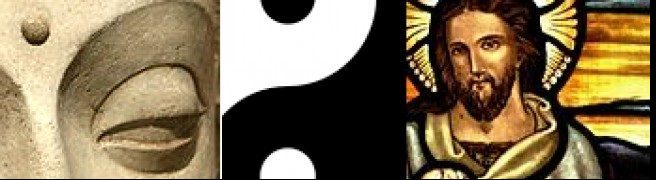
Women: Being Loved by Christ

When Jesus first taught in the synagogue in Jerusalem, his neighbors received him with skepticism verging on outrage [NIV Mark 6:2-6]:

“Where did this man get these things?” they asked. “What’s this wisdom that has been given him? What are these remarkable miracles he is performing? Isn’t this the carpenter? Isn’t this Mary’s son and the brother of James, Joseph, Judas and Simon? Aren’t his sisters here with us?” And they took offense at him.

Jesus said to them, “A prophet is not without honor except in his own town, among his relatives and in his own home.” He could not do any miracles there, except lay his hands on a few sick people and heal them. He was amazed at their lack of faith.

This contrasts with the events just prior with a woman who had bled for twelves years, and was healed simply by touching Jesus’s clothes. Shocked by the experience, the woman hid in the crowd, but Jesus persisted [NIV Mark 5:33-34]:

Then the woman, knowing what had happened to her, came and fell at his feet and, trembling with fear, told him the whole truth. He said to her, “Daughter, your faith has healed you. Go in peace and be freed from your suffering.”

How does this work, spiritually? The aura that forms around the head of a saint is generated by souls pressing against their minds in the hope of discovering meaning and purpose. Meaning and purpose are discovered most readily in the saint because they have surrendered themselves to love of the world, and the world in turn reveals itself to saint’s examination. It is as said by Tagore:

Power said to the World, “You are mine.”
The World kept it prisoner on her throne.
Love said to the World, “I am yours.”
The World gave it the freedom of her house.

The saint looks into the world and sees its spiritual needs. Among the souls that surround the saint are such that can fulfill those needs. The saint has the privilege of facilitating the union of the two parties. But where the party in the world (the soul currently “living”) seeks instead power, the union fails. The souls choose to remain to the company of the saint. That saint, honoring the compact of their company, accepts them back.

Spiritual union can be ravishing, having many of the aspects of intercourse. For this reason, Catholic nuns once referred to themselves as “brides of Christ.” But the union can be a tenuous thing. If Jesus had not been present to voice his approval, would the hemophiliac woman have maintained her cure?

When I encounter woman struggling with this dynamic, I offer the encouragement, “Believe in yourself!” There are angels in the air wishing to enter into you to heal the world. Yes, it feels wonderfully sensual, but you don’t need sex to receive them. You don’t need the approval of a father. Spirits becoming angels yearn only for the spiritual union we know as “Christ” that found its steward when Jesus took up the cross. To receive them, you need only their approval, an approval gained most powerfully through a commitment to love and heal the world.

He Will Reign – Won’t He?

One of the challenges in building a brand is to ensure that prospects receive a consistent message concerning value proposition. The Church fathers and Emperor Constantine addressed this problem in the fourth century, establishing the Nicean dogma and creed that the Catholic Church and its heretical variants enforced through preaching, training and – in the breach, until recently – torture and death.

Normally, we’d talk of offended authority as “spinning in the grave.” In this case, given the last, we must be glad for Jesus’s resurrection, because otherwise the globe would have been whirling around his tomb.

The early Church fathers, confronted with the evidence of civil decay following the decline of the Roman Empire, seem to have concluded that empire was a part of God’s plan of salvation. They spent the twelve centuries following Nicea working to centralize political authority in Europe. At the end of that era, Renaissance Europe sprouted a dozen kingdoms capable of reproducing the accomplishments of Rome. Their response to Church meddling was to interfere in Papal selection, and when coming out on the losing end of that struggle, to support the rise of reforming heresies.

So what might Christ think of that?

In Scripture, I see three high points in the relationship between Humanity and God. The first is in Eden, where Adam and Eve experienced the ravishing grace of a direct relationship with God. Next is the era of Judges immediately following the entry into the Promised Land. The Hebrews as a people lived in gratitude for the Father’s gift, and when their occupancy was threatened, God found heroes to guide them through danger. That era ended with the people throwing their trust onto the human institution of monarchy. In the final act, Jesus arrives to expose the iniquity of the human institutions of his day, and proclaims that redemption is not bound by any contract or tradition, but is available to all the peoples of the Earth.

The modern Dominionist interprets this proclamation as a call to spread the institutions of Christianity across all the globe. The question is: what is the true church? Or is it simply enough that each individual should recognize Christ as lord and master in his heart?

Jesus is a little coy on this point, stating [John 10:14-16]:

I am the good shepherd; I know my sheep and my sheep know me — just as the Father knows me and I know the Father — and I lay down my life for the sheep. I have other sheep that are not of this sheep pen. I must bring them also.

In The Soul Comes First, I consider the parallels between the spiritual trajectory in Judaism (culminating with Jesus) and Buddhism. In Islam and Christ, I examine the choices made in the formulation of Islam, choices made to facilitate such developments in cultures still practicing polytheism.

These insights, supported by the evolution of the covenant recorded in the Bible, lead me to the conclusion that Unconditional Love reaching to us from Christ meets us where we are. It does not care about structures and institutions, and in fact idolatry is often evident in human attempts to sustain those forms. Rather, as Jesus says, it enters into our lives in twos that grow into threes, thereby empowering us to care for one another.

Witnessing the end of this process, John testifies of the “New Jerusalem”, that {NIV Rev. 21:22]:

I did not see a temple in the city, because the Lord God Almighty and the Lamb are its temple.

Remember that Jesus does not ask us to submit, but to learn [NIV Matt 11:29]:

Take my yoke upon you and learn from me, for I am gentle and humble in heart, and you will find rest for your souls.

And [Math 20:28]

…the Son of Man did not come to be served, but to serve, and to give his life as a ransom for many.

The temple of God is the individual human heart. His age is consummated when we allow his sensibility to enter into us. As I said recently to a priest:

Sometimes words serve no purpose, and the only thing I can do is to allow the broken heart of Christ within me to speak for itself.

It is when we offer our hearts as he did, offering them in the service of supporting the weary and burdened, that his will for us is achieved. This is a service beyond understanding, for we cannot explain all the suffering in the world. It is beyond us, having its origins billions of years ago, and woven into our living through the predatory competition that is Darwinian evolution. All that we can do, as Jesus did, is to offer ourselves in the service of healing the wounds it has created.

So is the modern fragmentation of Christianity – exposing contradictory messages that erode faith – is that fragmentation a problem? Or should it be interpreted as the process by which Christ dissolves the human institutions that stand between the seeker and Unconditional Love? If Eden was the ideal, should we not be seeking to recreate that ideal for every man and every woman? And if that is the goal, how can we doubt Christ’s word that he will gather all of his flocks – all of those traditions that declare a covenant and discipline that opens our hearts to the power of Divine Love – how can we believe that any one of them will be unreconciled to Christ? Or judge any of them as inferior to our own path?