The Belly of the Beast

I am astonished by the announcement of John Boehner’s resignation from Congress.

My recommendation to the Republican Establishment is to put a Tea-Party candidate into his position as Speaker, and then give them a taste of their own medicine. The consequences of that object lesson would be far less disastrous than allowing them to continue to inflame political passions. I would hope that within 30 days, it would drive them completely out of the Republican Party.

Freedom from Immigration

During the motorcade through Washington, Pope Francis elevated the human reality of our immigration crisis by calling to him a beautiful Hispanic child. The circumstances of the little girl’s arrival upon the guarded road are suspicious – even the mildly cynical would surmise that she was put there by an adult. The appeal for relief from fear for her parents was also remarkably mature. Of course, that may reflect the constant working of her thoughts against the pressure of her fear. Children are sometimes forced into maturity.

The Pope’s response to her was spontaneous, specific and human, having her lifted up so that he could embrace her. That it was this child that caught his attention may reflect a deep internal resonance of her experience with his own experience as the child of Italian immigrants to Argentina.

Unfortunately, that personal identification is a weakness in his appeal for immigration reform in America. It seems to generate in him a confusion over two very different motivations for immigration: the search for opportunity, and the flight from desperation.

The two narratives – of opportunity and flight – are mingled in the American story. Many of the settlers were fleeing religious or political persecution, but chose America (rather than another European country) because it was a place of opportunity. That opportunity was secured by the huge imbalance in cultural and immunological sophistication of the settlers relative to the Native Americans. These two factors supported population densities that guaranteed that the European tide would eventually sweep aside the native way of life.

But as of 1950 or so, that process had been concluded. The West was settled, parceled and titled to its new owners. The appeal of America shifted: no longer the land of unfettered opporunity, we became the “land of the free.” The “Statue of Liberty” was installed with a plaque that called for the world to send “your tired, your poor, your huddled masses.” But the logistics of arranging a trip across the ocean created a filter that biased the arrivals more towards the clever, industrious and opportunistic. This is cemented in current American immigration policy, where heavy preference is given to those that come with exceptional skills. With its mantra of freedom, America now draws to it the most productive citizens from states that do not respect political rights.

What is faced by the refugee – one among the many waves fleeing fear – is an entirely different reality. It is a world of abusive employment practices, first brought to national attention by Caesar Chavez and the United Farm Workers, but reborn in the housekeeping business and meat packing plants. It is a culture dominated by aggressive men who establish diasporas enforced by intimidation and violence. Does this represent a shift in American immigration experience? No, for European immigrants, arriving in the densely populated East Coast, often did the same. What is different is that there is now no geographical outlet for those pressures.

So the Pope’s plea for unfettered resettlement of refugees is a little tone deaf. Where are the immigrants to go?

To those that cherish liberty, there is also a moral quandry. What about the tyranny, venality and incompetence that creates a refugee crisis? Would the advanced democratic societies, in guaranteeing the safety of refugees, become unwitting codependents and victims to oppression? In taking in the most productive and resourceful citizens of the affected nations, are we not simultaneously sapping them of the capacity to resist and recover from the side-effects of oppression?

The Catholic Church, as observed by the Canadian philosopher John Hall in Powers and Liberties, has some experience with this problem. As the curator of Europe’s shared culture heritage (including Latin, the libraries and universities, and religious expression), the Church facilitated the flourishing of the Renaissance by issuing letters of introduction for those fleeing feudal oppression. This meant that seizure of wealth actually facilitated the dissemination of ideas and technologies that drove the generation of wealth. However, it was only with the industrial age that the benefits of that dissemination reached down to the lower class, generating the era of relative wealth in the developed nations.

So do we ignore the Pope’s plea?

As a Christian, I cannot. I cannot ignore the misery of those fleeing societal collapse. But I would argue that we should be far more focused in ensuring that the wealth that is transfered from our societies to refugees is organized to ensure that pressure is brought to bear on the originators of their misery.

The uncoordinated dispersal of refugees should be prevented. Rather, I would recommend that they be admitted as a diaspora, seeking to maintain their cultural identification. Refugees should be integrated in the economy, contributing their energy and drive. But they should be encouraged to maintain a political involvement in the affairs of their home country, including participating in cultural exchanges (perhaps within the borders of a third country) that transfer knowledge and experience to those that remain behind. And I recommend that a portion of their earnings be allocated, under State Department oversight, to efforts to bring justice to their country. Their ultimate goal should be full citizenship through return to a reformed state.

The Pope should reflect that Jesus did not flee tyranny, but submitted to its ultimate injustice, and in doing so inspired others to shake off the chains of their fear. Obviously, those that can emulate him are few in number. But the founder of the Catholic Church would exhort it to not cater to cowardice, but rather to encourage others to “pick up their cross.” Of course, there is much that the Western democracies can do to facilitate that process, and in supporting the flowering of justice when chains are eventually cast off.

So I would exhort us not to seek to be free of immigration, nor allow unrestricted freedom of immigration, but rather to focus our policies to ensure that freedom is generated through immigration.

America Through the Papal Lens

We Americans might be expected, as members of the most powerful nation on Earth, to be used to thinking that every political issue ultimately will be a domestic issue. I expect, upon reading the analysis of the Pope’s message, to be confronted with arguments regarding the merit of his pronouncements regarding the death penalty, immigration, climate change, economic justice and the primacy of statesmanship over armed might. I myself will offer analysis on immigration in a future post.

But is that how we should interpret the lesson on political civics offered to us by Pope Francis in his oration before the Joint Meeting of Congress? For that is indeed what it was: a reminder that politics is an act of service to the people, and that the measure of political success is not the towering monuments of wealth, but the hope and opportunity served to the most desperate of our citizens. Did Francis attempt to resolve the delicate balance between, on one hand, the creation and maintenance of infrastructure that generates opportunity, and, on the other hand, the basic needs that sustain individual initiative? No, he did not, but long experience has shown that a resolution is impossible, and so could not have been his goal.

His goal was far simpler: to remind the United States how important it is as an example to the world. To this end, he raised to our attention four great personalities: Lincoln, MLK Jr, Dorothy Day and Thomas Merton. He did not dwell on their accomplishments, only offering the briefest analysis of their virtues before plunging into an elaboration of how those virtues relate to the challenges facing the world today.

Many will not see it that way. Many will see his pronouncements on immigration, for example, as meddling in domestic politics. But from his perspective, the problem is a global problem. The displaced refugee does not appear only as an illegal within our borders, but on every inhabited continent. If America cannot sustain the compassion to see them as human beings in need of support, then what nation can?

And so with his civics lesson: our tolerance of aggression in American politics is to authorize tyrannical pronouncements by despots all around the globe. That we tend to use economics to elaborate Clauswitz’s dictum (“War is the continuation of politics by other means”) cannot be expected to register on those without our economic sophistication. Tyrants will use the tools available to them when hostility is sparked by rhetoric, and often their tool of choice will be violence. Our political discourse should be civil, and thus set a better example for the rest of the world.

So I stand in awe of the presentation today. The negative was left implicit. Instead, Pope Francis offered us a paean to American excellence, and exhorted us to heed our better angels when crafting policy.

I do wish that Pope Francis would have extended a practical hand to the politicians that resist collaborative policy making. Early in his speech, he did offer that his goal was to reach not just those present, but all those they represent. The tenderness and humility of this man are a manifestation of divine authority that has changed many hearts over the course of human history. To have indicated some of the many Catholic initiatives intended to address our shared difficulties might have – as did Kennedy’s exhortation to reach the moon – provided an impetus to those that fear the problems are too large, and nothing can be done.

And I know that as an observer of reconciliation in Argentina, Pope Francis must have many profound personal stories to share regarding the political power of love, and the healing that it brings. While his personal example of charity and compassion is profound, those engaged in the cut and thrust of politics may see indulgence in such demonstrations. For those struggling with that resistance, personal testimony of political reconciliation might have been beneficial.

Getting Taken to Cleaner

Volkswagon, the world’s largest automobile manufacturer, issued a software patch for the 11 million vehicles sold with “clean diesel” motors. The patch links to Android and iOS smart phones, enabling the driver to replicate the acceleration profiles used during EPA emissions testing.

In announcing the patch, Volkswagon’s CEO said, “Those already taking directions from their smart phones will be perfectly comfortable with the new feature. Instead of ‘turn left in 200 yards’, the phone will command ‘release the accelerator by two millimeters in five hundredths of a second.'” When asked whether that was a practical solution, the CEO enthused: “That’s the beauty of the engineering! Do you know how hard it was to coordinate the voice announcement to end just in time to allow the driver to take action?”

Facing the prospect of billions of dollars in fines from environmental regulators across the globe, the new VW software prioritizes emissions above collision avoidance. As an explanation, the CEO offered, “Any deviation from the commanded – I mean ‘requested’ – acceleration sequence will cause the exhaust to belch a huge cloud of poisonous particulates. So the driver might as well run over the children in the cross walk.”

In a parallel, ISIS announced the availability of a new freemium game based upon the “Hit-and-Run” scoring system adopted by American teens to vent their frustration with dawdling pedestrians.

Bulding Bridges

Jeb Bush on Barack Obama:

Barack Obama is a talented man — and by the way he’s an American, he’s a Christian — his problem isn’t the fact that he was born here or what his faith is. His problem is that he’s a progressive liberal who tears down anybody that disagrees with him.

Well, Jeb, you’ve got another eighteen debates to overcome two precedents that establish that the Republican Party can’t put forward any candidate that can build bridges even within the Republican Party.

Much less put together the two-party coalition that passed the Health Care Affordability Act, much as the flip-flippers would like to disown it.

Freedom from Government through the Governance of Love

In explaining the necessity of God in Tragic Sense of Life, the Jesuit philosopher Miguel de Unamuno asserts that it arises when every man, naturally desiring to control the world, confronts the inevitability of death. As the latter treads on our heels, even the most powerful are pressed to the conclusion that the only way to live forever is to embrace a God that loves us enough to grant us life.

Atheists are inclined by this logic to conclude that faith is a delusion. Marx certainly saw it that way, declaring that “religion is the opium of the masses.” But the underlying pressure is evidenced in the pronouncements of some technologists, among them the man I described yesterday who saw our digital sensors, networks and software as empowering us to build God. Others are more humble. At the ACM fiftieth anniversary symposium in 1997, Nathan Myhrvold, then chief architect at Microsoft, envisioned (somewhat playfully) a future in which we could escape death by creating digital simulations of our brains. The video skit included Bill Gates rubbing his chin as he thoughtfully considered the reduction in Microsoft’s benefits budget.

But if delusion is pathetic, oftentimes in the powerful avoidance is grotesque. We have Vladimir Putin, assassin of Russian patriots, proclaiming that Jesus will find no fault with him on Judgment Day. Or the effrontery of Donald Trump who, protected by his army of lawyers, knows that so long as he asserts righteousness, no one has the means to contradict his claims of competency and benevolence. Thus he continues to assert – in contradiction of the actual birth certificate – that his lawyers have compelling evidence to reveal regarding President Obama’s citizenship. Both of these men suffer from the same affliction, the tendency of our bodies to respond to successful acts of aggression by manufacturing more and more testosterone, the chemical driver for aggression. This is a positive feedback loop that was broken only by death in the cases of Hitler, Franco, Mao, Stalin, Kim Yung Un and so many other tyrants. In the prelude, millions of people were sacrificed on the altars of their psychological invincibility.

This dynamic is writ small in the lives of many businesses, congregations and families. People addicted to the rush of adrenaline and the power of testosterone manufacture experiences that stimulate their production. This is why it is said “absolute power corrupts absolutely.” The desire for power arises from the biological thrill of success, and to continue to receive that thrill, the addict must continue to risk his power in ever greater contests. In the heat of passion, the suffering visited upon others is ignored.

There are three antidotes to this dynamic. The first is popular rebellion. Paradoxically, this is the very force that pushed Putin and Trump to prominence. At a stump speech yesterday, Trump opened the floor to questions, and the first person to the microphone began to rant hatefully about President Obama and an imagined domestic Muslim threat. Trump did not defuse the situation, instead responding “We need to hear this question!” But often rebellion is merely another manifestation of the drive to power. Unless tempered, it rages out of control, as happened in the Jacobian tyranny following the French Revolution.

The second antidote is reason. Reason builds discipline that forces us to reconcile our actions with their consequences, thereby disciplining our aggression with objective evidence of failure. The tension between reason and will is not just moral, however: heightened levels of adrenaline actually degrade the higher thinking centers of the brain. This creates a terribly contradictory dynamic, perhaps manifesting itself in the fact that most academics do their greatest work in their youth. While testosterone serves the reasoning mind in creating the thirst to conquer and claim ideas, as the successful mind expands, so do levels of testosterone and adrenaline, which destroys the power of reason. In that context, the methods used to sustain power are not as brutal as those used by the social tyrant, but have their own unique form of cruelty, and leave lasting scars on the psyche. Isaac Newton, cheated of credit for a scientific insight by his predecessor as head of the Royal Academy of Sciences, had the satisfaction of burning the man’s portrait. Most victims of intellectual tyranny are consigned to obscurity.

It is natural for supporters to gather around the social or intellectual tyrant during his rise to power. Claiming benevolent intention is a great way of rallying support from the oppressed. Unfortunately, this dictum holds: A man will change his beliefs before he will change his behavior. When that behavior is organized around aggression, enemies must be created when there are none left at hand. All tyrants eventually turn on their lieutenants, often using hallucinatory rhetoric to justify their actions.

A peer once offered to me that all the greatest scientists were lovers of humanity. This brings us to the third antidote: love. This arrives upon us through many pathways. It can be through sex and maternity. It can be when an infant first grasps our forefinger. It can be through service to those in want. In those moments a bond is established, a linkage that makes palpable the suffering we visit upon others. That can be rationalized in material terms: tears on a beloved face or cries of shame are evidence of our failure. That breaks the vicious cycle of success and aggression.

But there is another aspect that goes beyond negative feedback. Aggression stimulates the loins and the mind, but barely touches the heart. Exchanging love with someone just feels good. It opens us up to a world of experience that can be touched in no other way. Ultimately, its rewards are far greater because no one that loves themselves objects to being loved. They do not turn on their friends for satisfaction, because their friends offer them satisfaction every day.

Democracy attempts to combat the urge to power by institutionalizing rebellion. In America, the two Presidents that were awarded most authority were George Washington, who gracefully surrendered power after two terms of service following universal acclamation by the Electoral College, and FDR, who literally worked himself to death through four terms in office. Both those men were governed by a sense of duty and love for their country, a commitment affirmed by the popular voice that is expressed in elections. At the end of the 20th century, those that seek the freedom to act always as they please (the ultimate manifestation of power) responded to electoral constraint by attacking our faith in government. Driven by testosterone and thus unable to govern themselves, they have invested huge amounts of money creating personalities such as Newt Gingrich, Rush Limbaugh and Bill O’Reilly. As visible in the Oklahoma City bombing and the events surrounding the Republican nominating process, the end result has been to stimulate the resort to violence by others.

Thus we have the wisdom of Jesus: “Render unto Caesar those things that are Caesar’s.” We have the promise of Jeremiah: “For I will write my law on their hearts, and no man will be told ‘Come learn about my God’, because all will know me.” And we have Christ’s summation of the Jewish experience with law (the rule of reason) and governmental control: Love God and your neighbor.

It is through self-regulation that we discover truth and peace[NIV Matt. 7:13-14]:

Enter through the narrow gate. For wide is the gate and broad is the road that leads to destruction, and many enter through it. But small is the gate and narrow the road that leads to life, and only a few find it.

But what other government would we choose, except the governance of our hearts? And to what other authority would be choose to submit, other than the authority of compassion in another? Why do we delude ourselves that there is any other way?
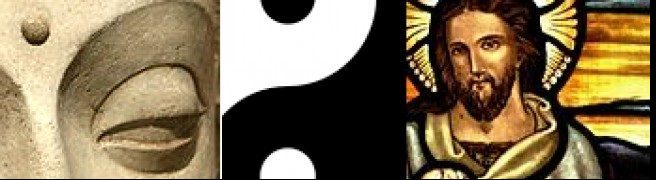
The Real Deal: Towering Ambition on Mars

Having seen the Trump stump rhetoric on the Iran nuclear deal evolve as predicted in earlier de-porting (as “re”-porting is to offer again the truth, “de”-porting must be to claw it back), this blogger was emboldened to follow the communications links that tie the Trump real-estate empire to the Iranian mullahs. New revelations expose the growth of the Trump ego from global to interplanetary dimensions.

With suspicions (and hackles) raised by Trump’s refusal to promise to place his holdings in blind trust, records of real estate transactions in the Washington, D.C. area were examined to expose the true cause of the Chinese stock-market crash: profit-taking by Chinese investors buying up huge swaths of the Washington landscape. It appears that Trump has arranged for multi-billion dollar Chinese support for his PAC with promises to lift the height limitation on Capitol Hill development, which by federal law is constrained by the cap of the Washington Monument.

In fact, PR documents in development attempt to paint the Monument itself as a hidden Iranian ICBM, similar to those revealed to have been concealed in the minarets of Iranian mosques. The Monument is slated for demolition during Trump’s first hundred days in office, to be followed immediately by construction of a huge Trump Tower complex on the Capitol Mall.

As if that was not sufficient outrage, it appears that the pull-back of the Obama-Islama resort complex announcement in Kenya is related to plans for Mars hinted at in a bizarre exchange between Elon Musk and Stephen Colbert on the late show. Mr. Musk suggested that Mars might be made habitable by liberating water and carbon dioxide trapped in polar crust using nuclear explosions.

It appears that Mr. Trump has promised to have NASA let a contract to SpaceX, the private rocket company owned by Mr. Musk, to design and construct a system to relocate the Iranian uranium enrichment complex to Mars. Rather than launching nuclear missiles from earth to Mars, the bombs will be manufactured on Mars itself using the transplanted Iranian machinery.

As a quid-pro-quo, the Republican majority in both houses of Congress will be expected to grant to Trump right of first refusal on all development deals as habitable terrain evolves on Mars. Support for the legislation is expected to be sealed with authorization of a “climate change exchange” that will allow fossil fuel companies holding land on both planets to average hot days on Earth against cold days on Mars.

In related news, the Bush nominating campaign is targeting a narrow climate-conscious fringe of the Republican party with a study of the correlation between local temperatures and Trump campaign rhetoric.

This blogger awaits further developments with basted breath.

Curating the Treasure

I was at Barnes & Noble yesterday afternoon, plowing through the examples in Troelson’s Pro C#, and a large gentleman waved his derriere in my face as he sat down at the adjoining table. I kept my head in the work, but he interrupted to offer “Sorry to stick my butt in your face like that.” I responded, “It happens,” and kept on grinding.

The place began to thin out at five, so I shifted to the counter against the wall, as the tall chairs allow me to open up my abdomen and breath. He followed a few minutes later, actually pointing out that he was following me. Trying to make it clear that I wasn’t avoiding him, I explained that I preferred the bar seats.

What followed was one of these interesting negotiations that I recognize as attempts by concerned spirits to engage with the work that I do. I remarked that I had noticed his interest in cosmology (he had been perusing a shelf copy of Hawkings’ A Brief History of Time). Through a process of disconnected association – in which the same words were repeated with different meanings – he revealed that he held a patent on a new electrical motor drive method.

Along the way came this story of how he had found a card for a $10,000 invitational for venture capital funding. He thought that was an interesting message from the universe, but when he called the number on the card, the responder just hung up again and again. Not to be deterred, he went to his Ninja master who advised him to print a fake business badge and gain entry to the venue on the pretext of inspecting the air conditioning. Changing clothes after entry, he made his way to the meeting. Identifying a British peer among the investors, he waited at the exit as the body guards passed before reaching out suddenly to grab his hand.

Intrigued by this intervention, the peer invited him to have lunch with another group of investors. The locale had a Japanese temple gateway, which my new friend understood required him to remove his shoes and bow before passing the threshold. He was followed by a group of Japanese investors, which marveled at his sophistication. Into this milieu came the peer, who congratulated him on having “married” the Japanese, who were considering a $400 million investment with Lloyd’s, the British reinsurance group.

After lunch, the peer took him aside to determine his interest in the VC meeting. My acquaintance offered the idea of laying a motor design out flat, as was done in a large accelerator facility. When asked how the idea was originated, he had offered that it came from a privileged supernatural source.

The story wrapped up with the observation that Thomas Edison had succeeded with direct current power because he knew the ins and outs of politics, while Nikolai Tesla just wanted to play with alternating current.

By this time, I had returned to typing in Visual Studio, prompting as I did so with questions just to let him know that I was paying attention. Story concluded, he pressed a business card on me and left.

There are people of influence, such as the British peer, who wander the world casting the net of their wealth around them to attract opportunity. They don’t understand the mechanisms by which it works, they just rely upon it as a privilege. The peer rewarded my acquaintance because he was a sensitive and responsive tool for facilitating the acquisition of wealth.

And then there are those that submit to the purpose of that talent – the goal of joining all of life in a web of mutual concern – to whom that actual mechanisms of the process are revealed. They are given possession of the treasure of the fields, of which Jesus said [NIV Matthew 13:44]:

The kingdom of heaven is like treasure hidden in a field. When a man found it, he hid it again, and then in his joy went and sold all he had and bought that field.

Lack of money isn’t the problem. The problem is the injection of selfishness into a process of co-creation that makes the participants (both biological and ethereal) incredibly vulnerable to exploitation. Once we learn to discipline ourselves, we’ll find that there is far more power available to us than is required to solve the problems that we confront.

Zmed Brothers

Played at Twisted Oak tonight. They actually are brothers, on electric mandolin and guitar, both with soaring reverb that carried up and around. The tension of the week was left behind, and I feel really relaxed right now.

Eclectic mix of covers, ranging from Kentucky Old Timey to Simon and Garfunkel to Hip-Hop S&M. When not soloing, the guitarist laid down the chord progression and offered edgy lead vocals. His brother sang with a far more polished alto voice, the contrast matching the tone of the instruments.

Much of what I was hearing was electronic tone generation, but there’s a definite skill in knowing when not to play as well. That was evident in their original numbers, the voices slipping around each other like sea-otters in the pool of sound. I stood up and drifted on my feet for the last two numbers, doing some floating myself.

As I noted last month: definitely a spiritual experience.

Stopping the Violence

The exhausted pleas of the Mayor of Kansas City touched me deeply today. Decrying the shooting death of a one-year-old child, he observed that our city officials can’t be everywhere at once, and exhorted all of us to stand up against violence. As a policy prescription, that translates to instituting restrictions on gun access.

It is true that ready access to firearms inflates violent death. Emotional shock or dehumanizing abuse can create a driving urge to remove the source of our pain. When a gun is at hand and familiar to the touch, it represents an immediate solution. But equally true is that a strong person does not employ that solution unless life is under threat.

The problem is that people are becoming weaker, not stronger. This is obvious in the comments on conservative bulletin boards. A steady theme is that the average American is not valued by the social elite, whether political or business leaders. Looking at the decline of the middle class, it is hard to argue with them. We suffer from the naivete of politicians that believed that the war on drugs could be won through incarceration, or that growth would stimulate China to liberalize its economy. And we suffer from the greed of business leaders that lobby to hold down wages and weaken environmental and public health regulations, often using the threat of Chinese competition as a rationale.

A recent study on sexism and racism on gaming sites reveals the social dynamics of the downward slide. What the researchers discovered is that the most successful gamers are nice to everybody – it’s those that struggle that hurl abuse. That abuse is reserved for new entrants to the competition – the skill of winners is widely admired. The abuse is directed at those trying to enter the community and acquire skills. It’s a means of keeping down direct competition.

I think that this is an important aspect of America’s perverse love affair with guns. They provide a false sense of security to those that bear them. They allow the dispatch of the physical intruder that comes to take our property or our jobs, while the elite collects credit card interest every month, drives up working hours and pushes mortgages into default.

But the love affair doesn’t end there. Our over-sized military and jails are social support systems, providing for the basic needs of large cohorts of our society while incubating violence. Our media appeals to our primitive psychological urges with the portrayal of life-threatening circumstances visited upon sexually attractive people whose mastery of physical violence produces victory. And our sports heroes become ever more powerful and intimidating in their performances, to the point that no padding can protect them from long-term disability, and so we simply throw them into the arena without covering for anything except their genitals.

This sounds terribly gloomy, but the celebration of brute physical power above strength of mind and character has a silver lining. It makes those that struggle against violence all the more powerful.

It’s hard to explain until you’ve actually experienced it (though I try in Ma and Golem). It’s to be stalked by a mountain lion in the moonlight, and to calmly escape it from ten feet after freezing it with the mental command, “Go eat something that can’t talk.” It’s to react to the men squared off over a woman in a night club – not by screaming “take it outside” – but by sucking the violence out of the air to the point that the one that threw a punch actually fell over on the floor, reporting later that “I just got all weak all of a sudden.”

But it’s also to give of our selves. It was the CEO of FMC who, having planned a series of acquisitions that created a vertically integrated company without redundancies, offered to the employees of a small, struggling subsidiary that he had “felt your pain.” It is to look the homeless in the eye, validating them as people. It is to tutor in a school for children that walk mean streets every night to homes that may not contain food to fill their stomachs.

It is to let people in fear know that “Yes, this is what it is to be loved.” Once they know, the short-term thrills of adrenaline and lust just don’t have the same attraction.

And more: through an encounter with a disciplined mind and compassionate heart, the promises of our religious avatars become obvious truths. The overwhelming power of those instruments has no material support – they are what they are only because an infinite source of unconditional love enters the world through them. It is through this knowledge that the long-suffering find patience that blossoms into enduring hope. In that endurance and strength, the threat of violence loses the last of its power.